Our verdict
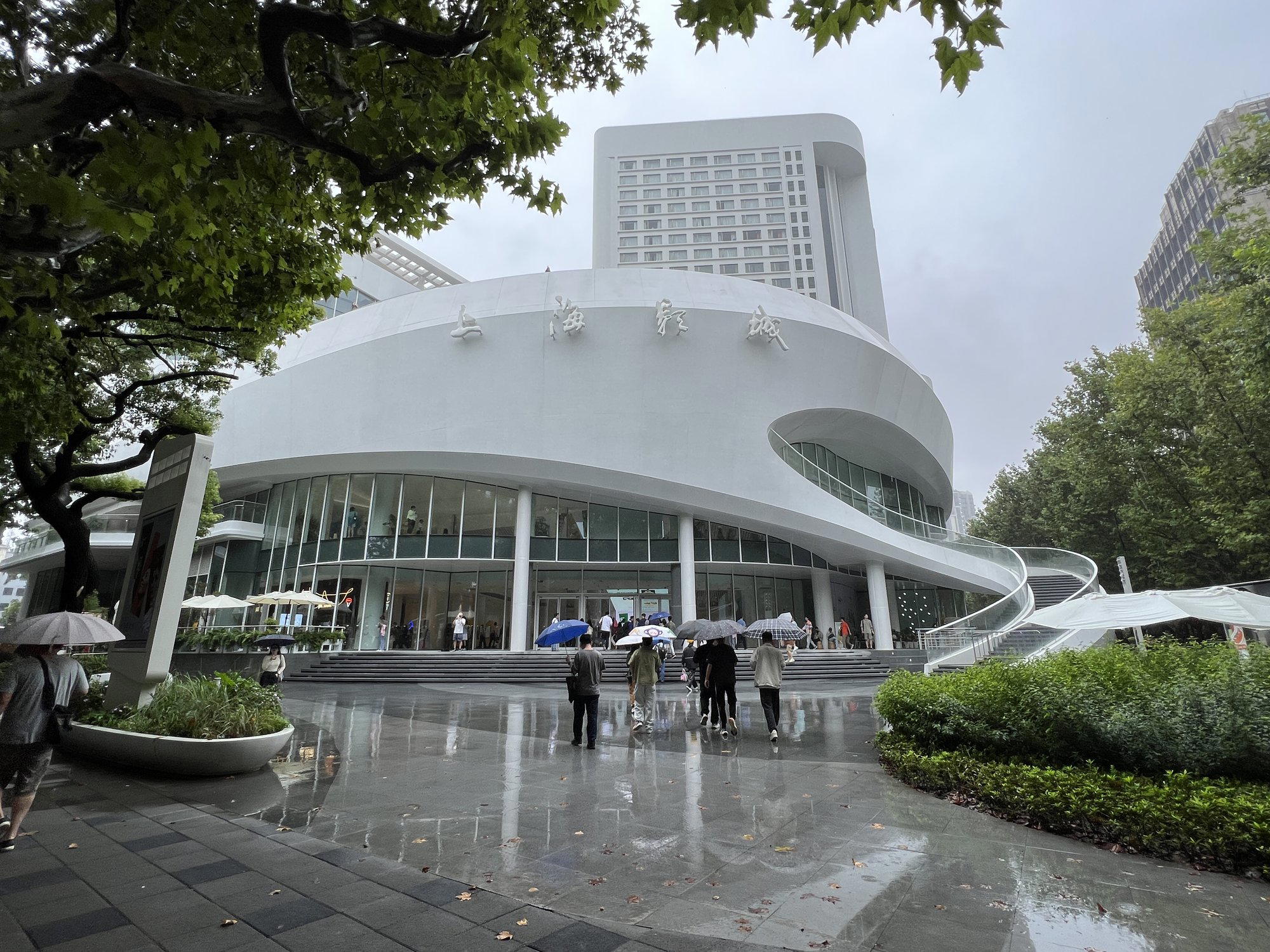
A Changning district institution where Shanghai's cinema-going culture and casual snack culture overlap, the Shanghai Film Art Center Popcorn sits at 160 Xinhua Road adjacent to one of the city's longest-running arthouse screens. Its loyal clientele return as much for the ritual as the refreshment, making it a useful reference point for understanding how Shanghai's neighbourhood leisure culture operates outside the fine-dining circuit.

Pearl is the En Primeur Club membership app — saves, bookings, and concierge access live there. Same editors, same standards.
The menu
What to order
- Popcorn
Where the Cinema Foyer Becomes the Destination
Xinhua Road in Changning is the kind of street that resists the obvious. Away from the Jing'an showpiece blocks and the Bund's tourist gravity, it runs through a residential-commercial corridor lined with plane trees and low-rise buildings that still read as neighbourhood rather than development project. The Shanghai Film Art Center has anchored this stretch for decades, and the Popcorn operation attached to it reflects something specific about how Shanghai's non-destination leisure spaces work: they acquire regulars not through programming but through presence, consistency, and the particular atmosphere that only accumulates with time.
The cinema foyer-adjacent snack format is more culturally legible in Shanghai than it might initially appear to visitors. Chinese moviegoing culture has historically placed as much value on the pre-film and post-film ritual as on the film itself, and venues that occupy this liminal space — neither restaurant nor kiosk — develop a social function that exceeds their apparent scale. At 160 Xinhua Road, the Film Art Center's programming has long leaned toward art-house and international releases, drawing an audience that tends to linger rather than rush. The Popcorn operation fits that cadence.
What the Regulars Know
The loyalty pattern at a venue like this is instructive. In Shanghai's Changning and Xuhui districts, there is a cohort of residents, many of them in creative industries or academia, drawn by proximity to campuses and design studios, who treat the Film Art Center as a recurring fixture rather than an occasional outing. For these regulars, the Popcorn counter is part of the visit's grammar: something consumed before settling in, or while debriefing afterward on Xinhua Road's pavement. It competes for habit.
That distinction matters when reading Shanghai's broader food and drink scene. The city's most-discussed dining addresses, from the vegetarian precision of Fu He Hui to the Taizhou seafood authority of Xin Rong Ji (West Nanjing Road), operate in a different register entirely, one defined by advance booking, ceremony, and critical validation. The Popcorn counter at the Film Art Center belongs to a parallel economy: the city's texture between the destinations.
Changning as Context
Understanding why a venue on Xinhua Road develops a loyal following requires understanding what Xinhua Road actually is. Historically associated with the city's pre-1949 foreign community, the street retained a European-influenced residential character long after other parts of Changning were redeveloped. Today it functions as a corridor for independent cafes, small restaurants, and cultural venues that serve a local rather than tourist audience. The Film Art Center sits toward the western end of this corridor, in a section where foot traffic is generated by residents and regulars rather than by tourism or commercial anchors.
This neighbourhood positioning shapes what the Popcorn operation can be. It is not a concept venue designed to photograph well or attract out-of-district visitors. It is a fixed point in a neighbourhood that has resisted, more than most Shanghai streets, the pressures of rapid commercial turnover. That resistance is itself a form of distinction in a city that remakes its retail and hospitality stock at considerable speed.
Shanghai's Casual Snack Culture in Wider Perspective
Across East Asia's major cities, the casual snack counter attached to a cultural institution occupies an interesting position in the food ecosystem. In Tokyo, cinema basement food halls have their own critical literature. In Seoul, the snack culture around multiplex lobbies has spawned distinct product categories. Shanghai's version is less codified but no less embedded. The Film Art Center Popcorn sits within this broader pattern, a small, habitual operation that functions as social infrastructure for a particular slice of neighbourhood life.
For visitors planning a serious Shanghai dining itinerary, the coordinates are worth holding separately from the destination-dining circuit. The Cantonese precision of 102 House, the modern European ambition of Taian Table, and the Italian authority of 8 1/2 Otto e Mezzo Bombana (Shanghai) represent the city's formal dining ceiling. The Film Art Center Popcorn represents something else: the city at rest, between screenings, on a tree-lined street in Changning. Our full Shanghai restaurants guide maps both registers across the city's neighbourhoods.
Planning a Visit
The venue sits at 160 Xinhua Road in Changning District, accessible by metro via Jiangsu Road station on Line 2 or Yili Road station on Line 10, both within walking distance along Xinhua Road. As with most cinema-adjacent operations in Shanghai, activity follows screening schedules rather than conventional meal times, so timing a visit around the Film Art Center's programme is the practical approach. Given the absence of booking infrastructure, this is a walk-in format by nature, there are no reservation requirements to manage. The neighbourhood itself warrants time on foot: Xinhua Road's independent cafes and small restaurants fill out an afternoon or evening itinerary without requiring advance planning.
For those building broader itineraries across the region, comparable neighbourhood-anchored dining culture appears in different forms at venues like Pingjiangsong in Suzhou and Ru Yuan in Hangzhou, both of which sit within walkable cultural precincts rather than destination dining clusters. Further afield, Fleurs Et Festin in Xiamen and Wenru No.9 in Fuzhou operate in similar neighbourhood-rooted registers. For fine Chinese dining anchored to cultural districts, Shang Palace in Yangzhou, Dai Yuet Heen in Nanjing, and Imperial Treasure Fine Chinese Cuisine in Guangzhou each offer a point of comparison. Across mainland China, the Xin Rong Ji in Beijing and Xin Rong Ji in Chengdu extend the regional dining picture, while Chef Tam's Seasons in Macau represents the formal Chinese fine-dining tradition at its most decorated.
Frequently asked questions
Where do I go for Shanghai Film Art Center Popcorn?
Shanghai Film Art Center Popcorn is located at 160 Xinhua Rd, Changning District, Shanghai, China, 200052, Shanghai.
Is Shanghai Film Art Center Popcorn a standalone destination or only for filmgoers?
The counter sits inside the Shanghai Film Art Center on Xinhua Road, a street in Changning historically associated with independent retail and low-footprint cultural venues rather than destination dining. For those not attending a screening, the draw is more the street itself — Xinhua Road rewards a slow walk — than the snack operation in isolation. Treat it as part of a Changning afternoon rather than the sole reason to make the trip.
What's the best thing to order at Shanghai Film Art Center Popcorn?
What the format suggests — a snack counter at an arthouse cinema on Xinhua Road in Changning — is a short, rotating selection built around cinema-going rather than a sit-down meal. The practical approach is to arrive with the film schedule and treat the counter as a pre-screening ritual rather than a standalone dining destination.
How hard is it to get a table at Shanghai Film Art Center Popcorn?
This is a walk-in operation at a cinema venue at 160 Xinhua Road, Changning — not the kind of counter that runs advance reservations or manages a waitlist. Foot traffic correlates with screening times at the Shanghai Film Art Center, so arriving just before a popular showing will be busier than mid-afternoon slots. No booking is required or, in all likelihood, possible.
Cuisine Lens
| Venue | Cuisine | Price | Awards | Notes |
|---|---|---|---|---|
| Shanghai Film Art Center PopcornThis venue — the venue you are viewing | Cinema Snacks | Not listed | Not listed | Not listed |
| Fu He Hui | Modern Seasonal Vegetarian Fine Dining | $200–300 | 2 Michelin Stars · World's 50 Best #11 | Vegetarian |
| Ming Court | Cantonese with Shanghainese Influences | $30–50 | 1 Michelin Star · Black Pearl 1 Diamond | Cantonese |
| Polux | French Bistro | $30–50 | Michelin Bib Gourmand | Not listed |
| Royal China Club | Cantonese Dim Sum | $100–150 | Michelin Plate · The Good Food Guide GFG Good | Not listed |
| Scarpetta | Refined Italian Pasta & Pizza | $50–100 | Michelin Plate · Wine Spectator Best of Award of Excellence | Not listed |
Continue exploring
More in Shanghai
Restaurants in Shanghai
All restaurants in Shanghai →
Bars in Shanghai
All bars in Shanghai →
Details
- Casual
- Well Known
- Casual Hangout
- Solo
- Standalone
- Small Plates
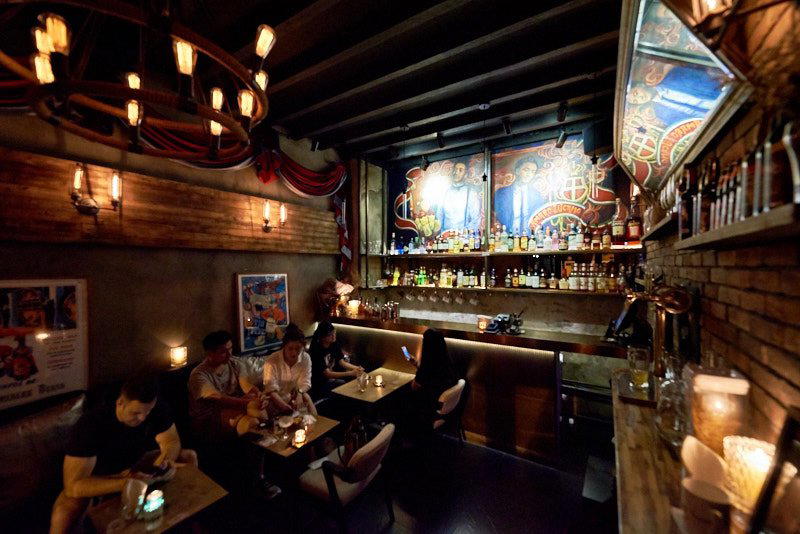
Casual cinema-adjacent setting with a renovated, film-lover atmosphere and conversational noise level.