







2 Michelin Stars · La Liste Top Restaurants · Star Wine List
Our verdict
Two Michelin stars and a Black Pearl 2 Diamond ranking place 8 1/2 Otto e Mezzo Bombana among Shanghai's most credentialed Italian tables. Set in the historic Yuanmingyuan Road corridor of the Bund district, the restaurant holds a position within the city's premium European dining tier that few Italian addresses on the mainland match. Ranked #146 in Opinionated About Dining's Asia list for 2025, it draws a clientele that treats pasta as seriously as it treats wine.

Pearl is the En Primeur Club membership app, where members save venues, book tables and use the concierge.
The menu
What to order
- Truffle tagliatelle
- New Zealand scampi
- Wagyu Beef Tenderloin Carpaccio
Where the Bund Meets Northern Italian Craft
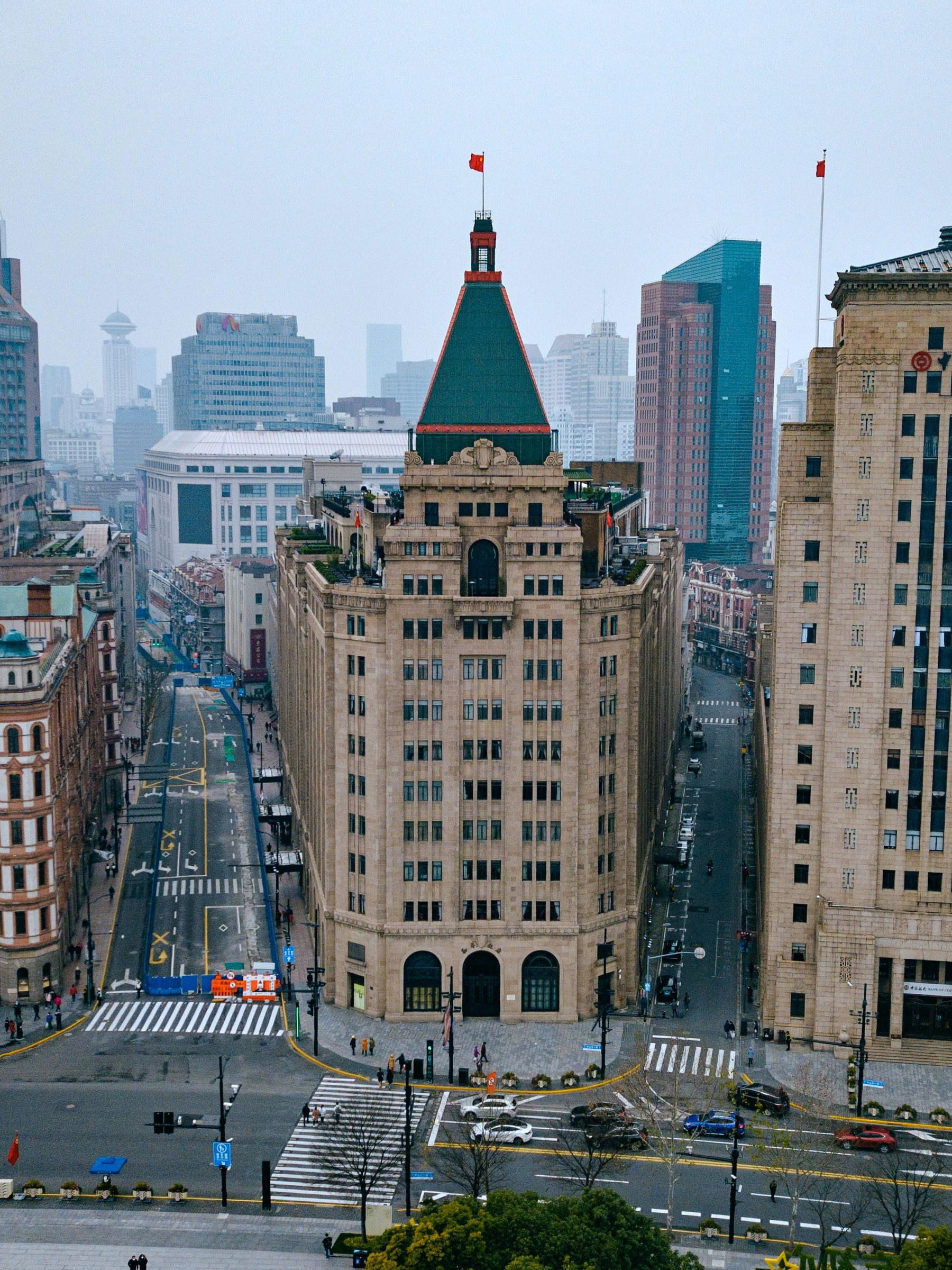
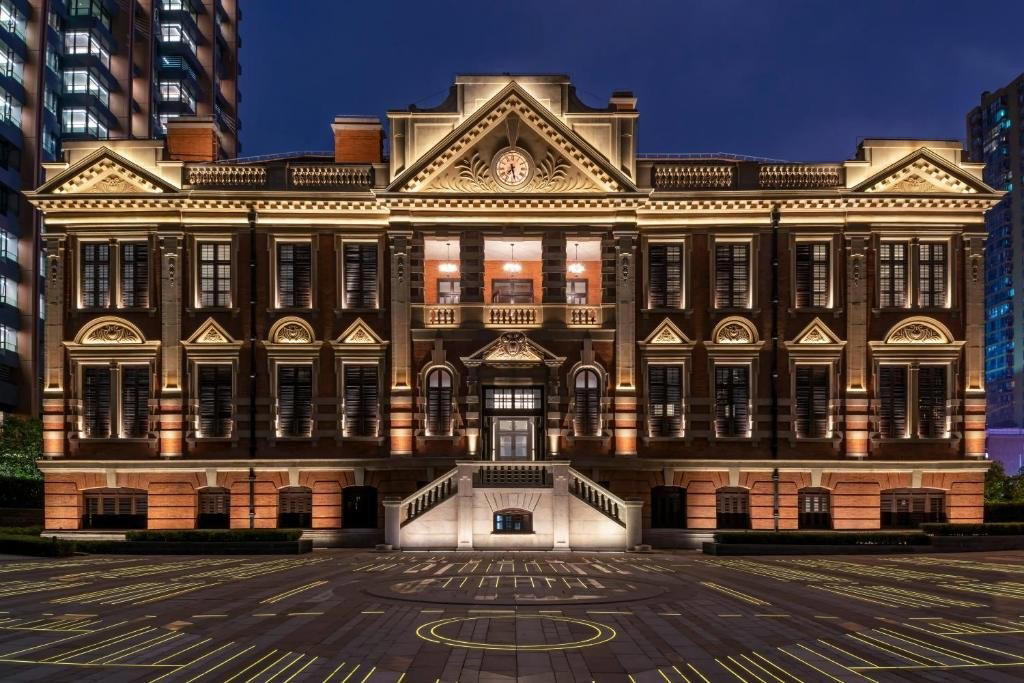
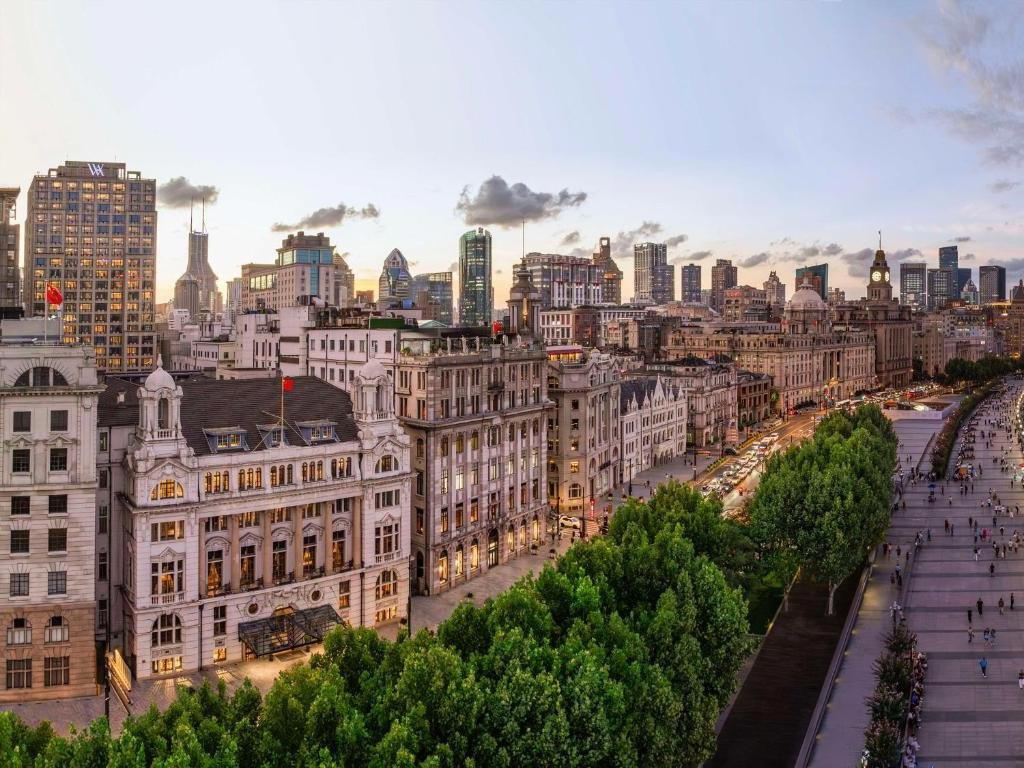
Yuanmingyuan Road runs quietly behind the more photographed stretches of the Bund, its early-twentieth-century colonial architecture giving it a register of composed restraint rather than spectacle. The building that houses 8 1/2 Otto e Mezzo Bombana, the Xiejin Building, sits within this corridor with the kind of physical authority that older Shanghai stone tends to project: solid, unhurried, positioned as though the city arranged itself around it rather than the other way around. Stepping inside from the street, the transition is abrupt in the leading possible way. The room is formal without being cold, the light calibrated rather than dramatic, the dining spaces proportioned for conversation rather than performance. This is the physical grammar of a serious European restaurant transplanted to mainland China's most internationally ambitious dining city.
Shanghai's premium European dining tier has expanded considerably over the past decade, but Italian cuisine occupies a specific and contested position within it. French addresses have historically anchored the upper bracket; Italian ones have had to argue harder for the same price point and the same level of diner seriousness. 8 1/2 Otto e Mezzo Bombana holds two Michelin stars as of both 2024 and 2025, a Black Pearl 2 Diamond rating for 2025, and an Opinionated About Dining Asia ranking of #146 for 2025. Those credentials together place it firmly inside the city's upper European dining bracket and in direct conversation with the Hong Kong original, which itself helped establish that Italian cuisine could command the same critical attention as French in an Asian metropolitan context. The 8 1/2 Otto e Mezzo Bombana in Hong Kong remains the reference point for understanding the Shanghai address: both operate within the same philosophy of sourcing premium Italian ingredients and applying classical Italian technique, but the Shanghai room has developed its own identity within that framework.
The Pasta Argument for This Tier
In Italian fine dining, pasta is where a kitchen's position on the craft-versus-luxury spectrum becomes most legible. The ingredient cost in a handmade pasta course rarely justifies the price on its own; what justifies it is the accumulated knowledge embedded in the technique, dough hydration, resting time, shape logic, the relationship between a specific pasta form and the sauce architecture built around it. At restaurants operating in this price tier across Asia, pasta often functions as the clearest signal of whether a kitchen is genuinely fluent in Italian regional tradition or simply applying Italian aesthetics to a luxury-dining format.
Northern Italian pasta traditions, the egg-rich doughs of Emilia-Romagna, the stuffed formats of Lombardy, the precision cutting that distinguishes a tagliatelle from a pappardelle at the level of millimeters, demand the kind of institutional knowledge that takes years to build and is difficult to sustain far from the source. In Shanghai, where the supply chain for Italian ingredients has improved markedly but where the culinary ecosystem for that knowledge is thinner than in European cities, maintaining that standard requires deliberate staffing and sourcing decisions. The kitchen at 8 1/2 Otto e Mezzo Bombana operates under chef Nicoló Rotella (La Liste's 2026 assessment credits him specifically), with Umberto Bombana's oversight providing the lineage credential. Bombana's reputation, built originally in Hong Kong and recognised across the region's Italian fine-dining community, gives the Shanghai address a credibility anchor that most standalone Italian openings in the city cannot match.
For diners who use pasta as their calibration point when assessing an Italian restaurant, and at this price range, that is a reasonable approach, the question is whether the kitchen's handmade work reflects genuine regional specificity or a generalised luxury-Italian idiom. The consistent Michelin recognition across two consecutive years suggests the former. Among Italian addresses in Shanghai, that level of sustained critical validation is rare. Scarpetta operates at a lower price point (¥¥¥ versus ¥¥¥¥ here) and draws a different kind of crowd; Mercato sits in an accessible casual-Italian register. Arva and Cellar to Table each occupy distinct niches within the broader Italian-adjacent or European-focused spectrum. Otto e Mezzo operates in a tier above them by price, award recognition, and the expectations those signals create.
For comparable Italian fine dining at this level across Asia, the reference set is narrow. cenci in Kyoto approaches Italian technique from a different angle, integrating Japanese seasonality into its framework. The Shanghai address takes a more classically rooted approach, Italian cooking on Italian terms, adjusted for a Shanghai context rather than hybridised into it.
Shanghai's Fine Dining Position in the Regional Picture
Shanghai sits alongside Hong Kong, Tokyo, and increasingly Beijing and Shenzhen as one of the cities where Asia's premium restaurant tier is actively being defined. The city's fine dining scene has developed both depth and range in recent years, with strong representation across Chinese regional cuisines as well as European and Japanese formats. The comparison set for a two-Michelin-star Italian address in Shanghai is genuinely regional rather than local: diners who book here may also hold reservations at Xin Rong Ji in Beijing, Chef Tam's Seasons in Macau, or Imperial Treasure Fine Chinese Cuisine in Guangzhou. The clientele for this tier moves across the region's premium dining circuit rather than treating any single city as a closed ecosystem.
Within Shanghai specifically, the Bund corridor and its adjacent streets continue to anchor the city's highest-profile European dining. The Yuanmingyuan Road address places Otto e Mezzo within comfortable reach of the waterfront hotels and the major corporate hospitality infrastructure of Huangpu district, which explains part of its clientele profile. This is not a neighbourhood restaurant that rewards wandering discovery; it is a destination address with a specific and consistent audience, business entertaining, celebration dinners, and the kind of visiting food-focused traveller who books several months ahead and treats Shanghai as one stop on a regional itinerary. For more on where this address fits within Shanghai's broader dining geography, see our full Shanghai restaurants guide.
Planning a Visit
At the ¥¥¥¥ price point, a meal here sits in the upper bracket of Shanghai dining expenditure, comparable to the premium Chinese fine dining addresses that populate the city's Michelin and Black Pearl lists. Advance booking is advisable at any two-star address in Shanghai, particularly for Friday and Saturday evening services; the Bund district's density of premium restaurants means that last-minute availability at this level is limited. The address on Yuanmingyuan Road is accessible from the major Bund-area hotels on foot, and Huangpu is well-served by the city's metro system. For accommodation planning around this area of Shanghai, our full Shanghai hotels guide maps the district's options in detail. Those building a broader Shanghai itinerary around the premium dining circuit can also consult our Shanghai bars guide, our Shanghai experiences guide, and our Shanghai wineries guide for complementary planning across the city. The Frasca listing also provides a useful contrast point for those comparing premium Italian addresses across different contexts.
Google's average across 602 reviews is notably consistent for a two-star address, where the gap between expectation and experience often produces polarised feedback. That consistency, alongside sustained Michelin recognition, suggests a kitchen and front-of-house team operating within a stable and well-rehearsed format rather than one dependent on a single chef's presence or a single season's inspiration. For a city that has seen rapid turnover in its premium European dining tier, that stability carries its own editorial weight. Similarly ambitious addresses in China's dining circuit, Xin Rong Ji in Chengdu, for instance, demonstrate how consistency of execution across multiple sites signals institutional seriousness. Otto e Mezzo makes the same argument, in Italian, from a building on Yuanmingyuan Road.
Frequently asked questions
What should I budget for a meal at 8 1/2 Otto e Mezzo Bombana (Shanghai)?
Pricing at 8 1/2 Otto e Mezzo Bombana (Shanghai) is listed as ¥¥¥¥.
Cuisine Context
| Venue | Cuisine | Price | Awards | Notes |
|---|---|---|---|---|
| 8 1/2 Otto e Mezzo Bombana (Shanghai)This venue (the venue you are viewing) | Modern Italian Fine Dining | $150–200 | 2 Michelin Stars · La Liste Top Restaurants | Not listed |
| Fu He Hui | Modern Seasonal Vegetarian Fine Dining | $200–300 | 2 Michelin Stars · World's 50 Best #11 | Vegetarian |
| Ming Court | Cantonese with Shanghainese Influences | $30–50 | 1 Michelin Star · Black Pearl 1 Diamond | Cantonese |
| Polux | French Bistro | $30–50 | Michelin Bib Gourmand | Not listed |
| Royal China Club | Cantonese Dim Sum | $100–150 | Michelin Plate · The Good Food Guide GFG Good | Not listed |
| Scarpetta | Refined Italian Pasta & Pizza | $50–100 | Michelin Plate · Wine Spectator Best of Award of Excellence | Not listed |
Recognition history
Dated appearances from independent guides and award organizations, with the underlying list record or original source where available.
Michelin 2 Stars
Michelin
La Liste Top Restaurants
La Liste
Star Wine List
Star Wine List
Black Pearl 2 Diamond
Black Pearl
Gambero Rosso 2 Forchette
Gambero Rosso
Full recognition history (12 entries)
Opinionated About Dining Top Restaurants in Asia Ranked #147
Opinionated About Dining
Black Pearl 2 Diamond
Black Pearl
Opinionated About Dining Top Restaurants in Asia Ranked #146
Opinionated About Dining
The Best Chef One Knife
The Best Chef
The Best Chef Two Knives
The Best Chef
Michelin 2 Stars
Michelin
World's Best Wine Lists Awards WBWL 3-Star
World's Best Wine Lists Awards
Continue exploring
More in Shanghai
Restaurants in Shanghai
All restaurants in Shanghai →
Bars in Shanghai
All bars in Shanghai →
8 1/2 Otto e Mezzo Bombana (Shanghai)
The wine
- Wine program
- Deep wine list
- Extensive wine list
- Sommelier-led
Details
- Elegant
- Sophisticated
- Intimate
- Well Known
- Date Night
- Special Occasion
- Business Dinner
- Open Kitchen
- Wine Cellar
- Panoramic View
- Hotel Restaurant
- Extensive Wine List
- Sommelier Led
- Skyline
- Tasting Menu
- A La Carte
- Set Menu
- Wine
- Vegetarian Friendly
- Vegan Options
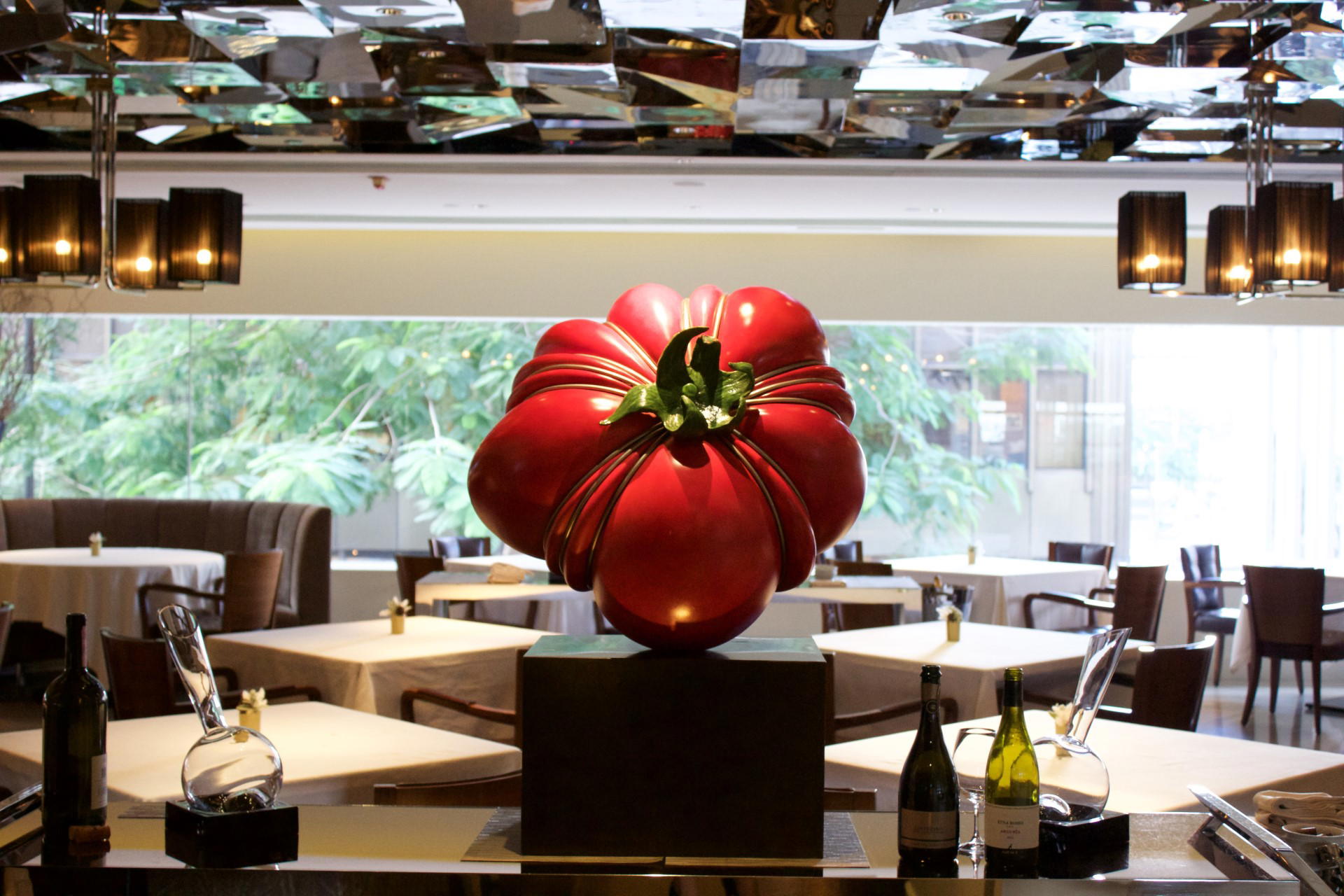
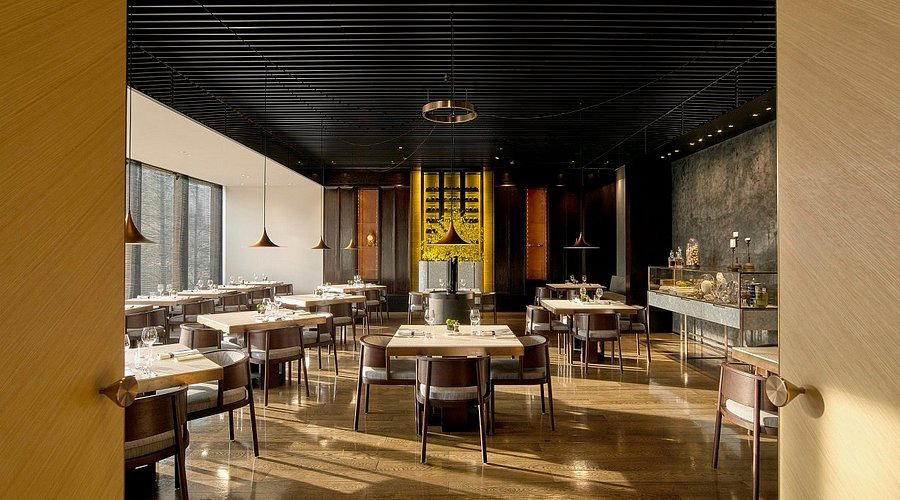
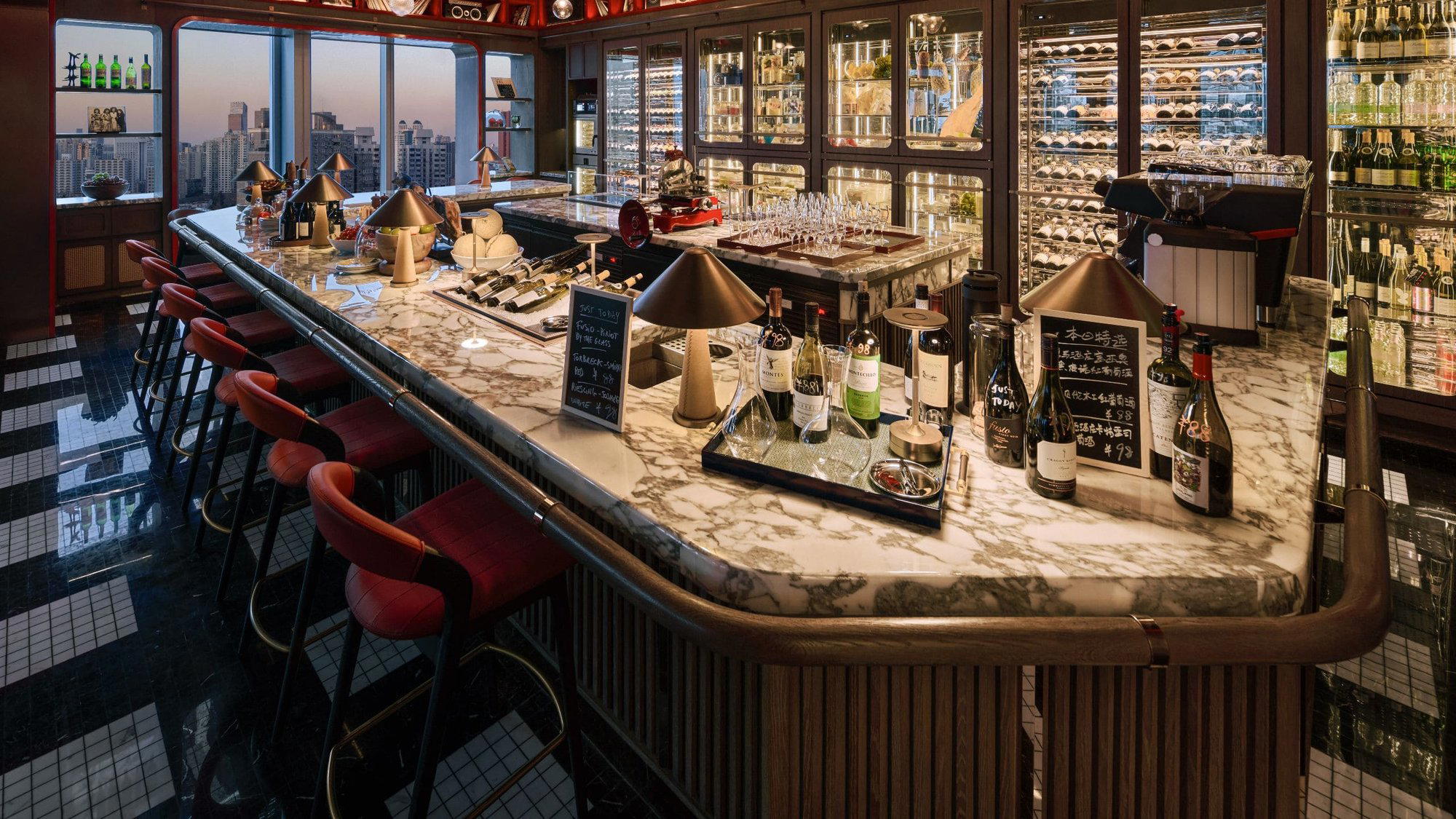
Classy, stylish interior with minimalist chic design in dark tones and sleek gold lines, elegant main dining room with balcony views, creating an atmosphere of understated luxury and sophistication.