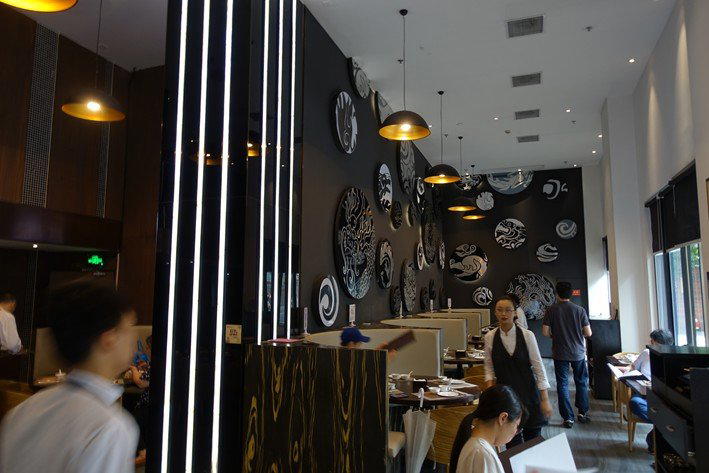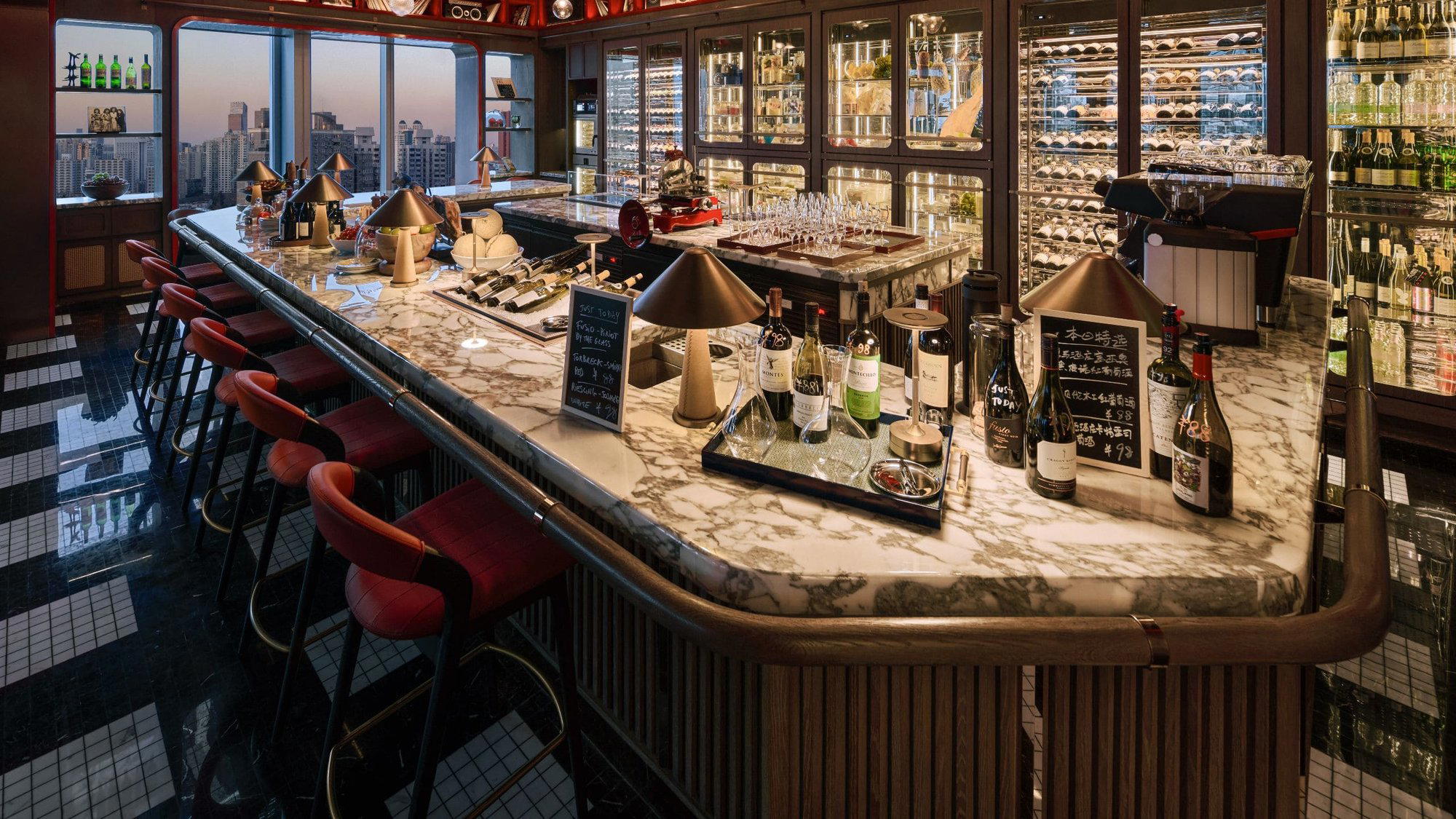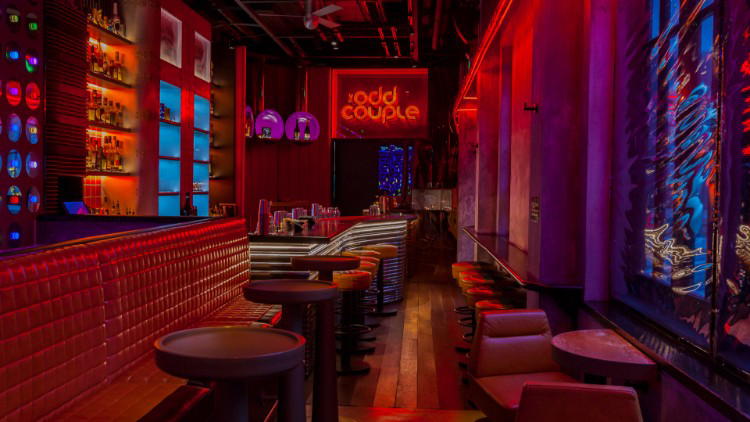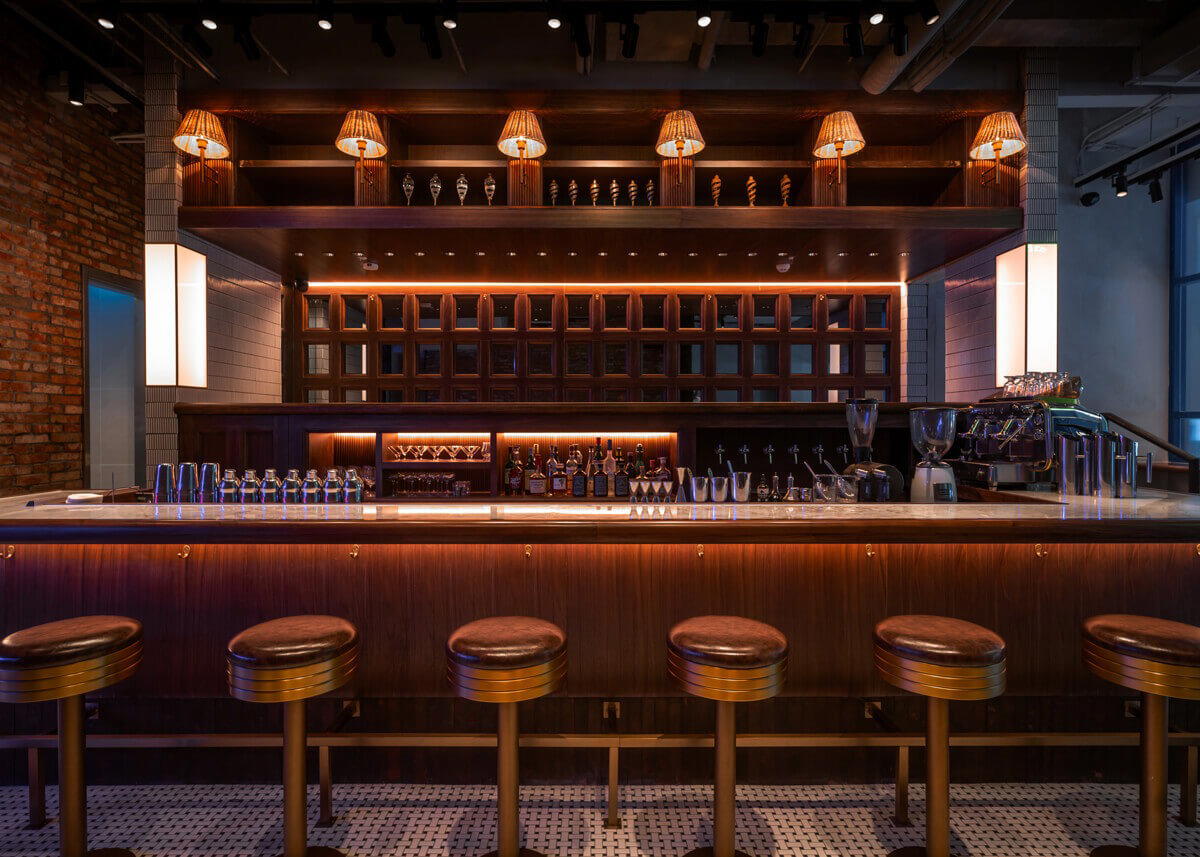
Gambero Rosso 3 Spicchi
Our verdict
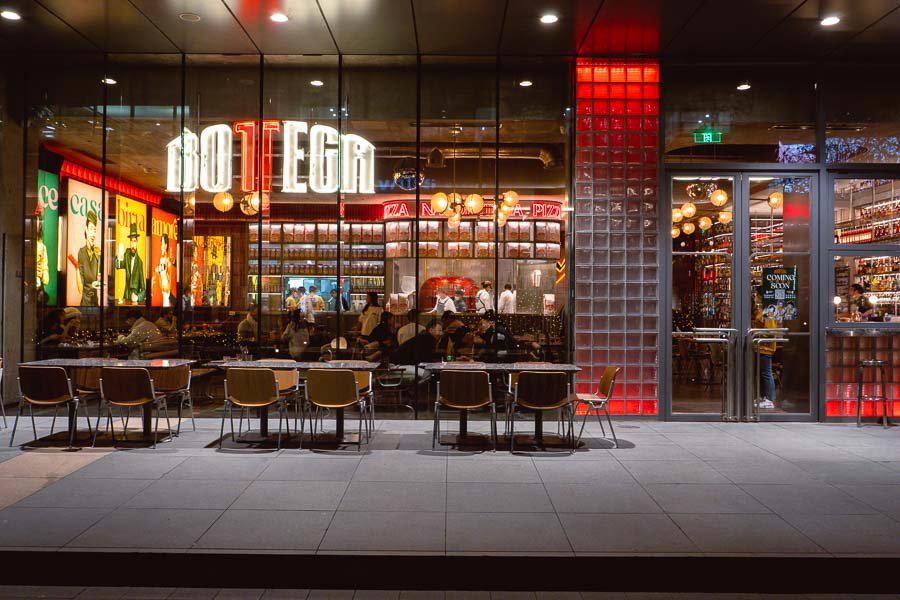
On Madang Road in Huangpu, Bottega occupies a position in Shanghai's Italian dining tier where European culinary tradition meets one of the world's most competitive restaurant cities. The name signals a workshop ethos common to serious Italian kitchens, and the Xintiandi-adjacent address places it in a neighbourhood where international dining formats have long found a receptive, well-travelled audience.

Pearl is the En Primeur Club membership app, where members save venues, book tables and use the concierge.
The menu
What to order
- Margherita pizza
- Pizza with mortadella and pistachio
- Pasta alla genovese
- Cotto e Funghi e Tartufo
Madang Road and the Italian Kitchen in Shanghai
Walking along Madang Road in Huangpu, you pass the kind of layered neighbourhood that defines Shanghai's approach to cosmopolitan dining: shikumen lane houses pressed against contemporary retail, the Xintiandi complex drawing a crowd that moves between Shanghainese tradition and imported formats without much friction. It is in this context that Bottega sits, a name that signals something specific in Italian culinary culture. Bottega translates as workshop or artisan's studio, and the word carries weight in Italian food tradition. It implies craft over spectacle, production over presentation, a kitchen that values the process of making things from base ingredients. In a city as trend-sensitive as Shanghai, that vocabulary is either a genuine commitment or a positioning choice; the address on Madang Road, close enough to Xintiandi to catch its foot traffic but not inside the complex itself, suggests a restaurant that benefits from proximity to the area's international clientele without being entirely defined by it.
Italian Dining in Shanghai: Where Bottega Sits
Shanghai's Italian restaurant tier has stratified considerably over the past decade. At the upper end, 8 1/2 Otto e Mezzo Bombana holds three Michelin stars and operates at a price point that places it in conversation with leading Italian addresses in Hong Kong and Tokyo rather than with mid-market trattoria formats. Below that, a broader cohort of Italian restaurants serves the city's expatriate and local professional populations, ranging from casual pasta bars to more considered osteria-style rooms. The bottega concept, as a category, tends to cluster in the middle of that range: ingredient-forward, often built around house-made components like pasta, charcuterie, or preserved goods, and positioning itself against the more theatrical end of Italian fine dining. Globally, the most respected bottega-format restaurants, from those in Bologna to smaller workshop kitchens in New York and San Francisco, compete on the quality of their primary ingredients and the discipline of their technique rather than on tasting-menu architecture or room design.
For reference, the Italian dining tradition in China's major cities has developed its own logic. In Beijing, European fine dining addresses tend to skew formal and expense-account-oriented. In Shanghai, there is more tolerance for a relaxed, wine-centred format, partly because the city's expatriate history created an early audience for Italian trattoria culture, and partly because Xintiandi and its surrounds have always attracted a demographic that eats internationally without ceremony. This is a relevant distinction for understanding what a well-positioned Italian restaurant in Huangpu needs to do differently from its counterparts in other Chinese cities.
The Cultural Weight of Italian Craft Cooking
The bottega tradition in Italian cooking is not a marketing construct; it has deep roots in regional food production. In Emilia-Romagna, the bottega is where Parmigiano-Reggiano wheels are aged and where fresh pasta is cut to order. In Tuscany, it is where salumi is cured in temperature-controlled cellars. The common thread is time and specificity: a bottega produces things that require sustained attention and cannot easily be replicated by a kitchen that does not prioritise the same ingredient sourcing and production methods. When that vocabulary travels to a city like Shanghai, it arrives with a set of implicit promises. A restaurant operating under that name is, whether intentionally or not, inviting comparison with the tradition it references.
Shanghai's food culture has become sophisticated enough to read that invitation clearly. The city's dining audience, particularly in Huangpu, now includes a significant cohort of Chinese diners who have eaten extensively in Italy, as well as long-term expatriates who maintain strong reference points for regional Italian cooking. This creates a more demanding environment than existed even five years ago. A pasta section, a wine list with Italian regional depth, and a sourcing approach that can be articulated to guests are no longer differentiators in this city; they are baseline expectations. What separates well-regarded Italian addresses from undifferentiated ones in Shanghai today is the coherence of the regional identity and the discipline of the execution.
For context on how other restaurant traditions are maintaining that discipline in the city, the Cantonese cooking at 102 House and the vegetarian precision at Fu He Hui both demonstrate how Shanghai's higher-end market rewards specificity and craft over general ambition. The innovative European format at Taian Table and the Taizhou tradition held at Xin Rong Ji similarly confirm that the city's serious dining tier now expects a legible point of view, not just competent execution of a familiar format.
The Xintiandi Adjacency and What It Means for the Guest
Huangpu's dining geography divides broadly between the Tourist-facing high-traffic zone of Xintiandi itself and the quieter residential-commercial mix of surrounding streets like Madang Road. Restaurants on Madang Road tend to attract a slightly more local, repeat-visit clientele than those inside the Xintiandi complex, where tourist and short-stay traffic is higher. This distinction matters for a restaurant like Bottega, because the bottega format rewards guests who return: the value of house-made products, a thoughtfully assembled Italian wine list, and ingredient-sourcing that changes with availability is harder to appreciate on a single visit than to understand over time.
Comparable Italian formats in other major Asian cities tend to confirm this pattern. The strongest Italian workshop-style restaurants in Tokyo's Minami-Aoyama and Hong Kong's Central are disproportionately driven by regular guests who track seasonal changes and build relationships with the room. A Madang Road address, with its mix of local residents and internationally-oriented professionals, provides a more hospitable environment for that kind of loyal audience than a higher-visibility tourist corridor would.
Planning Your Visit
Bottega's address on Madang Road places it within easy reach of the Xintiandi metro station on Line 10 and Line 13, making it direct to reach from most central Shanghai districts without a taxi. The Huangpu location puts it close to a concentration of other serious dining options, which makes the area worth spending an evening in rather than visiting in isolation. For those building a broader itinerary across Chinese cities, the peer context extends well: Xin Rong Ji in Beijing, Ru Yuan in Hangzhou, Chef Tam's Seasons in Macau, and Xin Rong Ji in Chengdu each represent the higher end of regional Chinese cooking traditions in cities accessible from Shanghai. Further afield in the region, Imperial Treasure Fine Chinese Cuisine in Guangzhou, Dai Yuet Heen in Nanjing, Fleurs Et Festin in Xiamen, Shang Palace in Yangzhou, Wenru No.9 in Fuzhou, and Pingjiangsong in Suzhou each offer different registers of serious regional dining. For those comparing the Italian format internationally, Le Bernardin in New York City and Lazy Bear in San Francisco illustrate how workshop-ethos restaurants have operated at the high end of the American market. Our full Shanghai restaurants guide covers the wider city in more depth for those building a multi-day dining plan.
Frequently asked questions
What part of town is Bottega in?
Bottega is located at î6FCF+4V4, Madang Rd, æ°å¤©å° Huangpu, Shanghai, China, 200021, Shanghai.
How does Bottega on Madang Road differ from other Italian restaurants in Shanghai's Huangpu district?
Bottega's address on Madang Road places it in the quieter residential-commercial stretch of Huangpu rather than the high-traffic Xintiandi core, a distinction that tends to attract a neighbourhood-oriented crowd over tourist-facing footfall. The venue's name references the Italian bottega tradition, which signals a craft-production approach rather than the white-tablecloth formality found at Shanghai's Michelin-recognised Italian addresses. For a city where Italian dining now spans everything from casual trattorie to three-starred counters, Bottega occupies a specific register that rewards guests looking for something outside the prestige circuit.
What's the signature dish at Bottega?
Given the venue's name and its grounding in the bottega tradition, most closely associated with Emilia-Romagna's artisan food production, house-made pasta and cured preparations would be the logical focus. Visit the restaurant directly on Madang Road in Huangpu, Shanghai, for the current menu.
What's the best way to book Bottega?
Bottega is located on Madang Road in Huangpu, Shanghai, close to Xintiandi metro station on Lines 10 and 13.
What's the signature at Bottega?
The venue's identity is anchored in the bottega concept, the Italian artisan workshop tradition tied to regional craft food production rather than formal fine dining. On Madang Road in Shanghai's Huangpu district, that translates to a positioning distinct from Michelin-tracked Italian addresses like 8½ Otto e Mezzo Bombana. Confirm current offerings directly with the restaurant.
At-a-Glance Comparison
Comparable venues nearby, for context on price, style, and recognition.
| Venue | Cuisine | Price | Awards | Notes |
|---|---|---|---|---|
| BottegaThis venue (the venue you are viewing) | Authentic Neapolitan Pizza & Italian Classics | $50–100 | Gambero Rosso 3 Spicchi | Not listed |
| Bella Vita | Upscale Italian Bistro in a Villa with Rooftop Terrace | $50–100 | Gambero Rosso 1 Forchetta | Xuhui |
| Il Ristorants | Contemporary Italian Fine Dining | $150–200 | Not listed | Hongkou |
| Mingge | Modern Cantonese | $50–100 | Not listed | Xintiandi |
| Le Saleya | French Bistro | $30–50 | Star Wine List | Da Pu Qiao |
| Rong Ji 95 | Modern Seafood Bistro | $50–100 | Star Wine List | Hongkou |
Recognition history
Dated appearances from independent guides and award organizations, with the underlying list record or original source where available.
Gambero Rosso 3 Spicchi
Gambero Rosso