Samcheongdong Sujebi

Michelin Bib Gourmand
Our verdict
Samcheongdong Sujebi holds consecutive Michelin Bib Gourmand awards for 2024 and 2025, placing it among Seoul's most recognised value-tier Korean restaurants. Located in Jongno-gu's gallery-lined Samcheong-dong neighbourhood, it specialises in sujebi, the hand-torn wheat noodle soup that anchors Korean home cooking. For regulars, it represents a deliberate counterpoint to the neighbourhood's creeping upmarket drift.

Pearl is the En Primeur Club membership app, where members save venues, book tables and use the concierge.
The menu
What to order
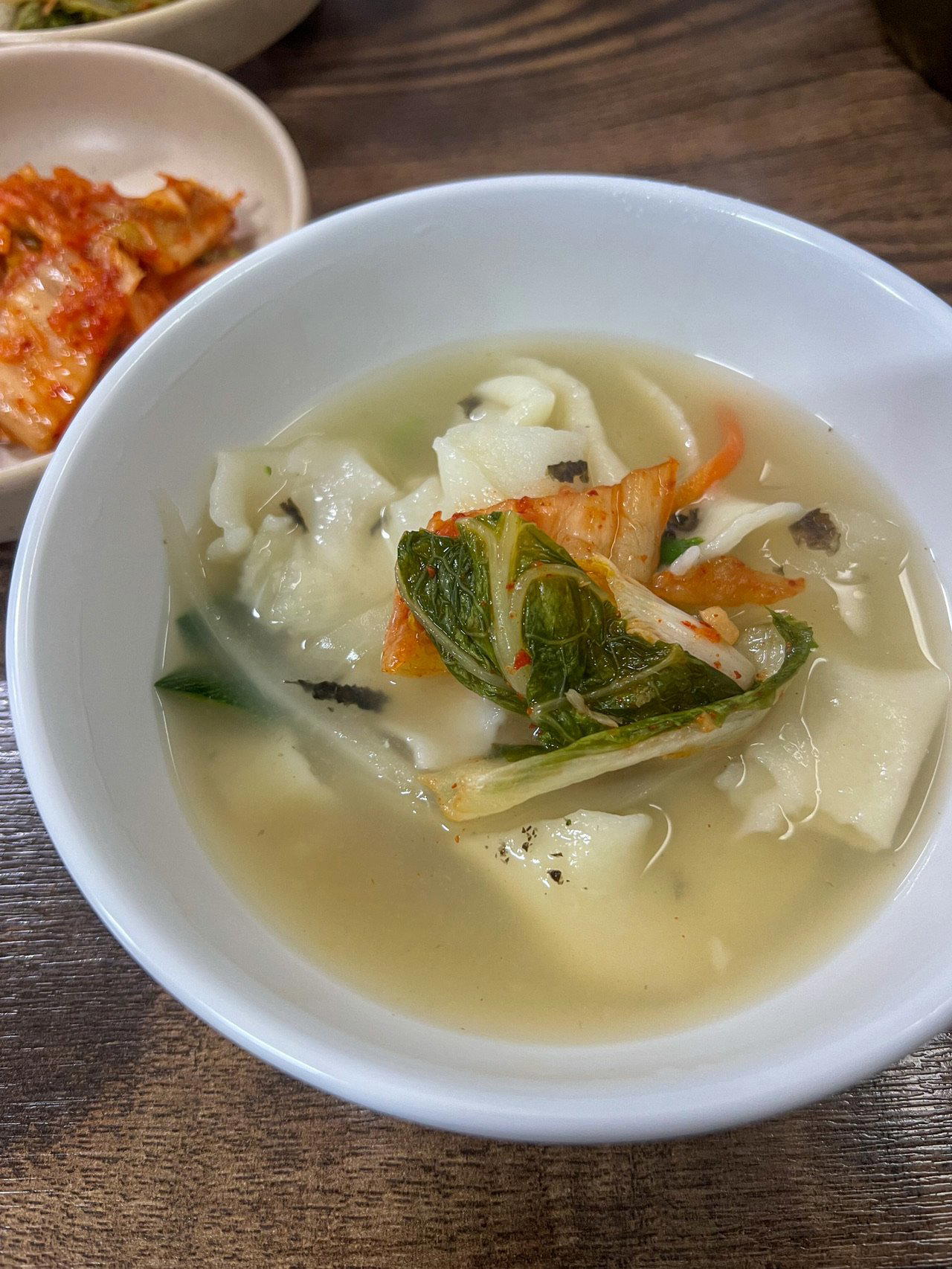
- Sujebi
- Potato Pancake
The Street That Sujebi Holds Together
Samcheong-dong is a neighbourhood in transition. The stretch of Samcheong-ro between Gyeongbokgung Palace and the Constitutional Court has, over the past decade, acquired an increasing density of concept boutiques, contemporary galleries, and cafés priced for a photographing audience. Against that drift, the presence of a sujebi specialist holding a Michelin Bib Gourmand, two consecutive years, 2024 and 2025, reads as something more than a food story. It is a statement about what the neighbourhood still values beneath the surface renovation.
Sujebi itself is one of Korea's most plainly honest dishes: wheat flour dough torn by hand directly into a simmering anchovy or kelp broth. No knife cuts, no extruder, no standardised shape. The irregularity is the point. Each piece absorbs the broth differently, creating a bowl that is simultaneously consistent and unrepeatable. For most Koreans, it is food associated with a grandmother's kitchen or a cold afternoon, the kind of dish that carries meaning precisely because it requires no occasion.
In that context, Samcheongdong Sujebi at 101-1 Samcheong-ro occupies a specific cultural position: it keeps a working-meal tradition alive in a corridor that could easily have abandoned it for something more legible to the international visitor.
What Keeps People Coming Back
The Bib Gourmand designation, awarded by Michelin for quality at a price point that falls below the starred tier, draws a particular kind of repeat visitor: someone who has already done the high-end Korean tasting menus at venues like Mingles or Jungsik, and who arrives at Samcheongdong Sujebi specifically for the contrast. The ₩ price range positions it at the entry level of Seoul dining spend, which in a city of this culinary range means it competes on something other than luxury signals.
Regulars here are not chasing novelty.
The dish that anchors the return visit is the sujebi itself, ordered plainly and eaten while it is hot. In Korean wheat-noodle culture, the broth temperature and the dough's texture in the first three minutes after serving represent the full argument for eating in rather than waiting for takeout. This is food that does not travel. Regulars understand that, which is why the room fills with people who have made a specific trip rather than stumbling in.
Sujebi in Seoul's Broader Food Register
Seoul's dining spectrum runs from street-level pojangmacha to multi-course tasting formats at Kwonsooksoo, Soigné, and alla prima. The Bib Gourmand tier sits between those poles, recognised by the same guide that awards stars to Gaon but assessed on a different axis entirely. What Michelin is saying with a consecutive Bib Gourmand is not that the food approaches starred ambition but that within its register, it is executing at a level worth going out of your way for.
That framing matters for understanding where sujebi fits in Korean culinary identity. Unlike hansik tasting formats that foreground heritage through elaboration and presentation, sujebi's prestige is entirely about restraint and execution. The broth has to be clean. The dough has to be pulled to the right thickness without uniformity becoming mechanical. The seasoning cannot mask either element. There is no garnish to redirect attention. In a city where the Michelin guide has consistently rewarded Korean restaurants that perform tradition at high price points, see the starred entries at 권숙수 Kwon Sook Soo in Gangnam-gu, the Bib Gourmand recognition of a sujebi specialist carries a different kind of editorial weight.
For comparison with the regional Korean dining scene, the temple food traditions recognised at venues like Baegyangsa Temple in Jangseong-gun or the seafood-led simplicity at Mori in Busan point toward the same principle: in Korean cooking, the highest praise for a simple dish is that nothing was added unnecessarily.
The Samcheong-dong Context
The neighbourhood geography matters to how regulars use the restaurant. Samcheong-dong sits above Gyeongbokgung Palace in Jongno-gu, connected southward to Bukchon Hanok Village and northward toward the lower slopes of Bugaksan. It is a walkable area with genuine residential density alongside its cultural institutions, which means lunch trade draws from office workers and residents, not only the tourist circuit from the palace gates.
That mixed clientele shapes the room's rhythm in ways that distinguish it from the international-facing restaurants further south in Gangnam or the tasting-menu circuit. A sujebi lunch here sits alongside people who ate the same bowl last Tuesday. That is a different social register from the one that surrounds a debut visit to an innovative Korean tasting format at somewhere like alla prima. Both are valid Seoul dining experiences; they are simply not equivalent ones.
For visitors building a Seoul itinerary that includes higher-end Korean dining at venues such as Mingles, a Samcheong-dong sujebi lunch provides useful calibration: it shows what Korean cooking looks like when the ambition is entirely directed at a single bowl rather than a sequence of courses. See our full Seoul restaurants guide for the broader picture, alongside our Seoul hotels guide, bars guide, experiences guide, and wineries guide.
Planning Your Visit
| Venue | Cuisine | Price Range | Michelin Recognition | Format |
|---|---|---|---|---|
| Samcheongdong Sujebi | Sujebi (Korean wheat noodle) | ₩ | Bib Gourmand 2024, 2025 | Casual lunch/dinner |
| L'Amitié | French | ₩₩₩ | – | Sit-down, mid-range |
| 7th Door | Korean, Contemporary | ₩₩₩₩ | – | Tasting menu |
| Onjium | Korean | ₩₩₩₩ | – | Tasting menu |
| Zero Complex | Korean-French, Innovative | ₩₩₩₩ | – | Tasting menu |
Address: 101-1 Samcheong-ro, Jongno-gu, Seoul, 03049. Price range: ₩ (entry-level Seoul dining spend). Michelin Bib Gourmand: 2024 and 2025. Hours and booking method are not available through this listing; confirm directly before visiting. The venue is within walking distance of Gyeongbokgung Palace station on Seoul Metro Line 3.
Frequently asked questions
Is Samcheongdong Sujebi expensive?
Pricing at Samcheongdong Sujebi is listed as ₩.
What cuisine category does Samcheongdong Sujebi fall under?
Does Samcheongdong Sujebi have a Michelin star or similar recognition?
Samcheongdong Sujebi has received recognition including: Michelin Bib Gourmand (2025); Michelin Bib Gourmand (2024).
What do regulars order at Samcheongdong Sujebi?
The restaurant's name is also its core offering: sujebi, the Korean hand-torn wheat dough soup that has anchored home kitchens and market stalls for generations. The Michelin Bib Gourmand recognition, given in both 2024 and 2025 specifically for quality at an accessible price point (the menu sits in the ₩ tier), signals the sujebi itself is the reason to visit rather than a supporting dish. Ordering anything else first would miss the point of coming to Samcheong-ro.
What's the address for Samcheongdong Sujebi?
Samcheongdong Sujebi is located at 101-1 Samcheong-ro, Jongno-gu, Seoul, 03049, South Korea, Seoul.
Who is the chef connected to Samcheongdong Sujebi?
The chef associated with Samcheongdong Sujebi is Tyler Peek.
Budget Reality Check
| Venue | Cuisine | Price | Awards | Notes |
|---|---|---|---|---|
| Samcheongdong SujebiThis venue (the venue you are viewing) | Traditional Korean Sujebi Noodle Soup | $10–20 | Michelin Bib Gourmand | Not listed |
| 7th Door | Modern Korean Fermentation Fine Dining | $100–150 | 1 Michelin Star · World's 50 Best #49 | Korean, Contemporary |
| Solbam | Contemporary Neo-Classical Korean | $200–300 | 1 Michelin Star · World's 50 Best #55 | Contemporary |
| Onjium | Modern Korean Royal Court Cuisine | Not listed | 1 Michelin Star · World's 50 Best #14 | Korean |
| L'Amitié | Classic French Fine Dining | $100–150 | 1 Michelin Star · La Liste Top Restaurants | French |
| Zero Complex | Modern French Neo-Bistro | $100–150 | 1 Michelin Star · La Liste Top Restaurants | Korean-French, Innovative |
Recognition history
Dated appearances from independent guides and award organizations, with the underlying list record or original source where available.
Michelin Bib Gourmand
Michelin
Full recognition history (3 entries)
Michelin Bib Gourmand
Michelin
Michelin Bib Gourmand
Michelin