Our verdict
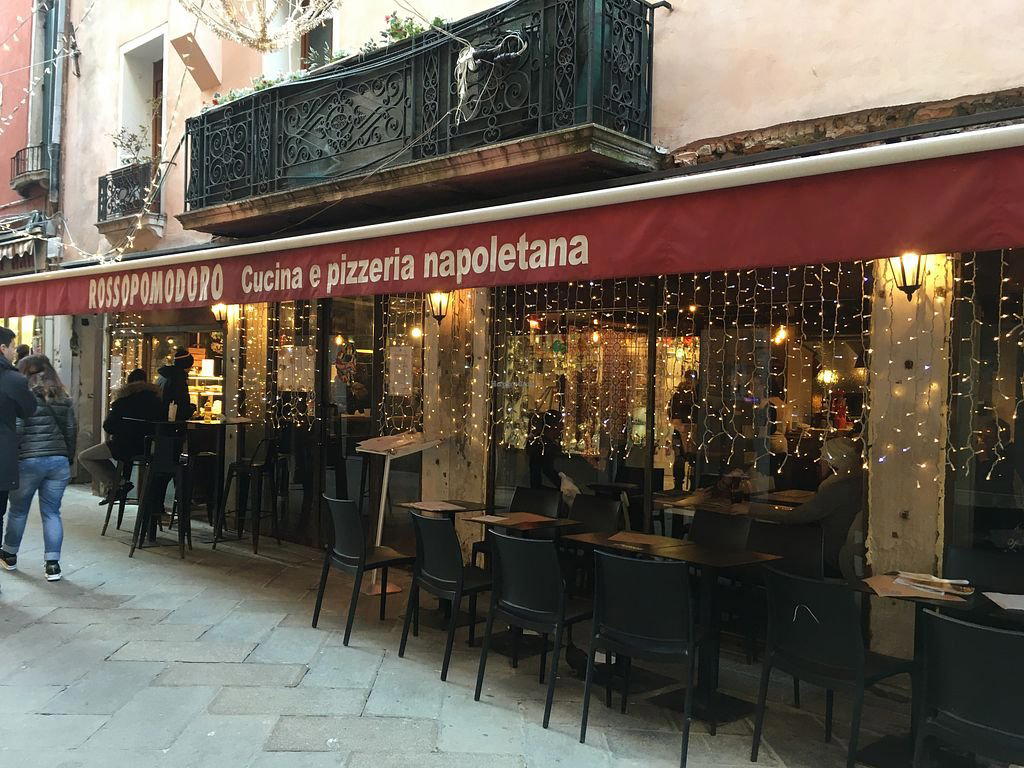
Rossopomodoro sits on Calle Larga S. Marco, one of the few addresses in Venice's dense tourist corridor where the draw is recognisably Neapolitan rather than generically Italian. The chain's Venice outpost positions itself as a reliable, informal anchor in a neighbourhood dominated by either high-end dining rooms or indifferent tourist traps, a place regulars return to precisely because it doesn't try to be everything.

Pearl is the En Primeur Club membership app, where members save venues, book tables and use the concierge.
The menu
What to order
- Paccheri alla Nerano
- Spaghetti pomodoro e basilico
- Pizza Margherita
Pizza in a City That Doesn't Grow Wheat
Venice has a complicated relationship with pizza. The city's culinary identity is built on lagoon fish, risotto di gò, and cicheti served at cramped bacari, not on wood-fired ovens or Neapolitan dough traditions. That structural absence means the few dedicated pizza addresses in the centro storico occupy a specific niche: they serve a different kind of visitor, or the same visitor on a different kind of evening. Rossopomodoro, on Calle Larga S. Marco, sits in that niche with more deliberateness than most. The brand is rooted in Naples, part of a group that has built its identity around sourcing from Campanian producers and adhering to the Associazione Verace Pizza Napoletana's standards, and that positioning carries into this Venice location.
The address itself explains part of the appeal to those who come back. Calle Larga S. Marco is one of the wider pedestrian arteries in the San Marco sestiere, which means it moves differently from the narrow calli nearby, less compressed, with more light. Approaching the entrance, you're in a zone that is simultaneously one of Venice's most visited and, paradoxically, one where genuinely neighbourhood-minded eating is hard to find at an accessible price. That gap is where Rossopomodoro operates.
What Keeps the Regulars Coming Back
The logic of the repeat visitor here is not mystery or novelty, it's predictability deployed intelligently. In a city where dining room quality swings unpredictably depending on season, staff turnover, and the ratio of tourists to locals at any given table, a restaurant anchored to a parent group's sourcing and production standards offers something that matters: consistency. Regulars at Rossopomodoro are not chasing the next extraordinary meal; they're making a sensible call on a Tuesday evening when the alternative is either queuing for a bacaro counter or surrendering to a menu turistico.
That dynamic is more common in Venice than in most Italian cities. The structural reality of the island, no deliveries by road, high operating costs, a captive audience that rotates every 48 hours, pushes many kitchens toward minimum viable effort. Places that maintain a standard above that floor, even if the standard is a defined and replicable one, accumulate a loyalty that elsewhere would seem understated. Rossopomodoro's regulars are not dining evangelists; they're people who have learned which addresses in Venice will not disappoint them, and they protect that knowledge accordingly.
For context on how Venice's dining scene stratifies, the higher end runs through addresses like Glam Restaurant by Enrico Bartolini, Oro Restaurant, and Ristorante Quadri, formal, tasting-menu-oriented rooms where the bill reflects Venice's premium position in Italian fine dining. Below that tier, the market fragments between serious neighbourhood trattorias, wine-bar eating, and the tourist-facing middle. Local and Wistèria occupy the contemporary end of the mid-range. Rossopomodoro sits outside that frame, it's not trying to be a Venetian restaurant at all, which is precisely what makes it useful.
The Neapolitan Standard in a Venetian Room
Neapolitan pizza is one of the most codified food traditions in Italy, and in that codification lies its transportability. The AVPN standard specifies flour type, fermentation time, oven temperature, and the provenance of key ingredients, San Marzano tomatoes from the Agro Sarnese-Nocerino zone, fior di latte or buffalo mozzarella from approved producers. When a group like Rossopomodoro builds its identity around that framework, the Venice location inherits a set of commitments that don't depend on local sourcing or a chef's individual judgment. The dough, the tomato, the cheese: these arrive with a pedigree that the kitchen executes rather than invents.
That structure separates Rossopomodoro from the many pizza operations in Venice that use the category as a low-investment menu item. A margherita made to AVPN standards in Venice is the same document as one made in Naples, the context changes, the standard doesn't. For the repeat visitor, that's the guarantee they're buying.
Italy's broader fine dining circuit, Osteria Francescana in Modena, Le Calandre in Rubano, Dal Pescatore in Runate, Piazza Duomo in Alba, Uliassi in Senigallia, Reale in Castel di Sangro, Atelier Moessmer Norbert Niederkofler in Brunico, Quattro Passi in Marina del Cantone, and Enoteca Pinchiorri in Florence, operates on an entirely different register. So does Venice's own ambitious tier. Rossopomodoro doesn't compete with any of that, and it doesn't need to.
Planning a Visit
Rossopomodoro is located at Calle Larga S. Marco 404/408 in the San Marco sestiere, reachable on foot from the vaporetto stops at San Marco Vallaresso or San Zaccaria in under ten minutes. The location puts it at a practical midpoint for anyone spending time around the Piazza, close enough to be a genuine option before or after, without being inside the worst of the foot traffic. Groups and families will find the format more accommodating than many of Venice's tighter restaurant formats; the address on a wider street helps with arrival and departure logistics. Those planning travel around the Italian dining calendar more broadly can use our full Venice restaurants guide to map the wider scene.
Frequently asked questions
What dish is Rossopomodoro famous for?
Rossopomodoro's identity across all its locations is built on Neapolitan pizza made to AVPN (Associazione Verace Pizza Napoletana) standards, using Campanian ingredients including San Marzano tomatoes and mozzarella from approved producers. In Venice, where wood-fired Neapolitan pizza is not a category with much depth, that focus gives the address a clear point of difference from generic tourist-oriented pizza operations.
Should I book Rossopomodoro in advance?
The San Marco location sits in one of Venice's highest-footfall zones, and the city's visitor volumes, particularly between April and October, mean that walk-in availability at any recognisable address becomes unreliable during peak hours. Booking ahead where the option exists is the more pragmatic approach. Contact details and current booking methods are best confirmed directly with the venue, as operational policies can shift seasonally.
What's Rossopomodoro leading at?
The address performs most reliably as an informal group or family option in a city where that category is undersupplied at a consistent standard. The Neapolitan pizza focus, underpinned by group sourcing and production commitments, gives it more backbone than most mid-market addresses in the San Marco area. It is not a destination for a serious Venetian dining experience; it is a dependable call when the priority is informality and reliability rather than culinary ambition. For the latter, Venice's upper tier, including Enrico Bartolini's broader Italian work and comparable formal rooms, operates at a different level entirely.
How does Rossopomodoro handle allergies?
In Italy, restaurants are required by EU regulation to provide allergen information on request, so staff should be able to address specific queries. Given that phone and website details are subject to change, verifying current contact information through a search or map platform before your visit is the most practical approach.
Is Rossopomodoro in Venice part of a larger group, and does that affect quality?
Yes, Rossopomodoro operates as a multi-location group with roots in Naples, and that structure is directly relevant to what the Venice location offers. Group membership means the kitchen works within defined sourcing and production standards tied to the AVPN framework, which constrains individual variation in a way that benefits consistency. In a city like Venice, where single-site independent restaurants can swing significantly in quality depending on the season and staffing, a location anchored to group-level standards is a different kind of proposition, less likely to surprise in either direction. For international comparisons on what group-backed quality control looks like at the fine dining end, addresses like Le Bernardin in New York or Atomix show how institutional discipline and sourcing rigour operate at higher price points.
Comparable Venues
Comparable venues nearby, for context on price, style, and recognition.
| Venue | Cuisine | Price | Notes |
|---|---|---|---|
| RossopomodoroThis venue (the venue you are viewing) | Neapolitan Pizza | $20–30 | Not listed |
| Enoteca Al Volto | Traditional Venetian Cicchetti and Wine Bar | $20–30 | San Marco |
| Trattoria da'a Marisa | Traditional Venetian Trattoria | $30–50 | Cannaregio |
| Antico Forno | Authentic Venetian Pizza al Taglio | $10–20 | San Polo |
| Alla Conchiglia | Venetian Seafood | $30–50 | Castello |
| Antico Calice | Traditional Venetian Seafood | $30–50 | San Marco |
Continue exploring
More in Venice
Restaurants in Venice
All restaurants in Venice →
Bars in Venice
All bars in Venice →



Details
- Lively
- Classic
- Casual Hangout
- Open Kitchen
- A La Carte
- Vegetarian Friendly
Current opening hours
- Monday
- 11:30 AM–11:30 PM
- Tuesday
- 11:30 AM–11:30 PM
- Wednesday
- 11:30 AM–11:30 PM
- Thursday
- 11:30 AM–11:30 PM
- Friday
- 11:30 AM–11:30 PM
- Saturday
- 11:30 AM–11:30 PM
- Sunday
- 11:30 AM–11:30 PM
Hours can change for holidays and private events. Hours as of .
Casual and lively atmosphere ideal for quick lunches with lively pizza-making energy.