A bacaro by name and inclination, Antico Calice sits on Calle dei Stagneri in the dense commercial heart of San Marco, a short walk from the Rialto. The address places it squarely in the pedestrian flow that connects two of Venice's most-visited points, yet the format belongs to an older, quieter economy: standing at the counter, glass in hand, working through the day's cicchetti while the city moves past outside.
Pearl is the En Primeur Club membership app — saves, bookings, and concierge access live there. Same editors, same standards.
- Address
- Calle dei Stagneri o de la Fava, 5229, 30124 Venezia VE, Italy
- Phone
- +39415209775
- Website
- anticocalice.it
- Directions
- Get directions
 Saves & bookings on Pearl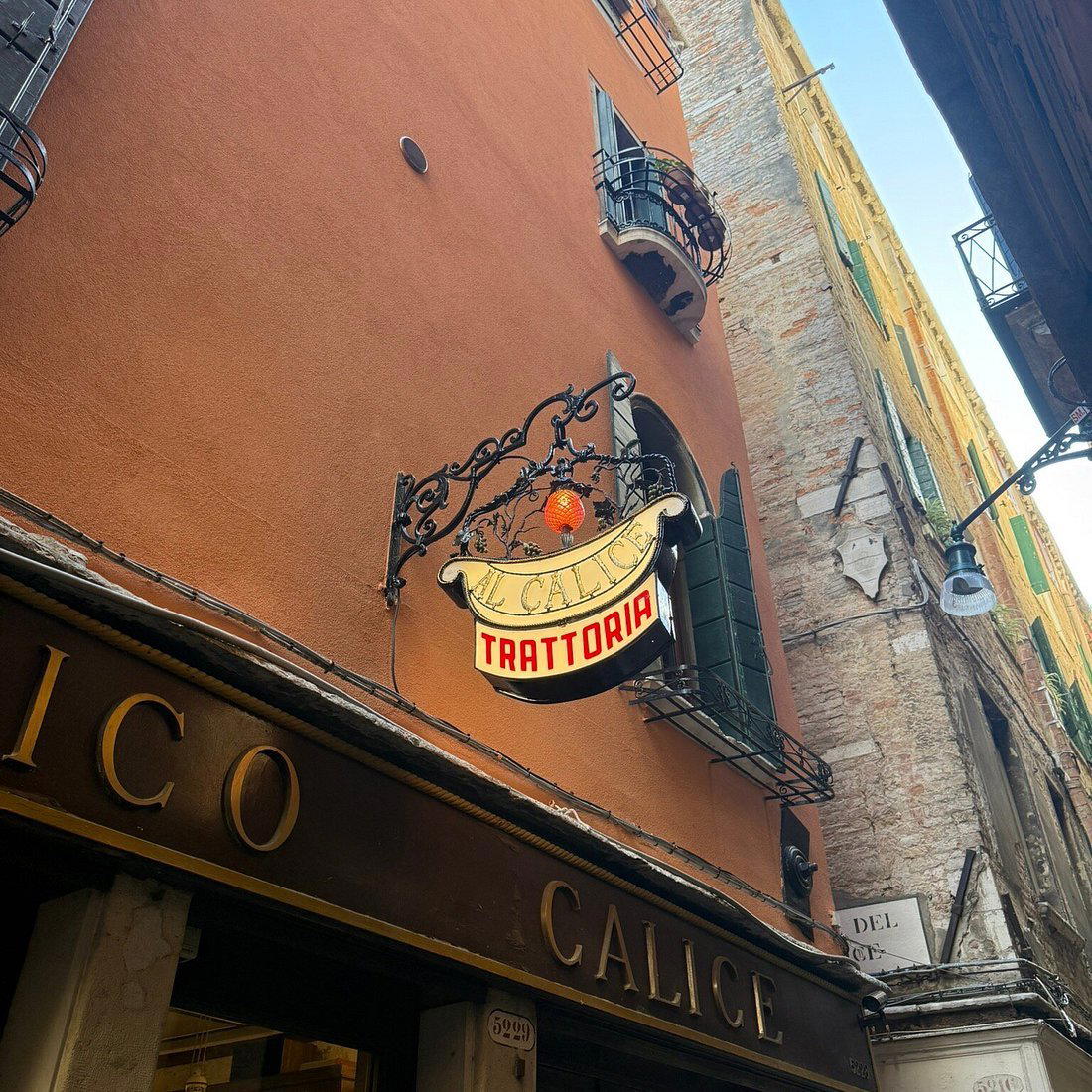
Counter Culture in San Marco: The Bacaro as Local Institution
Venice's eating habits have always divided along a line that has nothing to do with wealth. On one side sit the formal restaurants, table service, printed menus, the full theatre of a Venetian dinner. On the other is the bacaro circuit, a network of small wine bars where the transaction is simpler: you stand at a counter, you choose from a tray of small preparations, you drink a glass of local white or a spritz, and you move on. Antico Calice, on Calle dei Stagneri o de la Fava in San Marco, belongs to the second tradition. The address sits midway between the Rialto and Piazza San Marco, on a walking corridor that most visitors cover at least once.
The bacaro format predates modern Italian restaurant culture by centuries and was built for speed and economy. What has changed, in Venice as elsewhere in northern Italy, is the quality ceiling. The cicchetti that once meant bread, sardines, and leftover salt cod have evolved under pressure from a more travelled, more food-literate clientele, without losing the counter-and-glass structure that defines the format. Antico Calice operates inside that evolution.
The Rialto Corridor and What It Means for Dining
The stretch of San Marco between the Rialto bridge and the piazza concentrates heavy tourist traffic, which creates pressure on operations built around volume and margin rather than product. The bacari that survive with any credibility in this zone do so by maintaining a local customer base that insulates them from purely tourist economics. That dual-audience dynamic is worth understanding before you arrive: a useful time to read the room at a place like Antico Calice is mid-morning, when Venetian workers stop in before their commute deepens into the working day, or in the early evening, when the aperitivo hour reasserts the neighbourhood logic of standing, drinking, and talking before dinner elsewhere.
For visitors coming from the formal dining side of Venice's scene, the counterpoint is useful. Local and Ristorante Quadri both operate at the €€€€ tier, where the kitchen brings contemporary technique to Venetian ingredients in full tasting-menu format. Glam Restaurant by Enrico Bartolini pushes further into creative territory. The bacaro circuit, including Antico Calice, occupies a different register entirely, one where the editorial interest lies not in what a single chef is doing but in what the format itself preserves and transmits.
Local Ingredients in a Standing-Counter Frame
The editorial angle that runs through Venice's leading bacari is the intersection of hyper-local product with the disciplined informality of the counter format. The ingredients available to any serious bacaro kitchen are among the more specific in Italy: baccalà mantecato, the whipped salt cod preparation that has no real equivalent outside the Veneto and Friuli; sarde in saor, the sweet-sour sardine preparation that dates to medieval trade routes; folpeti, small boiled octopus sold cold from terracotta pots; and the crostini variations built on liver, anchovies, and seasonal vegetables from the Rialto market, which remains among the stronger-supplied wholesale fish and produce markets in northern Italy.
These preparations are not simple. Baccalà mantecato requires patience and technique: the desalted cod is worked by hand or with a mixer while olive oil is incorporated gradually, producing a mousse-like texture that takes skill to calibrate. Sarde in saor relies on a precisely managed sweet-acid balance that varies by cook and tradition. In this sense, what looks like bar snacking is actually a codified culinary tradition that connects directly to the same northern Italian product intelligence visible at formally structured restaurants like Dal Pescatore in Runate or Uliassi in Senigallia, only expressed through a radically compressed format and without the ceremony.
The wine selection at a Venetian bacaro typically runs toward Soave, Prosecco, and Pinot Grigio from the Veneto and Friuli-Venezia Giulia, with ombra, the traditional small pour, as the default unit. The logic is the same as the food: local, uncomplicated in presentation, deeply rooted in regional production. Italy's more technically ambitious wine programs, such as those documented at Enoteca Pinchiorri in Florence, represent a separate category entirely. The bacaro does not compete with that ambition; it operates on a different axis where accessibility and conviviality take precedence over depth of list.
Placing Antico Calice in the Wider Italian Dining Conversation
Italy's formal restaurant scene has been moving steadily toward the kind of ingredient-first discipline that bacaro cooking has practised for generations without naming it as a philosophy. Kitchens at Osteria Francescana in Modena, Piazza Duomo in Alba, and Le Calandre in Rubano have built internationally recognised programs around the idea that Italian regional product, handled with precision and restraint, is the argument itself. The bacaro tradition arrived at roughly the same conclusion centuries earlier, by necessity rather than by design, and continues to make that argument at two euros a glass rather than at tasting-menu prices.
This is not to suggest that the restaurant positions itself as a philosophical statement. It is a wine bar on a busy Venetian street, and it should be evaluated on those terms. But the tradition it belongs to carries enough culinary weight that the comparison to more formally celebrated Italian kitchens is worth making, if only to explain why the bacaro circuit remains a reference point for how Italy feeds itself when it is not performing for an audience.
Visitors who want to track the full range of what contemporary Italian cooking looks like, from the standing counter to the twelve-course progression, might also find useful reference points at Reale in Castel di Sangro, Quattro Passi in Marina del Cantone, and Atelier Moessmer Norbert Niederkofler in Brunico, each of which represents a distinct regional expression of the same underlying commitment to local product. For a broader view of where the restaurant sits within Venice's dining ecosystem, the full Venice restaurants guide covers the range from bacaro to contemporary tasting menus, including Wistèria and Oro Restaurant.
Planning Your Visit
The restaurant is located at Calle dei Stagneri o de la Fava 5229, in the San Marco sestiere, within comfortable walking distance of both the Rialto and Piazza San Marco. The bacaro format in Venice is almost always walk-in, with no reservation system and counter-side eating the expectation rather than the exception. The useful practical advice for any bacaro visit applies here: arrive early in the service window, before the cicchetti selection thins, and plan to eat standing rather than waiting for table space. For visitors calibrating a full day's eating in Venice, the bacaro circuit works well as a mid-morning or pre-dinner stop, bracketing a more formal meal at one of the city's seated restaurants.
Standing Among Peers
Comparable venues nearby, for context on price, style, and recognition.
| Venue | Cuisine | Price | Notes |
|---|---|---|---|
| Antico CaliceThis venue — the venue you are viewing | Traditional Venetian Seafood | $$ | Not listed |
| Trattoria Ca' D'Oro - Cucina Tipica Veneziana | Traditional Venetian Trattoria | $$ | Cannaregio |
| Ostaria da Mariano | Traditional Venetian Seafood & Regional Italian | $$ | Mestre |
| Hosteria Al Vecio Bragosso | Venetian Seafood Osteria | $$ | Santa Croce |
| Osteria Alla Frasca | Traditional Venetian Seafood Trattoria | $$ | Cannaregio |
| Osteria Mocenigo | Authentic Venetian Seafood Trattoria | $$ | Santa Croce |
Continue exploring
More in Venice
Restaurants in Venice
Browse all →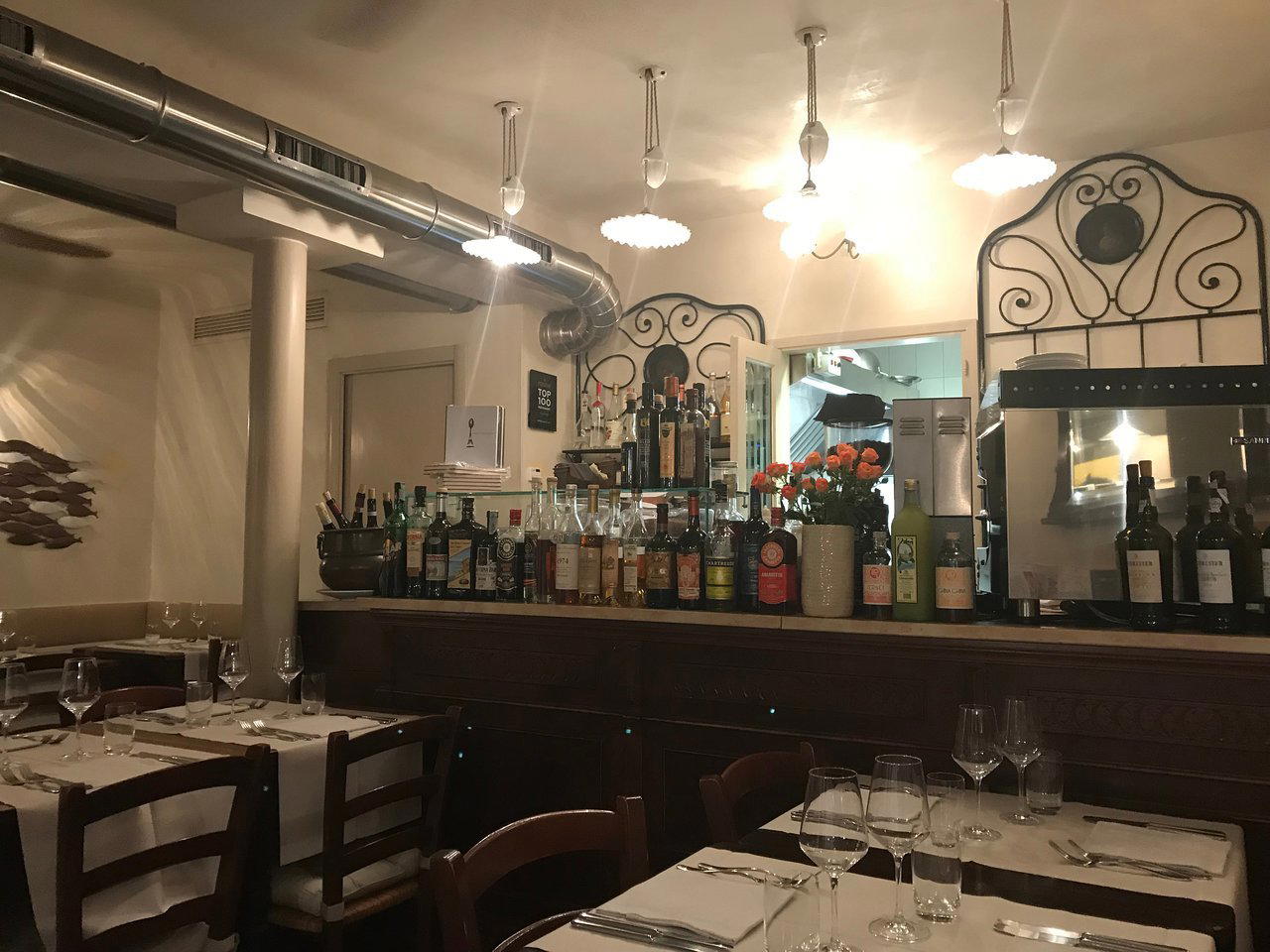
Bars in Venice
Browse all →
Hotels in Venice
Browse all →
At a Glance
- Classic
- Rustic
- Intimate
- Date Night
- Special Occasion
- Historic Building
- Extensive Wine List
Current opening hours
- Monday
- 12–3 PM, 7–10 PM
- Tuesday
- 12–3 PM
- Wednesday
- Closed
- Thursday
- 12–3 PM, 7–10 PM
- Friday
- 12–3 PM, 7–10 PM
- Saturday
- 12–3 PM, 7–10 PM
- Sunday
- 12–3 PM, 7–10 PM
Hours can change for holidays and private events. Last verified .
Traditional rustic atmosphere with focus on authentic Venetian dining.