


Retrobottega sits at the contemporary end of Rome's dining spectrum, where a Michelin Plate and an Opinionated About Dining European ranking signal the ambition behind its dark, spare interior on Via d'Ascanio. Owner-chefs Giuseppe Lo Iudice and Alessandro Miocchi, both shaped by Italian and international Michelin-starred kitchens, run a kitchen full of ideas that translate into a multi-course format worth planning around.
Pearl is the En Primeur Club membership app — saves, bookings, and concierge access live there. Same editors, same standards.
- Address
- Via d'Ascanio, 26A, 00186 Roma RM, Italy
- Phone
- +39 380 691 4759
- Website
- retro-bottega.com
- Directions
- Get directions
 Saves & bookings on Pearl
Dark Walls, Sharp Ideas: Inside Rome's Contemporary Counter Culture
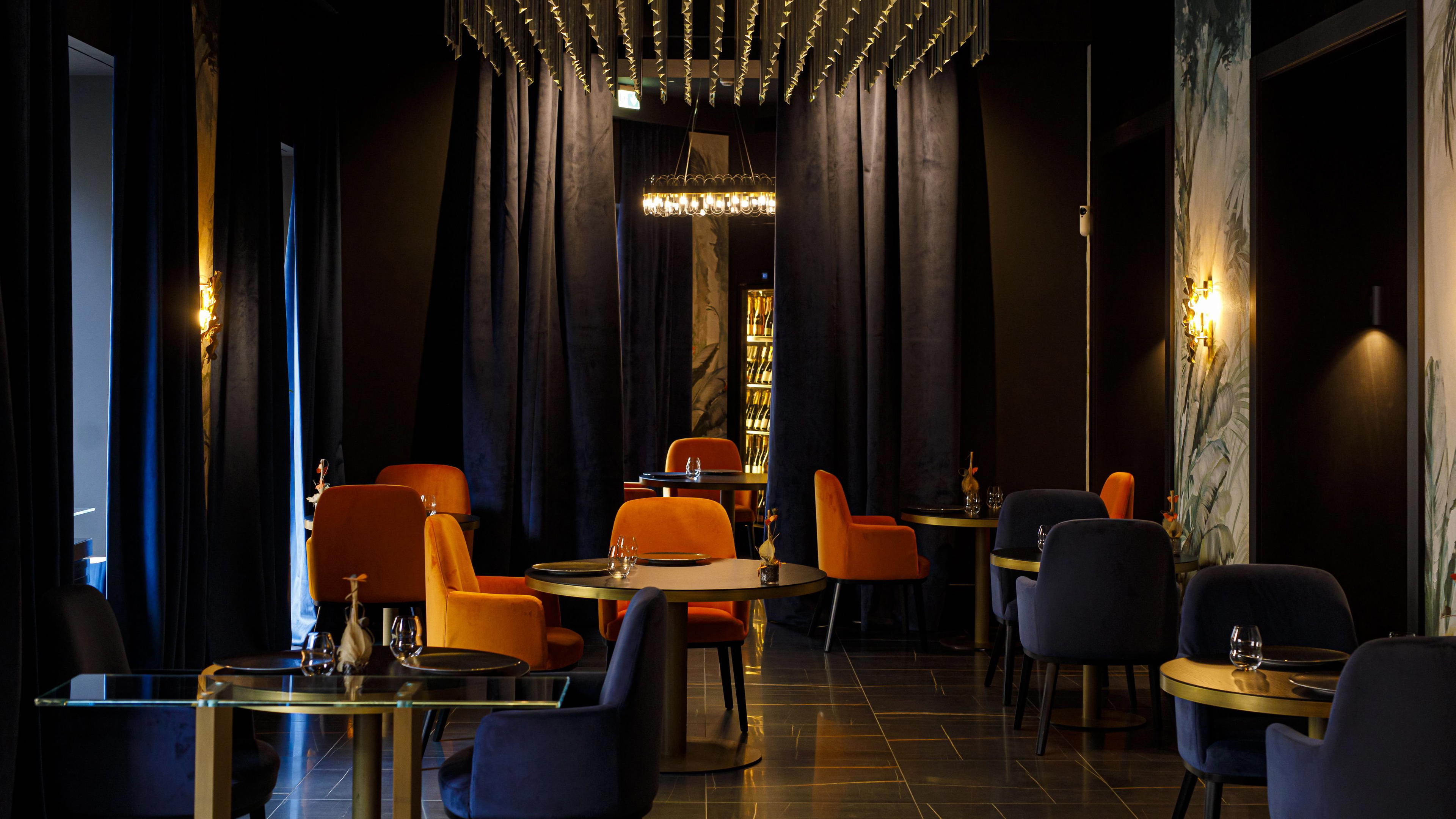
Via d'Ascanio is a quiet cut through central Rome's Centro Storico, and Retrobottega's entrance gives little away. The interior leans into minimalism: dark tones, clean lines, no decorative clutter. It is the kind of room designed to focus attention on the plate rather than the setting, a deliberate choice that positions the restaurant inside a small but growing tier of Rome dining rooms that have abandoned the capital's traditional trattoria warmth in favour of precision-led contemporary formats.
Rome's contemporary restaurant scene has historically lagged behind Milan and the Italian north in embracing tasting menu formats and technically ambitious kitchens. The city's dining identity runs deep through carbonara, cacio e pepe, and offal-led cucina romana, and departures from that tradition have often struggled to find their footing with a local audience. Retrobottega represents the cohort that has pushed through that resistance.
What the Awards Signal About the comparable set
A Michelin Plate, awarded in both 2024 and 2025, marks the restaurant as one that the Guide's inspectors consider worth visiting without yet placing it in the starred bracket. That position is specific: it sits above the mass of Rome restaurants that Michelin ignores entirely, but below the starred tier occupied in Rome by La Pergola at the leading, and by contemporaries like Il Ristorante Niko Romito, Adelaide, and Pulejo within the contemporary Italian conversation.
The Opinionated About Dining ranking adds a second trust signal from a different critical tradition. That dual recognition, from a mainstream guide and a specialist community, is a pattern seen more often at venues in the €€€ price tier that have built reputation through consistency rather than spectacle. Compare this to Italy's northern heavyweights: Osteria Francescana in Modena, Enoteca Pinchiorri in Florence, and Enrico Bartolini in Milan sit in a heavier awarded tier; Retrobottega's positioning is closer to ambitious mid-format venues with strong critical following but room still to climb.
The Arc of the Meal
The editorial logic of eating at Retrobottega runs through a tasting progression rather than à la carte selection. Contemporary Italian restaurants at this price point and ambition level typically structure the experience as a sequence: early courses that establish technical register through lighter preparations, a mid-section that introduces more ingredient weight and cooking complexity, and a close that tests whether the kitchen has the discipline to land a dessert course that feels integrated rather than appended.
Giuseppe Lo Iudice and Alessandro Miocchi bring credentials from Michelin-starred kitchens in Italy and internationally, which shapes the kitchen's technical baseline. That kind of multi-house formation, moving through different starred environments rather than staying within a single lineage, tends to produce cooks who can synthesise methods rather than reproducing a single house style. In the context of Rome's contemporary tier, where kitchens like 53 Untitled are pursuing their own angular take on the city's cuisine, that synthesis is what separates the rooms worth returning to from those that feel like competent replicas of northern Italian formats transplanted south.
The meal at Retrobottega has been described as entertaining and exciting, implying courses that carry a certain playfulness alongside technical seriousness. That combination is harder to sustain across a full progression than either quality alone. A kitchen can be technically precise without creating any momentum or surprise; it can be playful without the skill to back the ideas up. The ongoing Michelin recognition and the OAD ranking together suggest the balance has held across multiple inspection cycles.
Rome's Contemporary Italian Tier in Context
The Italian Contemporary category is well-represented nationally, from the coastal elegance of L'Olivo in Anacapri and Quattro Passi in Marina del Cantone to the Alpine rigour of Atelier Moessmer Norbert Niederkofler in Brunico and the Mantuan classicism of Dal Pescatore in Runate. Within that national context, Rome's contribution to the category has been growing but remains smaller in proportion to the city's size and international profile. The capital still exports fewer fine dining names per capita than Milan or the Emilia-Romagna corridor.
Retrobottega's position within Rome's contemporary bracket is reinforced by the €€€ pricing, which in the Roman market places it above the mid-range neighbourhood restaurant but below the full formal dining tariff of the €€€€ tier that includes La Pergola and competitors like Aroma, Idylio by Apreda, and Il Pagliaccio. That middle tier has real advantages: it tends to attract younger kitchens operating with more flexibility, menus that move faster, and an atmosphere that sits between the casual and the ceremonial. In a city where dining ritual can feel calcified at both ends of the price spectrum, that middle ground is where interesting food is often happening right now.
For readers tracking contemporary Italian cooking across the country and beyond, the parallel conversation extends to Agli Amici Rovinj in Rovinj, where Italian culinary tradition has crossed into Croatian territory with its own logic. The comparison is useful because it underscores how the Italian Contemporary category is defined less by geography than by a particular approach to ingredient-led progression cooking that Retrobottega shares with that broader current.
At a Glance
Comparable venues nearby, for context on price, style, and recognition.
| Venue | Cuisine | Price | Notes |
|---|---|---|---|
| RetrobottegaThis venue — the venue you are viewing | Campo Marzio, Modern Italian | $$$ | Not listed |
| Antica Pesa | Trastevere, Authentic Roman | $$$ | Not listed |
| Osteria Fernanda | Gianicolese, Modern Italian Bistro | $$$ | Not listed |
| Casa Coppelle | Not listed | $$$$ | San Eustachio, Modern Italian-French Mediterranean |
| Colline Emiliane | Trevi, Traditional Emilian Pasta | $$$ | Not listed |
| Domenico dal 1968 | Not listed | $$ | Appio-Latino, Classic Roman Trattoria with Seafood |
Recognition history
Dated appearances from independent guides and award organizations, with the underlying list record or original source where available.
Falstaff Restaurant - 94 Falstaff Points
Falstaff
Michelin Plate
Michelin
Opinionated About Dining Top Restaurants in Europe Recommended
Opinionated About Dining
Michelin Plate
Michelin
Opinionated About Dining Top Restaurants in Europe Ranked #508
Opinionated About Dining
Michelin Plate
Michelin
Continue exploring
More in Rome
More from Chef Giuseppe Lo Iudice and Alessandro Miocchi
Browse all →
Restaurants in Rome
Browse all →
Bars in Rome
Browse all →
Hotels in Rome
Browse all →

At a Glance
- Modern
- Trendy
- Sophisticated
- Minimalist
- Date Night
- Special Occasion
- Celebration
- Group Dining
- Open Kitchen
- Chefs Counter
- Design Destination
- Extensive Wine List
- Sommelier Led
- Corkage Allowed
- Byob
- Local Sourcing
Current opening hours
- Monday
- 6–11:30 PM
- Tuesday
- 8:30 AM–11:30 PM
- Wednesday
- 8:30 AM–11:30 PM
- Thursday
- 8:30 AM–11:30 PM
- Friday
- 8:30 AM–11:30 PM
- Saturday
- 8:30 AM–11:30 PM
- Sunday
- 8:30 AM–11:30 PM
Hours can change for holidays and private events. Last verified .
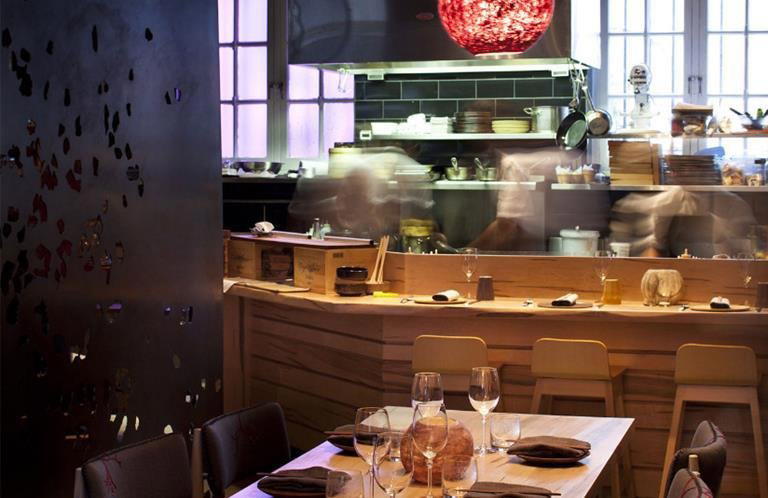
Minimalist decor with dark tones and clean lines; open kitchen creates an engaging, theatrical atmosphere with visible chef activity; intimate communal table setup fosters a convivial yet sophisticated environment.