Restaurant Deutsche Oper sits on Bismarckstraße in Charlottenburg, one of Berlin's most architecturally serious dining corridors, steps from the Deutsche Oper Berlin concert hall. The address places it inside a neighbourhood that has long attracted a quieter, more settled dining clientele than Mitte or Prenzlauer Berg, an audience that tends to arrive with expectations formed by decades of European fine dining rather than social media discovery.
Pearl is the En Primeur Club membership app — saves, bookings, and concierge access live there. Same editors, same standards.
- Address
- Bismarckstraße 35, 10627 Berlin, Germany
- Phone
- +493034384670
- Website
- rdo-berlin.de
- Directions
- Get directions
 Saves & bookings on Pearl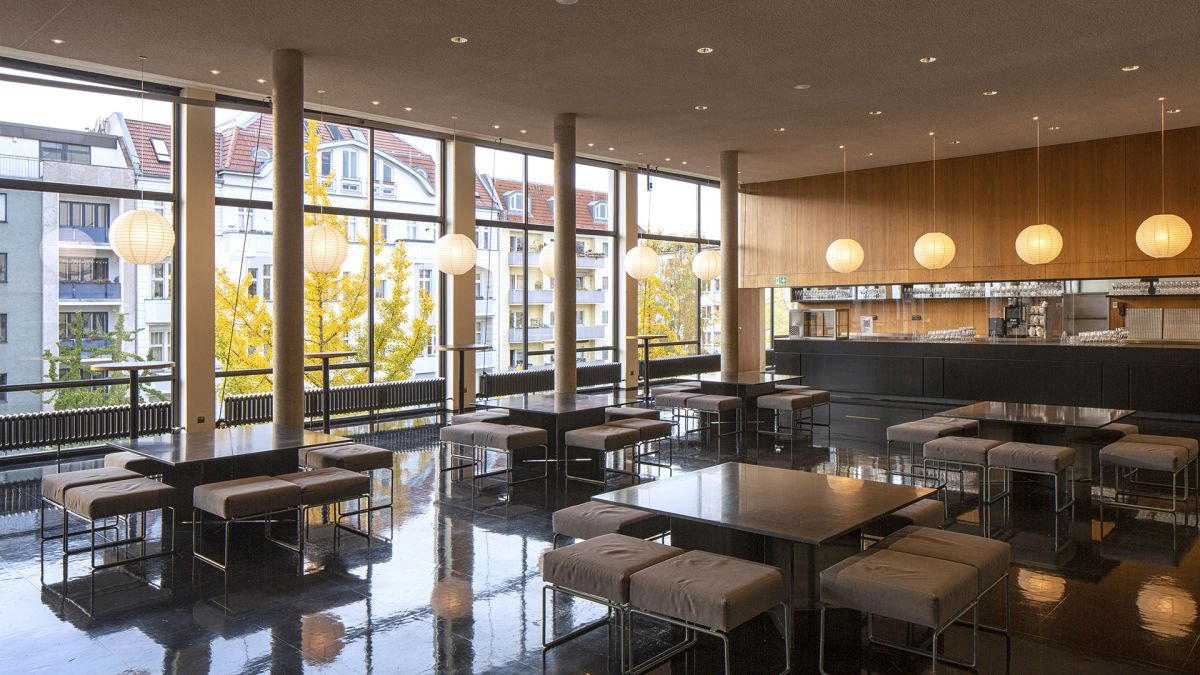
Charlottenburg's Dining Register: What the Address Signals
The city's restaurant geography broadly maps onto two temperaments: the louder, more experimental corridors of Mitte, Kreuzberg, and Prenzlauer Berg, where places like Nobelhart & Schmutzig and CODA Dessert Dining have built reputations on format-breaking concepts; and the quieter, more classically anchored west of the city, where Charlottenburg still operates on older assumptions about what a serious dinner looks like. Bismarckstraße sits firmly in the latter register.
That distinction matters more than it might first appear. A restaurant in Charlottenburg is not simply in a different postcode, it is making an implicit argument about its audience and its ambition. The neighbourhood draws on a long tradition of bourgeois European dining, the kind where the room architecture does as much work as the menu, and where the expectation is continuity rather than provocation. Restaurants that choose this address are positioning themselves alongside that tradition, whether consciously or by default.
Restaurant Deutsche Oper sits at Bismarckstraße 35, directly in the orbit of the Deutsche Oper Berlin, one of Germany's major opera houses. That proximity is not incidental. Pre- and post-performance dining has shaped the character of this particular stretch for decades, producing a clientele that arrives with a specific kind of appetite: culturally attuned, time-aware, and accustomed to rooms that do not require explanation.
The Broader Berlin Context: Where This Tier Sits
Berlin's upper tier of restaurants has become considerably more competitive over the past decade. The city now hosts multiple Michelin-recognised addresses across a range of formats, from the two-star precision of Rutz and the Franco-Asian rigour of Restaurant Tim Raue to the ingredient-sovereignty project of Nobelhart & Schmutzig and the hotel-dining format of FACIL. Each of these operates with a clearly articulated identity and a defined competitive set.
What characterises this tier across Berlin is a move away from anonymous European fine dining toward positions with clearer editorial logic, a specific culinary philosophy, a sourcing argument, a format decision. Restaurants that occupy a more traditional footing, serving the pre-theatre and occasion-dining market without a strongly differentiated identity, occupy a different but equally legitimate niche. They answer a demand that the more conceptually driven rooms do not always serve well: the dinner that needs to be reliable, readable, and suited to conversation rather than close attention to the kitchen's intellectual programme.
Germany's wider fine dining circuit, which includes addresses like Aqua in Wolfsburg, Schwarzwaldstube in Baiersbronn, and Vendôme in Bergisch Gladbach, illustrates how geographically dispersed the country's highest-rated tables remain. Berlin, for all its cultural weight, does not dominate the German Michelin map in the way that Paris dominates France's. That structural reality means the capital's serious dining rooms compete as much on atmosphere and occasion-fitness as on kitchen ambition alone.
Neighbourhood Character and the Opera Effect
The Deutsche Oper Berlin, which anchors this part of Bismarckstraße, is a mid-century modernist building that seats around 1,900 and hosts a full season of opera and ballet. Its presence defines the rhythm of the street in the evenings: concentrated bursts of well-dressed foot traffic before and after performances, a clientele with disposable income and a tolerance for formal settings, and a predictable demand for rooms that can turn a table with some efficiency without sacrificing the dinner-as-event quality.
This is the environment Restaurant Deutsche Oper inhabits. Charlottenburg more broadly retains more of the feel of pre-reunification West Berlin than almost any other district, a certain architectural solidity, a preference for established formats, a relative absence of the speculative energy that drives restaurant openings in Mitte or Neukölln. For some diners that is precisely the point. The neighbourhood is not where you go to discover something; it is where you go when you know what you want.
Comparable opera-adjacent dining traditions exist in other European cities, the cluster around the Vienna Staatsoper, the rooms near the Royal Opera House in London's Covent Garden, and they share a similar logic: the performance provides the occasion, the restaurant provides the frame, and neither is expected to upstage the other.
How This Address Compares
| Venue | Location | Format | Price Tier |
|---|---|---|---|
| Restaurant Deutsche Oper | Charlottenburg, Berlin | Classic European dining | Not confirmed |
| Rutz | Mitte, Berlin | Modern European, tasting menu | €€€€ |
| FACIL | Potsdamer Platz, Berlin | Contemporary European, hotel dining | €€€€ |
| Nobelhart & Schmutzig | Kreuzberg, Berlin | Modern German, concept-led | €€€€ |
| Restaurant Haerlin | Hamburg | Classic European, hotel dining | Not confirmed |
Charlottenburg-based dining addresses a different audience need than Kreuzberg or Mitte, even when the price point is comparable. Format, neighbourhood character, and occasion-type all factor into where a diner places a booking.
Planning Your Visit
Bismarckstraße is well served by public transport, with the Deutsche Oper U-Bahn station (U2 line) directly adjacent to the concert hall and a short walk from the restaurant address. Taxis and ride-share services concentrate heavily in this area on performance evenings, which can affect both arrival and departure timing. Diners attending a performance at the opera house should factor in the post-show crowd when planning their meal structure, pre-performance dinners require realistic time awareness, since the opera's start times are fixed and the kitchen cannot control the curtain.
For those building a broader German fine dining itinerary, the country's dispersed Michelin geography rewards planning. Addresses worth comparing across the national circuit include JAN in Munich, ES:SENZ in Grassau, Victor's Fine Dining by Christian Bau in Perl, Waldhotel Sonnora in Dreis, Schanz in Piesport, and Bagatelle in Trier. International comparisons that illuminate how opera-district dining works at its most developed include Le Bernardin in New York City and Atomix in New York City, both of which operate in dense cultural districts with similarly informed dining publics.
Where It Fits
Comparable venues nearby, for context on price, style, and recognition.
| Venue | Cuisine | Price | Notes |
|---|---|---|---|
| Restaurant Deutsche OperThis venue — the venue you are viewing | Sophisticated German Cuisine | $$$ | Not listed |
| DAS KÖSTLICH-Berlin Charlottenburg | Modern German | $$$ | Charlottenburg |
| Fleischerei | Modern German Meat Cuisine | $$$ | Prenzlauer Berg |
| Restaurant HessenWinkel | Regional German with Seasonal Specialties | $$$ | Rahnsdorf |
| Restaurant Jolesch | Traditional Austrian with Modern Twists | $$$ | Kreuzberg |
| Dicke Wirtin | Traditional Alt-Berliner Cuisine | $$ | Charlottenburg |
Continue exploring
More in Berlin
Restaurants in Berlin
Browse all →
Bars in Berlin
Browse all →
Hotels in Berlin
Browse all →

At a Glance
- Elegant
- Sophisticated
- Special Occasion
- Date Night
- Hotel Restaurant
Energetic atmosphere with excellent service, well-suited for pre-show dining.