
A counter-and-table ramen room in Yokohama’s Center Kita area, Ramen Kujira Ken Yokohama honten belongs to the value-driven end of Kanagawa’s serious ramen culture. Its Tabelog 100 - Ramen - KANAGAWA selections in 2024 and 2025 give it a credential beyond neighbourhood convenience, while the format remains casual, compact, and built for repeat local eating.
Pearl is the En Primeur Club membership app — saves, bookings, and concierge access live there. Same editors, same standards.
- Address
- 神奈川県横浜市都筑区牛久保西1-2-10 アネックスパーク 1-B
- Phone
- +81459123384
- Website
- tabelog.com
 Saves & bookings on Pearl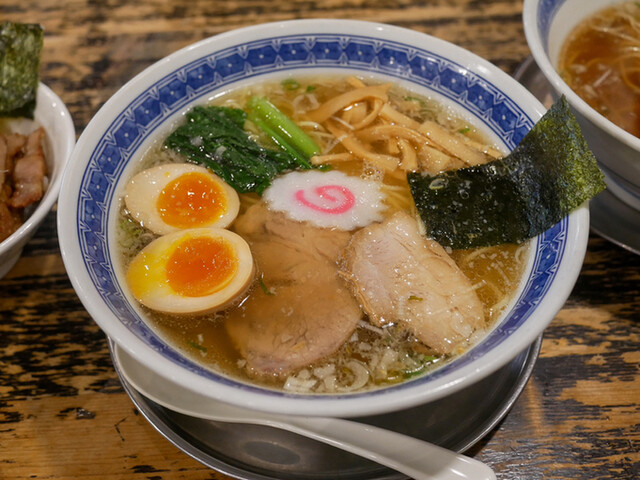
The first read is functional, not theatrical: a Yokohama ramen shop with counter seating, a few tables, and the pace of a room built around bowls, turnover, and regulars rather than ceremony. That matters in Kanagawa, where serious ramen often keeps its value in plain sight. The category rewards concentration: broth style, noodle handling, toppings, timing, and consistency, compressed into a meal that can cost less than a hotel cocktail.
Ramen Kujira Ken Yokohama honten sits between destination dining and everyday eating. Its recognition is substantive: selection for Tabelog 100 - Ramen - KANAGAWA in both 2024 and 2025 places it inside a competitive prefectural ramen bracket, not just a Yokohama neighbourhood shortlist. For travellers, that is the signal: a low-friction ramen stop with enough third-party recognition to justify leaving the central tourist path, not a luxury restaurant asking for ceremony.
Kanagawa ramen value without the tasting-menu tax
Yokohama dining pulls in several directions: Chinatown institutions, port-city hotel dining, curry houses, patisserie counters, yakitori rooms, and compact noodle shops built around speed and repetition. Ramen has an advantage because it can deliver craft at an approachable price. In the same city, Ajowan occupies a similar accessible spend range, while SONJIN moves higher at dinner. The comparison frames the decision properly: ramen here is not competing with long-format dining, but with other efficient, satisfying Yokohama meals where the bill stays controlled.
The shop’s categories explain its appeal better than any grand claim. Ramen anchors the visit, with donburi and tsukemen nearby, giving solo diners and small groups a format that needs no long reservation plan. A 26-seat room, split between tables and counter seats, feels like a working local restaurant rather than a staged chef’s counter. The counter matters in ramen culture: it shortens the distance between kitchen rhythm and diner, and suits guests who want focus without negotiating a full evening.
Within Yokohama, this place is especially valuable because the city’s dining map spreads beyond the waterfront and station zones. Center Kita is not postcard Yokohama, which is part of the point. The northern residential districts support restaurants through routine, not spectacle. A ramen shop drawing enough attention for prefecture-level selection must satisfy repeat expectations as much as visitor curiosity.
A casual room with enough recognition to change the detour calculus
The strongest argument for Ramen Kujira Ken Yokohama honten is not rarity, but the ratio between effort, cost, and credibility. Tabelog’s Hyakumeiten ramen selections are a practical filter in Japan’s dense noodle culture, where dozens of good-looking shops can sit within a short rail ride. A 2025 Kanagawa selection, after a 2024 selection, gives the restaurant a clearer place in the field: established, still visible, and judged in a category where small technical differences matter.
That does not make the room formal. It makes it useful. Children are welcome, private rooms are not part of the setup, and the non-smoking policy fits the modern everyday ramen experience. For a traveller building a Yokohama day, the question is less about dressing for dinner than choosing when a compact, credible bowl fits between larger plans. The venue works better as a precise itinerary insertion than as the anchor for an elaborate night out.
There is a broader Yokohama lesson here. The city rewards visitors who do not treat dining as one waterfront circuit. A meal at a ramen counter in Tsuzuki-ku tells a different story from yakitori at 1000 (Yakitori (Grilled chicken skewers)), regional Chinese at Aichun, or curry at Alpenjiro Honten. Together, they show value as a set of formats: skewers, noodles, rice plates, and spice-driven meals, each with its own tempo.
For broader planning, Our full Yokohama restaurants guide gives citywide dining context, while Our full Yokohama hotels guide, Our full Yokohama bars guide, Our full Yokohama wineries guide, and Our full Yokohama experiences guide place the meal inside a wider trip rather than a single-dish chase. Nearby-city comparisons help too: (Shoku) Vietnam in Kawasaki shows how casual regional cooking travels across Kanagawa, while -Grilled beef Sukiyaki- KAMAKURA TANUKIAN 鎌倉 たぬき庵 in Kamakura sits in a different, more meal-as-occasion register.
Who should make the trip
This is a strong fit for diners who measure ramen by consistency and context rather than novelty. The 1996 opening gives the shop a long operating history by ramen standards, and the recent Tabelog 100 selections show continued relevance in a fast-changing category. That combination is the appeal: longevity without a luxury frame.
The practical personality is clear. Reservations are unavailable, payment is cash-only, and the room suits solo dining, friends, and families more naturally than business entertaining. For international visitors, approach it as part of a flexible day, not a tightly scheduled evening. Subway access from Center Kita makes it workable, and parking behind the restaurant helps local diners, but the main reward is the price-to-recognition ratio: a serious Kanagawa ramen credential in a casual Yokohama format.
Travellers comparing Japan dining formats can use this stop as a counterweight to more formal meals elsewhere: Anzen Shokudo in Fukuoka for another regional everyday benchmark, [Curry Senmon Ten] Maruyama Kyoju. in Sapporo for a different comfort-food economy, or. 鮪と炭火焼き うお炭 秋葉原店 in Tokyo for a capital-city casual format. Even overseas Japanese-leaning references such as Jōdo Saké Bar in Los Angeles, Onigiri Time in Pasadena.cafe in Osaka, and.know in Kumamoto underline the same point: casual Japanese dining is not lesser when the format is disciplined. In Yokohama, Ramen Kujira Ken Yokohama honten makes that argument at noodle-shop scale.
Recognition Snapshot
Comparable venues to calibrate price, style, and recognition.
| Venue | Cuisine | Price | Notes |
|---|---|---|---|
| Ramen Kujira Ken Yokohama hontenThis venue — the venue you are viewing | Traditional Yokohama ramen shop | $ | Not listed |
| Rishiri Ramen Miraku (利尻らーめん 味楽) | Rishiri-Style Yaki Shoyu Ramen | $ | Kohoku-Ku |
| China Soba Ya Honten | Traditional Ramen (Shina Soba) | $ | Totsuka |
| Sakurai Chuka Soba Ten | Classic Japanese ramen & tsukemen | $ | Hodogaya |
| Sari Sari Curry | Pakistani-style Japanese curry set | $ | Kanagawa |
| Menya Sakigakeboshi | Modern Ramen with White Truffle Oil | $ | Naka |
Recognition history
Dated appearances from independent guides and award organizations, with the underlying list record or original source where available.
Tabelog 100 #29 · No. 29
Tabelog · Tabelog 100 - Ramen - KANAGAWA - 2025
Continue exploring
More in Yokohama
Restaurants in Yokohama
Browse all →


Bars in Yokohama
Browse all →


Hotels in Yokohama
Browse all →




Wineries in Yokohama
Browse all →
At a Glance
- Classic
- Cozy
- Solo
- Family
- Casual Hangout
- Group Dining
- After Work
- Standalone
A compact, long-running neighborhood ramen shop with counter and simple table seating, a casual and often busy atmosphere, and a focus on classic flavors over design or decor.