
China Soba Ya Honten is a Totsuka ramen counter with repeated Tabelog 100 recognition, including the Kanagawa ramen selection for 2025. Its appeal sits in the shina soba tradition: clear seasoning, disciplined broth work, and a format that belongs to Yokohama’s everyday ramen culture rather than destination tasting-menu dining.
Pearl is the En Primeur Club membership app — saves, bookings, and concierge access live there. Same editors, same standards.
- Address
- 6002-2 Totsukachō, Totsuka Ward, Yokohama, Kanagawa 244-0003, Japan
- Phone
- +81 45-827-3739
- Website
- nrfood.jp
 Saves & bookings on Pearl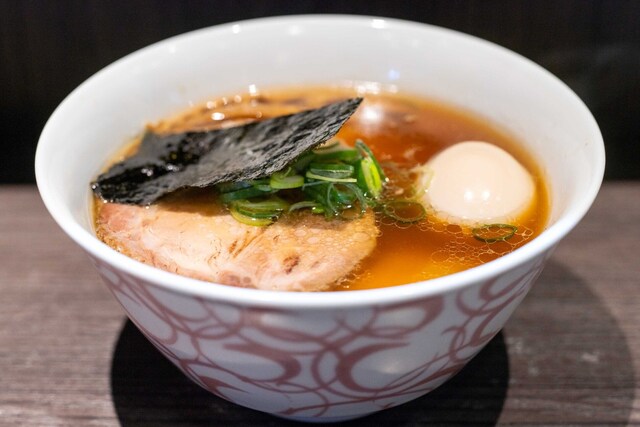
Approaching a serious ramen shop in suburban Yokohama is rarely theatrical. The signals are smaller: a compact room, counter seats within sight of the kitchen, tables for families, and a turnover rhythm that belongs to lunch as much as dinner. China Soba Ya Honten fits that grammar. It is not built around spectacle, but around the older shina soba idea that a bowl can carry precision without turning into ceremony.
That matters in Kanagawa, where ramen sits between Tokyo’s technical density and Yokohama’s own working-city appetite. The local field is broad, from low-priced bowls at places such as Bay & Leaf Yokohama and Ramen Kan 2 Ya to more tightly followed names including Jikaseimen Kamikaze, Yukiguni, and Ramen Moriya. Within that set, repeated inclusion in Tabelog’s ramen selections gives this shop a clearer signal than social-media heat: it has been selected for Tabelog Ramen EAST across multiple years and for Tabelog Ramen KANAGAWA in 2024 and 2025.
Shina soba discipline in a city that does not need another gimmick
Shina soba is often misunderstood by travelers who arrive in Japan expecting ramen to announce itself through thickness, spice, or loaded toppings. The style is more exacting than that. It asks the broth, tare, noodles, and aroma oil to stay legible, with no single component drowning the rest. In a city where commuters eat quickly and regulars remember details, restraint can be a harder test than excess.
The sourcing angle is central because classic ramen depends on invisible decisions: bones, dried seafood, soy seasoning, flour, water, and fat all have to read as coherent rather than merely strong. When a shop works in a lighter shina soba register, ingredient quality has fewer places to hide. The point is not luxury produce as a headline. It is whether the bowl keeps structure from first sip to final noodle, and whether seasoning supports the base rather than flattening it.
China Soba Ya Honten belongs to the side of Yokohama ramen that rewards repeat eating. The room’s mix of counter seating and tables also changes the experience. Counter seats suit the solo diner judging timing and assembly; tables make sense for the family-friendly side of the category, where ramen is a normal meal rather than a trophy booking. That duality is common in strong neighborhood ramen shops, and it is part of why this format survives constant trend cycles.
How Yokohama's ramen scene frames the bowl
Yokohama is often reduced to Chinatown, waterfront hotels, and day-trip convenience from Tokyo, but its restaurant culture is more granular. Totsuka, in particular, sits outside the visitor’s default circuit, which gives ramen shops there a different pressure. They serve local demand first. Recognition has to sit on top of daily usefulness, not replace it.
That is a useful distinction for travelers using Our full Yokohama restaurants guide. A high-recognition ramen stop in Totsuka occupies a different lane from a planned evening around yakitori at 1000 (Yakitori (Grilled chicken skewers)), Chinese cooking at Aichun, curry at Ajowan, or the long-running local comfort of Alpenjiro Honten. Ramen is quicker, narrower, and more dependent on timing; the critical question is not how many courses appear, but whether the shop controls the bowl under pressure.
Compared with Yokohama peers, the value proposition is direct: a serious ramen address with Tabelog 100 recognition, accessible pricing, and a format that does not ask the diner to commit an entire evening. That combination is why ramen remains one of Japan’s sharper dining formats. It compresses sourcing, technique, service rhythm, and local loyalty into a small ticket.
Planning the meal around Totsuka rather than central Yokohama
The practical decision is whether Totsuka fits the day’s route. The shop sits near Totsuka Station rather than the bayside hotel zone, so it works better as a purposeful detour or a stop built into west-side movement through Kanagawa. Travelers staying centrally should weigh the journey against other Yokohama plans, especially if the day already includes hotel time from Our full Yokohama hotels guide, drinking plans from Our full Yokohama bars guide, or broader itineraries across Our full Yokohama experiences guide. For wine-focused readers, Our full Yokohama wineries guide serves a different planning lane entirely.
The strongest use case is a ramen-focused lunch or early dinner where the destination is the bowl, not a neighborhood crawl. The venue’s no-reservation format and compact seating mean patience is part of the category, but the payoff is a clear read on Kanagawa’s ramen hierarchy at a modest spend. Payment flexibility also makes it easier for visitors who do not want to rely only on cash.
For a wider Japan food itinerary, this address pairs well conceptually with other specialist formats: the everyday directness of Anzen Shokudo, regional beef cooking at -Grilled beef Sukiyaki- KAMAKURA TANUKIAN 鎌倉 たぬき庵 in Kamakura, Tokyo’s charcoal-and-tuna register at. 鮪と炭火焼き うお炭 秋葉原店 in Tokyo, the casual cafe lane at.cafe in Osaka, and Kumamoto’s contemporary small-format dining at.know in Kumamoto. Outside Japan, the same interest in focused formats connects to Jōdo Saké Bar in Los Angeles and Onigiri Time in Pasadena, while (Shoku) Vietnam in Kawasaki and [Curry Senmon Ten] Maruyama Kyoju. in Sapporo show how single-category cooking can carry serious editorial interest without fine-dining architecture.
The verdict is simple: this is a Yokohama ramen stop for readers who care about clarity, sourcing logic, and category discipline more than novelty. Its repeated Tabelog 100 selections put it in a documented Kanagawa conversation, while the Totsuka setting keeps the experience tied to the city’s lived-in dining habits.
Pricing, Compared
Comparable venues at a glance for context.
| Venue | Cuisine | Price | Notes |
|---|---|---|---|
| China Soba Ya HontenThis venue — the venue you are viewing | Not listed | $ | Not listed |
| Tsurumigawa Bashi Motsu Niku Ten | Tsurumi, Japanese tachinomi offal bar | $ | Not listed |
| Menya Sakigakeboshi | Not listed | $ | Naka, Modern Ramen with White Truffle Oil |
| Yokohama Iekei Ramen Kachidoki Ya | Naka, Yokohama Iekei Ramen Shop | $ | Not listed |
| Ramen Inoue | Tsurumi, Ramen shop | $ | Not listed |
| Sakurai Chuka Soba Ten | Not listed | $ | Hodogaya, Classic Japanese ramen & tsukemen |
Recognition history
Dated appearances from independent guides and award organizations, with the underlying list record or original source where available.
Tabelog 100 #79 · No. 79
Tabelog · Tabelog 100 - Ramen - KANAGAWA - 2025










At a Glance
- Classic
- Cozy
- Well Known
- Solo
- Family
- Casual Hangout
- Group Dining
- Standalone
- Beer Program
Current opening hours
- Monday
- 11 AM–8:30 PM
- Tuesday
- 11 AM–8:30 PM
- Wednesday
- Closed
- Thursday
- 11 AM–8:30 PM
- Friday
- 11 AM–8:30 PM
- Saturday
- 11 AM–8:30 PM
- Sunday
- 11 AM–8:30 PM
Hours can change for holidays and private events. Last verified .
Warm, authentic, and unpretentious, with a compact neighborhood ramen-shop atmosphere rather than a polished dining room.