
Rakusui En puts Tokyo yakiniku in a local, counter-led register rather than a polished hotel-dining one. Its Tabelog 100 Yakiniku Tokyo selections from 2022 through 2025 signal a following beyond Nerima, while the appeal remains rooted in tripe, grilled beef, izakaya pacing, sake and shochu.
Pearl is the En Primeur Club membership app — saves, bookings, and concierge access live there. Same editors, same standards.
- Address
- 東京都練馬区田柄2-33-18 1F
- Phone
- +81339771358
- Website
- tabelog.com
 Saves & bookings on Pearl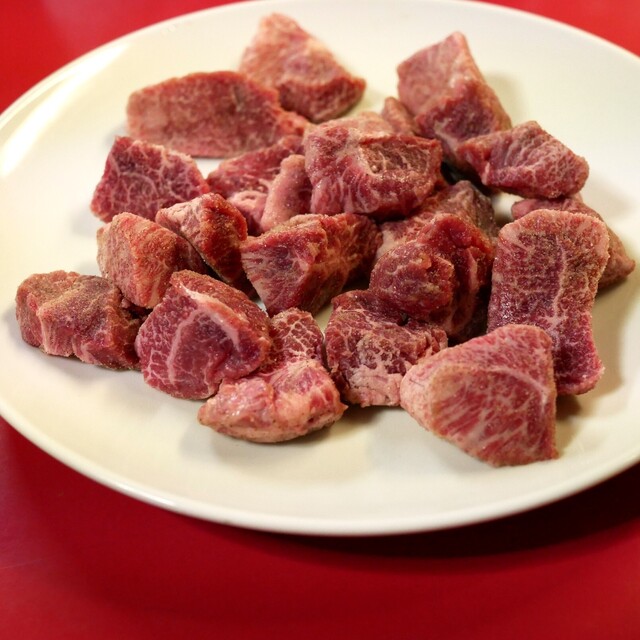
Approaching a neighborhood yakiniku room in Nerima is a different proposition from crossing Ginza for a formal counter. The tempo is local: smoke, conversation, regulars who know how they want the grill managed, and a room built around repeat use rather than spectacle. Rakusui En belongs to that Tokyo category where the meal is less about ceremony than control: heat, timing, offal, beef, and the small decisions that regulars make without turning them into performance.
Tokyo’s yakiniku culture has split into several lanes. There are polished wagyu tasting menus, brand-beef specialists, family grill rooms, late-night horumon counters, and izakaya-adjacent places where drinking and grilling carry equal weight. Rakusui En sits in the latter two lanes, with tripe, yakiniku and izakaya categories attached to its public listing, plus sake and shochu as the relevant drinks rather than a sommelier-led wine program. That tells experienced diners more than a long menu description would: the draw is not luxury staging, it is repeatable pleasure at the grill.
Nerima yakiniku, seen through regulars rather than destination dining
The useful way to read Rakusui En is through loyalty. A Tabelog score of 3.67 in Tokyo yakiniku is not casual decoration, and selection for Tabelog 100 Yakiniku Tokyo in 2025, with prior selections in 2022, 2023 and 2024, places it among rooms that have sustained attention across several cycles. In a city where grill restaurants can rise quickly on novelty, that continuity matters. It suggests a clientele returning for a format they understand, not a crowd chasing a single new dish.
For visitors, that changes the expectation. This is not the kind of Tokyo restaurant where every decision is translated into a tasting-menu arc. The grammar is closer to izakaya logic: order in rounds, drink alongside the food, let the grill set the pace, and pay attention to cuts that local regulars often value more than prestige beef alone. Tripe’s presence in the category mix is important. Horumon culture rewards texture, smoke management and confidence with parts that less practiced diners overlook.
That puts the restaurant in contrast with cheaper specialist counters such as Chuka Soba Benten or Ishida Ya, where the meal is defined by a tighter single-dish structure, and with daytime bakery or café stops such as BOULANGERIE KEN and 2D Cafe, where Tokyo’s casual food culture runs on speed and visual identity. Yakiniku asks for a different kind of commitment: the table becomes part of the cooking process, and the diner’s patience matters. For a wider city view, Our full Tokyo restaurants guide maps this kind of neighborhood specificity against central Tokyo’s more formal dining rooms.
The order is less scripted than the scene
The absence of a chef-led public narrative is not a weakness here. In Tokyo yakiniku, especially outside the luxury circuit, authorship often sits in sourcing discipline, prep work and the rhythm of service rather than in a named chef’s biography. The restaurant’s recognition sits with the room and its category, not with a personality brand. That is a useful distinction for travelers accustomed to chef-centric restaurant culture.
The likely decision point is not whether the restaurant has a signature dish, but whether the diner wants yakiniku with an offal and tavern accent. Beef grill restaurants in Tokyo can be highly hierarchical, with some rooms built around famous cattle, private-room entertaining or tasting-menu pacing. This address reads more democratic: counter seating is part of the format, private rooms are unavailable, and solo dining is a common fit. Those signals make it especially relevant for diners who travel alone and prefer a working neighborhood counter to a large-room meat palace.
Tokyo’s broader dining range helps frame that choice. A yakitori address such as 124. KAGURAZAKA (Yakitori) offers another version of grill discipline, while 12/10 Shinjuku ten points toward a different urban dining register. For seafood and fire, . 鮪と炭火焼き うお炭 秋葉原店 sits in a separate lane. The restaurant’s case is narrower and more local: yakiniku, tripe, drink, and repeat customers who understand the sequence.
Planning the meal without overcomplicating it
The practical read is simple. The restaurant is in Tagara, Nerima, by Chikatetsu Akatsuka, away from the hotel-heavy dining corridors that shape many first Tokyo itineraries. That location is part of the value proposition: the meal asks diners to leave the usual central circuit for a local grill room with multi-year Tabelog 100 recognition. Payment is cash-oriented, with credit cards, electronic money and QR payments not accepted, so planning should be literal rather than aspirational.
Smoking is allowed, which matters in a grill room more than it would in many categories. Diners sensitive to smoke should factor that into the decision before treating the award listing as an automatic green light. Parking is unavailable, private rooms are unavailable, and the counter format suits a compact meal more than a formal occasion. Reservations are available, and for a room with repeat recognition in a competitive Tokyo category, assuming walk-in flexibility is the wrong move.
For travelers building a full Tokyo itinerary, this is the kind of restaurant that works better as a focused evening than as an add-on between luxury stops. Pair the planning with Our full Tokyo hotels guide, Our full Tokyo bars guide, Our full Tokyo wineries guide and Our full Tokyo experiences guide if the night sits inside a broader city schedule. Regional comparisons also sharpen the point: -Grilled beef Sukiyaki- KAMAKURA TANUKIAN 鎌倉 たぬき庵 in Kamakura frames beef through sukiyaki, while.cafe in Osaka.know in Kumamoto, (Shoku) Vietnam in Kawasaki, [Curry Senmon Ten] Maruyama Kyoju. in Sapporo, [ki:] in Kyoto, Jōdo Saké Bar in Los Angeles and Onigiri Time in Pasadena show how far Japanese dining can move from grill-room regularity into other formats. The restaurant’s strength is staying inside its lane and making that lane worth the detour.
Similar Picks
Comparable venues at the same tier.
| Venue | Cuisine | Price | Notes |
|---|---|---|---|
| Rakusui EnThis venue — the venue you are viewing | Traditional Yakiniku & Tripe Izakaya | $$ | Not listed |
| HIKINIKU TO COME (挽肉と米) | Japanese Hamburger Steak with Rice | $$ | Shibuya |
| いこま寿司 | Traditional Edomae Sushi | $$ | Setagaya (Umegaoka) |
| Misokko Fuku | Miso ramen & tantanmen shop | $$ | Suginami |
| Kyu Yamu Tei Shimokita sou | Japanese Curry | $$ | Setagaya |
| 慈華 | japanese | Not listed | Minato |
Recognition history
Dated appearances from independent guides and award organizations, with the underlying list record or original source where available.
Tabelog 100 #53 · No. 53
Tabelog · Tabelog 100 - Yakiniku - TOKYO - 2025












At a Glance
- Lively
- Cozy
- Classic
- Energetic
- After Work
- Casual Hangout
- Group Dining
- Solo
- Late Night
- Standalone
- Sake Program
- Beer Program
Atmosphere is that of a classic Showa-era yakiniku izakaya: compact, smoky, and bustling, with counter seating, close-set tables, and an old-school, no-frills interior focused on grilled offal, meat, and drinks.