
Prologue places Yokohama’s suburban bread culture in clear view: bread, bagels, and sandwiches with enough local pull to earn selection for Tabelog Bread EAST “Tabelog 100” 2022. The appeal is not ceremony but daily craft, the kind of bakery format that makes sense in Aoba Ward’s residential rhythm rather than in a central-city dining script.
Pearl is the En Primeur Club membership app — saves, bookings, and concierge access live there. Same editors, same standards.
- Address
- 1 Chome-3-10 Utsukushigaokanishi, Aoba Ward, Yokohama, Kanagawa 225-0001, Japan
- Phone
- +81 45-902-7879
- Website
- prologue.opal.ne.jp
 Saves & bookings on Pearl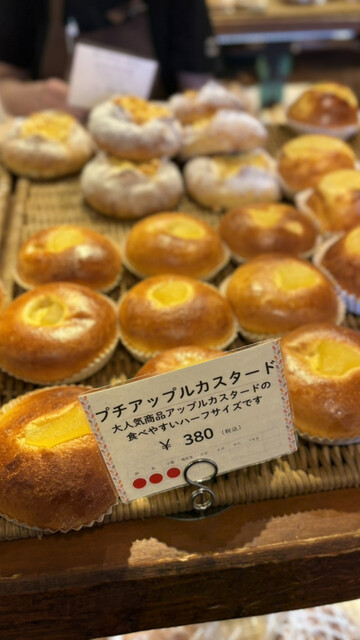
Approach the house-style bakery and the first cue is scale: not a polished hotel pâtisserie or commuter department-store bread counter. Yokohama’s serious bread culture often works differently away from the waterfront and station-mall corridors. In Aoba Ward, the bakery folds into residential life, where bread, bagels, and sandwiches sit closer to household routine than restaurant occasion.
That matters because Japanese bread culture is not a simple import story. Bakeries absorb European technique, American sandwich logic, convenience-store efficiency, and local preferences for softness, precision, and portability. Prologue belongs to the strand where everyday bread is judged like restaurant dining: not through tasting menus or chef theatre, but repeat demand, product discipline, and narrow category focus. Its selection for Tabelog Bread EAST “Tabelog 100” 2022 gives it a public credential in a field where reputation is often hyperlocal and built loaf by loaf.
Aoba Ward bread culture runs on daily demand, not dining-room drama
Yokohama’s restaurant conversation usually tilts toward Chinatown, Minato Mirai, and bay-facing districts, but the outer residential wards reveal another food map. Bread shops compete on breakfast utility, school-run timing, family buying patterns, and a range that covers a quick solo purchase as easily as a household bag. That is a tougher test than it sounds: charm can work once, but local repetition requires a format that fits weekday habits.
Prologue’s listed categories, bread, bagel, and sandwich, place it in a practical bakery lane rather than a pastry-led salon. That helps readers compare Yokohama options. Backerei TOKTARO Motoishikawa honten and La Belle Colline sit in a similar low-spend bakery bracket, while Berg no Shigatsu Honten and Koguma occupy higher spend bands in the local set. The point is not hierarchy, but that the city supports several versions of casual craft: bread for daily use, sweets-led stops, and small-format dining that asks for a more deliberate outing.
Ingredient sourcing in bakeries is quieter than in sushi or kaiseki because raw materials disappear into dough. Flour choice, fermentation, fillings, dairy, and seasonal fruit lack the theatre of a counter course, yet bread is unforgiving: small compromises show in texture, keeping quality, and whether a sandwich eats as a balanced item or scattered parts. Here, sourcing is less luxury signalling than consistency. A bakery earning repeat local use must make the basic purchase dependable before it can be interesting.
For a broader read on the city’s food range, Our full Yokohama restaurants guide is the natural companion, especially if a bakery stop fits into a day with a sit-down meal. Nearby and regional contrasts sharpen the point: 1000 (Yakitori (Grilled chicken skewers)) shows Yokohama’s grilled-skewer register, Aichun points to the city’s Chinese dining depth, Ajowan gives another casual-specialist angle, and Alpenjiro Honten helps readers track Yokohama’s curry culture beyond obvious tourist routes.
The format rewards early, purposeful buying
Japanese bakery shopping has its own etiquette. It is rarely about lingering over a long meal; it is about reading trays, choosing across categories, and knowing selection changes as the day moves. Prologue’s take-out orientation fits that rhythm. The open-terrace and bench setup softens the experience, but the core appeal remains the bakery purchase, not a restaurant-style service arc.
That format explains why cross-city comparison can mislead. A destination restaurant asks diners to surrender time; a bakery asks them to know when a neighbourhood is awake. In Yokohama’s suburban north, bread ties to morning routines, family use, and short detours rather than late-night dining. The low spend bracket is editorially relevant because it signals repeat buying, not a special-occasion bill.
The Tabelog Bread EAST “Tabelog 100” 2022 selection is the trust signal to notice. In Japan, Tabelog’s category lists matter because they sort specialists by field rather than treating all restaurants as one hierarchy. Bread is its own competitive class, with expectations distinct from ramen, sushi, or French dining. For Prologue, that recognition places it inside an eastern Japan bakery conversation, not merely as a local convenience stop.
Travelers building a Yokohama food day should not treat bread as filler between major meals. A bakery visit can show how a residential district eats when it is not performing for visitors. Pairing this stop with more formal meals gives a fuller read on the city than chasing only reservation-led dining. For wider planning, Our full Yokohama hotels guide, Our full Yokohama bars guide, Our full Yokohama wineries guide, and Our full Yokohama experiences guide place a bakery run inside a broader itinerary.
How to place it within a Japan food itinerary
For visitors moving through Japan, Prologue is not a counter restaurant or regional specialty house. It works as a calibration point: what does a recognised neighbourhood bakery look like in residential Yokohama? That question reveals more than asking whether it belongs on a trophy list. The answer sits in format, category discipline, and how bread culture carries daily life.
Readers comparing casual food across the country can use it alongside other specialist pages without forcing one ranking. In Fukuoka, Anzen Shokudo reflects a different everyday-dining grammar. In Kamakura, -Grilled beef Sukiyaki- KAMAKURA TANUKIAN 鎌倉 たぬき庵 in Kamakura moves the meal into a beef-focused register. Tokyo, Osaka, Kumamoto, Kawasaki, and Sapporo each shift the frame again through 鮪と炭火焼き うお炭 秋葉原店 in Tokyo.cafe in Osaka.know in Kumamoto, (Shoku) Vietnam in Kawasaki, and [Curry Senmon Ten] Maruyama Kyoju. in Sapporo.
The same logic travels overseas. Jōdo Saké Bar in Los Angeles and Onigiri Time in Pasadena show how Japanese formats change when filtered through California dining habits. Back in Yokohama, a bakery such as Prologue is valuable precisely because it has not become a grand statement. It shows quieter mechanics of quality: category focus, neighbourhood repetition, and bread good enough to be recognised in a specialist field.
Fast Comparison
Side-by-side context: comparable cuisine and price.
| Venue | Cuisine | Price | Notes |
|---|---|---|---|
| PrologueThis venue — the venue you are viewing | Japanese neighborhood bakery & café | $ | Not listed |
| Silk Road Ryori Budouen | Silk Road / Xinjiang homestyle cuisine | $ | Seya |
| Pain de U | Bakery & café | $ | Kanagawa |
| DORER | Pastry shop & bakery | $ | Nishi |
| Elena | Japanese kissaten-style cafe with handmade cakes and tea | $ | Naka |
| NASCHIKATZE | Traditional Viennese pastry shop | $ | Aoba |
Recognition history
Dated appearances from independent guides and award organizations, with the underlying list record or original source where available.
Tabelog 100 #92 · No. 92
Tabelog · Tabelog 100 - Bread - EAST - 2022
Continue exploring
More in Yokohama
Restaurants in Yokohama
Browse all →


Bars in Yokohama
Browse all →




Hotels in Yokohama
Browse all →




Wineries in Yokohama
Browse all →
At a Glance
- Cozy
- Lively
- Casual
- Casual Hangout
- Solo
- Family
- Standalone
Current opening hours
- Monday
- 6 AM–6 PM
- Tuesday
- 6 AM–6 PM
- Wednesday
- 6 AM–6 PM
- Thursday
- 6 AM–6 PM
- Friday
- 6 AM–6 PM
- Saturday
- 6 AM–6 PM
- Sunday
- 6 AM–6 PM
Hours can change for holidays and private events. Last verified .
Bright, casual, and bustling morning bakery atmosphere with a friendly neighborhood feel, where guests quickly pick up breads and pastries throughout the day.