Gambero Rosso 2 Spicchi · Tabelog 100 #16
Our verdict
A Neapolitan-rooted pizzeria operating out of a compact Nihonbashi Horidome-cho address, Pizzeria Il Tamburello sits inside Tokyo's growing conversation about what Italian cooking means when filtered through Japanese material standards. The Chuo City location places it within easy reach of the city's financial and heritage districts, making it a practical stop for those exploring the area's quieter dining options.

Pearl is the En Primeur Club membership app, where members save venues, book tables and use the concierge.
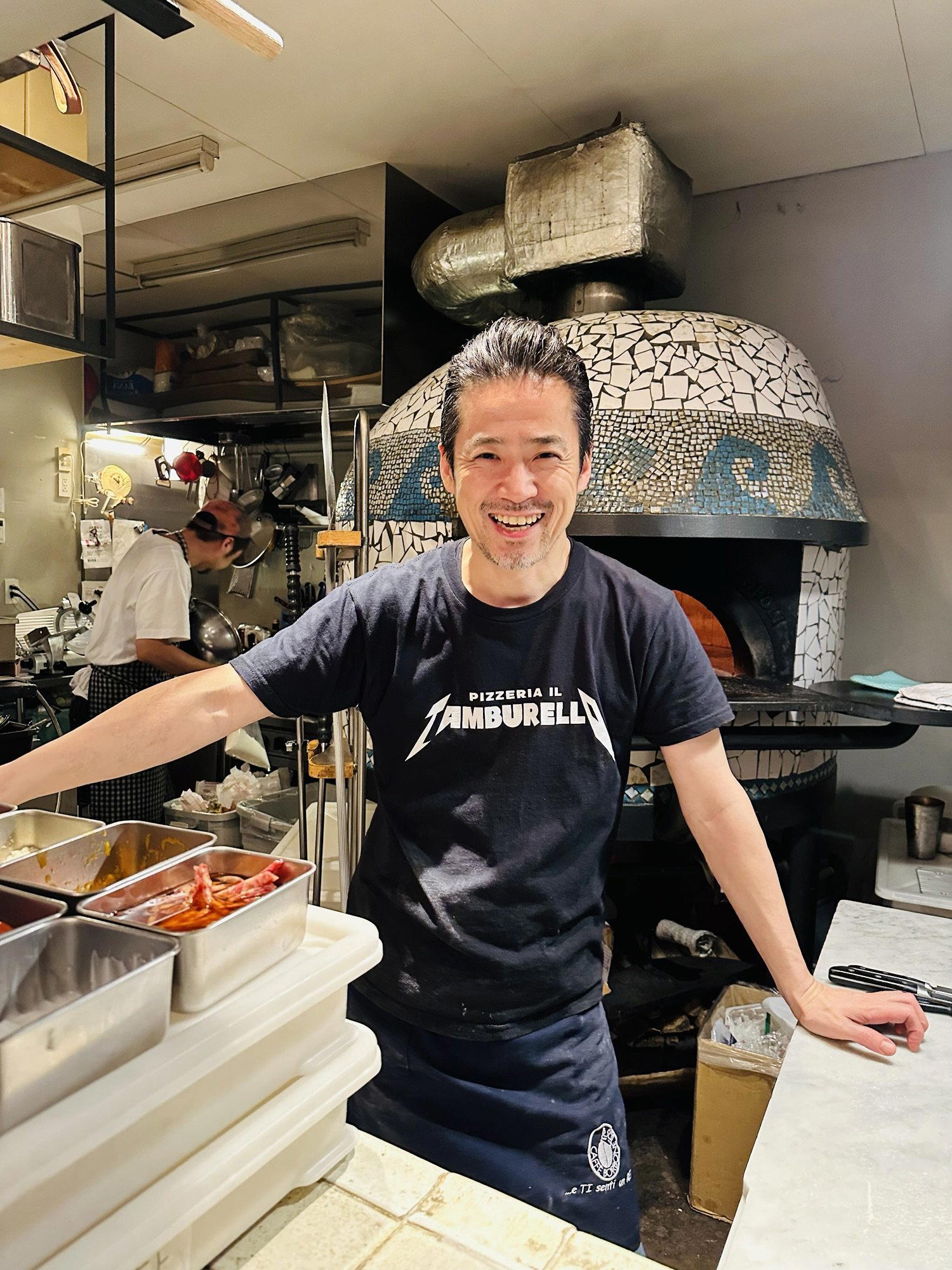
The menu
What to order
- Margherita
- Truffle and Gorgonzola
- Salsiccia e friarielli
Neapolitan Pizza in a City That Demands Precision
Tokyo's relationship with pizza has always been more serious than the category typically invites. Where other cities treat Neapolitan-style pizza as a casual default, Tokyo's dining culture tends to hold every imported tradition to the same standard it applies to its own: sourcing matters, technique is visible, and shortcuts are noticed. That context shapes how any pizzeria in this city positions itself, and how a neighbourhood like Nihonbashi Horidome-cho, with its blend of old mercantile Tokyo and newer food-curious residents, frames the experience before a single dish arrives.
Pizzeria Il Tamburello operates from a ground-floor address in Chuo City, one of Tokyo's more historically layered wards. The Nihonbashi area carries centuries of commercial identity, this was, for much of Edo-period Japan, the geographic and economic centre of the country. Today that density of history coexists with a dining scene that skews toward the considered rather than the casual, with neighbours ranging from long-established Japanese institutions to smaller international formats that have found a foothold precisely because the area rewards quality over volume.
The Ethical Sourcing Conversation in Tokyo's Italian Kitchens
Across Tokyo's Italian restaurants, the question of where ingredients come from has become as contested as it is in French or kaiseki kitchens. Japan's import regulations for dairy and wheat have historically complicated any attempt to replicate Italian originals faithfully, pushing kitchens toward creative substitution or, more interestingly, toward building supply chains that source domestically grown alternatives. Some of the more thoughtful Italian operators in the city work directly with Japanese flour producers and domestic dairy farms, a choice that reduces import emissions, supports local agriculture, and, not incidentally, produces results that reflect the seasonal character of Japanese growing conditions rather than the standardised profile of imported commodity ingredients.
This is the direction in which Tokyo's serious Italian cooking has been moving for several years, and it sits in productive tension with the Neapolitan tradition's own strict geographic logic. Vera Pizza Napoletana certification, for instance, specifies particular Italian tomatoes, particular flour types, and particular water conditions, criteria that are essentially impossible to meet on Japanese soil. The operators who navigate this tension most credibly tend to do so by being transparent about their choices: using Japanese ingredients not as a compromise but as a deliberate editorial decision about what their version of the dish should be.
For context, Tokyo's high-end dining tier, represented by venues like L'Effervescence in Minami-Aoyama and Sézanne, has made locally sourced, seasonally driven procurement a near-universal baseline. The question for a pizzeria format is whether the same rigour is applied to a category that often escapes that scrutiny. The more compelling examples in the city suggest it can be.
Chuo City as a Dining Address
Nihonbashi Horidome-cho sits at an interesting remove from Tokyo's more immediately legible dining districts. It is not Ginza, where the density of Michelin-starred Japanese cooking draws international visitors in predictable patterns. It is not Shinjuku or Shibuya, where volume and variety do most of the work. Chuo City's dining character is more residential-professional in texture, shaped by the offices, galleries, and small cultural institutions that define the ward's daytime life and the quieter, more neighbourhood-oriented restaurants that serve the people who work and live within it.
That positioning has historically suited small-format operators well. A pizzeria with strong sourcing discipline and a focused menu is a better fit for this kind of neighbourhood than for the tourist-heavy corridors further south or west. The address, 1-2-9 Nihonbashihoridomecho, 1F, places it on a relatively quiet street, the kind of location that rewards knowing where you are going rather than stumbling upon it.
For reference against Tokyo's other serious Italian and French-influenced kitchens, the contrast in format and scale is significant. RyuGin and Harutaka operate in a tier defined by multi-course progression, counter service, and prices that reflect years of critical recognition. A focused pizzeria format occupies a different part of the market entirely, more accessible in price and format, but not necessarily less demanding in its standards for what goes on the plate. Crony in Minami-Aoyama demonstrates how an innovative approach to European culinary traditions can build serious recognition without the full kaiseki apparatus.
What the Category Asks of Any Tokyo Pizzeria
Pizza in Tokyo carries a peculiar burden. The city's diners have, over two decades of serious Italian immigration to the local food scene, developed a reference point that is often more refined than what visitors from outside Japan might expect. Japanese pizza culture includes a documented enthusiasm for Neapolitan technique, the charred leopard-spot crust, the wet centre, the short proof times, that has produced some genuinely skilled operators across the country, not only in Tokyo but also in cities like Osaka (where HAJIME anchors a different kind of European-inflected ambition) and Fukuoka (see Goh for the broader regional picture).
The sustainability angle matters more in this category than it might first appear. Wood-fired ovens, the standard tool of Neapolitan pizza production, carry an energy and emissions profile that is attracting increasing scrutiny in urban environments. Some Tokyo operators have moved toward gas-hybrid options; others have doubled down on wood sourced from certified sustainable forestry, treating fuel provenance with the same attention given to flour and tomatoes. How a kitchen handles this question, and whether it communicates its position to guests, is increasingly part of the quality signal in this segment.
The broader Japan dining network offers useful comparative context. Venues like akordu in Nara and Gion Sasaki in Kyoto demonstrate how thoughtful sourcing and regional identity can distinguish a restaurant in a market that rewards those signals. Internationally, Le Bernardin in New York and Atomix show how rigorous ingredient provenance frameworks can anchor a kitchen's entire public identity. A well-run pizzeria in Chuo City is playing a different game in terms of format and price, but the underlying logic, that sourcing transparency builds trust, applies across categories.
Exploring further afield, venues like this Nanao restaurant, this Sapporo address, and regional operators such as Bistro Ange in Toyohashi and Birdland in Sakai round out a picture of Japan's broader, serious mid-market dining scene, the tier where craft and sourcing ethics do real commercial work without the critical infrastructure of Michelin stars. This Takashima address and this Nishikawa Machi spot add further regional depth to that picture.
Planning Your Visit
For a broader view of where Pizzeria Il Tamburello sits within Tokyo's dining options, see our full Tokyo restaurants guide.
Frequently asked questions
Where exactly is PIZZERIA IL TAMBURELLO?
PIZZERIA IL TAMBURELLO is located at Japan, 〒103-0012 Tokyo, Chuo City, Nihonbashihoridomecho, 1 Chome−2−9 1F #B DIG DUG, Tokyo.
How does Pizzeria Il Tamburello's Nihonbashi location compare to Tokyo's more prominent Italian dining districts?
Nihonbashihoridomecho sits at a deliberate remove from Ginza and Minami-Aoyama, where Tokyo's concentration of Michelin-recognised Italian addresses is highest. That distance is not a drawback, Chuo City has its own established dining culture rooted in office-district lunches and neighbourhood regulars rather than destination tourism. A Neapolitan pizzeria operating in that context answers to a different, arguably more consistent, local demand.
What should I order at PIZZERIA IL TAMBURELLO?
What the Nihonbashihoridomecho address and the broader Tokyo Neapolitan category suggest is a focused menu built around dough technique and sourcing discipline. Visit the restaurant directly or check current listings to confirm what is on offer before arriving with fixed expectations.
Do I need a reservation for PIZZERIA IL TAMBURELLO?
The Chuo City location draws a mix of office and residential traffic, and smaller pizzerias in that part of Tokyo tend to fill at lunch without much warning. Arriving early or enquiring in person is the most reliable approach until direct contact information becomes available.
Comparable Spots
Comparable venues nearby, for context on price, style, and recognition.
| Venue | Cuisine | Price | Awards | Notes |
|---|---|---|---|---|
| PIZZERIA IL TAMBURELLOThis venue (the venue you are viewing) | Authentic Neapolitan Pizza | $20–30 | Gambero Rosso 2 Spicchi · Tabelog 100 #16 | Not listed |
| pizzeria fabbrica 1090 | Neapolitan Pizza | $20–30 | Tabelog 100 #83 | Ōta |
| Bar & Enoteca Implicito | Italian wine bar & enoteca | $20–30 | Gambero Rosso 2 Bottiglie | Shibuya |
| オステリア・ウネット | Florentine Tripperia (Offal-Focused Italian) | $50–100 | Not listed | Chūō |
| MASSIMOTTAVIO | Neapolitan Pizza | Not listed | 50 Top Pizza Asia-Pacific #32 · Tabelog 100 #89 | Suginami |
| Trattoria Tsukiji Paradiso | Southern Italian Seafood Trattoria | $50–100 | Tabelog 100 #14 | Chūō |
Recognition history
Dated appearances from independent guides and award organizations, with the underlying list record or original source where available.
Gambero Rosso 2 Spicchi
Gambero Rosso
Tabelog 100 #16 · No. 16
Tabelog · Tabelog 100 - Pizza - 2025