
A 24-seat Ontakesan pizzeria with Tabelog Pizza 100 selection for 2025, pizzeria fabbrica 1090 belongs to Tokyo’s quieter wave of serious neighborhood pizza rooms. The draw is not Ginza theatre or hotel polish, but a compact counter-and-table format where wine, family-friendly service, and modest pricing place it in a different lane from the city’s tasting-menu economy.
Pearl is the En Primeur Club membership app — saves, bookings, and concierge access live there. Same editors, same standards.
- Address
- 東京都大田区北嶺町34-6 中央ビル 1F
- Phone
- +81364257788
- Website
- r.goope.jp
 Saves & bookings on Pearl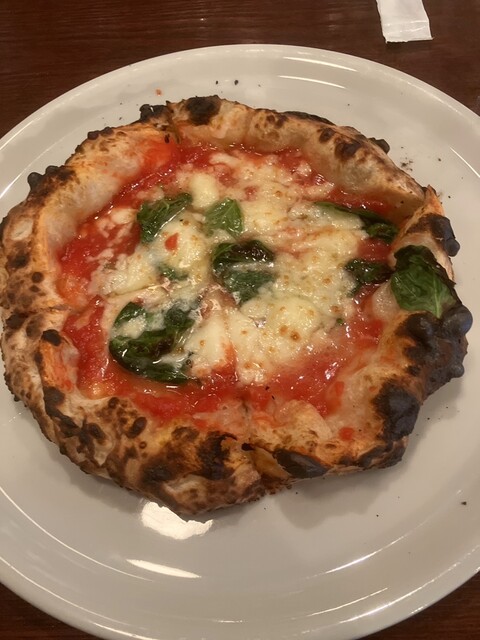
Ontakesan is not the Tokyo most visitors imagine for dinner. The station sits on the Tokyu Ikegami Line, away from hotel corridors and department-store dining floors, with a residential rhythm of low-rise blocks, local errands, and slower evenings. That setting matters: Tokyo’s pizza culture has matured beyond novelty, and some stronger rooms now work in neighborhoods where rent, repeat custom, and a tight service footprint shape the experience as much as the oven.
pizzeria fabbrica 1090 fits that pattern. Its selection for Tabelog Pizza 100 in 2025 is a clear credential in a crowded category, but the more telling signal is scale: 24 seats, split between four counter seats and 20 table seats. That is small enough to feel personal, but not so austere that dinner becomes a chef-facing performance. In a city where premium dining often means fixed courses and high-friction reservations, this is serious pizza without fine-dining posture.
Tokyo pizza, viewed from a residential line rather than a dining district
Tokyo has become among the more exacting pizza cities outside Italy because its dining culture rewards specialization. The city already understands counter craft through sushi, tempura, yakitori, and kappo; pizza slipped naturally into that grammar once dough fermentation, oven management, and ingredient discipline became central. The strongest pizzerias here are rarely casual in the careless sense. Rooms may be relaxed, but the cooking is judged by the granular standards Tokyo applies to ramen broth or yakitori smoke.
That makes Tabelog Pizza 100 recognition useful not as a trophy, but as a sorting mechanism. The 2025 list places the venue among national pizza specialists rather than generic Italian restaurants. A Tabelog score of 3.86 reinforces that position within Japan’s restaurant-rating culture, where small numerical gaps carry real weight among local diners. The dinner budget, JPY 4,000 to JPY 4,999, sits far below Tokyo’s luxury omakase and dégustation circuit, while lunch at JPY 1,000 to JPY 1,999 keeps it realistic for repeat neighborhood use.
Comparison clarifies the niche. Jinenbo, also in Tokyo, sits in a similar everyday-premium price conversation at JPY 3,000 to JPY 3,999 for dinner, while Natsuya no Chuka Soba occupies the lower ramen-adjacent bracket at JPY 1,000 to JPY 1,999. BAMBAKUN signals another Tokyo route, with a creative format and higher spend cue. Against those references, pizzeria fabbrica 1090 is neither cheap-eats utility nor special-occasion theatre. It is a focused pizza room with controlled spend, compact format, and recognition from category depth rather than spectacle.
Wine is the clue to how the room wants to be used
The listed drink category is wine, and that matters. In Tokyo, pizza can tilt toward quick lunch, family dinner, craft-beer hangout, natural-wine bar with dough, or date-night trattoria. A wine-led framing places this room near the middle, where pizza is a table meal rather than a snack. The counter seats support solo or two-person dining; the table seats work for families and small groups. Children are welcome, giving the address a different social texture from adult-only counters and late-night wine bars.
Because no named bottles or sommelier details are public, the useful editorial point is structural rather than label-specific. Wine changes pizza’s pacing. It encourages ordering across the table, staying through more than one round, and treating the meal as a shared evening rather than fast turnover. Tokyo does this well: its better casual restaurants often compress ambition into small rooms where the beverage program signals seriousness without ceremony.
The no-smoking policy supports that wine-and-dinner reading, as does the configuration: four counter seats for close-range observation and 20 table seats for a conventional meal. Private rooms are not part of the format, but private use is available, suggesting a flexible neighborhood restaurant rather than a rigid destination counter. The result suits travelers who have already booked sushi, tempura, or kaiseki and want another view of Tokyo’s craft dining culture without another formal course sequence.
Where it belongs in a Tokyo itinerary
This is not shorthand for Tokyo luxury. It is more revealing. Ota’s Kitaminemachi area shows how strong specialist dining in Tokyo often hides in plain residential geography, close to railway routines rather than international hotel lobbies. For a wider food map, the address counters the central-city pull of Shinjuku, Ginza, Roppongi, and Nihonbashi, rewarding diners willing to let a neighborhood define the evening.
The surrounding itinerary can stay deliberately varied. For Tokyo restaurant planning, compare this focused pizzeria with the broader range in Our full Tokyo restaurants guide, from charcoal-led formats such as . 鮪と炭火焼き うお炭 秋葉原店 to Shinjuku dining at 12/10 Shinjuku ten, yakitori at 124. KAGURAZAKA (Yakitori), graphic café culture at 2D Cafe, and curry specialization at 3 Chome no Curry Ya San. Travelers pairing dinner with sleep, drinking, or cultural planning can widen the map through Our full Tokyo hotels guide, Our full Tokyo bars guide, Our full Tokyo wineries guide, and Our full Tokyo experiences guide.
Outside Tokyo, the comparison is less about pizza than how Japan’s regional dining formats communicate value: sukiyaki in Kanagawa at -Grilled beef Sukiyaki- KAMAKURA TANUKIAN 鎌倉 たぬき庵 in Kamakura, café culture at.cafe in Osaka, small-format dining at.know in Kumamoto, Vietnamese cooking in Kanagawa at (Shoku) Vietnam in Kawasaki, Sapporo curry at [Curry Senmon Ten] Maruyama Kyoju. in Sapporo, and Kyoto’s [ki:] in Kyoto. Across the Pacific, Jōdo Saké Bar in Los Angeles and Onigiri Time in Pasadena show how Japanese food formats travel, adapt, and acquire new price signals abroad.
The editorial case is clear: pizzeria fabbrica 1090 shows Tokyo’s pizza scene at neighborhood scale, with enough recognition to justify attention and enough restraint to avoid turning dinner into an occasion engineered for outsiders. The wine cue, compact seating, family-friendly status, and 2025 Pizza 100 selection all point the same way: a serious pizzeria for diners who care about category depth more than dining-room drama.
Standing Among Peers
Comparable venues for context, by category and price tier.
| Venue | Cuisine | Price | Notes |
|---|---|---|---|
| pizzeria fabbrica 1090This venue — the venue you are viewing | Neapolitan Pizza | $$ | Not listed |
| RistoPizza by Napoli sta ca | Contemporary Neapolitan Pizza | $$ | Minato |
| Gelateria Acquolina | Artisanal Italian Gelato | $$ | Meguro |
| Pizzeria Parentesi | Organic-focused Neapolitan-style Pizzeria & Italian in Meguro | $$ | Meguro |
| Pizzeria Trattoria da Okapito | Neapolitan pizza & seasonal Italian trattoria | $$ | Suginami |
| Alporto | Italian Kaiseki | $$$ | Minato |
Recognition history
Dated appearances from independent guides and award organizations, with the underlying list record or original source where available.
Tabelog 100 #83 · No. 83
Tabelog · Tabelog 100 - Pizza - 2025










At a Glance
- Cozy
- Classic
- Casual Hangout
- Solo
- Family
- Open Kitchen
- Standalone
- Beer Program
A small, neighborhood-style pizzeria with a focused, no-frills atmosphere centered on freshly fired pizza and a hands-on service approach.