Michelin Bib Gourmand
Our verdict
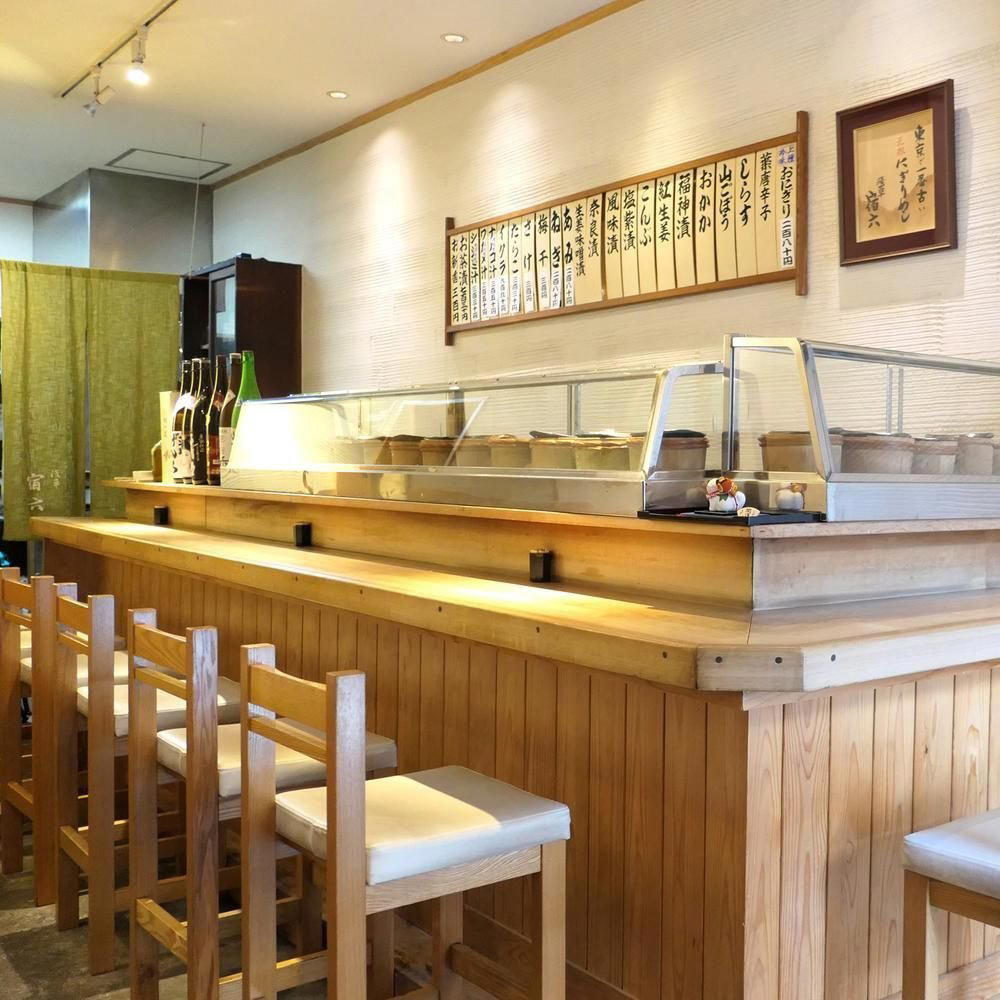
Three generations of the same family have served onigiri from this Asakusa counter, earning a Michelin Bib Gourmand in 2024. Ingredients displayed sushi-counter style are formed to order, ranging from salmon and dried plum to herring roe pickled in sake lees. It is among the few dedicated onigiri shops in Tokyo to receive formal critical recognition at this level.

Pearl is the En Primeur Club membership app, where members save venues, book tables and use the concierge.
The menu
What to order
- Salmon onigiri
- Ume onigiri
- Tarako onigiri
The Bib Gourmand and the Rice Ball: What Michelin's Recognition of Yadoroku Tells You About Tokyo Dining
The glass case is the tell. At Onigiri Asakusa Yadoroku, fillings are arranged and displayed exactly as fish would be at a sushi counter, each ingredient visible before the order is placed and each rice ball formed on the spot. It is a presentation logic that insists on the same transparency and craft standards applied to far more expensive formats, and it is part of what Michelin's inspectors are registering when they award a Bib Gourmand: a kitchen operating with discipline at a price point that requires no compromise on either side of the transaction.
Where Onigiri Fits in the Tokyo Dining Register
Tokyo's formally recognised dining scene skews heavily toward omakase counters, kaiseki sequences, and tasting-menu formats. Consider the price and format distance between Yadoroku's single-yen price range and the ¥¥¥¥ tier occupied by counters such as Harutaka for sushi or RyuGin for kaiseki. The gap is considerable, and the Bib Gourmand exists precisely to mark the places where that gap closes in terms of kitchen seriousness, even when the price differential remains. Onigiri as a category sits outside the multi-course structures that dominate prestige dining, and that outsider position makes a Michelin recognition more pointed, not less. It signals that the inspectors found something worth encoding at the level of the ingredient work and the generational consistency, not the setting or the price.
In the broader context of Tokyo's food culture, onigiri occupies a position that is simultaneously everyday and, in skilled hands, technically specific. The rice-to-filling ratio, the temperature of the rice, the firmness of the moulding, and the quality of the nori are all variables that affect the result. Dedicated onigiri shops operating at this standard represent a smaller subset of Tokyo's dining options than the volume of convenience-store versions might suggest. For readers tracking the full range of the city's food culture, the full Tokyo restaurants guide places this category in its wider context.
Three Generations in Asakusa: What Continuity Signals
Asakusa's dining character is shaped by its history as a popular entertainment district, a place where bars, theatres, and street commerce created a dense pedestrian culture across the twentieth century. The venue data for Yadoroku is explicit about this: the area was once home to numerous bars and pubs, and customers would drop in for morsels to restore constitutions after a night out. A family serving the same product across three generations in that neighbourhood is not an accident of loyalty; it reflects an audience that returned consistently enough to support continuity. That kind of neighbourhood embeddedness is harder to manufacture than a Michelin star and, in a city where leases are competitive and food trends cycle quickly, it carries its own form of credibility.
Generational depth of this kind is relatively rare across Tokyo's recognised dining scene. At the higher end of the price register, restaurants such as L'Effervescence and Sézanne trade in chef-driven concepts that are typically single-generation projects. The institutional continuity at Yadoroku is a different kind of signal, one that speaks to product consistency rather than creative evolution.
The Ingredient Range as Editorial Argument
The filling selection at Yadoroku runs from the familiar to the genuinely uncommon. Salmon and dried plum are baseline offerings at any onigiri counter worth the name. What extends Yadoroku's range is the presence of ingredients such as herring roe pickled in sake lees and opossum shrimp preserved and simmered in sweetened soy sauce. These are not novelty items; they belong to a tradition of Japanese preserved and fermented ingredients that requires sourcing discipline and product knowledge to execute properly. The glass-case display format means that customers can select based on what is available that day, a structure that mirrors the best-available logic of sushi omakase at a fraction of the price and formality.
That orientation is a meaningful departure from the standardised comfort-food positioning that most low-price-tier operations default to.
Placing Yadoroku Against the Regional Field
For readers moving between Japanese cities, the contrast with formally recognised dining elsewhere in the country is instructive. Restaurants such as Gion Sasaki in Kyoto, HAJIME in Osaka, and Goh in Fukuoka represent the higher-end anchors of their respective cities' recognised scenes. Yadoroku operates in an entirely different register but lands on the same Michelin list, which is part of what makes the Bib Gourmand category useful as a navigation tool. It is not a consolation tier; it is a separate category of recognition, applied to places where the price-to-quality ratio is the primary editorial argument.
For international visitors arriving from cities where recognised dining clusters at higher price points, such as Le Bernardin in New York City or Atomix in New York City, the Bib Gourmand tier in Tokyo offers a genuinely different entry point into the city's food culture. The accessible price range at Yadoroku means the decision calculus involves time and proximity rather than reservation strategy or budget allocation. Asakusa is reachable via multiple metro lines, and the counter format at this kind of shop typically moves quickly enough that queuing, rather than advance booking, is the relevant logistical consideration. Visiting during off-peak hours, either early in the service or mid-afternoon if the shop operates through the day, is the standard approach for shorter waits at popular Tokyo counters of this type.
What the 2024 Bib Gourmand Means in Practice
Michelin's 2024 Bib Gourmand listing for Yadoroku places it in company with Tokyo's most carefully documented value dining. That combination of formal critical recognition and broad popular approval is not always found together, and when it is, it tends to indicate a product that is genuinely consistent rather than context-dependent.
For readers building a Tokyo itinerary that ranges across price points and formats, the pairing logic is direct. An afternoon at Yadoroku fits alongside an evening at Crony or a later exploration of Tokyo's bar scene without any tonal contradiction. The city's dining culture is built on exactly this kind of range, and navigating it well means treating the Bib Gourmand tier as a serious category rather than a consolation bracket. Yadoroku is a point of entry into Asakusa's food character and into a craft tradition that the neighbourhood has supported for three generations. The Michelin recognition in 2024 made that case in formal terms; the shop's own record made it long before.
For further orientation across Japan's dining scene, the guides to akordu in Nara and 1000 in Yokohama extend the regional picture, while the 6 in Okinawa represents a further point on the archipelago's recognised dining map. Tokyo's own full guides to hotels, wineries, and experiences complete the planning picture for visitors spending meaningful time in the city.
Frequently Asked Questions
- What is Onigiri Asakusa Yadoroku known for?
- Yadoroku holds a 2024 Michelin Bib Gourmand and is recognised as a three-generation family operation in Asakusa. The shop is known for its glass-case display of fillings formed to order, and for an ingredient range that extends from standard options such as salmon and dried plum to less common preserved items including herring roe pickled in sake lees and opossum shrimp in sweetened soy sauce.
- What do regulars order at Onigiri Asakusa Yadoroku?
- The filling selection covers both familiar and rarer ingredients. The rarer preserved items, including herring roe pickled in sake lees, represent the part of the menu that distinguishes Yadoroku from standard onigiri counters. The glass-case format allows customers to see what is available before ordering, which is the standard approach to selecting at the counter.
- How far ahead should I plan for Onigiri Asakusa Yadoroku?
- At the ¥ price range and with a counter format, advance booking is not the relevant variable. The practical consideration is queuing time, particularly at peak hours. Visiting during off-peak periods reduces wait times at popular Tokyo counters of this type. The Michelin Bib Gourmand recognition in 2024 has increased awareness, so earlier-in-day visits are the standard local approach.
Frequently asked questions
Is Onigiri Asakusa Yadoroku more mid-range or high-end?
Pricing at Onigiri Asakusa Yadoroku is listed as ¥.
Where is Onigiri Asakusa Yadoroku in Tokyo?
Onigiri Asakusa Yadoroku is located at Japan, 〒111-0032 Tokyo, Taito City, Asakusa, 3 Chome−9−10 キャピタルプラザ浅草 1F, Tokyo.
What awards or recognition does Onigiri Asakusa Yadoroku have?
Onigiri Asakusa Yadoroku has received recognition including: This family has been serving onigiri in Asakusa for three generations. Ingredients are arrayed inside a glass case, as at a sushi shop, to be formed into onigiri on the spot. Offerings range from salmon and dried plum to rarer items such as….
What do regulars order at Onigiri Asakusa Yadoroku?
The filling selection runs from standards like salmon and dried plum to rarer options: herring roe pickled in sake lees and opossum shrimp simmered in sweetened soy sauce. The glass-case display, arranged like a sushi counter, lets you see exactly what's available before ordering. Regulars often choose based on how their stomach is feeling that day, a tradition rooted in the venue's history of serving late-night bar-goers in Asakusa.
Is Onigiri Asakusa Yadoroku focused on a specific cuisine style?
How far ahead should I plan for Onigiri Asakusa Yadoroku?
Current hours and reservation details are not published online, so visiting outside midday and early evening rush periods is the most reliable approach. No phone or website is listed, so walk-in is the standard method.
What is Onigiri Asakusa Yadoroku known for?
Yadoroku is a three-generation family operation in Asakusa, Tokyo, recognised by the 2024 Michelin Bib Gourmand for serving hand-formed onigiri with ingredients displayed in a glass case, following the logic of a sushi shop. The filling range extends well beyond convenience-store staples into preserved and pickled items that reflect older Japanese ingredient traditions. At the ¥ price tier, it sits among the most carefully documented value dining in the city.
Cuisine Lens
| Venue | Cuisine | Price | Awards | Notes |
|---|---|---|---|---|
| Onigiri Asakusa YadorokuThis venue (the venue you are viewing) | Traditional Onigiri | $10–20 | Michelin Bib Gourmand | Not listed |
| Harutaka | Edo-Style Omakase Sushi | $200–300 | 3 Michelin Stars · World's 50 Best #76 | Sushi |
| RyuGin | Modern Kaiseki | $500+ | 3 Michelin Stars · World's 50 Best #41 | Kaiseki, Japanese |
| L'Effervescence | Modern French with Japanese Influences | $200–300 | 3 Michelin Stars · World's 50 Best #69 | French |
| HOMMAGE | Modern French with Japanese Influences | $150–200 | 2 Michelin Stars · World's 50 Best #78 | Innovtive French, French |
| MAZ | Innovative Peruvian-Japanese Fusion | $150–200 | 2 Michelin Stars · World's 50 Best #28 | Innovative |
Recognition history
Dated appearances from independent guides and award organizations, with the underlying list record or original source where available.
Michelin Bib Gourmand
Michelin
Full recognition history (2 entries)
Michelin Bib Gourmand
Michelin