
Tabelog Silver #98
Our verdict
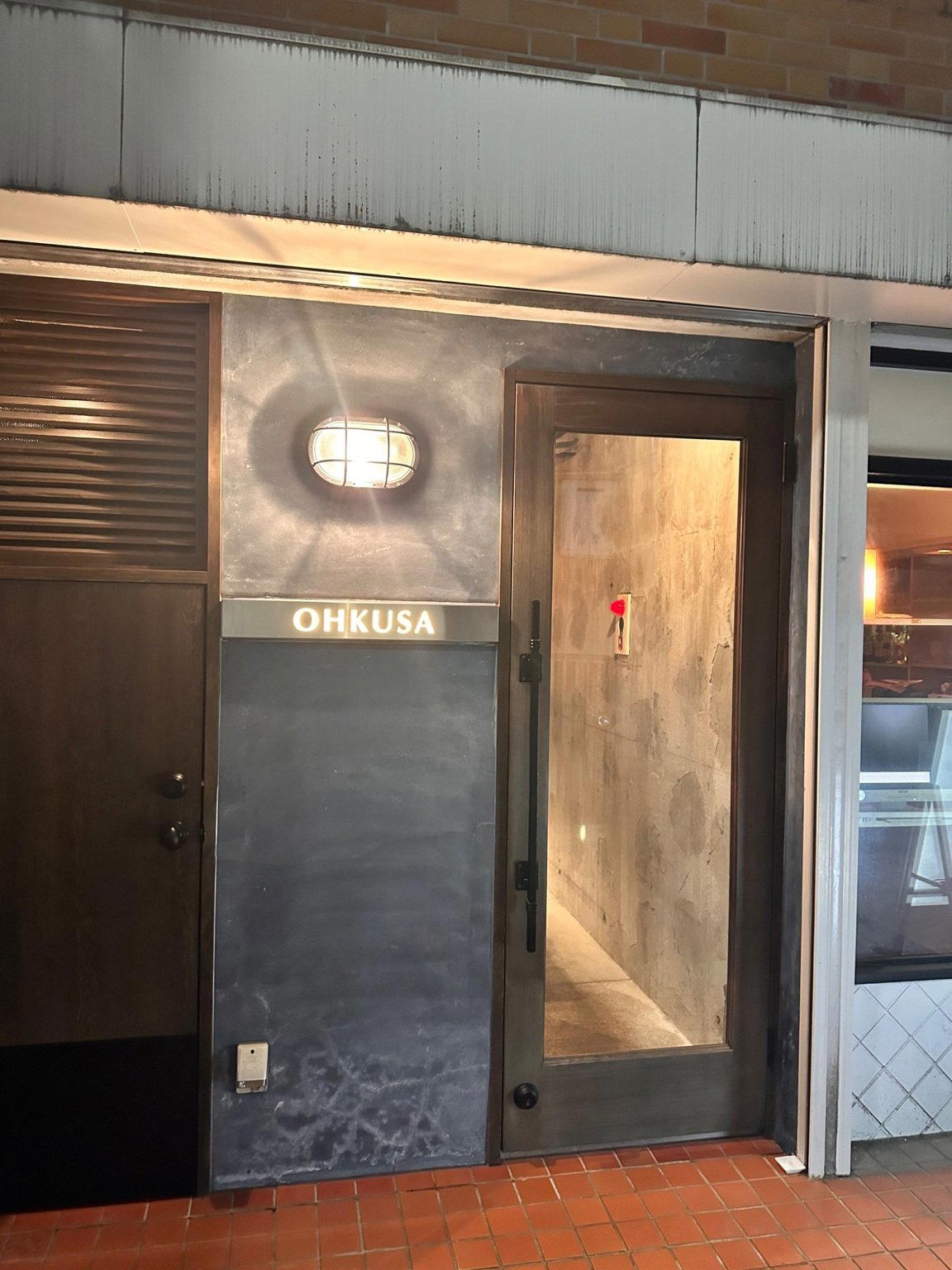
An eight-seat yakitori counter in Shinjuku's Arakicho district, OHKUSA has held Tabelog Silver recognition in four of the past six years and earned consecutive Yakitori 100 listings since 2021. Dinner runs JPY 15,000–19,999, reservations open exactly one week ahead by phone, and the counter accepts a maximum of two guests per booking. Cash only; no photography permitted inside.

Pearl is the En Primeur Club membership app, where members save venues, book tables and use the concierge.
The menu
What to order
- Takasaka Chicken Breast
- Kousaka Chicken Liver
- Shingen Chicken Red Meat
Eight Seats, One Week, No Exceptions
Tokyo's highest-regarded yakitori counters share a particular discipline: small capacity, short booking windows, and a near-complete absence of the concessions that larger restaurants make to convenience. OHKUSA operates from an eight-seat counter in the Morito Building on Arakicho's quiet residential side streets, four minutes on foot from Yotsuya Sanchome Station. The counter accepts a maximum of two guests per booking. Reservations open precisely one week in advance by phone between noon and 5 p.m. and no booking is accepted beyond that one-week horizon. If the target date falls on a public holiday, the window shifts to the next business day. This is not a quirk of administration, it is the operational shape of a counter built to function at close range, where every seat matters and the margin for no-shows is effectively zero.
Opened on 11 November 2019, OHKUSA entered the Tabelog award system quickly and has sustained recognition across six consecutive years: Bronze in 2021, Silver in 2022, 2023, and 2024, Bronze in 2025, and Silver again in 2026, with a current score of 4.39. It has appeared on the Tabelog Yakitori EAST 100 list every year from 2021 through 2025. In the context of Tokyo's yakitori scene, a category that spans everything from standing-room kushiyaki stalls in Yurakucho to omakase-format counters priced well above this bracket, that consistency of recognition over half a decade places OHKUSA firmly in the upper tier of single-category specialist counters. For comparison, the broader fine dining tier in Tokyo includes kaiseki rooms like RyuGin, sushi counters like Harutaka, and French tables like Sézanne and L'Effervescence, all operating at higher price points and with different booking architectures.
The Tradition Behind Binchotan Yakitori
Yakitori as a serious cooking discipline has a longer and more demanding technical history than its casual street-food reputation suggests. The use of binchotan, white charcoal made from Japanese oak, burning at sustained high heat with minimal smoke, changes the dynamics of chicken cookery entirely. The charcoal maintains temperatures that allow fat to render cleanly without flaring, gives the cook precise control over crust formation, and produces a radiant heat that penetrates differently than gas or standard charcoal. At counters operating at this level, the chicken itself is the primary variable: free-range birds, breed-selected and sourced daily, butchered in-house into cuts that reflect the anatomy of the bird rather than a standardised menu grid. The slow grilling approach described in OHKUSA's Tabelog listing, generous cuts, grilled slowly over binchotan, is the technical method that separates this class of yakitori from faster, higher-throughput formats. It is not a selling point; it is simply what the cooking requires at this standard.
Arakicho is one of Tokyo's more self-contained neighbourhood pockets: a small residential district between Shinjuku and Yotsuya with a concentration of small restaurants and bars that has built gradually over decades. It does not attract the same international foot traffic as Ginza or Nishi-Azabu, which is partly why counters here can maintain the operational tightness that OHKUSA's format demands. The neighbourhood context matters, the audience is largely local and repeat, and the booking system is calibrated accordingly.
The Drink Program: Sake, Shochu, Wine
The editorial angle on any serious yakitori counter's drink list begins with a structural fact: binchotan-grilled chicken, with its rendered fat and char, is one of the more versatile pairing canvases in Japanese cooking. The fat handles acid well. The char handles tannin. The seasoning range, from lightly salted to tare-glazed, means a drink program can move across a wide register without any single choice dominating.
OHKUSA's Tabelog listing flags particular attention to nihonshu (sake), shochu, and wine, three categories that each approach the food from a different angle. Premium sake, especially junmai daiginjo styles with their clean umami character and low astringency, has a long history of pairing intelligently with grilled poultry. Shochu's distilled dryness, particularly imo or mugi varieties, cuts through fat without the sweetness interference that beer can introduce. The wine component is the more pointed editorial signal: a counter of eight seats choosing to maintain a wine selection alongside sake and shochu is committing to a significant cellar discipline relative to its size. That combination, at a JPY 15,000–19,999 price point with no service charge, means the drink margin is not the revenue driver, the pairing integrity is the point.
This approach puts OHKUSA in a small cohort of Tokyo counters where the drink list is treated as an equal structural element of the meal rather than an afterthought. The parallel in Tokyo's broader scene appears at innovative French tables like Crony, where drink integration is also a deliberate editorial position rather than a commercial one. At OHKUSA, the three-category drink focus at eight seats signals the same seriousness applied to a very different culinary register.
Policies That Define the Format
Several of OHKUSA's operational rules are worth reading as format statements rather than restrictions. The counter does not accept reservations from operators of other yakitori restaurants, an unusual policy that positions the room as a place for guests rather than industry reconnaissance. Photography and video are prohibited inside. Minors are not admitted. Credit cards, electronic money, and QR code payments are all declined; the counter operates on cash only with no service charge or additional fees. Maximum party size is two.
These policies collectively describe a counter designed for uninterrupted focus on the food. The no-photography rule in particular is common at the top tier of small Tokyo counters, it keeps the rhythm of service intact and prevents the pacing that marks the difference between a grilled chicken dinner and a performance of one. The cash-only structure, combined with the absence of a service charge, keeps the transaction simple and the pricing transparent: what the menu costs is what you pay.
The service window of 19:00 to 21:30, Tuesday through Saturday (closed Sundays, Mondays, and public holidays), means a single seating per evening. There is no second turn. The evening is structured as a single continuous event at the counter, which is consistent with how the booking and capacity constraints function across the board.
Planning a Visit
Reaching OHKUSA is direct: Yotsuya Sanchome Station on the Tokyo Metro Marunouchi Line puts you 196 metres from the Morito Building, a four-minute walk through Arakicho. The phone reservation line (+81-3-6709-8874) opens at noon exactly one week before your intended visit date. Reservations are accepted for parties of up to two. Bring cash; no card payment of any form is accepted. The dress code is not specified, but the price point and format suggest smart casual at minimum. Photography equipment, including phones used as cameras, should remain in your pocket from the moment you enter.
For visitors building a broader Tokyo itinerary around serious dining, our full Tokyo restaurants guide covers the range from sushi to kaiseki to French. Tokyo hotels, bars, wineries, and experiences are covered separately. For those travelling the wider Japan circuit, comparable serious dining at different price points and formats includes HAJIME in Osaka, Gion Sasaki in Kyoto, akordu in Nara, Goh in Fukuoka, 1000 in Yokohama, and 6 in Okinawa. For those comparing Tokyo's counter format to international equivalents, Le Bernardin and Atomix in New York City operate in similarly specialist single-focus registers, though at very different price and format scales.
Frequently asked questions
Is OHKUSA formal or casual?
The format sits between the two. The price point, JPY 15,000 to 19,999 for dinner, and the Tabelog Silver award history place it clearly in the serious dining tier, but the counter format and the yakitori category are inherently more relaxed in atmosphere than a kaiseki room or a white-tablecloth French restaurant. The no-photography rule, the cash-only policy, and the maximum two-person booking all create an environment of focused attention rather than occasion-dining spectacle. Smart casual dress is appropriate. First-time visitors should treat it with the same preparation as any serious counter booking in Tokyo.
What dish is OHKUSA famous for?
The Tabelog listing describes the approach rather than specific dishes: free-range chicken selected daily, cut into generous pieces, and grilled slowly over binchotan charcoal. At counters of this calibre, the menu is not published in advance and typically follows an omakase structure where the cook determines the sequence based on the bird and the service. The format, the sourcing discipline, and the binchotan method are the consistent elements, specific preparations vary. Five consecutive years on the Tabelog Yakitori 100 list suggests reviewers return to the precision of the grilling and the quality of the sourcing as the defining characteristics.
What do critics highlight about OHKUSA?
Tabelog's review aggregate gives OHKUSA a score of 4.39, with Silver recognition in 2022, 2023, 2024, and 2026, and Bronze in 2021 and 2025, one of the more sustained award records in the yakitori category in Tokyo east. The consistent Yakitori 100 placement across five years reflects depth of repeat-reviewer sentiment rather than a single strong year. The policies the counter enforces, no industry reservations, no photography, cash only, maximum two per booking, tend to generate commentary in reviews as signals of the counter's focus on the food itself rather than on commercial throughput.
Price and Recognition
Comparable venues nearby, for context on price, style, and recognition.
| Venue | Cuisine | Price | Awards | Notes |
|---|---|---|---|---|
| OHKUSAThis venue (the venue you are viewing) | Modern Yakitori Omakase | $100–150 | Tabelog Silver #98 | Not listed |
| Sushi Ogawa | Edomae Sushi Omakase | $100–150 | Not listed | Chūō, Edomae Sushi Omakase |
| Bistrot Dia | Japanese Kobe Beef Teppanyaki | $150–200 | Not listed | Minato, Japanese Kobe Beef Teppanyaki |
| Ginza Torishige | Traditional Yakitori | $50–100 | Not listed | Chūō, Traditional Yakitori |
| Tonkatsu Sugita | Tonkatsu | $20–30 | Tabelog 100 #100 | Taitō, Tonkatsu |
| Kagurazaka Teppanyaki Himawari | Japanese Teppanyaki | $150–200 | Tabelog 100 #12 | Shinjuku, Japanese Teppanyaki |
Recognition history
Dated appearances from independent guides and award organizations, with the underlying list record or original source where available.
Tabelog Silver #98
Tabelog
Full recognition history (3 entries)
Tabelog Bronze
Tabelog
Tabelog 100 #61 · No. 61
Tabelog · Tabelog 100 - Yakitori - EAST - 2025
Continue exploring
More in Tokyo
Restaurants in Tokyo
All restaurants in Tokyo →



Bars in Tokyo
All bars in Tokyo →






Details
- Cozy
- Intimate
- Elegant
- Modern
- Date Night
- Special Occasion
- Chefs Counter
- Open Kitchen
- Sake Program
- Local Sourcing
- Omakase
- Counter Dining
- Sake Program
Current opening hours
- Monday
- Closed
- Tuesday
- 7–9:30 PM
- Wednesday
- 7–9:30 PM
- Thursday
- 7–9:30 PM
- Friday
- 7–9:30 PM
- Saturday
- 7–9:30 PM
- Sunday
- Closed
Hours can change for holidays and private events. Hours as of .
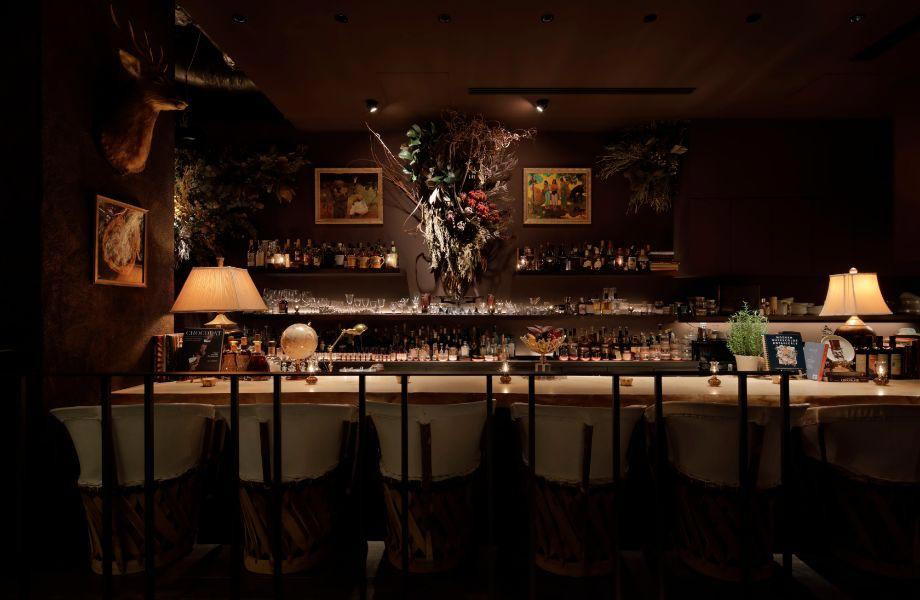
Cozy counter seating with exposed concrete, soothing jazz music, and seasonal flower arrangements creating a warm, home-like retreat.