

Michelin Bib Gourmand · Tabelog 100 #14
Our verdict
A Michelin Bib Gourmand recipient in 2024 and 2025, Ogimachi Udonya Asuro operates at the budget end of Osaka's dining spectrum, single-digit prices, a queue that forms before the shutters open, and udon built around clear seafood broth and toppings worth choosing carefully. It sits steps from Tenjinbashi-suji, Kansai's longest shopping street, in Kita Ward.

Pearl is the En Primeur Club membership app, where members save venues, book tables and use the concierge.
The menu
What to order
- Toriten to Taichikuwaten to Ontama Bukkake
- Hiyakake
The Queue as Context
Osaka's udon culture is not polite about waiting. At the keener end of the city's noodle shops, the ones where the broth is made fresh, the noodles have real chew, and the price stays well inside four figures in yen, the queue is part of the social contract. Ogimachi Udonya Asuro, on a side street off Tenjinbashi-suji in Kita Ward, operates inside that tradition. The line outside is, by most accounts, one of the longer ones in the neighbourhood, and its length functions as an informal recommendation system that no marketing could replicate.
That queue culture maps onto something broader about how Osaka eats. The city's relationship with low-cost, high-craft food is structural rather than accidental: the tradition of kuidaore (eating until you drop) places a value on democratic access to quality that filters right down to udon counters. Asuro's position, holding a Michelin Bib Gourmand for both 2024 and 2025 at the ¥ price tier, places it squarely in that lineage. The Bib Gourmand designation, awarded to restaurants offering notable cooking at moderate prices, is effectively Michelin's acknowledgment of exactly this end of the market.
Noodles and Broth in the Kansai Style
The Kansai udon tradition diverges from its Sanuki (Kagawa Prefecture) counterpart in one fundamental respect: where Sanuki udon is about firmness and chew, the Kansai style tends toward a softer, more yielding noodle, with the broth carrying more of the flavour weight. That broth is typically built on a lighter dashi base, kombu and dried bonito, which produces a paler, more translucent appearance than the darker soy-forward stocks of eastern Japan. At Asuro, the 'Hiyakake', cold udon in a clear dipping sauce, strips the format back to its essentials, allowing the quality of the seafood broth and the texture of the noodles to do all the work without distraction.
This reductive approach is where udon distinguishes itself from the more baroque end of Japanese noodle culture. There are no twelve-hour tonkotsu reductions, no carbonised tare, no Instagram-optimised toppings. The logic is that the noodle and the liquid it sits in should be interesting enough to hold attention on their own terms. When that relationship works, the simplicity is a feature, not a limitation.
The Communal Register
In the context of the editorial angle worth applying here, Asuro functions in a register closer to izakaya culture than its udon-shop format might suggest. Izakayas are not defined by what they serve so much as how they organise eating: the food comes in an order that suits the table, portions are sized for sharing or sequential ordering, and the social fabric of the meal is as important as any single dish. A udon shop at this price point and proximity to a major shopping artery operates on similar principles, people arrive in groups after work or between errands, toppings are compared and exchanged across the table, and the low price per head removes the inhibition that shapes behaviour at more expensive venues.
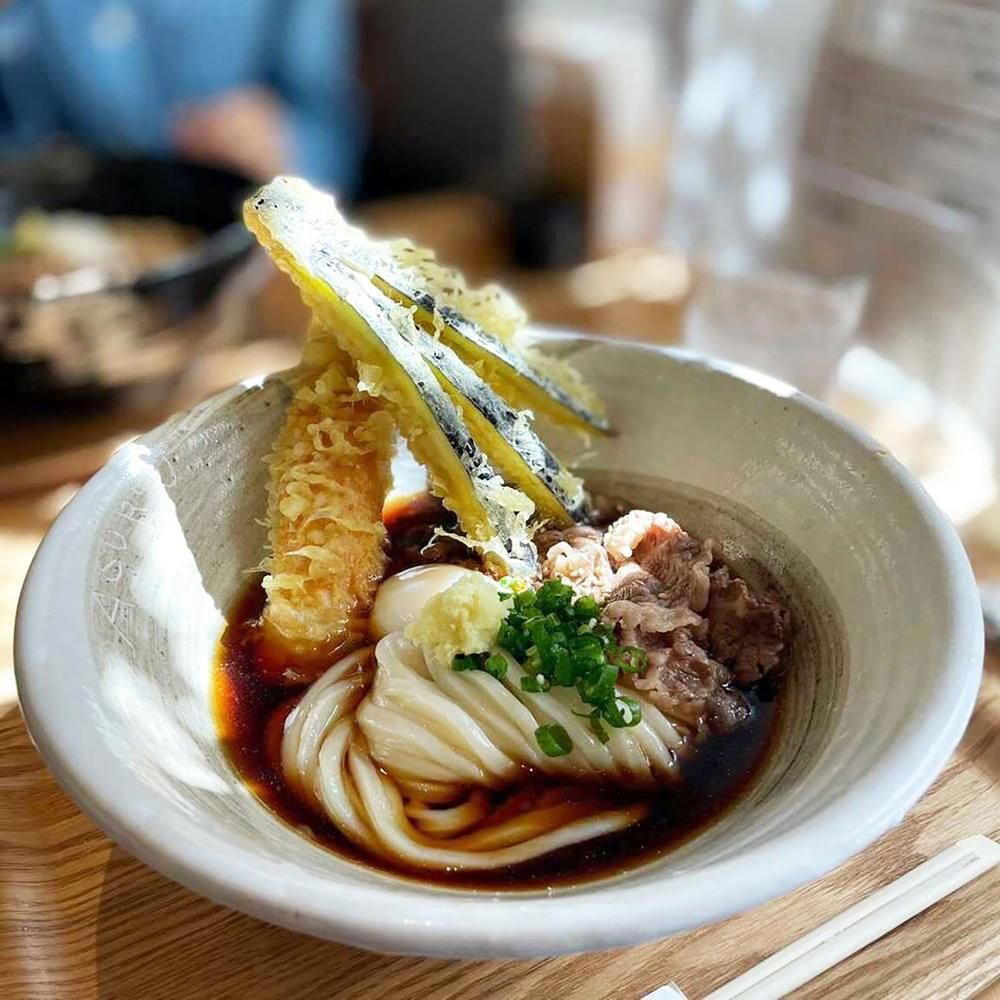
The topping choice at Asuro reinforces this. The 'Toriten to Taichikuwaten to Ontama Bukkake', udon with chicken tempura, sea bream paste cake tempura, and a soft-boiled egg, is a dish with multiple components that rewards attention and discussion. What is the tempura batter doing to the texture of the broth? Does the egg yolk change the flavour balance? These are questions that generate conversation, and conversation is the raw material of communal eating.
Neighbourhood Placement
Tenjinbashi-suji runs for roughly 2.6 kilometres through Kita Ward, making it one of the longest covered shopping streets in Japan. The streets immediately surrounding it carry a density of food options that reflects Osaka's general approach to feeding people efficiently and affordably. Asuro sits in this environment rather than apart from it: its address on Tenjinbashi 3-chome places it within a few minutes' walk of the street's commercial energy, while its side-street position gives it a degree of separation from the heaviest foot traffic.
For visitors building a broader Osaka itinerary, this part of Kita Ward connects conveniently to the rest of the city's eating landscape. At the other extreme of the price spectrum, HAJIME (French, Innovative) and La Cime (French) represent Osaka's three-star and two-star tiers respectively. Asuro's Bib Gourmand fits a different category entirely, but both ends of the spectrum reflect the same underlying seriousness about food that defines the city's reputation.
Within the udon category specifically, Osaka offers several points of comparison. Oudon Yomogi and Udondokoro Shigemi operate in the same noodle tradition and reward direct comparison for anyone trying to map Osaka's udon scene. Further afield, Gion Yorozuya in Kyoto shows how the same Kansai udon format plays in a city with a different culinary temperament, while Hyun Udon in Seoul offers a cross-regional reference point for the form.
For those extending their Japan trip beyond Osaka, the EP Club covers the full range: Harutaka in Tokyo, Gion Sasaki in Kyoto, akordu in Nara, Goh in Fukuoka, 1000 in Yokohama, and 6 in Okinawa cover the wider Japanese dining map.
Planning Your Visit
The practical profile at Asuro is shaped by two facts: the price is at the lowest tier of the ¥ range, and the queue is a consistent feature. Arriving early, before or shortly after opening, is the standard strategy for minimising wait time. Under Chef Nishigori Koki, the kitchen operates with the kind of focus that single-format restaurants tend to develop: when the menu is narrow and the throughput is high, the technique becomes automatic in the leading sense.
Also in the area, Aozora Blue offers a different entry point into Kita Ward dining. For the full picture of what Osaka offers across categories, see our full Osaka restaurants guide, alongside guides to hotels, bars, wineries, and experiences in the city.
At a Glance: Udon in the ¥ Tier, Osaka vs. Regional Comparisons
| Venue | City | Price Tier | Recognition | Format |
|---|---|---|---|---|
| Ogimachi Udonya Asuro | Osaka | ¥ | Michelin Bib Gourmand 2024, 2025 | Counter / casual, queue-based |
| Oudon Yomogi | Osaka | ¥ | See EP Club listing | Kansai udon, counter |
| Udondokoro Shigemi | Osaka | ¥ | See EP Club listing | Kansai udon, counter |
| Gion Yorozuya | Kyoto | See listing | See EP Club listing | Kansai udon |
| Hyun Udon | Seoul | See listing | See EP Club listing | Udon, Korean context |
Frequently asked questions
How much does it cost to eat at Ogimachi Udonya Asuro?
Pricing at Ogimachi Udonya Asuro is listed as ¥.
Who is the chef or culinary lead at Ogimachi Udonya Asuro?
The chef associated with Ogimachi Udonya Asuro is Nishigori Koki.
What should I order at Ogimachi Udonya Asuro?
Two dishes define the menu. The 'Toriten to Taichikuwaten to Ontama Bukkake', udon topped with chicken tempura, sea bream paste cake tempura, and a soft-boiled egg, is the signature order. For something that lets the broth speak clearly, the 'Hiyakake' strips the bowl back to cold clear sauce and noodles, where the seafood broth and noodle texture take full focus. Both sit within the ¥ price tier.
What's Ogimachi Udonya Asuro's location?
Ogimachi Udonya Asuro is located at Japan, 〒530-0041 Osaka, Kita Ward, Tenjinbashi, 3 Chome−8−3 マチスビル, Osaka.
Has Ogimachi Udonya Asuro won any awards?
Ogimachi Udonya Asuro has received recognition including: Located close to Tenjinbashi-suji, Kansai’s longest shopping street. The shop seems to be in competition for the longest queue to get in. The dish of renown is ‘Toriten to Taichikuwaten to Ontama Bukkake’ (udon topped with chicken tempura, ….
Is Ogimachi Udonya Asuro reservation-only?
Asuro operates as a walk-in venue. The queue is a consistent and well-documented feature of the experience, arriving early is the practical approach, particularly given its proximity to Tenjinbashi-suji, one of Japan's longest covered shopping streets. The shop holds a Michelin Bib Gourmand for 2024 and 2025, which keeps demand steady.
Cost Snapshot
A quick snapshot of similar venues for side-by-side context.
| Venue | Cuisine | Price | Awards | Notes |
|---|---|---|---|---|
| Ogimachi Udonya AsuroThis venue (the venue you are viewing) | Handmade Udon Specialist | $10–20 | Michelin Bib Gourmand · Tabelog 100 #14 | Not listed |
| HAJIME | Avant-Garde Japanese Fine Dining | $300–500 | 3 Michelin Stars · World's 50 Best #83 | French, Innovative |
| La Cime | Modern French with Japanese Ingredients | $150–200 | 2 Michelin Stars · World's 50 Best #13 | French |
| Kashiwaya Osaka Senriyama | Seasonal Kaiseki Omakase | $200–300 | 3 Michelin Stars · La Liste Top Restaurants | Japanese |
| Taian | Traditional Japanese Kaiseki Omakase | $150–200 | 3 Michelin Stars · La Liste Top Restaurants | Kaiseki, Japanese |
| Fujiya 1935 | Modern Japanese with European influences | $100–150 | 2 Michelin Stars · La Liste Top Restaurants | Innovative |
Recognition history
Dated appearances from independent guides and award organizations, with the underlying list record or original source where available.
Michelin Bib Gourmand
Michelin
Tabelog 100 #14 · No. 14
Tabelog · Tabelog 100 - Udon - WEST - 2024
Full recognition history (4 entries)
Michelin Bib Gourmand
Michelin
Michelin Bib Gourmand
Michelin
Continue exploring
More in Osaka
Restaurants in Osaka
All restaurants in Osaka →


Bars in Osaka
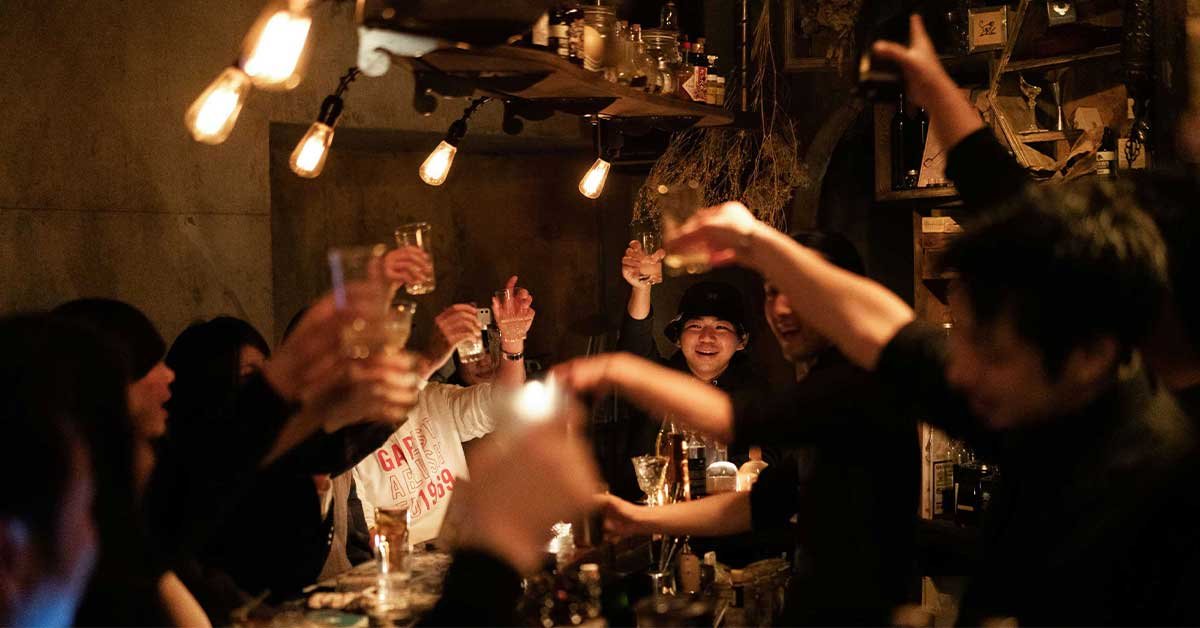
All bars in Osaka →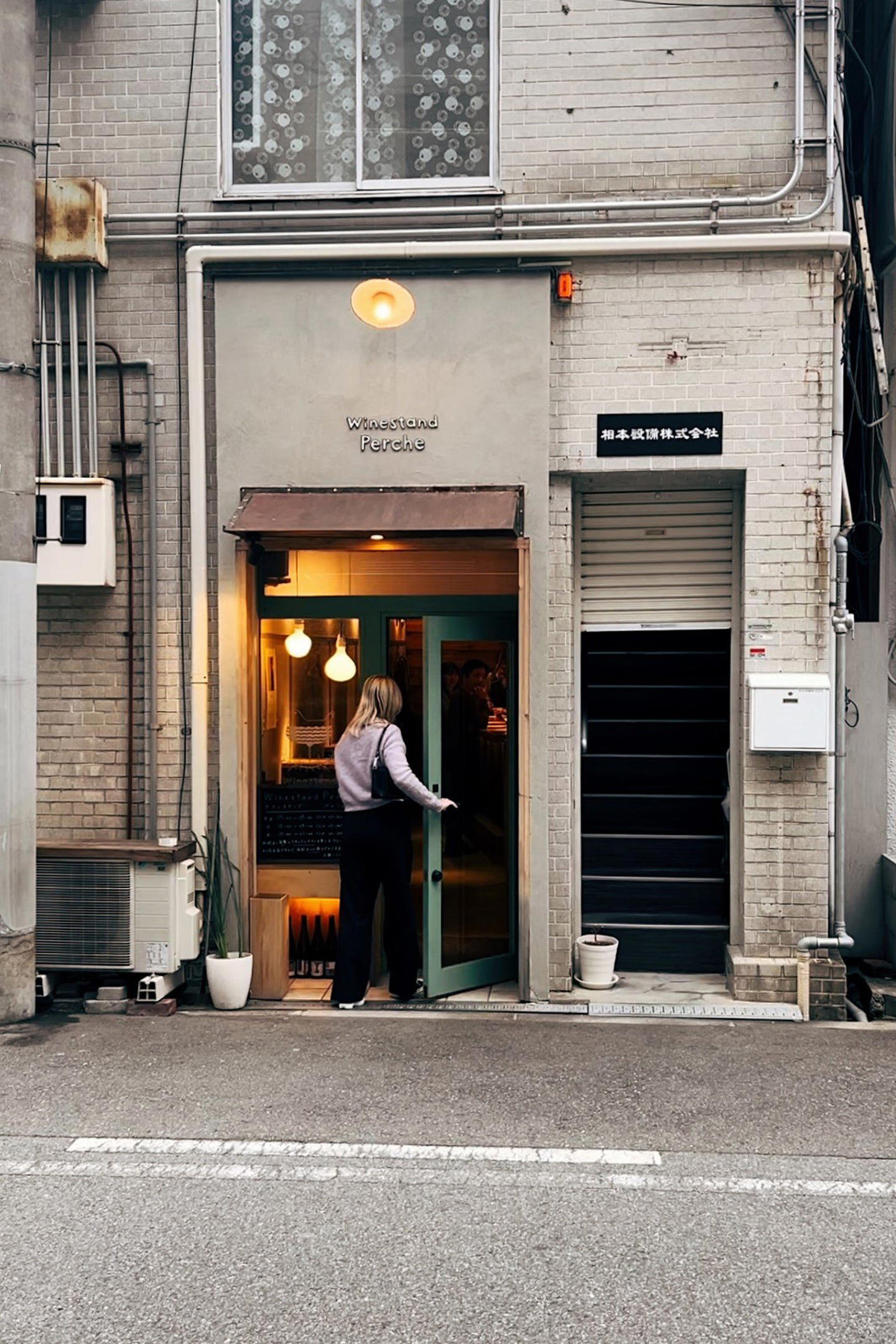
Hotels in Osaka
All hotels in Osaka →


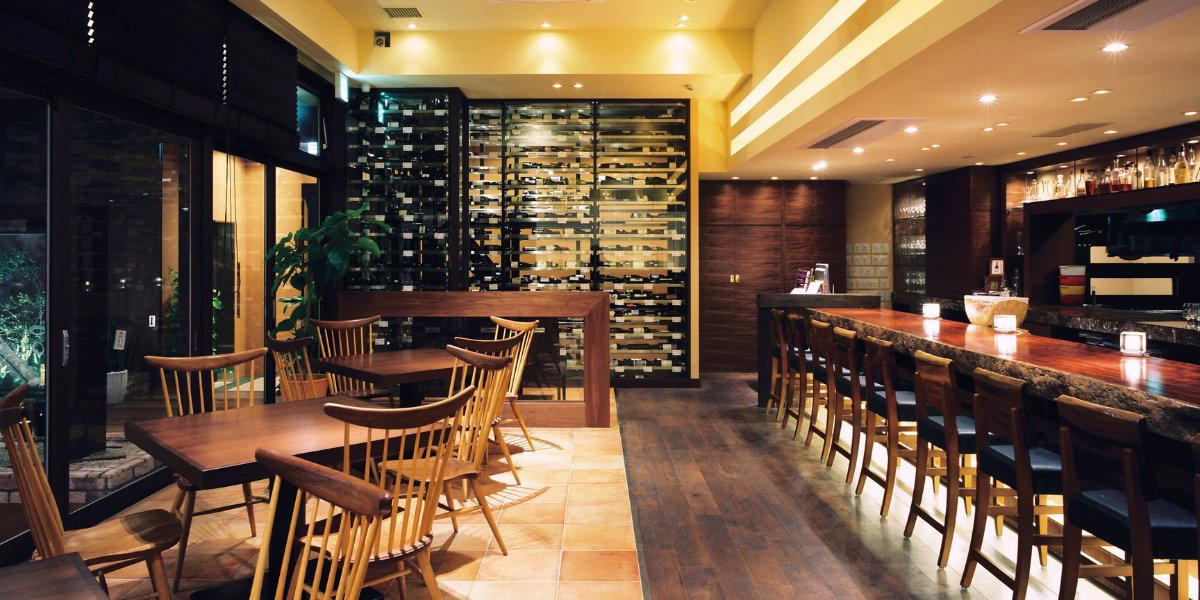
Wineries in Osaka
Browse all →
Details
- Cozy
- Rustic
- Casual Hangout
- Sake Program
- A La Carte
Current opening hours
- Monday
- 11 AM–4 PM
- Tuesday
- 11 AM–4 PM
- Wednesday
- Closed
- Thursday
- Closed
- Friday
- 11 AM–4 PM
- Saturday
- 11 AM–4 PM
- Sunday
- 11 AM–4 PM
Hours can change for holidays and private events. Hours as of .
Humble, unpretentious shop with long queues, focusing on the pure flavors of springy noodles and clear seafood broth.