Niño Gordo



Niño Gordo occupies a particular position in Buenos Aires dining: a Michelin Plate-recognised restaurant on Thames in Palermo Soho that applies East and Southeast Asian grilling techniques to Argentine ingredients and the open-fire tradition of the parrilla. The result is a kitchen that reads as fusion without apology, backed by Germán Sitz and Pedro Peña, set inside a red-saturated space drawn from Asian pop culture references.
Pearl is the En Primeur Club membership app — saves, bookings, and concierge access live there. Same editors, same standards.
- Address
- Thames 1810, C1414DDL C1414DDL, Cdad. Autónoma de Buenos Aires, Argentina
- Phone
- +54 11 5048-6102
- Website
- xn--niogordo-e3a.com.ar
- Directions
- Get directions
 Saves & bookings on Pearl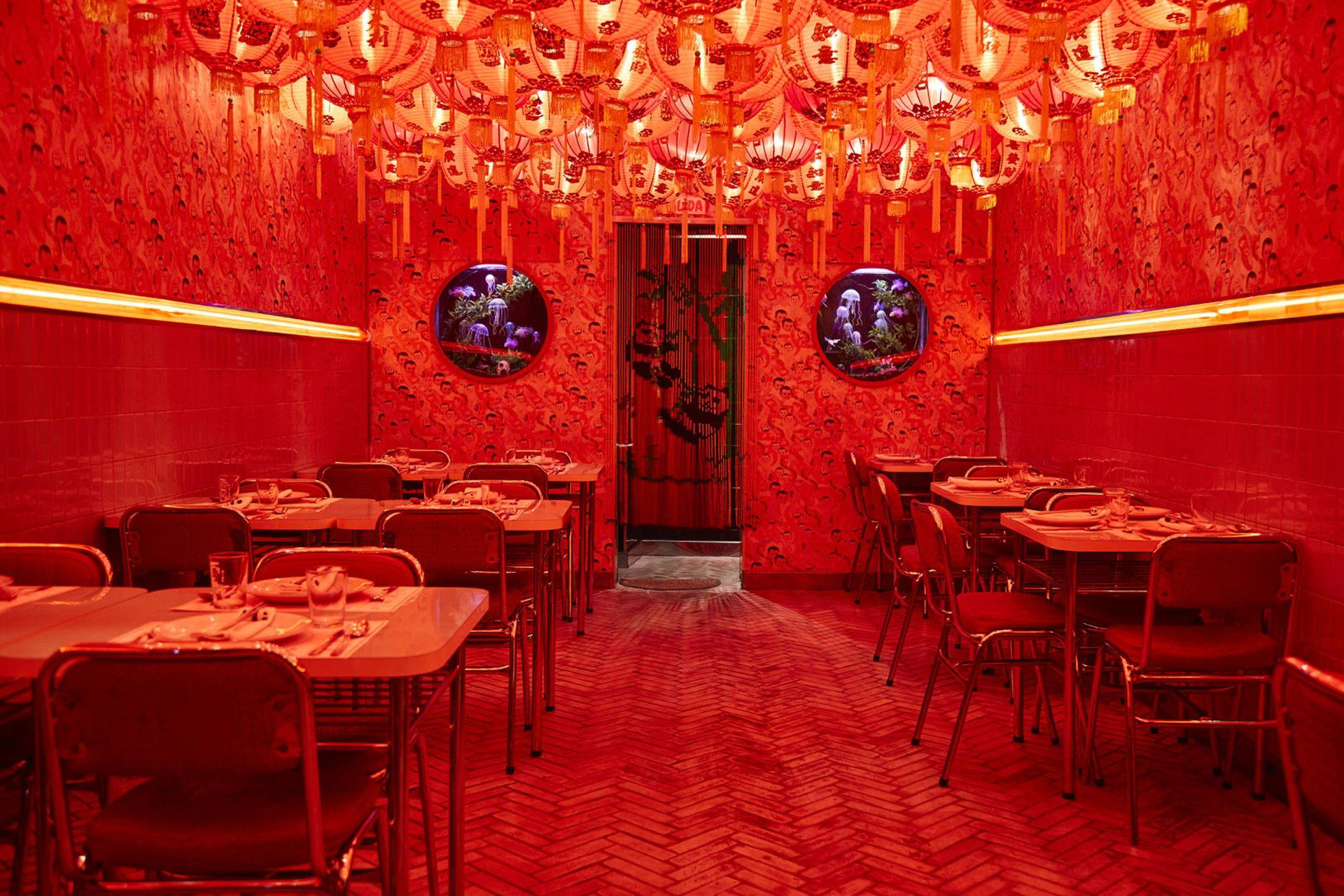
Where the Parrilla Meets the Pacific
The red hits you first. Walking into Niño Gordo on Thames in Palermo Soho, the interior reads less like a Buenos Aires restaurant than a compressed visual argument about how Argentine and Asian aesthetics might coexist in the same room. Pop culture references line the walls; the colour temperature runs warm and loud. It is a deliberate aesthetic position, and it sets the terms for what arrives at the table.
Buenos Aires has a long-standing relationship with fire. The parrilla is not a cooking method here so much as a civic institution, and restaurants from Don Julio to La Bamba de Areco have built reputations on the fidelity of that tradition. Niño Gordo does not abandon the tradition. It redirects it, applying the Argentine command of live-fire cooking to the flavour logic of East and Southeast Asian kitchens: fermented pastes, aromatic fats, char-driven umami, and the kind of structural heat that Argentine cooking historically avoids.
The Intersection of Technique and Tradition
In global terms, the move of grafting Asian technique onto a strong regional grilling tradition is not new. You see versions of it at taku in Cologne and Jun's in Dubai, where the question is always the same: which tradition leads and which serves as seasoning? At Niño Gordo, the answer appears to be that Argentine fire leads and Asian flavour architecture wraps around it. The parrilla provides the cooking grammar; the East and Southeast Asian pantry provides the vocabulary.
That framing matters because it distinguishes the restaurant from the category of Asian-inspired restaurants that treat Argentine ingredients as interchangeable with any other protein source. Here, the local supply chain, the grilling instinct, and the Argentine palate's comfort with offal, fat, and smoke are treated as fixed points. The Asian elements are not decorative. They do structural work: acidifying, fermenting, building secondary layers of flavour where a traditional parrilla would leave the meat to carry the weight alone.
Germán Sitz and Pedro Peña are the names behind the kitchen, though the editorial point is less about their individual biographies than about what their combined approach has produced: a restaurant that sits in a genuinely specific position in Buenos Aires dining, earning Michelin Plate recognition in both 2024 and 2025, a designation that signals consistent kitchen craft rather than ambition alone. Within the broader Buenos Aires restaurant conversation, which tends to organise itself around either traditional Argentine cooking or international fine dining, the restaurant operates in a smaller, more contested middle space.
Palermo Soho as Context
Palermo Soho remains one of Buenos Aires's most concentrated blocks for mid-to-upper restaurant density, and Thames in particular draws a regular stream of both local and international diners. The neighbourhood has enough peer competition at the same price tier, marked as $$, to make positioning meaningful. Compare the restaurant's Asian-Argentine fusion model against the direct traditional cooking at El Preferido de Palermo or the contemporary Argentine approach at Anafe, and the distinctiveness of the format becomes clearer. This is not a restaurant that competes on nostalgia or on ingredients alone; it competes on the specificity of its framework.
For those whose Buenos Aires itinerary also includes the city's formal fine dining tier, restaurants like Aramburu and Trescha occupy a structurally different position, with tasting menu formats, higher price tiers, and a different set of expectations around service formality and course progression. Crizia sits closer in register. The restaurant's value in a broader Buenos Aires itinerary lies precisely in its contrast to both ends: more technically adventurous than a traditional parrilla, more relaxed in format than the tasting-menu houses.
Across Argentina, the conversation about local ingredients and imported technique runs at different registers. Azafrán in Mendoza applies it to the wine country's produce; Cavas Wine Lodge in Alto Agrelo frames it within a luxury hospitality context. Awasi Iguazu draws on the northeastern biome. The restaurant's version is especially stylistically bold among the, and particularly urban in its sensibility. It reads the city around it rather than the landscape.
Planning a Visit
The restaurant sits on Thames 1810 in Palermo Soho, a neighbourhood well-connected by taxi and ride-share from most Buenos Aires hotel clusters. Reservations are advisable, particularly on weekend evenings when Palermo Soho dining traffic peaks. The $$ price range places it accessibly within the mid-tier, making it a practical anchor point around which to build an evening in the neighbourhood rather than a special-occasion destination requiring logistical planning.
For dining outside the capital, EOLO in El Calafate and El Colibrí in Santa Catalina extend the Argentina dining map into the country's more remote registers.
What to Order at Niño Gordo
What should I order at Niño Gordo?
What the restaurant's documented premise confirms is that the kitchen's strength lies in the convergence of Argentine grilling and East and Southeast Asian flavour architecture. That means one rewarding ordering strategy is to follow whatever the kitchen applies fire to most directly. Dishes built around char, aromatic fats, and fermented seasonings are the conceptual core of the format here. Ask the floor team what is moving on the day you visit; at a restaurant with this kind of hybrid programme, current kitchen emphasis tells you more than a static menu printed weeks earlier. The $$ price tier means ordering across multiple dishes, rather than building a single plate around a main course, is likely both feasible and consistent with how the menu is designed to be read.
The Essentials
Comparable venues nearby, for context on price, style, and recognition.
| Venue | Cuisine | Price | Notes |
|---|---|---|---|
| Niño GordoThis venue — the venue you are viewing | Palermo, Asian-Argentine Fusion Grill | $$$ | Not listed |
| El Preferido de Palermo | Palermo, Classic Italian Bodegón | $$$ | Not listed |
| Julia | Villa Crespo, Modern Indie Fusion | $$$$ | Not listed |
| Ness | Núñez, Modern Argentine Fire Cooking | $$$ | Not listed |
| Mishiguene | Palermo, Modern Jewish Immigrant Cuisine | $$$ | Not listed |
| El Mercado | Not listed | $$$ | Piñeyro, Contemporary Argentine Steakhouse |
Recognition history
Dated appearances from independent guides and award organizations, with the underlying list record or original source where available.
Michelin Plate
Michelin
Opinionated About Dining Top Restaurants in South America Ranked #58
Opinionated About Dining
Michelin Plate
Michelin
World's 50 Best Latin America's Best Restaurants #21
World's 50 Best
Michelin Plate
Michelin
Continue exploring
More in Buenos Aires
Restaurants in Buenos Aires
Browse all →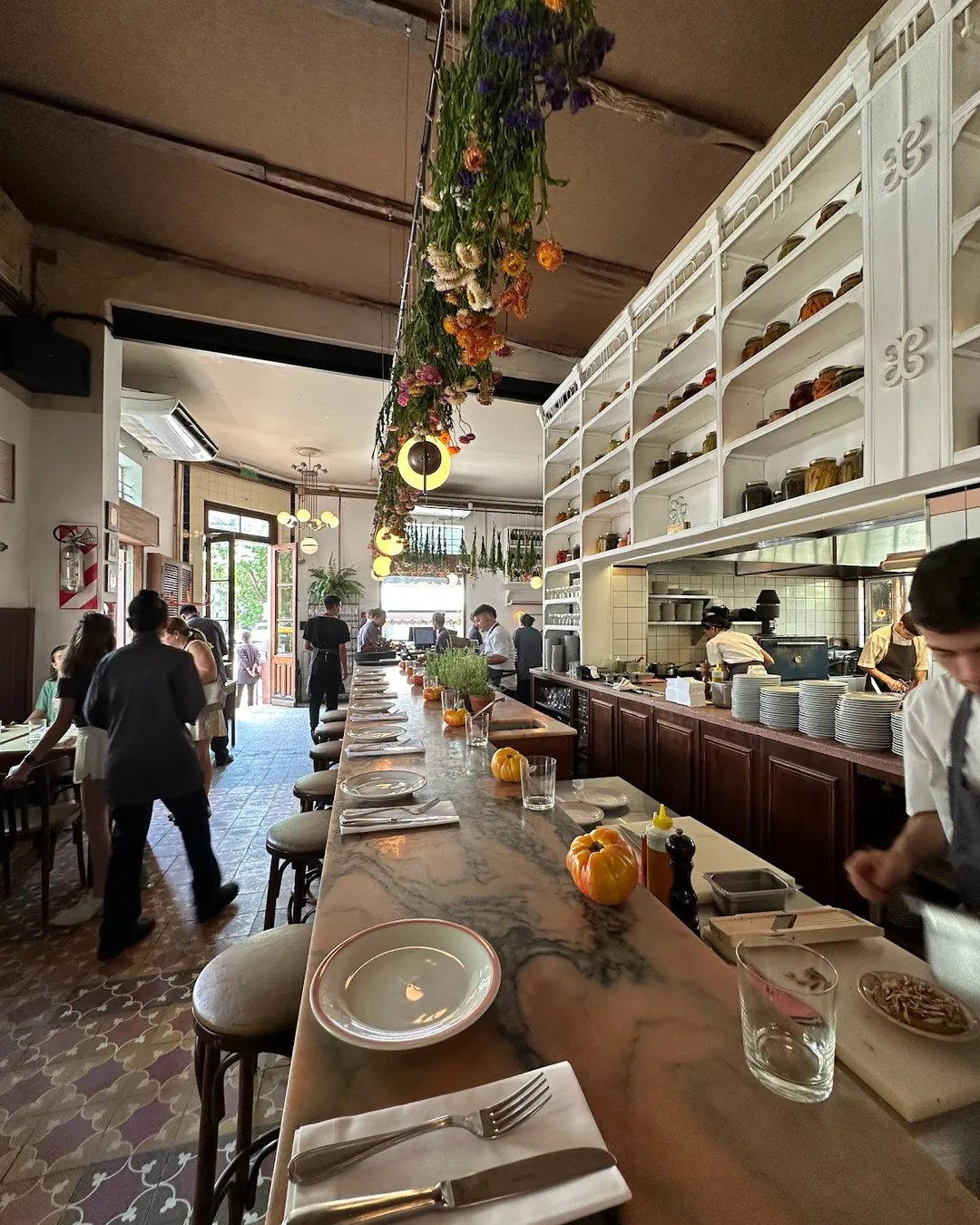
Bars in Buenos Aires
Browse all →
Hotels in Buenos Aires
Browse all →
Wineries in Buenos Aires
Browse all →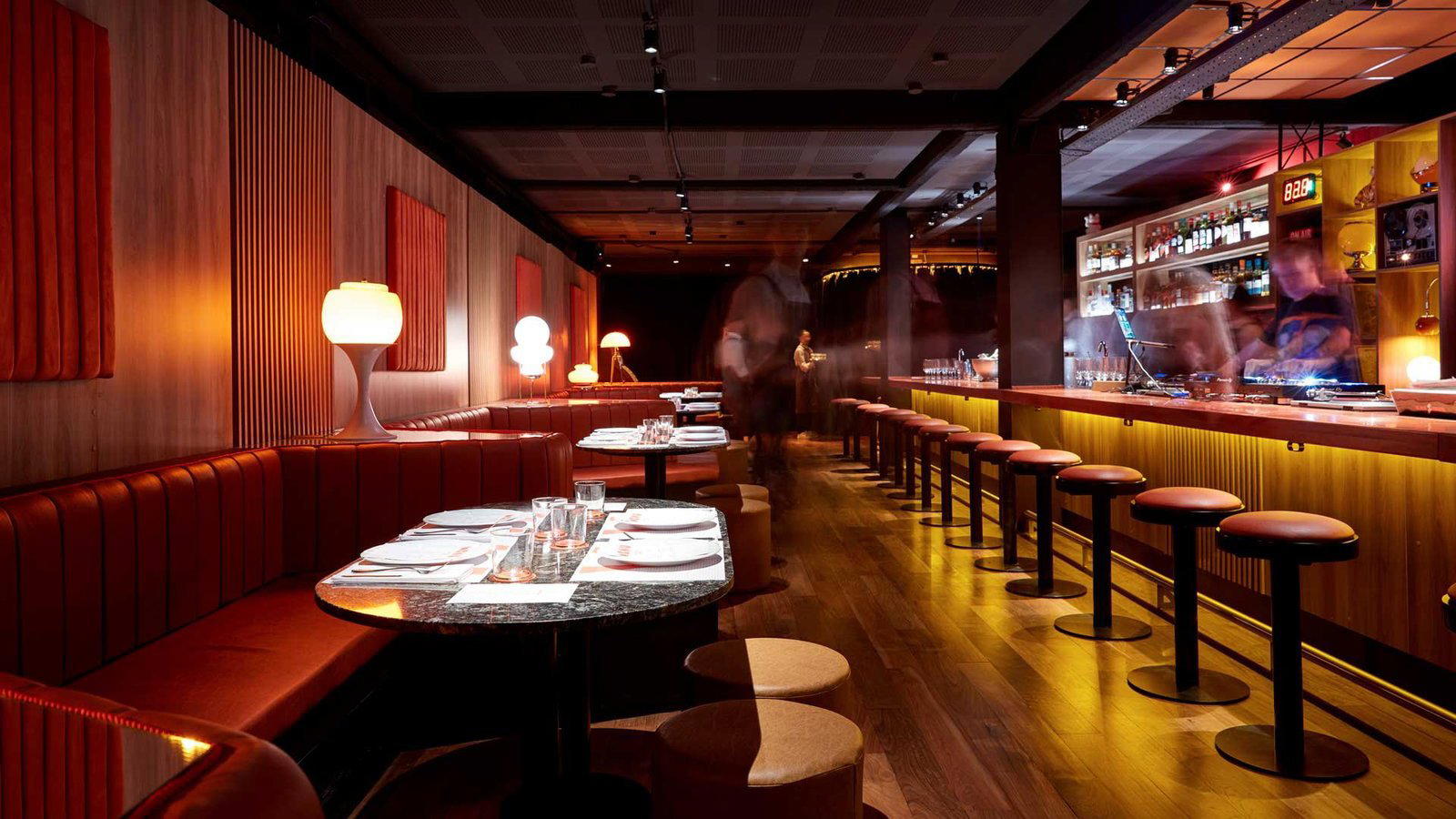
At a Glance
- Lively
- Trendy
- Whimsical
- Modern
- Date Night
- Group Dining
- Casual Hangout
- Special Occasion
- Open Kitchen
- Chefs Counter
- Design Destination
- Craft Cocktails
- Beer Program
- Local Sourcing
Current opening hours
- Monday
- 7 PM–12 AM
- Tuesday
- 7 PM–12 AM
- Wednesday
- 7 PM–12 AM
- Thursday
- 7 PM–12 AM
- Friday
- 7 PM–12 AM
- Saturday
- 1–4 PM, 7 PM–12 AM
- Sunday
- 1–4 PM, 7 PM–12 AM
Hours can change for holidays and private events. Last verified .
Lively and lively with bold red hanging lanterns, neon lights, Asian motifs, and playful pop culture elements; intimate bar seating directly in front of open kitchen where chefs work visibly; energetic and Instagram-worthy throughout.