El Preferido de Palermo




A Buenos Aires bodegón transformed into a fully-fledged restaurant in 2019, El Preferido de Palermo runs classic Spanish and Italian-inspired dishes through the same operational rigour as its sibling, the celebrated steakhouse Don Julio. Ranked 25th in South America by Opinionated About Dining in 2025 and recognised with a Michelin Plate, it operates in a different price bracket from its stablemate but holds its own on produce quality and craft.
Pearl is the En Primeur Club membership app — saves, bookings, and concierge access live there. Same editors, same standards.
- Address
- Jorge Luis Borges 2108, C1425FFD Cdad. Autónoma de Buenos Aires, Argentina
- Phone
- +54 11 4774-6585
- Website
- elpreferido.meitre.com
- Directions
- Get directions
 Saves & bookings on Pearl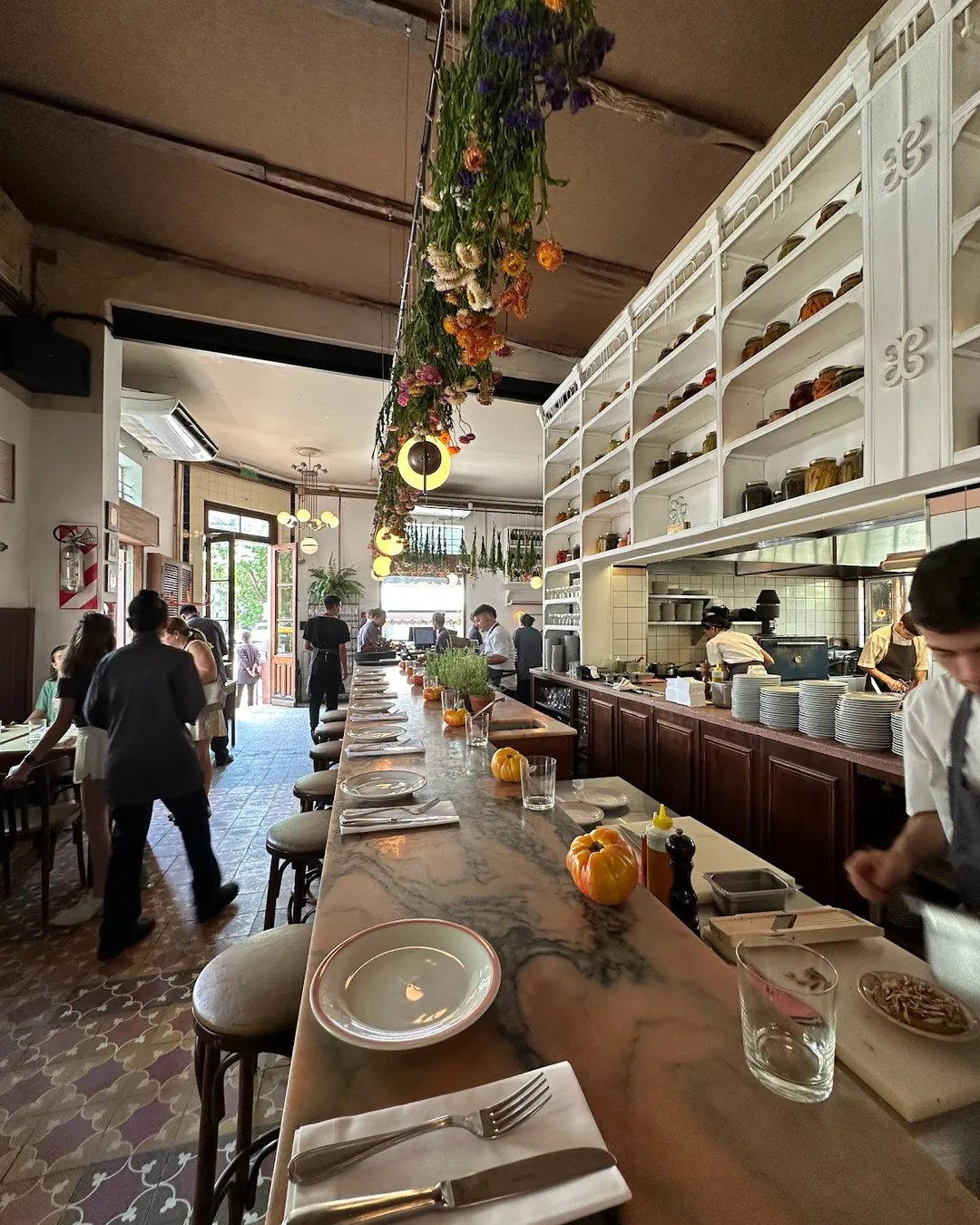
Where Palermo Eats Without Ceremony
The corner of Jorge Luis Borges and Guatemala in Palermo Soho carries the particular charge of a block that has been feeding the neighbourhood for decades. El Preferido de Palermo occupies that corner with the low-key confidence of a place that has never needed to announce itself. The tiled facade, the shelves of preserves visible through the window, the hum of midday lunch service that runs as naturally as the barometric pressure of Buenos Aires itself, all of it signals a dining register that the city does well when it is not trying to perform. This is the bodegón idiom: modest in address, serious in execution.
What changed in 2019 was the degree of seriousness. The team behind Don Julio, the Palermo steakhouse now ranked among the World's 50 Best Restaurants, turned their attention to El Preferido with a considered renovation in 2019 that moved the space from neighbourhood canteen to a more deliberate restaurant format, without stripping the character that gave it meaning. The produce-driven pantry logic, the homemade preserves and charcuterie, the Spanish and Italian undercurrents in a city shaped by both immigrations, remained intact. What arrived was better kitchen discipline and a menu that could now support a full evening arc rather than just a lunch pit-stop.
The Arc of a Meal Here
Buenos Aires restaurants in the bodegón tradition tend to front-load the experience: bread arrives, wine is poured, and the table is stacked with small plates before anyone has thought about mains. El Preferido follows that logic but sharpens it. The charcuterie and preserve work that defines the kitchen's identity functions as a proper opening act rather than incidental nibbling. Housemade products in this context carry editorial weight, they telegraph the kitchen's position on quality control and producer relationships before a single hot dish appears.
From there, the Spanish and Italian-inflected dishes that form the middle of the meal reflect the kind of cooking that built Buenos Aires's restaurant culture in the first half of the twentieth century. This is not revival cooking dressed up as nostalgia; it is the actual continuation of a tradition that the city's postwar immigration waves embedded into its culinary fabric. A kitchen at this price point, firmly in the $$ bracket, accessible relative to the $$$$ tier occupied by Don Julio and Aramburu, that takes this tradition seriously rather than cheapening it is doing something worth noting.
The close of a meal here carries the same logic: you are not being steered toward a tasting-menu crescendo. The rhythm is the rhythm of a long Argentine lunch or a late dinner that ends when the conversation does. Service at El Preferido runs until 1 am on every day of the week.
Placing It in the Buenos Aires Dining Picture
The contemporary Buenos Aires dining scene has split into recognisable tiers. At the leading sit the Michelin-starred operators and the globally ranked destination restaurants: Don Julio holds a Michelin Star and a World's 50 Best position; Aramburu holds two Michelin Stars and runs a creative tasting format at the $$$$ level. Restaurants like Trescha and Crizia occupy the contemporary middle, where modern technique and local produce intersect in the $$$-$$$$ range.
El Preferido operates differently. Its $$ price point places it alongside venues like La Carnicería in accessibility, but the awards trajectory separates it. A Michelin Plate in both 2024 and 2025, combined with an Opinionated About Dining ranking of 25th in South America in 2025 (up from 29th in 2023), situates it in a small cohort of restaurants that price at mid-market but perform at a higher critical register. That gap, between what you pay and what the room delivers, is precisely where the restaurant earns its following.4 across more than 9,000 reviews confirms a consistency that critic rankings alone do not always capture.
The connection to Don Julio is an operational fact as much as a brand story. The team that manages among the more scrutinised restaurant operations in South America applies the same supplier logic and quality threshold to a room that costs a fraction of the price to eat in. That transfer of standards across price tiers is not common, and it is what puts El Preferido in a different conversation from other casual Palermo options.
The Bodegón as a Living Format
The bodegón is a Spanish import, a no-frills tavern format built on honest wine, preserved goods, and cooking that does not require a tasting menu to justify itself. Buenos Aires absorbed the form through waves of Spanish and Italian immigration and made it its own, adding the asado sensibility, the long lunch culture, and the particular Argentine relationship with wine as an everyday rather than ceremonial beverage.
What 2019 represented for El Preferido was a recognition that the bodegón format could be held to a higher standard without being transformed into something else. Comparable moves have happened in other cities: in Madrid, a generation of chefs has returned to taberna formats with serious kitchen discipline; in New York, the trattoria revival brought rigour to formats that had drifted toward tourist comfort. Buenos Aires has its own version of this in El Preferido, a place that took a familiar frame and sharpened what went inside it. Restaurants like Anafe occupy adjacent territory in the contemporary Palermo register, but the specific bodegón-with-craft positioning is less crowded.
For visitors arriving from elsewhere in Argentina, the comparison set shifts. The wine-focused dining culture of Azafrán in Mendoza or the remote lodge dining of EOLO in Patagonia represents entirely different registers. El Preferido is city dining in Buenos Aires sense of the phrase: dense, convivial, historically rooted, and available every day of the week at both lunch and dinner.
Planning the Visit
El Preferido de Palermo operates seven days a week with a split-shift structure: lunch from 11:30 AM to 4 PM, dinner from 7 PM to 1 AM. The all-day closure between 4 pm and 7 pm is consistent daily, which means the kitchen is not running straight through. The Jorge Luis Borges address puts the restaurant in the more residential, less bar-heavy end of the district. For those building a broader Buenos Aires itinerary, the broader scene is easy to map from here. The $55 per person pricing means a full lunch or dinner here adds little friction to a week that might also include Don Julio or one of the higher-ticket tasting-menu restaurants. The overlap in team, and in philosophy around sourcing, makes El Preferido a logical complement rather than an alternative to the Don Julio experience.
Internationally, the critical recognition that El Preferido has accumulated since its 2019 renovation sits comfortably alongside other serious mid-market operators across South America. For visitors triangulating across the continent, the World’s 50 Best ranking of 24 in 2025 provides a reliable position marker: this is a restaurant that holds its place in serious company without requiring the occasion-dining framing that surrounds it at the summit of the Buenos Aires market. Chef Martin Lukesh leads the kitchen in a room that rewards the kind of Tuesday lunch or late Thursday dinner that Buenos Aires does well.
What to Order at El Preferido de Palermo
What should I eat at El Preferido de Palermo?
The kitchen's identity is built around housemade preserves and charcuterie, which function as the opening movement of any serious meal here. From there, the menu follows Spanish and Italian-inflected lines that reflect Buenos Aires's immigration history rather than any contemporary invention. The Michelin Plate recognition in both 2024 and 2025 points to consistent execution across the menu rather than a single signature dish, and the Opinionated About Dining ranking of 25th in South America suggests the kitchen performs at a level that justifies ordering across multiple courses. Given the $$ price point, exploring the full spread, preserved goods, shared plates, a main, wine, is how the meal earns its arc. Verified dish-level specifics are best confirmed at the time of booking, as the menu reflects seasonal and supplier-driven changes.
Comparable Options
Comparable venues nearby, for context on price, style, and recognition.
| Venue | Cuisine | Price | Notes |
|---|---|---|---|
| El Preferido de PalermoThis venue — the venue you are viewing | Classic Italian Bodegón | $$$ | Not listed |
| Trescha | Modern Argentine Fine Dining | $$$$ | Villa Crespo |
| El Mercado | Contemporary Argentine Steakhouse | $$$ | Piñeyro |
| Niño Gordo | Asian-Argentine Fusion Grill | $$$ | Palermo |
| Crizia | Contemporary Argentine Seafood | $$$$ | Palermo |
| Tegui | Contemporary Argentine Fine Dining | $$$$ | Recoleta |
Recognition history
Dated appearances from independent guides and award organizations, with the underlying list record or original source where available.
Michelin Plate
Michelin
Opinionated About Dining Top Restaurants in South America Ranked #26
Opinionated About Dining
Star Wine List
Star Wine List
Michelin Plate
Michelin
Opinionated About Dining Top Restaurants in South America Ranked #25
Opinionated About Dining
World's 50 Best Latin America's Best Restaurants #24
World's 50 Best
Michelin Plate
Michelin
Opinionated About Dining Top Restaurants in South America Ranked #29
Opinionated About Dining
Continue exploring
More in Buenos Aires
Restaurants in Buenos Aires
Browse all →
Bars in Buenos Aires
Browse all →
Hotels in Buenos Aires
Browse all →
Wineries in Buenos Aires
Browse all →
At a Glance
- Lively
- Classic
- Elegant
- Well Known
- Date Night
- Group Dining
- Celebration
- Special Occasion
- Open Kitchen
- Historic Building
- Standalone
- Extensive Wine List
- Sommelier Led
- Farm To Table
- Organic
- Local Sourcing
Current opening hours
- Monday
- 11:30 AM–4 PM, 7 PM–1 AM
- Tuesday
- 11:30 AM–4 PM, 7 PM–1 AM
- Wednesday
- 11:30 AM–4 PM, 7 PM–1 AM
- Thursday
- 11:30 AM–4 PM, 7 PM–1 AM
- Friday
- 11:30 AM–4 PM, 7 PM–1 AM
- Saturday
- 11:30 AM–4 PM, 7 PM–1 AM
- Sunday
- 11:30 AM–4 PM, 7 PM–1 AM
Hours can change for holidays and private events. Last verified .
Lively and bustling with beautiful decor, spacious tables, and a lively atmosphere; single large hall with high ceilings and attentive service staff.