EOLO - Patagonia's Spirit

EOLO sits on a private 10,000-acre estancia outside El Calafate, operating as a Relais & Châteaux all-inclusive lodge where the Patagonian steppe sets the terms of the experience. With a 4.7 Google rating across more than 4,000 reviews and EP Club recognition, it represents the upper tier of Argentina's remote lodge category, a format where landscape access and kitchen craft carry equal weight.
 Discover on Pearl
Pearl is the En Primeur Club membership app — saves, bookings, and concierge access live there. Same editors, same standards.
- Address
- Ruta 11 km 23, Z9405 El Calafate, Santa Cruz, Argentina
- Phone
- +54 11 4700-0075
- Website
- eolopatagonia.com
Where the Steppe Begins
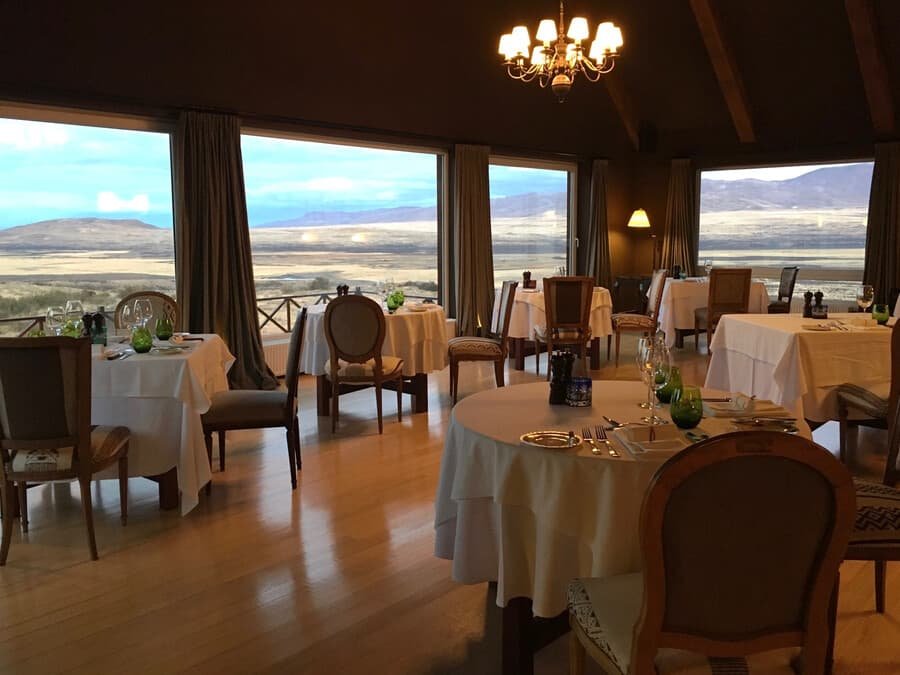
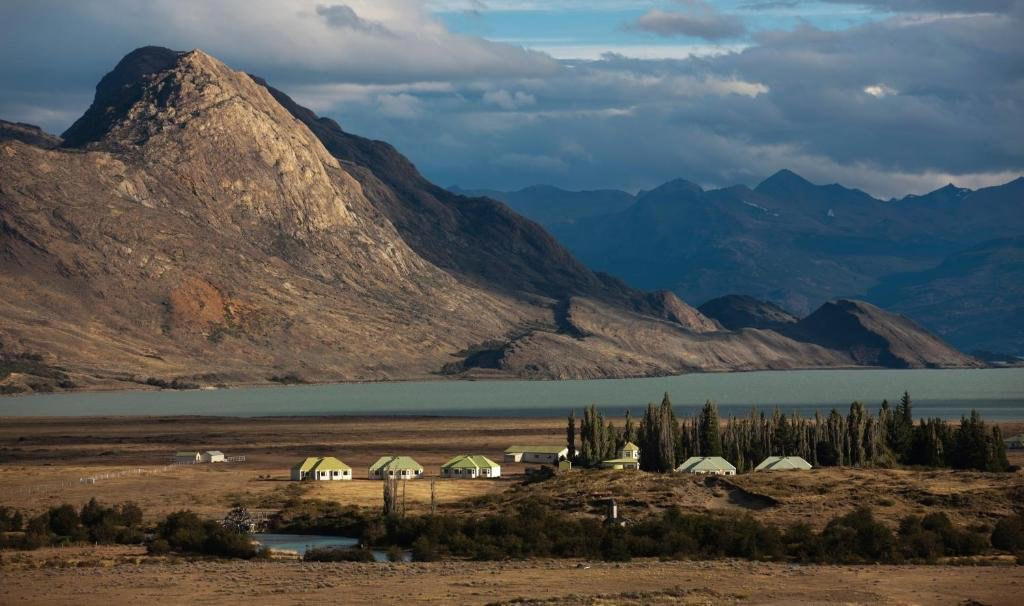
Driving south from El Calafate along Ruta 11, the town dissolves quickly into something older and less negotiable: the Patagonian steppe, a sweep of amber grass and volcanic rock running toward the Andes under skies that change hourly. At kilometre 23, the road reaches EOLO, a lodge that positions itself not as a refuge from this landscape but as a deliberate immersion in it. The architecture faces the wind rather than hiding from it. The views from the rooms are panoramic in the literal sense, no framing device, no landscaped buffer, just the raw cordillera horizon. Arriving here, the physical sensation of scale is immediate and not easily bracketed.
That atmospheric intensity is the context against which all of EOLO's hospitality should be read. The lodge belongs to the all-inclusive Relais & Châteaux model, a format that, in remote Argentina, means the property absorbs the full weight of a guest's experience: accommodation, dining, guided activities, and the particular challenge of making isolation feel curated rather than merely remote. EOLO holds a 4.8 rating across 164 Google reviews.
The Patagonian Kitchen and What It Demands
Cooking at elevation on the steppe is a discipline shaped by constraint. The Argentine tradition of cocina patagónica draws on what the land and its proximity to the Atlantic and Andean foothills actually produce: Patagonian lamb raised on the very grasslands visible from the dining room, trout from cold southern rivers, wild game, and native herbs that survive in a climate that tolerates very little. This is not a cuisine of abundance in the Mediterranean sense. It is a cuisine of depth, where a few ingredients, treated with technical clarity, carry significant weight.
Chef Juan Pablo Bonaveri operates within this tradition at EOLO. The Patagonian kitchen at this level asks a cook to make place-specific ingredients legible to an international guest, to do justice to the provenance of Patagonian lamb without reducing it to a set piece, and to resist the temptation to import techniques that flatten the local character. The format reinforces this pressure: guests eat here over multiple sittings, and the kitchen must sustain interest throughout a stay. That sustained engagement is a different test than the one-night tasting menu context in which, say, Don Julio in Buenos Aires or Cavas Wine Lodge in Alto Agrelo operates.
Among Argentina's premium lodge restaurants, the comparison set is instructive. Properties like Awasi Iguazu in Puerto Iguazu and Las Balsas Restaurant in Villa La Angostura face analogous challenges: remote settings, captive-audience dining, and the need to ground menus in regional specificity. What separates the properties that carry sustained reputations in this format is whether the kitchen reads as genuinely connected to its location or merely decorated with local names on a menu that could exist elsewhere. EOLO's Patagonian focus signals the former intent.
The Lodge Experience in Context
Argentina's remote luxury lodge sector has grown to occupy a distinct position in the country's high-end hospitality offer, distinct from the urban steakhouse culture represented by venues like Don Julio and Azafrán in Mendoza, and distinct from the wine-country lodge model of Cavas Wine Lodge or La Table de House of Jasmines in La Merced Chica. The Patagonian lodge operates on a different logic: the landscape is the primary product, and dining exists in direct dialogue with it rather than as an independent draw.
EOLO's 10,000-acre private estancia places it at the scale end of this category. The property's membership signals placement in a global network that uses dining quality and hospitality consistency as gatekeeping criteria, placing EOLO alongside properties like La Bamba de Areco in San Antonio de Areco and El Colibri in Santa Catalina in a curated tier of Argentina's estancia and lodge restaurants. For international travellers comparing remote Argentine properties, that affiliation functions as a peer-set marker more useful than price tier alone, since the all-inclusive structure makes direct cost comparison across formats less direct.
What to Know Before You Go
EOLO sits at kilometre 23 on Ruta 11, approximately 23 kilometres from the centre of El Calafate, making it accessible by road from the town while maintaining the physical separation that the lodge experience requires. El Calafate has its own domestic airport with regular connections to Buenos Aires, which makes EOLO a practicable destination for travellers arriving from the Argentine capital without a long overland transfer. The all-inclusive format means dining, activities, and accommodation are bundled, a planning consideration that distinguishes the property from standalone restaurants in El Calafate's dining scene, which is covered in
The Patagonian season matters here more than at most Argentine destinations. Southern Patagonia's austral summer, roughly November through March, offers the most accessible conditions: longer days, more predictable weather, and peak wildlife activity on the steppe. Winter visits are possible and carry their own character, but the outdoor components of the lodge programme are substantially shaped by season, and the dining experience is most coherent when it connects to active access to the surrounding land. Travellers planning around the Perito Moreno Glacier, a primary draw to the wider El Calafate area, tend to cluster in the November-to-March window, and EOLO operates within that same seasonal logic. For those building a broader Argentine itinerary,
For context within the wider Argentine dining conversation, comparisons extend across formats: the urban fine-dining tier anchored by properties like Ti Amo in Adrogué and international reference points like Le Bernardin in New York City, Atomix in New York City, Emeril's in New Orleans, and Lazy Bear in San Francisco all represent the lodge-to-city spectrum of what place-specific dining can mean when the kitchen commits to its geography.
In Context: Similar Options
Comparable venues nearby, for context on price, style, and recognition.
| Venue | Cuisine | Price | Awards |
|---|---|---|---|
| EOLO - Patagonia's SpiritThis venue — the venue you are viewing | Patagonian Argentinian | ||
| Don Julio | Argentinian Steakhouse | $$$$ | Michelin 1 Star |
| Aramburu | Modern Argentinian, Creative | $$$$ | Michelin 2 Star |
| 1884 Francis Mallmann | Argentinian Steakhouse, Traditional Cuisine | $$$$ | World's 50 Best |
| El Preferido de Palermo | Argentinian, Traditional Cuisine | $$ | World's 50 Best |
| Elena | South American, Steakhouse | $$$ |
Continue exploring
More in El Calafate
Restaurants in El Calafate
Browse all →
Hotels in El Calafate
Browse all →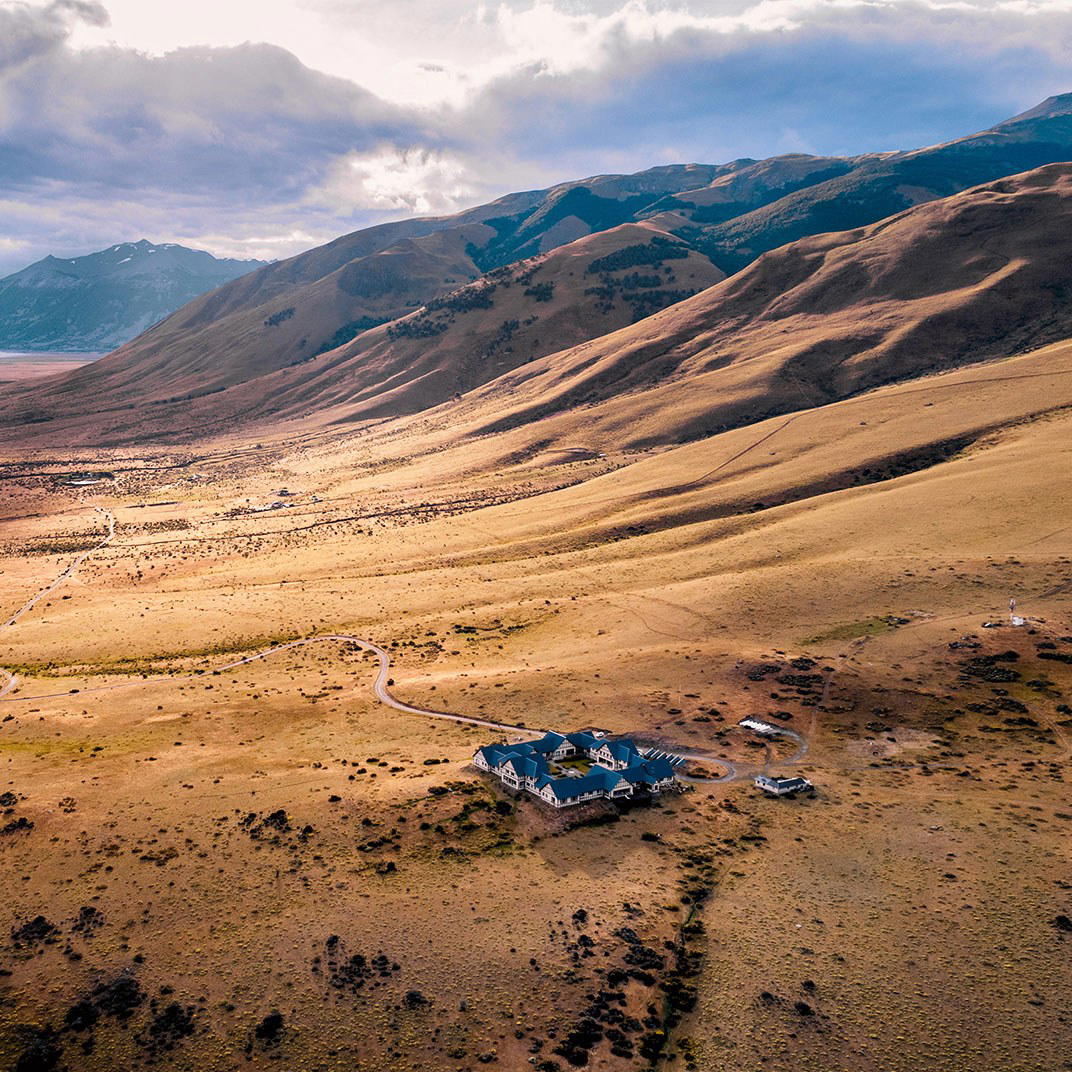
At a Glance
- Scenic
- Elegant
- Cozy
- Rustic
- Intimate
- Sophisticated
- Special Occasion
- Celebration
- Panoramic View
- Open Kitchen
- Extensive Wine List
- Sommelier Led
- Local Sourcing
- Mountain
Serene and tranquil with natural light from panoramic windows overlooking the steppe and lake, relaxed yet luxurious decor mimicking the austere Patagonian landscape.