
A seven-seat counter in Hachioji puts Tokyo ramen back into ritual form: queue, ticket, bowl, exit. Niboshi Iwashi Ramen En Hachioji honten belongs to the city’s serious dried-sardine ramen conversation, with repeated Tabelog Ramen TOKYO 100 selections from 2017 through 2025 anchoring its reputation beyond the central wards.
Pearl is the En Primeur Club membership app — saves, bookings, and concierge access live there. Same editors, same standards.
- Address
- 東京都八王子市横山町21-21
- Website
- tabelog.com
 Saves & bookings on Pearl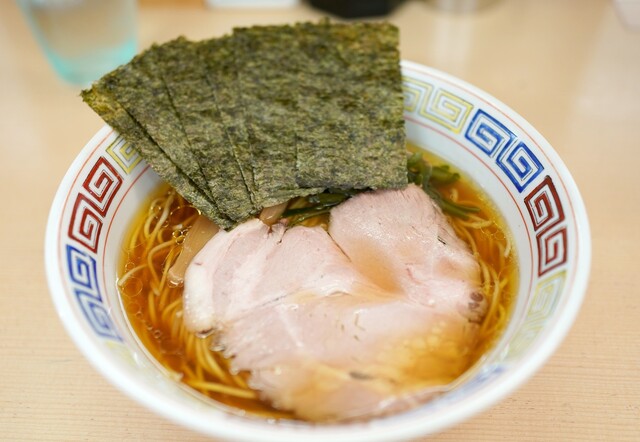
Hachioji changes the tempo of a Tokyo ramen run before the first bowl appears. The central wards train diners to think in transfers, queues, and compressed lunch breaks; out here, the ritual feels more local and more deliberate. A counter-only ramen shop reduces the meal to a sequence that Tokyo knows well: wait your turn, take the seat offered, keep the table moving, and read the room rather than treating the counter like a lounge.
That ritual matters with niboshi ramen. Dried-sardine broth sits in a more assertive lane than the chicken-clear, pork-heavy, or miso-rich styles that dominate different parts of the city. Its appeal is not politeness. It is concentration, salinity, and the particular depth that comes from fish handled as structure rather than garnish. In Tokyo, where ramen can stretch from student fuel to obsessive craft, this style rewards diners who understand that a short meal can still carry serious intent.
Niboshi ramen as a disciplined counter ritual
Niboshi Iwashi Ramen En Hachioji honten belongs to the small-format side of Tokyo ramen culture, where the room enforces the pace. Seven counter seats do not allow for drifting conversation or indecision. The format pushes attention toward the bowl and toward etiquette: order cleanly, eat while the noodles are at their intended texture, and release the seat once the meal is done. That is not austerity for its own sake; it is how much of Tokyo’s ramen craft has always functioned at street level.
The restaurant’s category listing covers ramen and tsukemen, which places it inside two related but distinct habits. Ramen is the integrated form, broth and noodles meeting immediately. Tsukemen slows the exchange, asking the diner to dip, adjust, and manage temperature as the meal progresses. In a niboshi context, that distinction can sharpen how the fish-driven base is perceived: direct in soup form, more concentrated and rhythmic in dipping-noodle form. The point is less menu breadth than the way a narrow category can still offer different pacing.
Recognition gives the shop a firmer place in the city’s ramen map. It has been selected for Tabelog Ramen TOKYO 100 across multiple years, including 2017 through 2025, a signal that matters in a city where ramen reputation is built as much by repeat local consensus as by international awards. Its Tabelog score of 3.78 sits in a competitive band for a genre with thousands of entries and fierce neighbourhood loyalty.
Why Hachioji changes the ramen calculation
For visitors who only eat around Ginza, Shinjuku, or Roppongi, Hachioji can feel like a different Tokyo. It is not a detour for spectacle; it is a reminder that the city’s food culture is not confined to its hotel districts. Western Tokyo has its own commuter patterns, local regulars, and specialised shops, and ramen benefits from that geography. A bowl can justify the trip when it reflects a neighbourhood’s daily dining habits rather than a tourist-facing script.
The price tier also says something about ramen’s democratic ceiling. Serious ramen in Tokyo can command attention without adopting the architecture of fine dining. Compared with casual Tokyo peers such as Isoya, TAKUMA, Boule Beurre Boulangerie, Honkaku Teuchi Udon Arata, and Tantan, this shop sits in a slightly higher spend bracket, but the format remains fast, compact, and counter-led. That combination is central to the appeal: a meal with critical weight, not a long reservation-led production.
The shop’s continuity has also passed through a visible change. Founder Mr. Tanaka retired in 2020, and Machida of Tachikawa’s Kyoka took over the restaurant that March, with menu changes and higher prices following the transition. In Tokyo ramen terms, that kind of handover is worth noting because diners often attach reputation to a founder’s era. Here, the continuing award selections after the transition suggest that the shop remains part of the city’s current ramen conversation rather than a preserved memory.
How to read the meal without overcomplicating it
Right approach is to treat the meal as a compact craft session. This is not the place to test a long list of add-ons or turn the counter into a tasting seminar. Niboshi ramen asks for focus: broth, noodle texture, temperature, and pacing. The sharper fish profile can divide diners who expect rounder pork or chicken richness, but that is precisely why the style has a following. It gives ramen a leaner, more marine backbone.
For a broader read on Tokyo dining, place this stop beside other specialised formats rather than against luxury restaurants. The city’s food culture is built from narrow commitments: yakitori counters, curry specialists, seafood grills, cafés, and noodle shops that refine a single habit until it becomes a destination. Nearby planning can branch through Our full Tokyo restaurants guide, while category-specific comparisons across the city might include . 鮪と炭火焼き うお炭 秋葉原店, 12/10 Shinjuku ten, 124. KAGURAZAKA (Yakitori), 2D Cafe, and 3 Chome no Curry Ya San.
Travellers building a wider Japan itinerary can use the same lens outside Tokyo: focused formats often reveal more than broad menus. Compare the urban ramen ritual here with -Grilled beef Sukiyaki- KAMAKURA TANUKIAN 鎌倉 たぬき庵 in Kamakura.cafe in Osaka.know in Kumamoto, (Shoku) Vietnam in Kawasaki, [Curry Senmon Ten] Maruyama Kyoju. in Sapporo, and [ki:] in Kyoto. For cross-cultural Japanese drinking and casual formats abroad, Jōdo Saké Bar in Los Angeles and Onigiri Time in Pasadena show how tightly defined Japanese ideas travel.
The practical read is simple: this is a focused ramen counter, not a lingering dining room. Hachioji rewards those willing to leave the central circuit for a bowl with a clear stylistic identity and a local rhythm. Pair it with planning from Our full Tokyo hotels guide, Our full Tokyo bars guide, Our full Tokyo wineries guide, and Our full Tokyo experiences guide if the meal is part of a wider Tokyo stay.
Credentials Lens
Comparable venues for context, by category and price tier.
| Venue | Cuisine | Price | Notes |
|---|---|---|---|
| Niboshi Iwashi Ramen En Hachioji hontenThis venue — the venue you are viewing | Niboshi-focused Hachioji ramen | $ | Not listed |
| Buta Daigaku (豚大学) | Grilled Pork Bowl (Butadon) | $ | Shimbashi |
| Honkaku Teuchi Udon Arata | Traditional Hand-Made Udon | $ | Hachioji |
| Ishida Ya | Traditional Sushi & Japanese Cuisine | $ | Itabashi |
| Kinmochi | Casual Japanese curry counter | $ | Shinjuku |
| Chuka Soba Chigonoki | Niboshi-focused Ramen Shop | $ | Shinjuku |
Recognition history
Dated appearances from independent guides and award organizations, with the underlying list record or original source where available.
Tabelog 100 #58 · No. 58
Tabelog · Tabelog 100 - Ramen - TOKYO - 2025
Continue exploring
More in Tokyo
Restaurants in Tokyo
Browse all →



Bars in Tokyo
Browse all →



Hotels in Tokyo
Browse all →



Wineries in Tokyo
Browse all →
At a Glance
- Cozy
- Classic
- Intimate
- Solo
- After Work
- Casual Hangout
- Family
- Late Night
- Chefs Counter
- Standalone
A small, non-smoking, counter-only ramen shop with just seven seats, relaxed and cozy but typically busy, focused on serving bowls quickly rather than lingering, with a direct, classic ramen-ya feel.