
Ishida Ya places Tokyo’s wagashi culture in a suburban register: practical, takeaway-focused, and grounded in everyday gifting rather than hotel-lobby ceremony. Its Tabelog 100 selection for Tokyo Japanese traditional sweets and sweets cafés in 2023 gives it a useful credential in a category where craft is often judged by regular local traffic as much as by formal dining rituals.
Pearl is the En Primeur Club membership app — saves, bookings, and concierge access live there. Same editors, same standards.
- Address
- 2 Chome-32-16 Kamiitabashi, Itabashi City, Tokyo 174-0076, Japan
- Phone
- +81 3-3933-3305
- Website
- hitomoto-ishidaya.com
 Saves & bookings on Pearl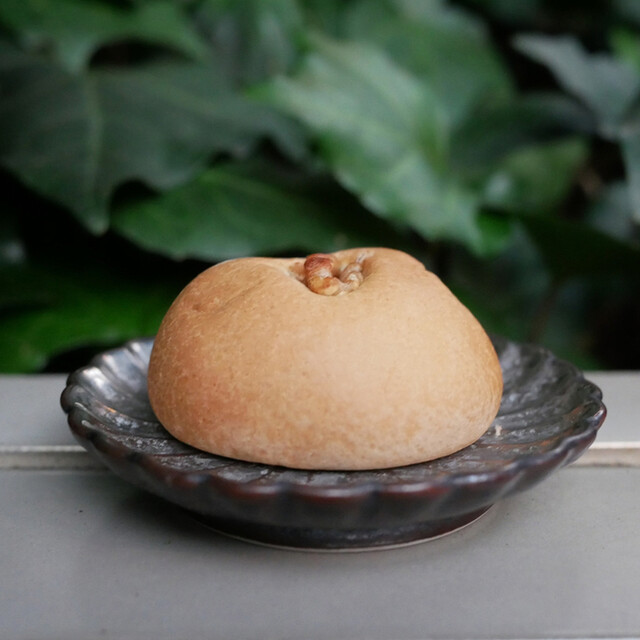
Approaching a neighborhood wagashi shop in Tokyo is a different exercise from arriving at a Ginza counter or a hotel pastry salon. The cues are quieter: a shopping-street rhythm, customers buying for home, and sweets treated as part of the day rather than a staged occasion. In Kamiitabashi, that context matters. Ishida Ya belongs to the city’s everyday sweets tradition, where dorayaki, cakes, and Japanese confectionery sit closer to domestic ritual than restaurant theater.
Tokyo’s serious sweet shops split into several tribes. Department-store counters prize packaging and gifting polish. Hotel pâtisseries trade on French technique and dining-room adjacency. Old-line wagashi shops work through seasonality, texture, and restraint, often with little need for a dining room. This is the lane to understand here. The recognition that matters is not a Michelin-style tasting-menu signal, but selection for Tabelog’s 2023 Tokyo list for Japanese traditional sweets and sweets cafés, a category that rewards a different kind of consistency.
Tokyo wagashi without the dining-room performance
Japanese sweets culture has its own version of cellar thinking. Instead of bottles, the serious curation is in formats, fillings, wrappers, shelf life, and the way a shop calibrates everyday purchase against seasonal gift. A disciplined wagashi counter does not need a long menu to communicate range; it needs enough depth to show how bean paste, pancake batter, sponge, and confectionery technique can serve different occasions. Ishida Ya’s listed categories, Japanese traditional sweets, cake, and dorayaki, place it in that hybrid Tokyo zone where wagashi and Western-style cake are not opposing camps but adjacent habits.
The dorayaki marker is especially useful for visitors trying to read the category. In Tokyo, dorayaki is not merely a casual snack; it is a benchmark sweet because the format exposes balance quickly. Pancake texture, filling proportion, and freshness cannot hide behind decoration. That makes a shop’s treatment of dorayaki a shorthand for its broader discipline, much as a compact by-the-glass list can reveal a bar’s taste faster than a leather-bound cellar book.
Among comparison venues in Tokyo, pricing and format underline the range of the city’s everyday specialists. Chuka Soba Ibuki and Kotobuki Seimen Yoshikawa Nishidai ekimae ten sit in a similarly low-spend bracket, but noodle shops and wagashi counters answer different needs: one is a meal stop, the other a purchase for later, for sharing, or for a train ride home. CRIOLLO Honten, Machi no Parlor, and Shimura Tokujuen occupy other sweet, café, or specialty registers at different spending levels. The useful comparison is not cuisine-for-cuisine, but purpose-for-purpose: Tokyo’s affordable excellence often lives far from destination-dining choreography.
Kamiitabashi puts the shop in a local Tokyo register
Kamiitabashi changes the frame. This is not the Tokyo of luxury retail footfall or international hotel density; it is a residential pocket on the Tobu Tojo Line where food shops depend on repeat use and local confidence. For travelers, that makes the sweets counter more revealing than a staged dessert course. The value is in seeing how Japanese confectionery functions when it is bought for family, office, or home rather than plated for a tasting menu.
The shop’s take-out format reinforces that reading. A no-frills sweets purchase in Tokyo can carry as much cultural information as a formal reservation, especially when the category is wagashi. The transaction is quick, but the standards are not casual. In this tier, recognition such as Tabelog 100 helps separate a neighborhood address with broader credibility from a shop that is merely convenient to the station.
That distinction matters for visitors building a Tokyo food itinerary. A day can hold both counter dining and small-format purchases without turning into a checklist. Pairing a wagashi stop with restaurants such as . 鮪と炭火焼き うお炭 秋葉原店, 12/10 Shinjuku ten, 124. KAGURAZAKA (Yakitori), 2D Cafe, or 3 Chome no Curry Ya San shows how broad Tokyo’s food map becomes once it is not limited to dinner reservations. For wider planning, use Our full Tokyo restaurants guide, Our full Tokyo hotels guide, Our full Tokyo bars guide, Our full Tokyo wineries guide, and Our full Tokyo experiences guide.
How to read the value of a sweets counter
For EP Club readers, the case for Ishida Ya is not luxury in the conventional sense. It is precision at a modest spend, backed by category recognition and a format that belongs to daily Tokyo life. That makes it a sharper cultural stop than another high-design dessert room when the goal is to understand how the city eats between formal meals.
The planning logic is simple: treat it as a sweets stop, not a restaurant booking. The listed average spend sits in the sub-¥1,000 bracket, and the format is in-store sales rather than seated dining. Payment is listed as cash-only across cards, electronic money, and QR code systems, so the practical move is to arrive prepared rather than assuming Tokyo’s newer payment habits apply everywhere. Tuesday is the regular closed day, with daytime service listed on the remaining days.
Tokyo itineraries often reward this kind of small detour. The same editorial principle applies beyond the capital: regional specialists such as -Grilled beef Sukiyaki- KAMAKURA TANUKIAN 鎌倉 たぬき庵 in Kamakura.cafe in Osaka.know in Kumamoto, (Shoku) Vietnam in Kawasaki, [Curry Senmon Ten] Maruyama Kyoju. in Sapporo, [ki:] in Kyoto, Jōdo Saké Bar in Los Angeles, and Onigiri Time in Pasadena each make sense when judged by format, local use, and category discipline rather than spectacle. The restaurant fits that reading of Tokyo: concise, practical, and more revealing than its modest scale suggests.
Style and Standing
Comparable venues by price and recognition.
| Venue | Cuisine | Price | Notes |
|---|---|---|---|
| Ishida YaThis venue — the venue you are viewing | Traditional Sushi & Japanese Cuisine | $ | Not listed |
| Gyoza no Fukuho (餃子の福包) | Traditional Japanese Gyoza | $ | Shinjuku |
| Umemura | Japanese Soul Food | $ | Koto |
| Suzumeya | Japanese sweets / Dorayaki | $ | Toshima |
| Ganso Shio Daifuku Mizuno | Traditional Japanese confectionery & cafe (shio daifuku specialist) | $ | Toshima |
| Takahashi no Saka Manju | Japanese traditional sweets (saka manju specialty) | $ | Suginami |
Recognition history
Dated appearances from independent guides and award organizations, with the underlying list record or original source where available.
Tabelog 100 #3 · No. 3
Tabelog · Tabelog 100 - Japanese traditional sweets / Japanese sweets cafe - TOKYO - 2023













At a Glance
- Solo
- Casual Hangout
- After Work
- Family
- Standalone
Current opening hours
- Monday
- 8:45 AM–5:45 PM
- Tuesday
- Closed
- Wednesday
- 8:45 AM–5:45 PM
- Thursday
- 8:45 AM–5:45 PM
- Friday
- 8:45 AM–5:45 PM
- Saturday
- 8:45 AM–5:45 PM
- Sunday
- 8:45 AM–5:45 PM
Hours can change for holidays and private events. Last verified .
Casual, no-frills atmosphere typical of a local sushi shop, with a relaxed environment suitable for everyday meals rather than special-occasion dining.