
Nara Seimen places a compact Yoyogi noodle counter inside Tokyo’s serious udon conversation: an 8-seat room, a JPY 1,000–1,999 budget, and selection for Tabelog 100 Udon EAST in 2022 and 2024. Its interest lies in menu architecture rather than ceremony, with udon, ramen, sake, and wine arranged for a quick but closely judged meal near Shinjuku’s commuter edge.
Pearl is the En Primeur Club membership app — saves, bookings, and concierge access live there. Same editors, same standards.
- Address
- 2 Chome-26-2 Yoyogi, Shibuya, Tokyo 151-0053, Japan
- Website
- instagram.com
 Saves & bookings on Pearl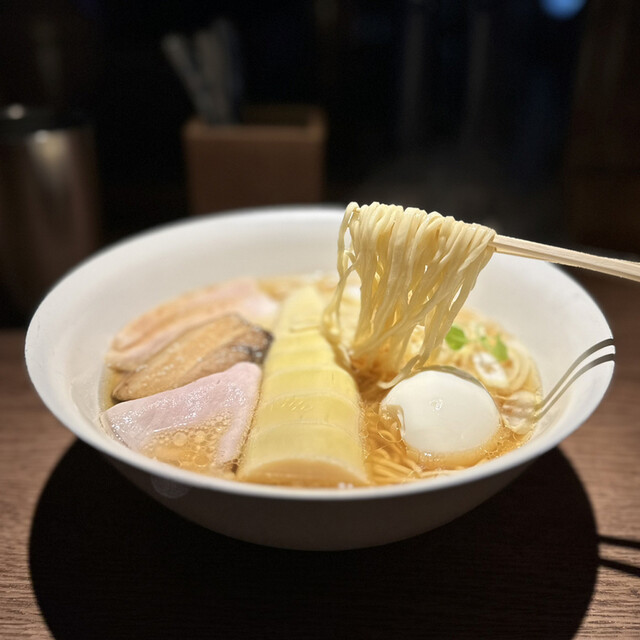
Yoyogi’s noodle culture is not built for grand entrances. Around Minami-Shinjuku, the city shifts from station traffic to smaller side streets, and the restaurants that matter often announce themselves through counter rhythm rather than design theatre. Nara Seimen belongs to that Tokyo category: a compact, counter-led noodle shop where the room’s scale shapes the meal before the first order is placed. With 8 counter seats and small private rooms requiring reservation, the format keeps attention on sequence, turnover, and the way a short menu can carry more intent than a long one.
The address places it in a useful in-between zone: close enough to Shinjuku to fit into a central Tokyo day, but removed from the department-store dining floors and tourist-facing ramen clusters. That distinction matters. Tokyo’s noodle map is often read through ramen queues and late-night bowls, yet udon occupies a different register: wheat, texture, temperature, broth, and restraint. A serious udon shop does not need luxury codes to be worth studying. It needs a clear structure and enough discipline for small choices to read clearly.
A small counter built around wheat, broth, and menu discipline
The menu architecture is the point here. The public category set lists udon, ramen, and noodles, which places the shop in a more elastic bracket than single-style udon specialists. That breadth can be a warning sign in less focused rooms, but in Tokyo’s everyday noodle culture, it can also indicate a practical intelligence: a compact shop serving a narrow price band while allowing different noodle formats to carry the same house logic. At JPY 1,000–1,999 for lunch and dinner, the value proposition sits closer to everyday craft than occasion dining.
Selection for Tabelog 100 Udon EAST in 2022 and 2024 gives the shop its clearest public credential. In Japan, Tabelog’s Hyakumeiten lists function less like luxury awards than category maps, identifying venues with enough consensus inside a specific food tradition to merit attention. For udon, that matters because the category is intensely regional and technical: Sanuki-style chew, Kansai-leaning broth restraint, Tokyo’s stronger seasoning history, and contemporary hybrids all compete under the same broad word. Nara Seimen’s recognition places it within that judged field rather than merely among casual noodle shops near Shinjuku.
The drinks listing, sake and wine, is also telling. Udon counters are often read as fast, functional meals, but a drinks program, even a concise one, suggests the meal can stretch beyond pure refuelling. That does not turn the room into a tasting-menu restaurant. It simply changes the reader’s expectation: this is a noodle stop where the architecture allows a deliberate lunch, an early dinner, or a low-key evening built around wheat noodles rather than sushi-counter ceremony.
Why Yoyogi changes the reading of a Tokyo noodle meal
Location affects how a restaurant should be judged. In Ginza, a counter may be read through price escalation and reservation scarcity. In Shinjuku, the benchmark is volume, convenience, and late-night density. Yoyogi sits between those pressures. It has enough office and residential traffic to support regulars, enough station access to pull destination diners, and enough distance from the main Shinjuku churn to reward places with a narrower point of view.
That is where Nara Seimen’s smallness becomes useful rather than merely quaint. Eight counter seats create a different social contract from a large noodle hall: decisions need to be made promptly, solo diners fit naturally, and the meal’s success depends on clarity rather than spectacle. Private rooms for 2 or 4 exist, with reservation required, but the counter remains the primary lens. For visitors trying to understand Tokyo beyond omakase and high-rise hotel dining, this is the type of format that explains how much precision the city expects from inexpensive food.
The comparison set around Tokyo underlines the point. A meal at KINO_ belongs to a different financial and experiential bracket, with budgets listed from JPY 8,000–9,999 at lunch and JPY 15,000–19,999 at dinner. moonbow, by contrast, occupies the same JPY 1,000–1,999 budget band, which shows how much variation Tokyo compresses into modest pricing. Noodle counters, curry shops, yakitori rooms, and casual izakaya formats can share a spend level while asking for completely different expectations from the diner.
For restaurant context, start with Our full Tokyo restaurants guide; for a Shinjuku-adjacent contrast, see 12/10 Shinjuku ten. Nearby category-hopping might include 3 Chome no Curry Ya San, 2D Cafe, 124. KAGURAZAKA (Yakitori), and. 鮪と炭火焼き うお炭 秋葉原店. For cross-city perspective on Japan’s casual dining range, compare -Grilled beef Sukiyaki- KAMAKURA TANUKIAN 鎌倉 たぬき庵 in Kamakura.cafe in Osaka.know in Kumamoto, (Shoku) Vietnam in Kawasaki, [Curry Senmon Ten] Maruyama Kyoju. in Sapporo, and [ki:] in Kyoto. Travellers building a fuller itinerary can layer in Our full Tokyo hotels guide, Our full Tokyo bars guide, Our full Tokyo wineries guide, and Our full Tokyo experiences guide; outside Japan, Jōdo Saké Bar in Los Angeles and Onigiri Time in Pasadena show how Japanese casual formats translate abroad.
Know Before You Go
- Format: Counter-led noodle shop with udon, ramen, and noodle categories listed.
- Recognition: Selected for Tabelog 100 Udon EAST in 2022 and 2024.
- Budget: JPY 1,000–1,999 at lunch and dinner.
- Seating: 8 counter seats, plus small private rooms for 2 or 4 by reservation.
- Access: Near Minami-Shinjuku and within walking range of Yoyogi and Shinjuku station exits.
- Payment: Cash planning is sensible, as cards, electronic money, and QR code payments are listed as not accepted.
- Useful detail: English and Korean menus are listed, which lowers friction for visitors who want a serious noodle meal without a full Japanese-language ordering exchange.
Cuisine and Credentials
Comparable venues to place this listing in its category.
| Venue | Cuisine | Price | Notes |
|---|---|---|---|
| Nara SeimenThis venue — the venue you are viewing | Modern Japanese ramen / udon noodle shop | $$ | Not listed |
| Re:s Cafe Bar & Sweets | Japanese Dessert Cafe | $$ | Nishi Waseda |
| 鮨・四季創作 心陽 (こはる) | Fresh Sushi & Seafood Bowls | $$ | Harajuku / Kita-Sando |
| Gandhi | Japanese-style European curry house | $$ | Shinjuku |
| Tsunahashi Shinjuku | Traditional Japanese Tempura | $$ | Shinjuku |
| Satei Zenkashoin Shibuya hikarie ShinQs ten | Kyoto-style Japanese Tea Cafe | $$ | Shibuya |
Recognition history
Dated appearances from independent guides and award organizations, with the underlying list record or original source where available.
Tabelog 100 #59 · No. 59
Tabelog · Tabelog 100 - Udon - EAST - 2024











At a Glance
- Cozy
- Modern
- Intimate
- Solo
- Casual Hangout
- After Work
- Date Night
- Chefs Counter
- Standalone
- Design Destination
- Beer Program
Current opening hours
- Monday
- 11 AM–9 PM
- Tuesday
- 11 AM–9 PM
- Wednesday
- 11 AM–9 PM
- Thursday
- 11 AM–9 PM
- Friday
- 11 AM–9 PM
- Saturday
- 11 AM–9 PM
- Sunday
- 11 AM–10 PM
Hours can change for holidays and private events. Last verified .
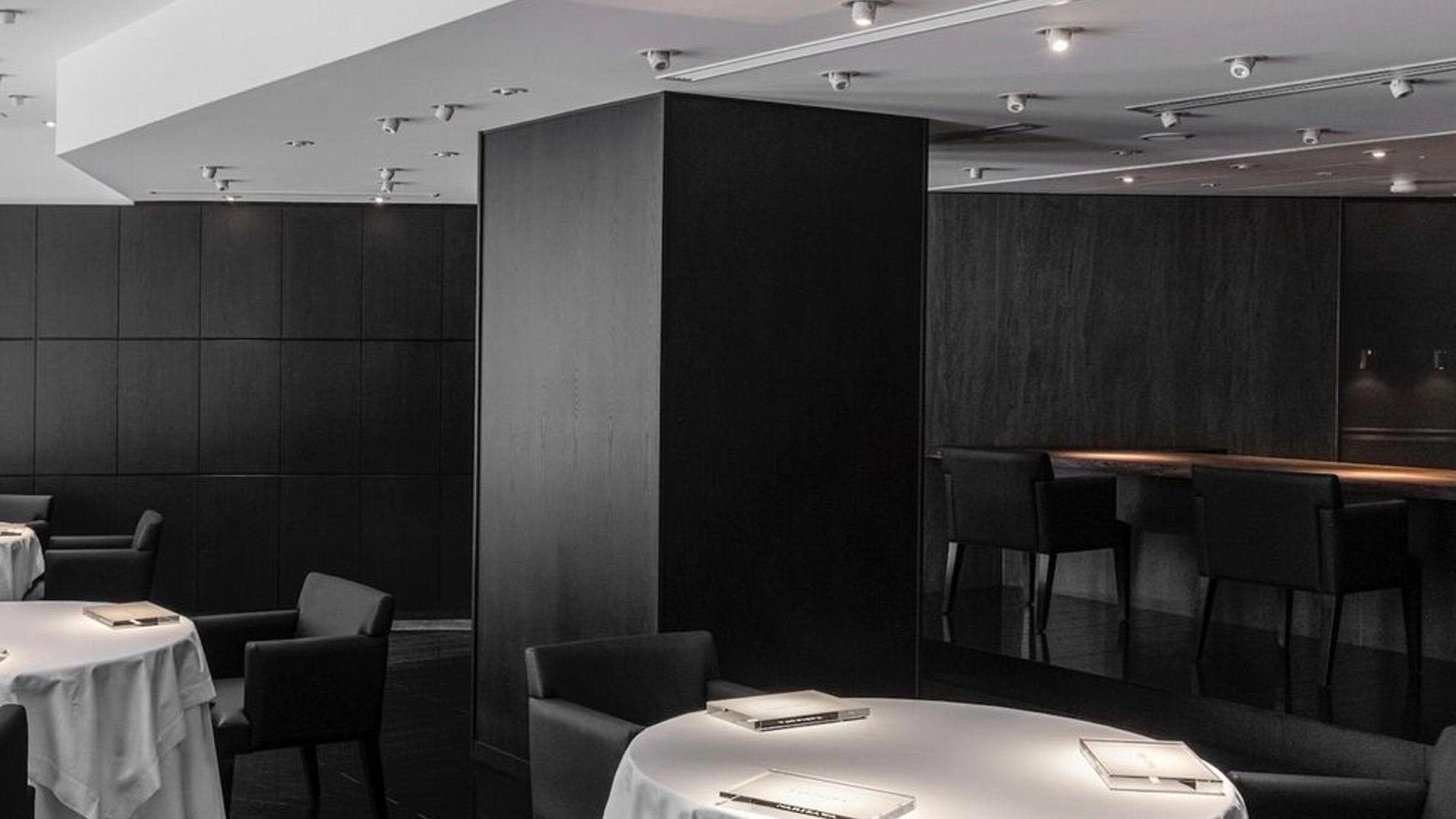
A small, counter-focused space with a minimalist, elegant feel often described as a refined ramen shack: calm, clean, quietly stylish, and well-suited to solo or couple dining rather than large groups.