

1 Michelin Star · Black Pearl 1 Diamond
Our verdict
Moose (Pudong) holds a Black Pearl 1 Diamond (2025) and anchors the Jiangzhe tradition in one of Shanghai's most accessible fine-dining formats. Huaiyang cooking takes centre stage, with set menus and seasonal specials built around classical technique, braised pork belly, sautéed river shrimps, and a rotating catch of the day worth asking about at the table. Booking ahead is advised for weekend sittings.

Pearl is the En Primeur Club membership app, where members save venues, book tables and use the concierge.
The menu
What to order
- Braised lion's head pork balls
- Peking duck
- Squirrel fish
- Braised pork belly
- Sautéed river shrimps
Pudong's Jiangzhe Counter: Where Huaiyang Cooking Holds Its Ground
The ninth floor of a commercial building on Pudong South Road is not where most first-time visitors to Shanghai expect to find serious classical Chinese cooking. That slight remove from the tourist circuit is partly the point. Pudong's dining identity has shifted considerably over the past decade, with international hotel restaurants and Lujiazui expense-account dining long dominating the conversation. Moose (Pudong) occupies a different position in that picture: a Black Pearl 1 Diamond recipient in 2025, it operates as a deliberately public-facing outpost within a three-branch network, bringing Huaiyang-centric cooking to an audience that extends beyond the city's usual fine-dining circuit.
Huaiyang cuisine, the tradition centred on the Huai and Yangtze river deltas, is among China's most technically demanding regional styles. Knife work, stock clarity, and the careful preservation of ingredient flavour without heavy seasoning are its defining standards. It shares root territory with the broader Jiangzhe category (Jiangsu and Zhejiang provinces), and Shanghai's position at the confluence of those culinary geographies means the city has always supported serious practitioners. What has changed is the competitive pressure: newer format restaurants pulling from contemporary Chinese and fusion directions have pushed some of the classical Jiangzhe houses toward a more conservative, older-skewing clientele. Moose, across its three branches, has navigated that by running at a ¥¥¥ price point, accessible relative to the ¥¥¥¥ positioning of peers like Fu He Hui (Vegetarian), while maintaining the technical baseline that earns Black Pearl recognition.
What's on the Table
The Pudong branch runs a Huaiyang-centric menu with deliberate painstaking execution on select preparations. The head chef, trained in Anhui province, champions the pagoda version of hong shao rou (braised pork belly in brown sauce), a preparation where the pork is layered and constructed into a vertical form that requires precision knife work to achieve the characteristic shape and even distribution of fat and lean. It is a dish that signals kitchen discipline: shortcuts in preparation collapse the result immediately, and the version here is cited in the Black Pearl assessment as evidence of that discipline.
River shrimps, a Jiangzhe staple, appear in a sautéed preparation that prioritises clean, umami-loaded flavour over heavy saucing. The technique is characteristic of the style: the shrimps arrive translucent, treated with enough heat to set the protein without losing the sweetness of fresh river catch. This is the kind of dish that reads as simple on a menu and reveals kitchen confidence in execution.
The seasonal menu and daily catch are where the kitchen's sourcing habits show up most directly. Servers are equipped to walk through what is available, and it is worth asking specifically about the catch of the day, which changes with market availability rather than a fixed rotation. Seasonal vegetables and braised preparations follow the same logic. The approach places Moose within a broader Jiangzhe tradition of ingredient-led cooking rather than the fixed tasting-menu format that has become standard at the higher end of Shanghai's Chinese fine dining, see Xin Rong Ji (West Nanjing Road) for a Taizhou-inflected take on a similar price tier, or 102 House (Cantonese) for the Cantonese version of classical technique in Shanghai.
The Booking Experience: What to Know Before You Go
The EA-GN-10 consideration matters here more than it might at a single-location restaurant. Moose operates across three Shanghai branches under the same kitchen team, which means the brand name does not resolve to a single address when making plans. The Pudong branch at 899 Pudong South Road, 9th floor, unit 908, serves a broad public-facing demographic, its format and positioning are distinct from the other branches, which are calibrated for different audiences. Confirming the specific branch before booking avoids misdirection.
Given the Black Pearl recognition and the ¥¥¥ price positioning, weekend evening sittings fill on shorter lead times than the restaurant's relatively low profile might suggest. Planning two to three days ahead for weekday sittings and five to seven days for weekend evenings is a reasonable baseline, though this will vary by season. Spring and autumn, when seasonal Jiangzhe ingredients are at their peak, river shrimps, young bamboo shoots, seasonal fish, see higher demand. Booking during those windows requires earlier action.
Confirming reservation details in Mandarin reduces ambiguity; most staff will have limited English at this address.
This is not the format for spontaneous walk-in dining at peak hours. The kitchen paces service around the complexity of Huaiyang preparations, and arriving without a reservation on a Friday or Saturday evening will likely result in a wait or redirection to a later sitting. Build the visit into a Pudong itinerary rather than treating it as a backup option.
Shanghai Jiangzhe in Context
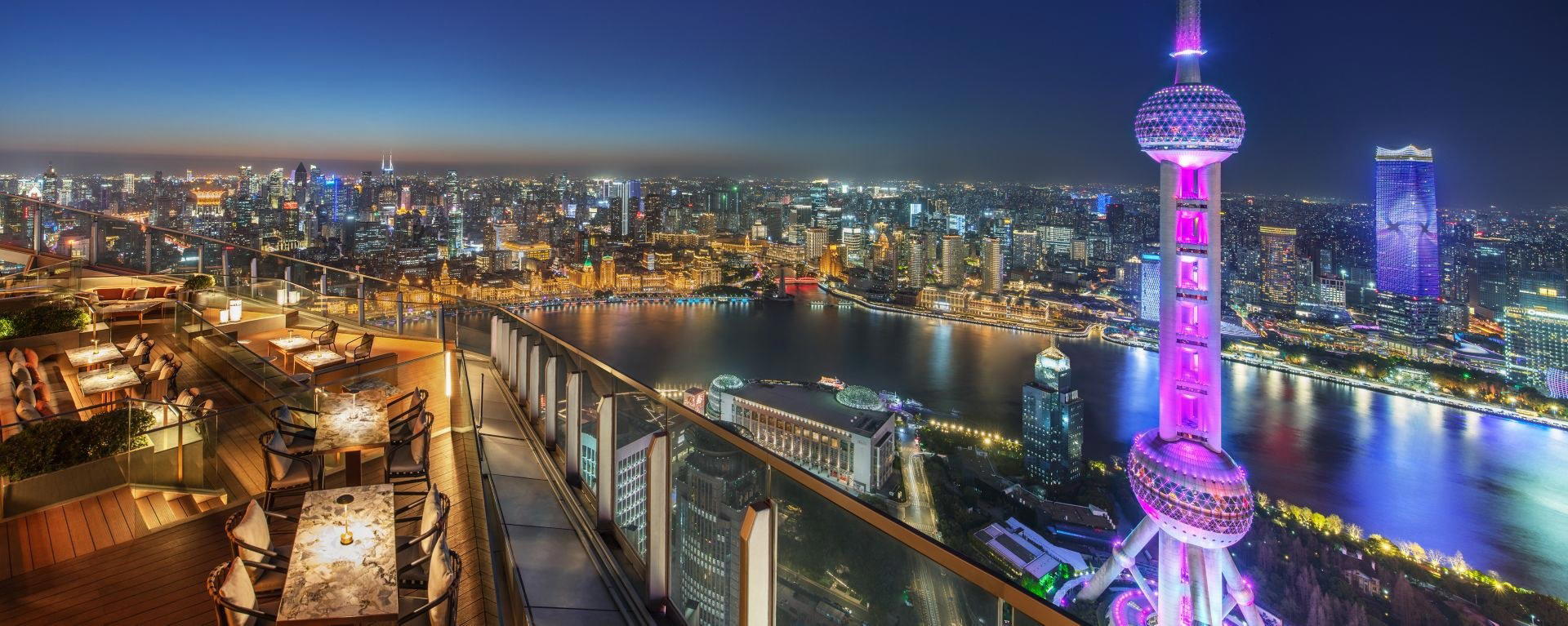
Shanghai's classical Chinese dining tier is well-documented but unevenly distributed geographically. Most of the city's recognised Jiangzhe and Shanghainese houses cluster on the Puxi side, with Pudong historically underserved at this level. Moose's presence on Pudong South Road therefore fills a gap as much as it competes within a dense field. Visitors staying in or around Lujiazui, or combining a meal with the broader Pudong museum and waterfront itinerary, gain access to Black Pearl-level cooking without crossing the river.
For readers building a broader picture of classical Chinese fine dining across China's cities, comparable Jiangzhe-adjacent traditions show up at Ru Yuan in Hangzhou, Hangzhou being the spiritual home of much of what Huaiyang cooking draws from, and in more Cantonese-inflected register at Imperial Treasure Fine Chinese Cuisine in Guangzhou. The Beijing branch of Xin Rong Ji (Xinyuan South Road) and Xin Rong Ji in Chengdu extend the comparison into how Taizhou-style cooking, a close relative to Jiangzhe, travels across very different dining markets.
Within Shanghai itself, the contrast between Moose's accessible, ingredient-led format and the more architecturally ambitious end of the city's dining scene is instructive. Taian Table (Modern European, Innovative) and 8 1/2 Otto e Mezzo Bombana (Shanghai) represent the international fine-dining pole; Moose sits at the other end of that axis, where the reference points are culinary history rather than global recognition circuits. Both ends earn their standing on different terms. For further context across the city's dining, drinking, and hotel options, see our full Shanghai restaurants guide, our full Shanghai hotels guide, our full Shanghai bars guide, our full Shanghai wineries guide, and our full Shanghai experiences guide.
Readers planning a longer China itinerary alongside a Shanghai stop might also consider how the Macanese take on classical Chinese cooking compares at Chef Tam's Seasons in Macau, or how southern Chinese technique reads at Dai Yuet Heen in Nanjing. For international benchmarks at a technical level comparable to what Black Pearl recognition implies, though in very different culinary registers, Le Bernardin in New York City and Atomix in New York City offer a useful calibration of what sustained award recognition looks like when the kitchen discipline is the constant.
Know Before You Go
- Address: 899 Pudong South Road, 9th Floor, Unit 908, Pudong New Area, Shanghai 200120
- Building: Former Yaohan commercial complex
- Cuisine: Jiangzhe (Huaiyang-centric)
- Price tier: ¥¥¥
- Awards: Black Pearl 1 Diamond (2025)
- Booking lead time: 2–3 days weekdays; 5–7 days weekends; longer during spring and autumn peak seasons
- Language: Mandarin is the primary service language at this branch; confirm reservations in Mandarin where possible
- Seasonal menu: Ask servers about the catch of the day and seasonal specials, these rotate with market availability
- Network: Three Shanghai branches operated by the same team; confirm Pudong branch specifically when booking
Frequently asked questions
What do regulars order at Moose (Pudong)?
Is Moose (Pudong) reservation-only?
Cost and Credentials
| Venue | Cuisine | Price | Awards | Notes |
|---|---|---|---|---|
| Moose (Pudong)This venue (the venue you are viewing) | Refined Huaiyang Cuisine | $50–100 | 1 Michelin Star · Black Pearl 1 Diamond | Not listed |
| Fu He Hui | Modern Seasonal Vegetarian Fine Dining | $200–300 | 2 Michelin Stars · World's 50 Best #11 | Vegetarian |
| Ming Court | Cantonese with Shanghainese Influences | $30–50 | 1 Michelin Star · Black Pearl 1 Diamond | Cantonese |
| Polux | French Bistro | $30–50 | Michelin Bib Gourmand | French |
| Royal China Club | Cantonese Dim Sum | $100–150 | Michelin Plate · The Good Food Guide GFG Good | Chinese, Cantonese |
| Scarpetta | Refined Italian Pasta & Pizza | $50–100 | Michelin Plate · Wine Spectator Best of Award of Excellence | Italian |
Recognition history
Dated appearances from independent guides and award organizations, with the underlying list record or original source where available.
Michelin 1 Star
Michelin
Black Pearl 1 Diamond
Black Pearl
Continue exploring
More in Shanghai
Restaurants in Shanghai
All restaurants in Shanghai →
Bars in Shanghai
All bars in Shanghai →

Details
- Elegant
- Sophisticated
- Cozy
- Modern
- Business Dinner
- Special Occasion
- Private Dining
- Extensive Wine List
- A La Carte
Refurbished century-old mansion with antique furniture, oil paintings, all-white interior exuding modern European charm and elegant luxury.