
Tabelog 100 #93
Our verdict
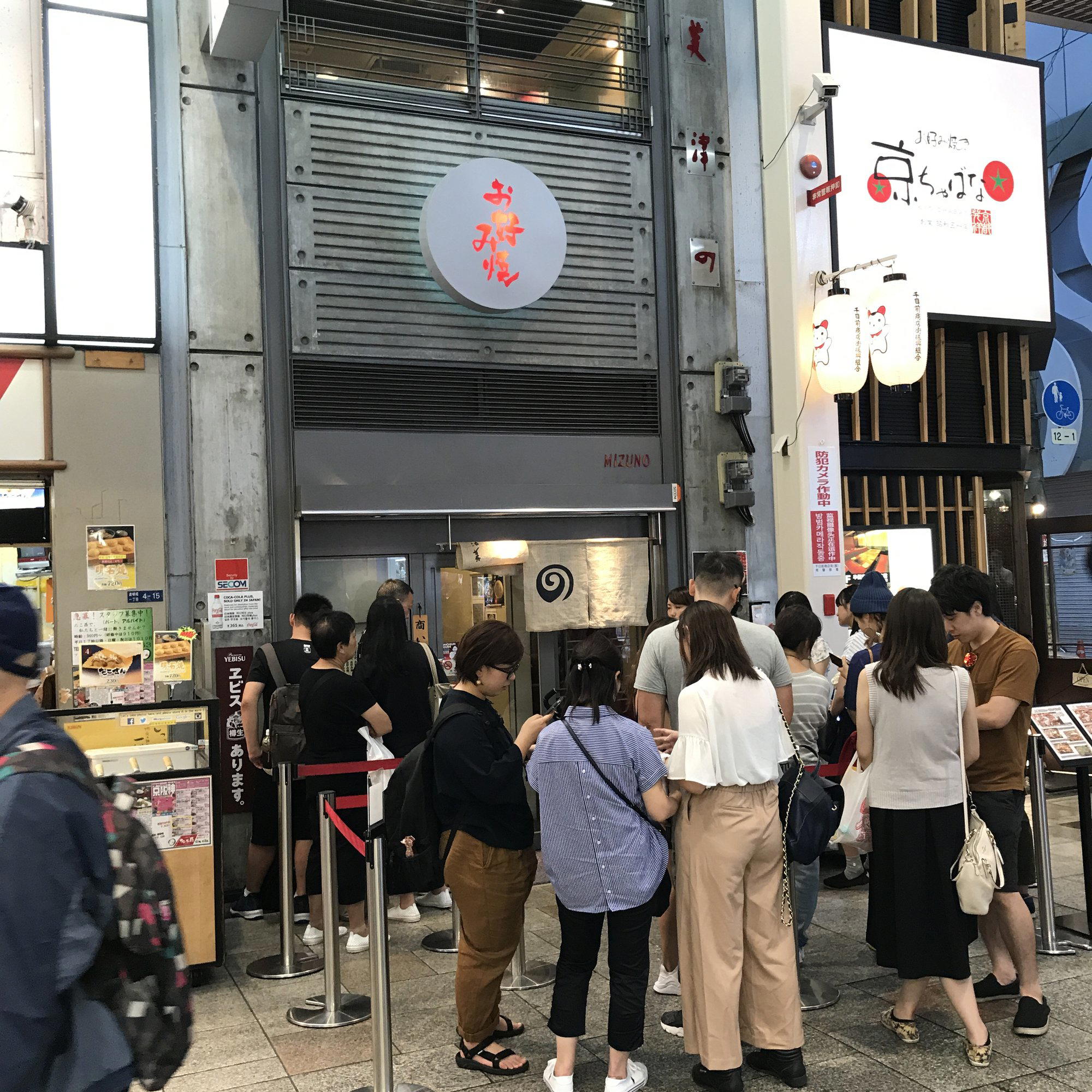
On Dotonbori's most recognisable stretch, Mizuno (美津の) has served okonomiyaki to Osaka residents long enough to become part of the street's institutional fabric. The restaurant draws regulars who return not for novelty but for consistency, the kind that only accumulates over decades. For visitors, it offers direct access to the dish that defines Osaka's everyday food culture.

Pearl is the En Primeur Club membership app, where members save venues, book tables and use the concierge.
The menu
What to order
- Mizuno-yaki
- Yamaimo-yaki
- Modan-yaki
The Counter That Dotonbori Built
Dotonbori is many things at once: a tourist corridor, a working entertainment district, and one of the few places in Japan where the street food culture visible from the pavement matches what serious locals actually eat. The neon signs, the canal reflections, the noise, all of it is real. And inside that environment, on a strip where restaurants change hands with some regularity, a handful of addresses have become structural. Mizuno (美津の), at 中央区道頓堀1-4-15, is one of them.
Okonomiyaki, the savoury pancake built around a batter of flour, egg, and dashi, loaded with cabbage and a choice of proteins, is Osaka's answer to the question of what a city eats when it feeds itself rather than performing for visitors. Two cities dominate the okonomiyaki tradition: Osaka, where the ingredients are mixed into the batter before cooking, and Hiroshima, where the layers are assembled separately on the griddle. Mizuno works the Osaka style, and has done so at this address long enough that the distinction between the restaurant and the dish, for many regulars, has essentially collapsed.
What Draws People Back
The regulars' relationship with a place like Mizuno is built on something that doesn't translate well into review language: repetition. Not the repetition of boredom, but of a known sequence, the wait if there is one, the griddle visible from the dining room, the smell of batter hitting hot iron, the particular weight of the dish when it arrives. These are things people return for precisely because they don't change. In a district as commercially active as Dotonbori, that consistency is a form of resistance.
What the long-term clientele of Osaka's okonomiyaki institutions understand is that the dish is a platform for adjustments, more nagaimo (mountain yam) in the batter for a lighter texture, specific protein combinations, sauce ratios. Regulars at counters like this often have preferences accumulated over years rather than visits. They know what they want before they sit down. For a first-time visitor watching that dynamic from a neighbouring table, it's one of the more instructive dining experiences the city offers.
Osaka's broader restaurant scene has moved considerably in recent decades. Restaurants like HAJIME and La Cime represent the city's French-inflected fine dining tier, while Kashiwaya Osaka Senriyama and Taian anchor the kaiseki tradition. Fujiya 1935 sits in the innovative tier. None of that movement has displaced the okonomiyaki counter from its position in how Osaka defines its own food identity. If anything, the proliferation of high-end restaurants in the city makes the enduring authority of places like Mizuno more legible, not less.
The Dish in Its City Context
In Japan's broader regional food geography, okonomiyaki occupies a specific position: it is a post-war staple that emerged from scarcity and became, over generations, a source of genuine civic pride. Osaka's version, kansai-style, or sometimes called osaka-yaki, reflects the city's historical appetite for wheat-based street food. Takoyaki shares the same cultural shelf. Both are cooked in front of the customer, finished with the same family of condiments (Worcestershire-based sauce, Japanese mayonnaise, bonito flakes, aonori), and consumed at a pace that has nothing to do with fine dining's rhythms.
This is worth stating plainly for visitors approaching Dotonbori from the direction of kaiseki or omakase: okonomiyaki is not a simplified or lesser form of Japanese cuisine. It is a different register entirely, with its own technique requirements, its own regional debates, and its own hierarchy of practitioners. A restaurant that has held a consistent position in that hierarchy for as long as Mizuno has is making a claim about execution, not just longevity.
The Japan-wide context is also useful here. The concentration of serious food culture in the Kansai region is unusual. Gion Sasaki in Kyoto and akordu in Nara each represent distinct local traditions within about an hour of Osaka by train. Across Japan, the regional differentiation is equally pronounced: Harutaka in Tokyo, Goh in Fukuoka, and destinations further afield, including restaurants in Nanao, Sapporo, Takashima, and Nishikawa Machi, each operate within food traditions that are locally coherent and nationally distinct. Osaka's okonomiyaki sits inside that system as one of its most recognisable regional expressions.
For a wider frame of reference, the EP Club covers food traditions across categories and continents, from Le Bernardin in New York City to Atomix, from Birdland in Sakai to Bistro Ange in Toyohashi. See the full Osaka restaurants guide for the broader picture of what the city's dining scene currently offers across price points and categories.
Planning Your Visit
Mizuno sits on Dotonbori's main pedestrian stretch in Chuo-ku, at an address (中央区道頓堀1-4-15, 大阪市, 大阪府, 542-0071) that places it within easy walking distance of Namba Station. The restaurant is well-known enough to generate queues, particularly on weekend evenings and during peak tourist periods, so arriving earlier in the meal service, lunch or early dinner on a weekday, gives a more representative experience of how regulars actually use the place. At busy times, the wait is visible from the street, which lets you make the call in real time. Booking details, current hours, and pricing are best confirmed through the restaurant directly or via current listings, as these are subject to change.
Frequently asked questions
Where is Mizuno (美津の) located?
Mizuno (美津の) is located at 中央区道頓堀1-4-15, 大阪市, 大阪府, 542-0071, Osaka.
Is Mizuno (美津の) different from other okonomiyaki restaurants on Dotonbori?
Mizuno's long-established presence on Dotonbori's main strip in Chuo-ku, Osaka, positions it as a reference point for the city's okonomiyaki tradition rather than a recent entrant chasing foot traffic. Where many Dotonbori restaurants operate across multiple formats, Mizuno maintains a single-category focus on okonomiyaki. That specialisation, sustained over decades in one of Japan's most competitive dining corridors, is the practical distinction.
What's the best thing to order at Mizuno (美津の)?
Mizuno is an okonomiyaki specialist, and the focus is Osaka style: ingredients folded into the batter rather than layered as in Hiroshima. Ordering outside that core category misses the point of coming to this address in Dotonbori. Work through the okonomiyaki options rather than treating them as a side decision.
How far ahead should I plan for Mizuno (美津の)?
Mizuno sits on Dotonbori's main pedestrian corridor in Chuo-ku, one of Osaka's most trafficked tourist stretches, which makes walk-in waits a realistic expectation on weekends and evenings. Arriving early in the lunch window or on a weekday significantly reduces queuing time. There are no online booking details publicly.
Cuisine and Awards Snapshot
Comparable venues nearby, for context on price, style, and recognition.
| Venue | Cuisine | Price | Awards | Notes |
|---|---|---|---|---|
| Mizuno (美津の)This venue (the venue you are viewing) | Traditional Osaka Okonomiyaki | $10–20 | Tabelog 100 #93 | Not listed |
| Dontaku | Osaka Okonomiyaki & Teppanyaki Counter | $20–30 | Tabelog 100 #86 | Kita |
| Stand Aida | Standing yakitori & chicken dishes | $30–50 | Tabelog 100 #93 | Chūō |
| Toriyaki Shogun Eiwa | Traditional Yakitori Izakaya | Not listed | Tabelog 100 #30 | Higashi-Osaka |
| Fukutaro (福太郎) | Osaka Okonomiyaki & Negiyaki | $10–20 | Tabelog 100 #90 | Sennichimae |
| Sangourmand | A5 Wagyu Hamburger Steak & Omurice Yoshoku | $20–30 | Tabelog 100 #38 | Kita |
Recognition history
Dated appearances from independent guides and award organizations, with the underlying list record or original source where available.
Tabelog 100 #93 · No. 93
Tabelog · Tabelog 100 - Okonomiyaki - 2025
Continue exploring
More in Osaka
Restaurants in Osaka
All restaurants in Osaka →


Bars in Osaka
All bars in Osaka →
Hotels in Osaka
All hotels in Osaka →



Wineries in Osaka
Browse all →
Details
- Lively
- Well Known
- Intimate
- Casual Hangout
- Group Dining
- Open Kitchen
- Sake Program
- A La Carte
- Counter Dining
- Vegetarian Friendly
Casual and energetic grill-side atmosphere with sizzling teppan griddles and crowds forming lines out the door.