
Tabelog 100 #90
Our verdict
Fukutaro sits in Osaka's Namba-adjacent Sennichimae district, where the city's okonomiyaki and kushikatsu traditions run deepest. The address places it squarely in the working grid of Chuo-ku, a neighbourhood that has fed Osaka's late-night crowds for generations. For visitors tracing the city's street-food lineage through a more composed setting, this is a considered stop.

Pearl is the En Primeur Club membership app, where members save venues, book tables and use the concierge.
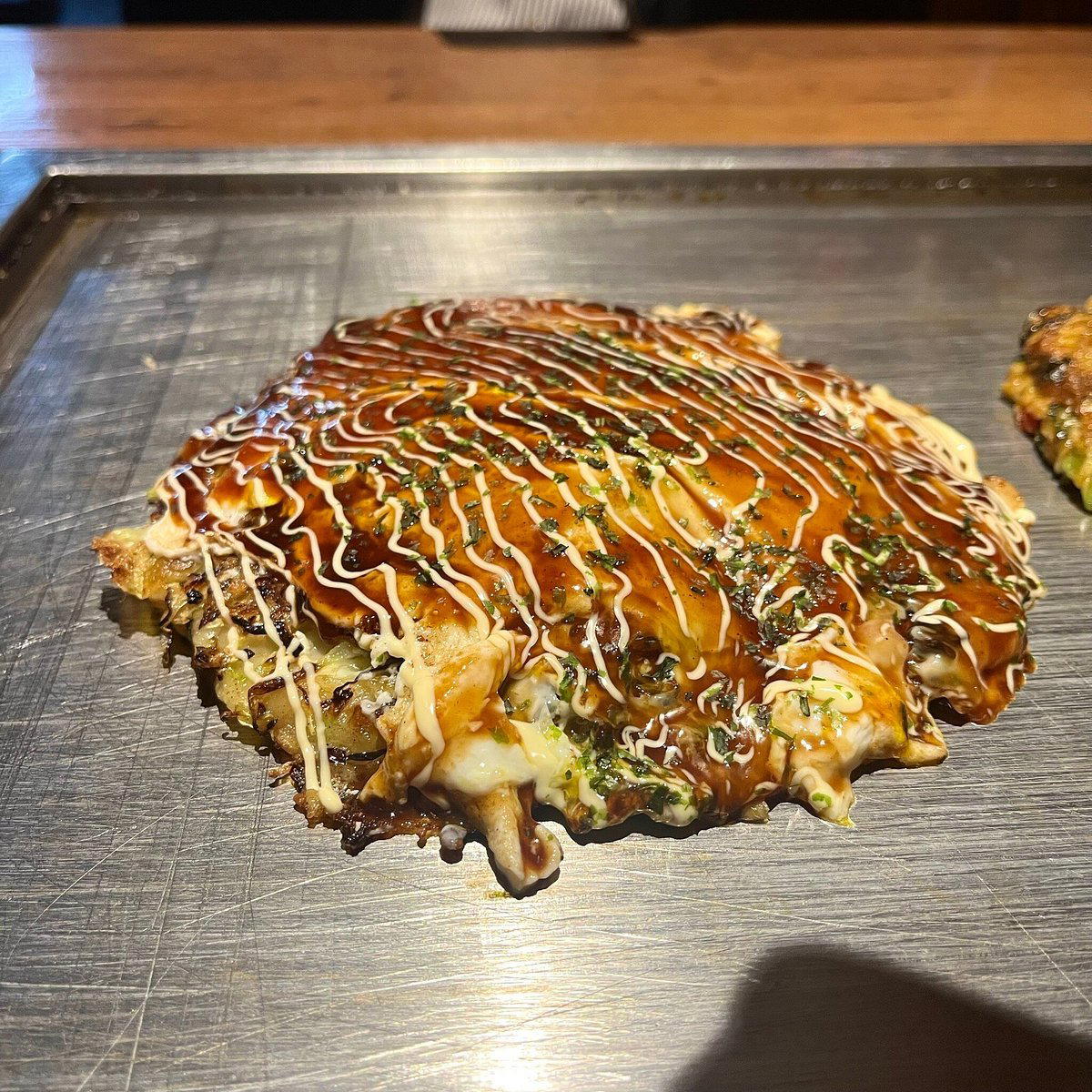
Sennichimae and the Roots of Osaka's Eating Culture
The stretch of Chuo-ku running south from Dotonbori toward Sennichimae is not the Osaka that ends up in architectural photography. It is older and less curated than that, built on the logic of feeding people efficiently and well. The streets around Sennichimae 2-chome have housed theatres, markets, and kitchens for well over a century, and the neighbourhood still carries that layered, functional character. Fukutaro occupies a building at the address 2-3-17 in this district, which places it precisely within that older commercial fabric, a few minutes from Namba and its surrounding tourist pressure, but culturally at a slight remove from it.
Osaka's culinary identity is built around a set of principles that pre-date the current era of fine-dining competition. Kuidaore, the idea of eating until you are ruined, is less a joke than an accurate description of how the city has historically allocated its energy. The food culture here is participatory and unapologetic, producing traditions like okonomiyaki, takoyaki, and kushikatsu that reward execution over concept. Sennichimae is where several of those traditions are practised with the least self-consciousness, which is not the same as practising them carelessly.
Okonomiyaki as a Civic Practice
Osaka's claim on okonomiyaki is contested by Hiroshima, whose layered construction differs structurally from the Osaka style of mixing all ingredients into the batter before cooking. The Osaka version, sometimes called Kansai-style, produces a denser, more unified result, where the cabbage, protein, and batter are inseparable from the first pour. This is not a minor technical distinction. The two approaches reflect different philosophies about structure and integration that go well beyond the griddle. Osaka's version is the older form in terms of regional lineage, and it is the one that establishments in this part of Chuo-ku have built their reputations around.
Fukutaro operates in that Kansai-style tradition. For visitors who have eaten okonomiyaki only at tourist-facing counters near Dotonbori, the version served in Sennichimae-area restaurants tends to be calibrated differently, with less accommodation for novelty and more confidence in the base preparation. The batter-to-cabbage ratio, the quality of the dashi used in the mix, and the timing of the flip are all areas where long-standing neighbourhood establishments diverge from high-volume tourist operations. These are the technical details that define the difference between a dish as spectacle and a dish as craft.
Within Osaka's restaurant scene, the premium tier is occupied by kaiseki houses like Kashiwaya Osaka Senriyama and Taian, and by the innovative Western-Japanese hybrids represented by HAJIME, La Cime, and Fujiya 1935. Fukutaro operates at a different point in the city's dining structure, one that is less about critical recognition and more about the kind of consistent neighbourhood presence that sustains a food culture over time. Both ends of that structure are worth understanding if you are reading Osaka seriously.
The Neighbourhood at Table
Sennichimae has historically drawn a crowd that is local by default rather than local by design. The area feeds theatregoers from the nearby entertainment district, late-shift workers, and the kind of Osaka residents who are not particularly interested in where they are photographed eating. This produces a dining atmosphere that is calibrated to comfort and repetition rather than occasion. Restaurants here earn their reputation across hundreds of ordinary evenings, not through a single high-profile review cycle.
That dynamic distinguishes places like Fukutaro from the more globally visible end of the Osaka dining scene. Comparable neighbourhood-rooted experiences can be found across Japan in cities with strong regional food identities: Goh in Fukuoka operates within a different culinary tradition but with a similar sense of place-specificity, and Gion Sasaki in Kyoto represents the kaiseki equivalent of deep neighbourhood roots. For contrast across prefectures, akordu in Nara shows how a restaurant can anchor itself to regional character while working in a completely different format. And for those extending a Japan itinerary, Tokyo's tasting-menu tier is mapped well by Harutaka, while regional expressions worth noting include Abon in Ashiya, affetto akita in Akita, Aji Arai in Oita, Ajidocoro in Yubari District, Akakichi in Imabari, and aki nagao in Sapporo. For readers mapping premium casual dining internationally, Le Bernardin in New York City and Lazy Bear in San Francisco represent the Western analogues of restaurants that carry a specific culinary tradition with seriousness at a neighbourhood scale.
Planning a Visit
Fukutaro's address in Chuo-ku places it within easy walking distance of Namba Station, making it accessible without the need for a separate transit leg. The Sennichimae area is most animated in the evening hours, consistent with Osaka's general pattern of late dining, and the surrounding streets are worth exploring before or after eating. Given that specific booking details are not published through central reservation platforms, the standard approach for visitors from outside Japan is to ask hotel concierge staff to call ahead, particularly for weekend evenings when neighbourhood demand in this part of Chuo-ku runs high. The restaurant's entry in the Osaka dining record is direct enough that a concierge familiar with the city will know it. For a broader orientation to eating across the city before finalising any itinerary, our full Osaka restaurants guide covers the range from street-food traditions to Michelin-level kaiseki.
Frequently asked questions
Where is Fukutaro (福太郎) in Osaka?
Fukutaro (福太郎) is located at 中央区千日前2-3-17, 大阪市, 大阪府, 542-0074, Osaka.
Is Fukutaro a good choice for first-time visitors trying Osaka-style okonomiyaki?
Fukutaro's location in Chuo-ku, Sennichimae, a neighbourhood historically tied to Osaka's working and theatre-going population, places it in the tradition rather than the tourist-facing version of it. For a visitor whose frame of reference is Hiroshima-style or international interpretations, the Kansai mixed method here offers a clear point of comparison. The area around Namba Station is walkable, which makes Fukutaro easy to reach without a dedicated transit leg.
What's the signature dish at Fukutaro (福太郎)?
Fukutaro is anchored to Osaka's Kansai-style okonomiyaki, the version in which cabbage, protein, and batter are combined before hitting the griddle, structurally distinct from Hiroshima's layered construction. This mixed method is the defining civic form in Osaka, and Sennichimae is one of the neighbourhoods most closely associated with it. The dish arrives as the menu's centre of gravity rather than as a novelty item.
How far ahead should I plan for Fukutaro (福太郎)?
No confirmed booking window is published for Fukutaro, but Sennichimae draws theatregoers from the nearby entertainment district alongside its regular local clientele, which means weekend evenings fill early. Arriving before the dinner rush or targeting weekday sittings is the practical approach for walk-in visitors from Namba Station, a short walk from the Chuo-ku address. Checking current reservation practice directly with the venue before travel is advisable.
Cost Snapshot
| Venue | Cuisine | Price | Awards | Notes |
|---|---|---|---|---|
| Fukutaro (福太郎)This venue (the venue you are viewing) | Osaka Okonomiyaki & Negiyaki | $10–20 | Tabelog 100 #90 | Not listed |
| HAJIME | Avant-Garde Japanese Fine Dining | $300–500 | 3 Michelin Stars · World's 50 Best #83 | French, Innovative |
| La Cime | Modern French with Japanese Ingredients | $150–200 | 2 Michelin Stars · World's 50 Best #13 | French |
| Kashiwaya Osaka Senriyama | Seasonal Kaiseki Omakase | $200–300 | 3 Michelin Stars · La Liste Top Restaurants | Japanese |
| Taian | Traditional Japanese Kaiseki Omakase | $150–200 | 3 Michelin Stars · La Liste Top Restaurants | Kaiseki, Japanese |
| Fujiya 1935 | Modern Japanese with European influences | $100–150 | 2 Michelin Stars · La Liste Top Restaurants | Innovative |
Recognition history
Dated appearances from independent guides and award organizations, with the underlying list record or original source where available.
Tabelog 100 #90 · No. 90
Tabelog · Tabelog 100 - Okonomiyaki - 2025
Continue exploring
More in Osaka
Restaurants in Osaka
All restaurants in Osaka →



Bars in Osaka
All bars in Osaka →
Hotels in Osaka
All hotels in Osaka →



Wineries in Osaka
Browse all →
Details
- Lively
- Casual
- Casual Hangout
- Group Dining
- Open Kitchen
- Sake Program
- Local Sourcing
- A La Carte
Casual lively atmosphere with open kitchen where guests watch chefs prepare savory pancakes.