
Toriyaki Shogun Eiwa puts Higashiosaka’s evening chicken-dining culture in focus: part toriyaki house, part izakaya, with nabe folded into the same casual grammar. Its 2025 Tabelog 100 selection for chicken cuisine gives the address a clear trust signal, while the format reads more local-night-out than destination tasting counter.
Pearl is the En Primeur Club membership app — saves, bookings, and concierge access live there. Same editors, same standards.
- Address
- 大阪府東大阪市永和1-3-16
- Phone
- +81667286555
- Website
- tabelog.com
 Saves & bookings on Pearl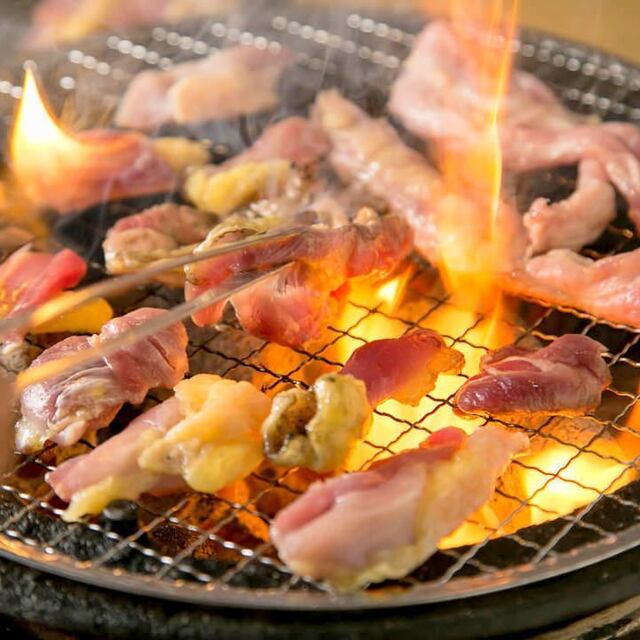
Approaching the Eiwa side of Higashiosaka at night, Osaka’s restaurant mood changes scale. The city-centre rush gives way to smaller streets, commuter routines and dinner rooms built for groups rather than performance. This is the register in which chicken restaurants do some of their strongest work: smoke, grill, hot pot, drinks and a room that can take a proper evening rather than a quick refuel.
Toriyaki Shogun Eiwa belongs to that after-dark Osaka category. The address is not a lunch-driven noodle counter or a department-store dining floor; it is a chicken-focused izakaya with nabe in the repertoire, selected for the Tabelog 100 Chicken Cuisine list in 2025. That recognition matters because chicken cookery in Japan is broad, from yakitori counters with tightly controlled sequencing to more social toriyaki rooms where grilled poultry, shared plates and drinks carry the night.
Chicken cookery as an evening format, not a daytime stop
The lunch-versus-dinner divide is unusually clear here. Osaka’s daytime value circuit is dominated by fast, narrow categories: ramen, udon, curry, bakery counters and casual Chinese cooking, often priced for office workers and station traffic. In the comparison group, Taishu Chuuyuuka Shokudo Hakkai, Gokuju Bimen umami, Chuka Soba Fukuhara and Totomen En all sit in the JPY 1,000 to JPY 1,999 bracket, while Junai Udon Nadeshiko runs even leaner. Those are daytime economics: short dwell time, high turnover, a single craving solved with precision.
Evening chicken dining works differently. The category stretches the meal, puts drinks into the centre of the table and makes room for larger parties. Toriyaki Shogun Eiwa’s listed categories, chicken dishes, izakaya and nabe, place it in that slower rhythm. The point is not a single bowl or a quick set meal; it is a dinner built around poultry, shared heat and the kind of drink list that can move from sake and shochu to wine and cocktails without pretending to be a formal bar.
That distinction also explains the value proposition. A chicken-focused dinner in the JPY 3,000 to JPY 3,999 range occupies a middle lane in Osaka: above the city’s lunch staples, below the reservation-heavy counters that define luxury dining in Ginza or Kitashinchi. For travellers, the lesson is useful. If the day is for fast Osaka classics such as buns, noodles and bakeries, the evening is where neighbourhood specialisation becomes more revealing.
Why Higashiosaka changes the reading of the meal
Location shapes expectation. Higashiosaka is not the same dining proposition as Umeda, Namba or Shinsaibashi, where restaurants compete against hotels, department stores and inbound traffic. Eiwa reads more residential and rail-linked, which makes a 57-seat chicken izakaya a different kind of signal: enough capacity for dates, friends and banquets, but not the compact theatre of an eight-seat counter. Counter seats, sofa seating and upstairs table seating point to a room designed for several dining speeds.
That breadth is part of Osaka’s strength. The city is often reduced to takoyaki and okonomiyaki by visitors, but its better everyday dining culture is more layered: specialist ramen shops, udon rooms, bakeries, izakaya, kappo counters and category-specific restaurants that reward leaving the obvious hotel corridor. A chicken house selected by Tabelog in 2025 gives Higashiosaka a reason to enter that conversation without asking the diner to treat it like a ceremony.
The absence of an official website also says something about the practical texture of this tier. Japan still has restaurants where third-party listings, phone reservations and local familiarity do more work than polished digital branding. That does not make the meal less serious. It means the planning burden shifts: check current operating details before travelling across town, and treat payment terms and smoking policy as part of the decision rather than footnotes.
How to place it in an Osaka itinerary
For a visitor building a full Osaka eating day, Toriyaki Shogun Eiwa makes more sense at night than at midday. Keep lunch for faster formats, then use dinner for a longer, drink-led meal outside the central tourist belt. The surrounding choice set matters: a traveller might read it alongside 551 Horai (551蓬莱) for Osaka’s mass-loved comfort food, 52CHO-ME BAKERY for daytime carbohydrates, a canto (Italian) for a different dinner register, or 99 Pizza Napoletana Gourmet when the night calls for imported technique rather than Japanese poultry cookery.
For broader planning, Our full Osaka restaurants guide is the natural starting point, with Our full Osaka hotels guide, Our full Osaka bars guide, Our full Osaka wineries guide and Our full Osaka experiences guide filling in the rest of the trip. Nearby and cross-city browsing can also use.cafe as a softer daytime counterpoint.
Outside Osaka, the comparison becomes national rather than local: -Grilled beef Sukiyaki- KAMAKURA TANUKIAN 鎌倉 たぬき庵 in Kamakura frames another meat tradition. 鮪と炭火焼き うお炭 秋葉原店 in Tokyo puts charcoal and seafood into an urban Tokyo context.know in Kumamoto, (Shoku) Vietnam in Kawasaki, [Curry Senmon Ten] Maruyama Kyoju. in Sapporo and [ki:] in Kyoto show how tightly Japanese cities segment casual specialisation. For readers extending the theme overseas, Jōdo Saké Bar in Los Angeles and Onigiri Time in Pasadena trace how Japanese formats translate abroad.
The editorial read is simple: choose this for a night when Osaka should feel local, social and poultry-led rather than polished into a tasting-menu sequence. The Tabelog 100 selection supplies the external credential; the stronger reason to go is the category itself, a dinner format that explains how Osaka eats after work, away from the city’s obvious visitor routes.
Peers Worth Knowing
Nearby venues at a similar price tier for orientation.
| Venue | Cuisine | Price | Notes |
|---|---|---|---|
| Toriyaki Shogun EiwaThis venue — the venue you are viewing | Traditional Yakitori Izakaya | $$ | Not listed |
| Fukutaro (福太郎) | Osaka Okonomiyaki & Negiyaki | $$ | Sennichimae |
| Tapioca Shokudo | Okonomiyaki & Negiyaki | $$ | Tennōji |
| RAMU-NO-LOVESONG | Lamb-focused Modern Japanese Stand Bar | $$ | Kita |
| Stand Tiger Lily | Standing Teppan Izakaya & Bar | $$ | Kita |
| Revo Honten | Japanese Yoshoku (Steak & Hamburger Steak) | $$ | Nishinari |
Recognition history
Dated appearances from independent guides and award organizations, with the underlying list record or original source where available.
Tabelog 100 #30 · No. 30
Tabelog · Tabelog 100 - Chicken cuisine - 2025
Continue exploring
More in Osaka
Restaurants in Osaka
Browse all →




Bars in Osaka
Browse all →

Hotels in Osaka
Browse all →



Wineries in Osaka
Browse all →
At a Glance
- Cozy
- Classic
- Lively
- Group Dining
- Celebration
- Casual Hangout
- After Work
- Late Night
- Private Event
- Private Dining
- Standalone
- Open Kitchen
- Sake Program
- Beer Program
- Local Sourcing
Traditional, authentic-style chicken restaurant with a hidden-alley feel, charcoal-grill ventilation, and a lively late-night izakaya atmosphere.