Google: 4.4 · 62 reviews

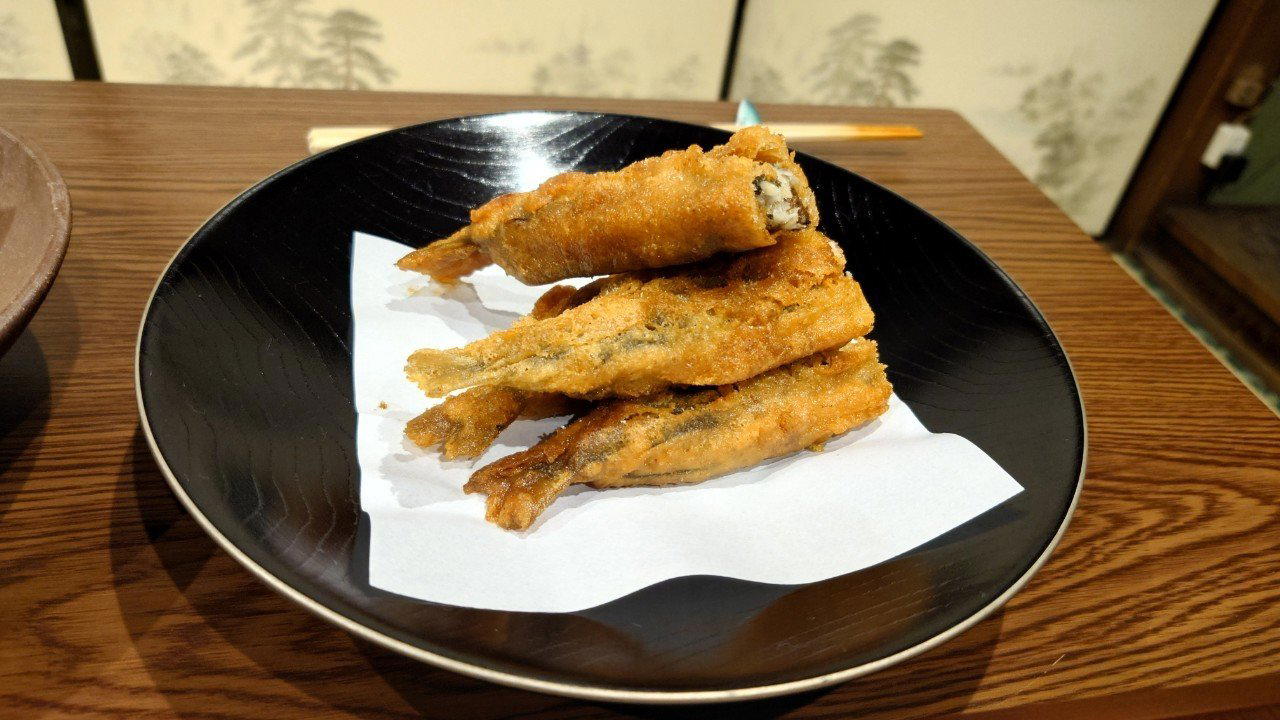
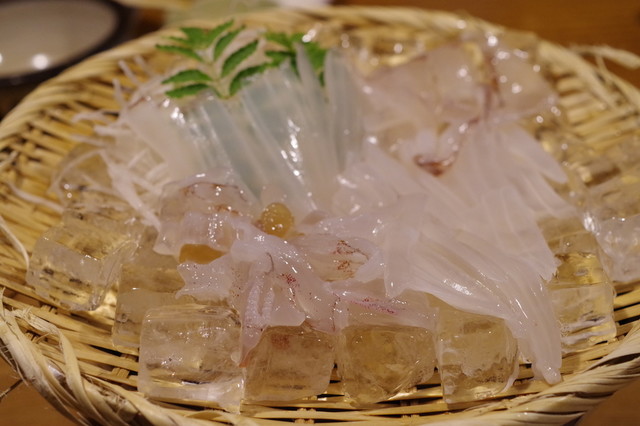
A reservation-only kaiseki house in rural Shimane, Mikadoya has held Tabelog Silver or Bronze recognition every year since 2017 and earned selection in the Tabelog Japanese Cuisine WEST 100 in both 2021 and 2025. The kitchen centres on ayu sweetfish drawn from the Takatsugawa river and suppon soft-shell turtle, served across sittings of eight guests at most. Meals run two and a half to three hours; this is a table for people with time to spend.

Where the River Dictates the Menu
Japan's most celebrated kaiseki tables tend to cluster in Kyoto, Osaka, and Tokyo, where competition, foot traffic, and foreign press sustain a visible hierarchy. A different kind of precision exists outside that circuit. In the San'in region of western Honshu, a handful of old-line restaurants have built their reputations not on urban density but on singular local ingredients that metropolitan kitchens simply cannot replicate. Mikadoya, operating out of a house restaurant in Nichihara, a district of Tsuwano in Shimane Prefecture, belongs to that category. The Tabelog score of 4.31 for 2026 and a consecutive award history running from Bronze in 2017 through multiple Silver years to inclusion in the Tabelog Japanese Cuisine WEST 100 in both 2021 and 2025 place it in the same recognition tier as destination kaiseki rooms in major cities, despite a location that requires deliberate effort to reach.
The premise is geographic. The Takatsugawa river, which runs through this corner of Shimane, produces ayu (sweetfish) that are among the most sought-after in Japan. Ayu are acutely sensitive to water quality; the fish eat river algae, and their flavour reflects the mineral character of the water and stone they inhabit. The Takatsugawa's clarity and its relatively undisturbed watershed give the ayu here a clean, faintly grassy profile that differs measurably from fish raised in degraded or heavily managed rivers. Restaurants like Gion Sasaki in Kyoto command high prices partly on the strength of their sourcing relationships with specific rivers; Mikadoya is positioned at the source itself.
The Sourcing Logic Behind an Eight-Seat Room
Ingredient-led kaiseki at this price point, JPY 30,000 to JPY 39,999 per person at posted rates with actual review averages running toward JPY 40,000 to JPY 49,999 at dinner, is only sustainable if the kitchen can control quality at every stage. Limiting capacity to eight seats per sitting is one mechanism for that control. Small tables allow the kitchen to work with the day's catch rather than a standardised supply chain, and they allow service to adjust pacing to the group rather than to a floor of forty covers. The format is comparable to counter kaiseki in Kyoto or the small-room structures at akordu in Nara and Aji Arai in Oita, where the constraint of scale is a deliberate choice, not a limitation of circumstance.
The kitchen's second headline ingredient, suppon (soft-shell turtle), occupies a specific position in Japanese culinary tradition. Suppon has been a luxury ingredient in kaiseki and banquet cooking for centuries, valued for its collagen-rich broth and its association with stamina and seasonal eating. Unlike ayu, which is tied to a defined summer and early autumn season, suppon preparation extends across a wider window. The combination of a river-sourced seasonal fish and a year-round luxury protein gives the kitchen range across the calendar that a single-ingredient specialist would not have. The database description identifies the restaurant as representing ayu cuisine at a national level, which positions it alongside a small number of specialist ayu kaiseki rooms rather than the broader category of traditional Japanese restaurants.
The Physical Experience
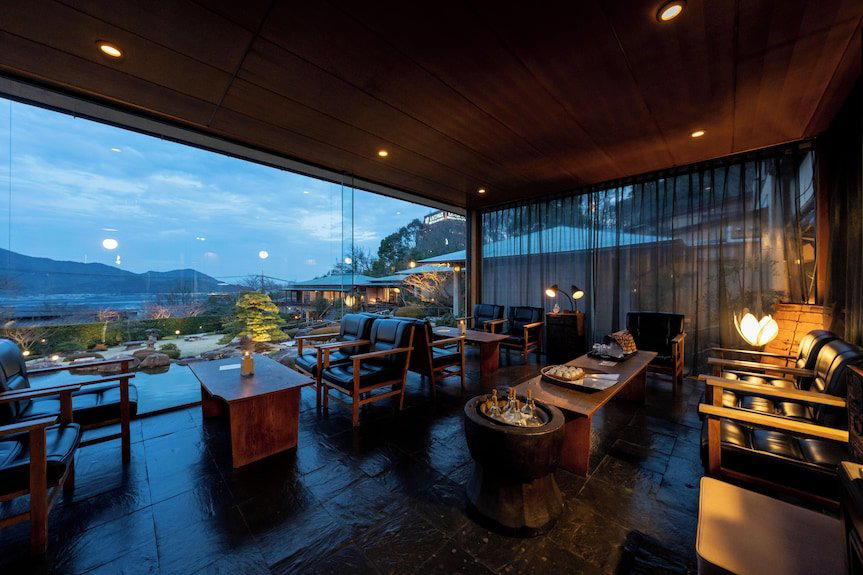
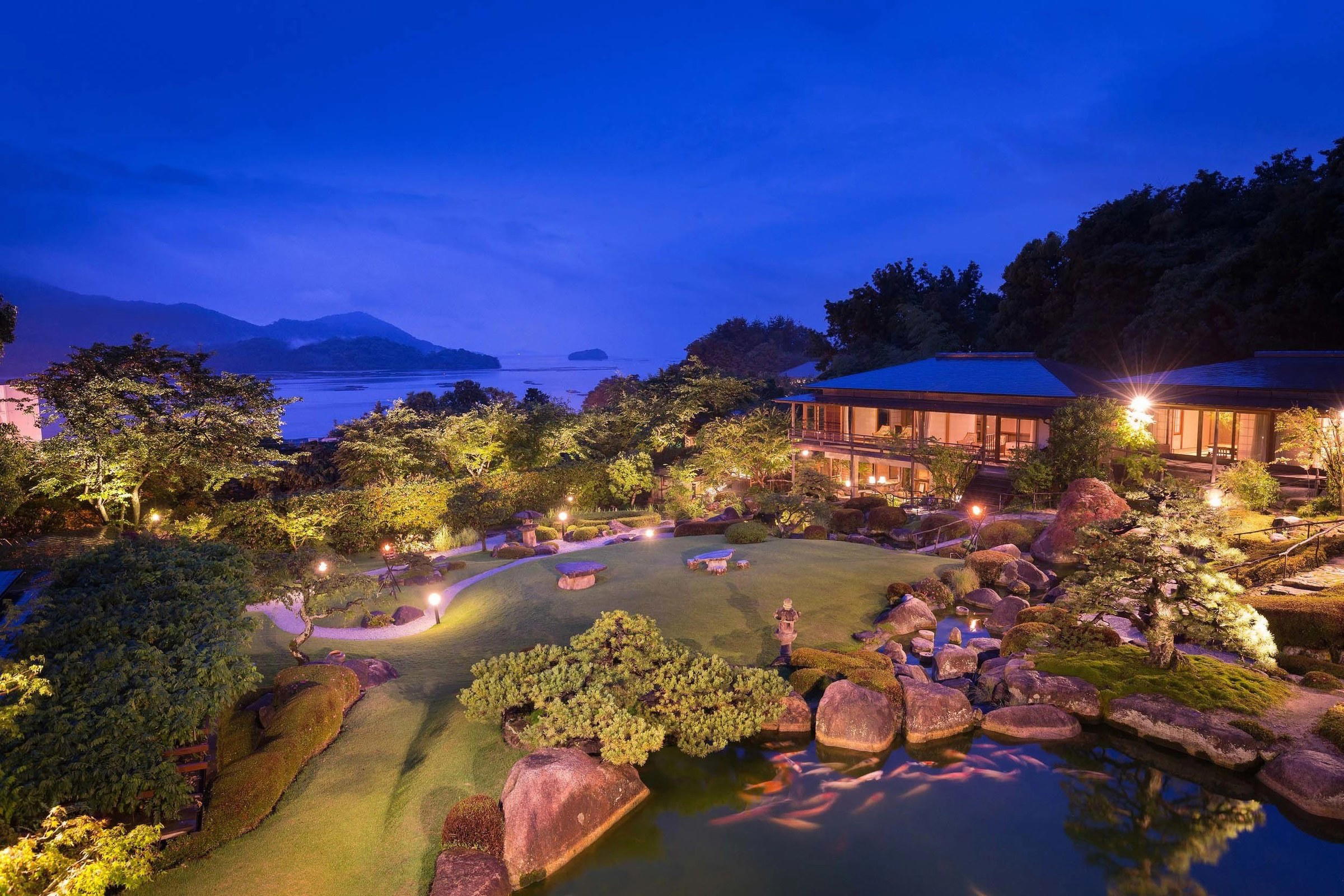
Approaching a house restaurant in rural Shimane involves a different set of sensory cues than arriving at a named address in Ginza or Gion. The architecture is domestic, typically Showa-era in character, and the surrounding landscape is the kind of mid-mountain valley terrain common to this part of western Honshu. The dining room sits on the second floor, reached by stairs, and the maximum seating of eight people across configurations for two, four, six, or eight guests means the room functions more like a private dining space than a restaurant floor. Private use for events of up to 20 people is available, which suggests the ground-floor space can be opened for larger gatherings, though the standard table operates at eight seats.
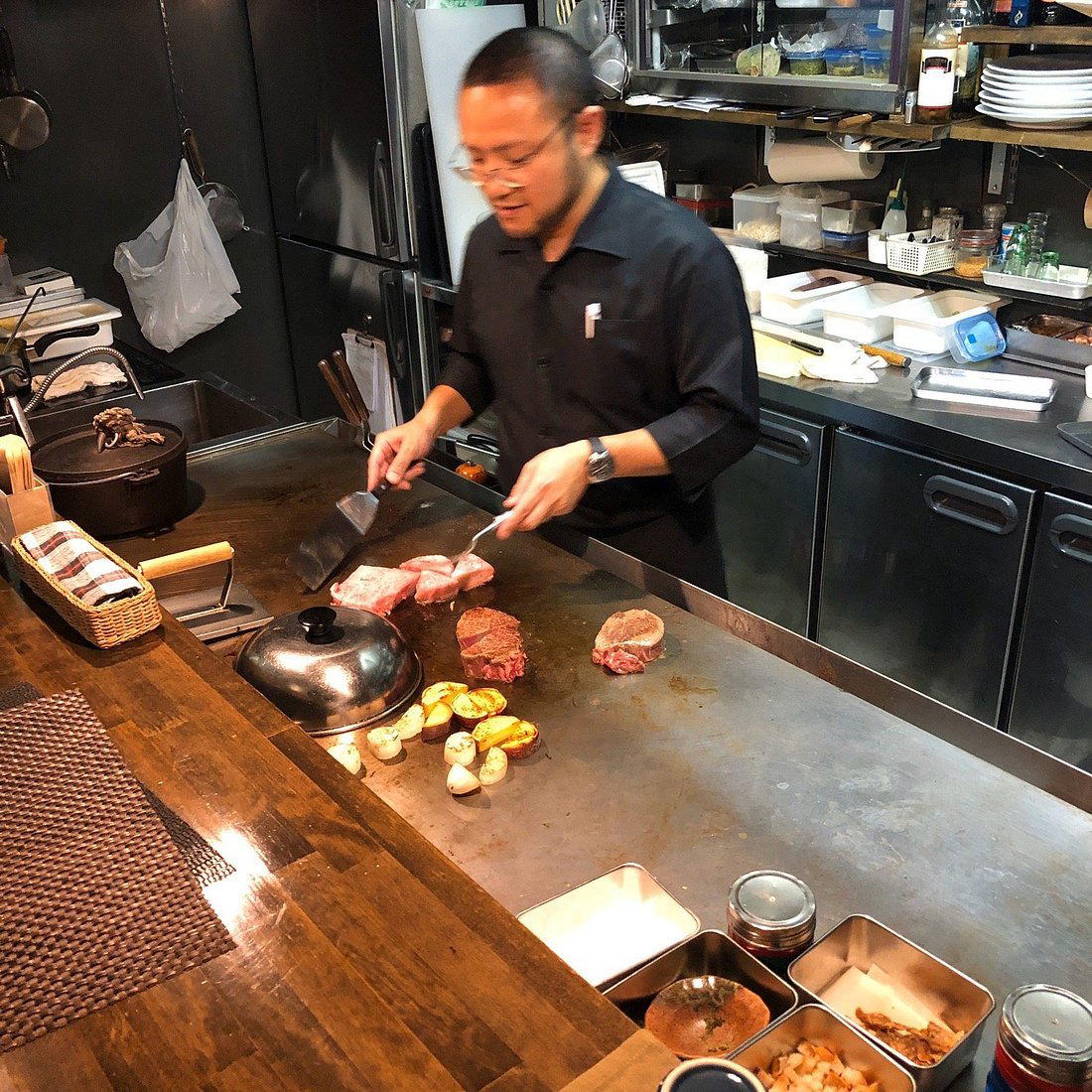
Meals are timed at two and a half to three hours. The restaurant is explicit that guests in a hurry should not book, which reflects a kaiseki pacing philosophy rather than a service inconvenience. At this price and format, the meal is the event, not a prelude to something else. Sake, shochu, and wine are available; major credit cards are accepted; a 10 percent service charge applies. Solo bookings are not accommodated; the minimum party is two. These are structural features of the format rather than quirks of management, and they align Mikadoya with how premium kaiseki rooms across Japan generally operate.
What the Awards Communicate About the Peer Set
Tabelog's award structure places Silver roughly equivalent to sustained high performance across a large review base, while Gold sits at the apex of the system. Mikadoya has held Silver in six of the past eight years (2017, 2018, 2019, 2021, 2022, 2023, 2025) with Bronze in the intervening years and the WEST 100 selection in 2021 and 2025. For context, Silver-level Tabelog recognition in the Japanese cuisine category at this price tier places a restaurant in company with rooms that compete against each other in Kyoto and Osaka. The fact that this recognition attaches to a small kaiseki house in a rural Shimane valley is the editorial point: the sourcing relationship with the Takatsugawa creates a competitive advantage that location alone does not undermine.
For comparison, destination restaurants drawing on similarly specific regional ingredients, such as Goh in Fukuoka or affetto akita in Akita, demonstrate that Japan's most consistently recognised tables are not confined to its three main urban centres. The pattern of Tabelog recognition following ingredient-led rooms outside Tokyo, Kyoto, and Osaka is now well established. Internationally, the analogy is the destination restaurant built around a single exceptional local product: not unlike the logic that takes diners to Le Bernardin in New York City for a specific relationship with seafood sourcing, or to Atomix in New York City for a specific interpretive approach to Korean fine dining ingredients.
Planning a Meal at Mikadoya
The restaurant operates on a reservation-only basis, with sittings at noon and from 18:00 in the evening. Bookings for solo diners are not accepted. The site is located in Nichihara, accessible on foot from Nibara Station on the JR Yamaguchi Line in approximately 15 minutes, or by car from Hagi Iwami Airport in around 25 minutes. Parking is available on site. The kitchen is closed every Monday and for three days around mid-August (August 14 to 16), which is a standard Obon-period closure for rural Japanese restaurants. Given the seasonal dependency on ayu, the summer months from June through September are the period when the kitchen's primary ingredient is at its most active in the itinerary; booking during this window is the logical choice for visitors whose primary interest is the river fish rather than the suppon programme.
Families travelling with small children can note that the kitchen offers seasonal children's dishes featuring sweetfish, though the restaurant asks that this be communicated at the time of reservation. The format, price, and pacing, a minimum two and a half hour meal at JPY 30,000 to JPY 49,999 per head, are not oriented toward casual dining; the restaurant is clear on this.
For a fuller view of where to eat and stay while in the area, see our full Tsuwano restaurants guide, our full Tsuwano hotels guide, our full Tsuwano bars guide, our full Tsuwano wineries guide, and our full Tsuwano experiences guide. Readers comparing kaiseki options across western Japan may also want to consult coverage of HAJIME in Osaka, Harutaka in Tokyo, 1000 in Yokohama, 6 in Okinawa, Abon in Ashiya, and Ajidocoro in Yubari District.
Peer Set Snapshot
These are the closest comparables we have in our database for quick context.
| Venue | Cuisine | Price | Awards | Notes |
|---|---|---|---|---|
| Mikadoya | {"Year":"2026","Award Source":"Tabelog",… | This venue | ||
| Harutaka | Sushi | ¥¥¥¥ | Michelin 3 Star | Sushi, ¥¥¥¥ |
| RyuGin | Kaiseki, Japanese | ¥¥¥¥ | Michelin 3 Star | Kaiseki, Japanese, ¥¥¥¥ |
| HAJIME | French, Innovative | ¥¥¥¥ | Michelin 3 Star | French, Innovative, ¥¥¥¥ |
| L'Effervescence | French | ¥¥¥¥ | Michelin 3 Star | French, ¥¥¥¥ |
| HOMMAGE | Innovtive French, French | ¥¥¥¥ | Michelin 2 Star | Innovtive French, French, ¥¥¥¥ |
Continue exploring
More in Tsuwano
Restaurants in Tsuwano
Browse all →At a Glance
- Classic
- Cozy
- Elegant
- Quiet
- Intimate
- Special Occasion
- Historic Building
- Sake Program
- Local Sourcing
Traditional Japanese room with tatami mats, shoji screens, soft lighting, low ceilings, and a dignified, nostalgic atmosphere preserving Showa-era craftsmanship.