Positioned on Piazza Armando Diaz in central Milan, MARTINI occupies the kind of address that carries its own civic weight, a stone's throw from the financial district and the city's commercial core. It sits within a broader Milanese tradition of rooms where business, fashion, and appetite converge, drawing a clientele that treats the table as an extension of professional life.
Pearl is the En Primeur Club membership app — saves, bookings, and concierge access live there. Same editors, same standards.
- Address
- Piazza Armando Diaz, 7, 20123 Milano MI, Italy
- Phone
- +39200702335
- Website
- martini.com
- Directions
- Get directions
 Saves & bookings on Pearl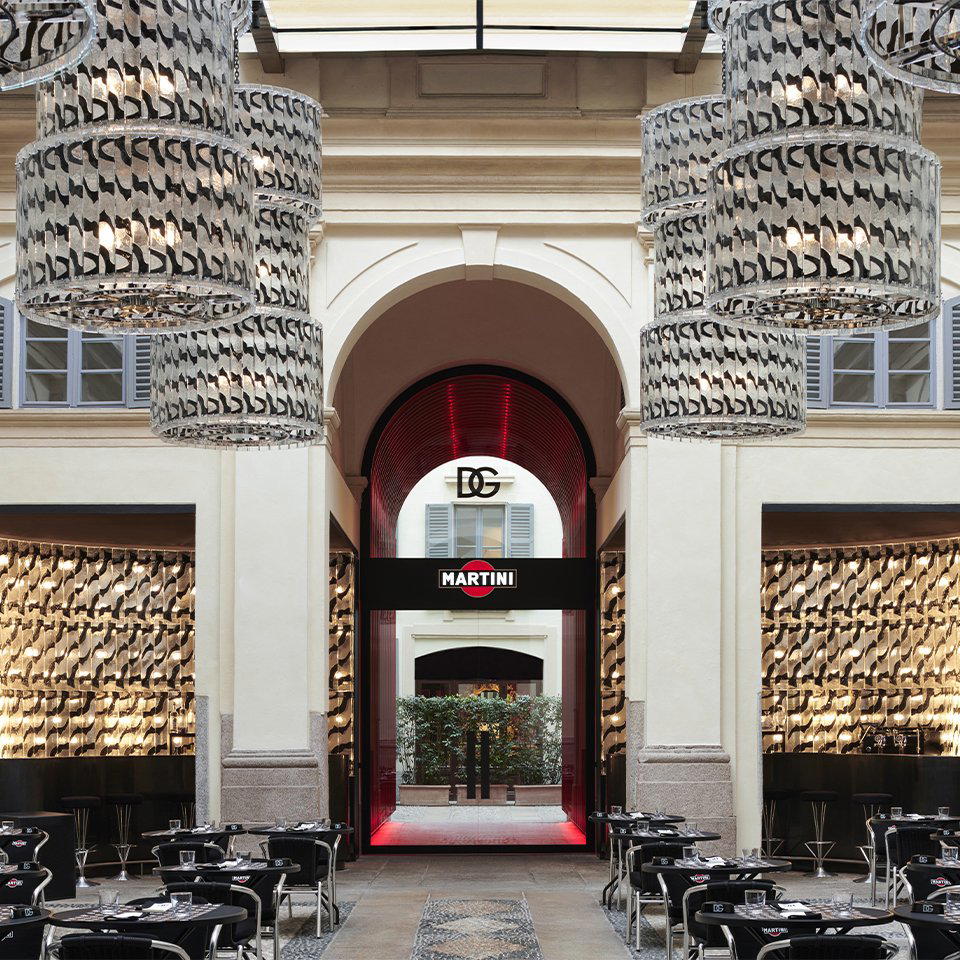
A Room That Reads the Room
MARTINI is a restaurant on Piazza Armando Diaz in Milan, serving modern Sicilian cuisine with Mediterranean influences at about $60 per person. Piazza Armando Diaz, a few minutes' walk from the Duomo and deep inside the collar-and-tie geography of the city's financial district, is one of them. MARTINI at number 7 occupies that kind of address. The piazza itself is broad and formal, and that restraint carries through the threshold. Milan's most enduring dining rooms tend to share a quality of purposeful seriousness, and MARTINI draws from that tradition.
For context on Milan's restaurant geography, the city divides roughly into the design-forward tables of Brera and Porta Nuova, the creatively minded kitchens clustered around Navigli, and the older rooms of the centro storico. MARTINI belongs to that orbit, which in Milan carries specific meaning: rooms in this zone typically service a clientele that treats lunch and dinner as instruments of professional life, not as leisure. That shapes atmosphere, pace, and the implicit contract between kitchen and guest.
The Milanese Table in Its Broader Italian Frame
MARTINI sits inside the wider Italian restaurant tradition. Italy's most-decorated kitchens span a geographic spread that might surprise visitors conditioned to think of Rome and Florence as the country's culinary anchors. Osteria Francescana in Modena and Le Calandre in Rubano represent the intellectual north; Piazza Duomo in Alba grounds haute cuisine in Piedmontese terroir; Enoteca Pinchiorri in Florence pairs technique with one of Italy's great cellars; and coastal addresses like Uliassi in Senigallia and Quattro Passi in Marina del Cantone anchor Italy's seafood tradition at its most technically rigorous. Milan, by contrast, has historically produced rooms defined by the city's own commercial energy rather than agricultural rootedness, a dining culture shaped by proximity to trade, fashion, and finance.
That civic character shows up consistently in the city's dining rooms, from creative programmes at addresses like Enrico Bartolini and Andrea Aprea through to the theatrically positioned Cracco in Galleria, where the setting inside the Galleria Vittorio Emanuele II functions as an argument in its own right. Seta, operating from within the Mandarin Oriental, represents Milan's integration of international hotel infrastructure with seriously considered Italian cooking. MARTINI's positioning on Piazza Armando Diaz places it in a tradition of rooms that prioritize consistency and professional hospitality over experimental menu architecture.
What the Address Tells You About the Offer
Piazza Armando Diaz sits within walking distance of Palazzo Mezzanotte, Milan's stock exchange, and the dense commercial fabric of Cordusio and Piazza Cordusio. Rooms in this zone operate according to a logic that differs from destination-dining tables: the clientele arrives with an agenda, values service timing as much as food quality, and expects a room that can hold a business conversation without acoustic interference. This is not a criticism, it is a distinct hospitality format that Italian cities have maintained across centuries, from the grand caffè-restaurants of Turin to the historic rooms of Rome's centro storico. The Milanese iteration tends toward formal but not stiff, attentive but not theatrical.
For the visitor arriving without a fixed business context, the practical question is whether a room calibrated for professional Milanese life translates to a satisfying experience for the leisure traveller. In most cases it does, because the underlying qualities that make such rooms function professionally, reliable technique, knowledgeable front-of-house, a room that does not demand your attention, are precisely the qualities that make for a confident, low-friction meal. The tradeoff is that you will not encounter the experimental tasting-menu architecture of addresses like Verso Capitaneo, nor the alpine precision applied to northern Italian produce at Atelier Moessmer Norbert Niederkofler in Brunico.
Situating MARTINI in Milan's Dining Tier
Milan's restaurant market has stratified sharply over the past decade. At the leading end, creative tasting-menu programmes price against international peers, comparable, in ambition and cost, to what Le Bernardin in New York or Atomix represent in their respective categories. Below that stratum sits a wide mid-range of serious but less maximalist rooms, and below that a substantial casual tier anchored by regional trattorias and modern all-day formats. The centro storico addresses, particularly those in the financial district, typically occupy a price register that reflects their real estate costs and clientele expectations rather than tasting-menu ambition. That means wine lists weighted toward established producers, service ratios that support a business-lunch pace, and menus that execute Italian classics with professional confidence rather than conceptual provocation.
For travellers building a broader Italian itinerary, the full context is available in our full Milan restaurants guide, which maps the city's dining rooms across neighbourhood and category. Further afield, rooms like Dal Pescatore in Runate, Reale in Castel di Sangro, and Casa Perbellini 12 Apostoli in Verona represent the alternative model: destination rooms embedded in smaller cities or rural settings where the kitchen is the entire argument. MARTINI's argument is more urban and more contextual, it is inseparable from the particular civic seriousness of its address.
Planning Your Visit
MARTINI sits at Piazza Armando Diaz 7 in Milan's first municipalità, within direct reach of the M1/M3 Duomo metro interchange. The address places it roughly equidistant between the Duomo and Piazza Cordusio, making it a practical choice for anyone spending time in the financial or historic centre. As with most rooms in this district, the lunch service is likely to run at a different register than dinner, faster-paced, business-weighted, which is worth factoring into your timing if a more relaxed table is the priority. Booking through the venue's own channels is advisable for any central Milan address during Fashion Week periods (typically February and September), when the city's hospitality infrastructure operates well above normal demand.
Quick Comparison
Comparable venues nearby, for context on price, style, and recognition.
| Venue | Cuisine | Price | Notes |
|---|---|---|---|
| MARTINIThis venue — the venue you are viewing | Modern Sicilian with Mediterranean influences | $$$ | Not listed |
| 55 Milan | Italian Casual Dining | $$$ | Sarpi |
| Valentino Legend | Classic Italian Milanese | $$$ | Duomo |
| Cantine MILANO | Mediterranean Italian Wine Restaurant | $$$ | Isola |
| Tannico Wine Bar | Modern Italian Wine Bar | $$$ | Porta Genova |
| DG Martini | Upscale Sicilian-inspired Italian restaurant & cocktail bar | $$$$ | Centro Storico |
Continue exploring
More in Milan
Restaurants in Milan
Browse all →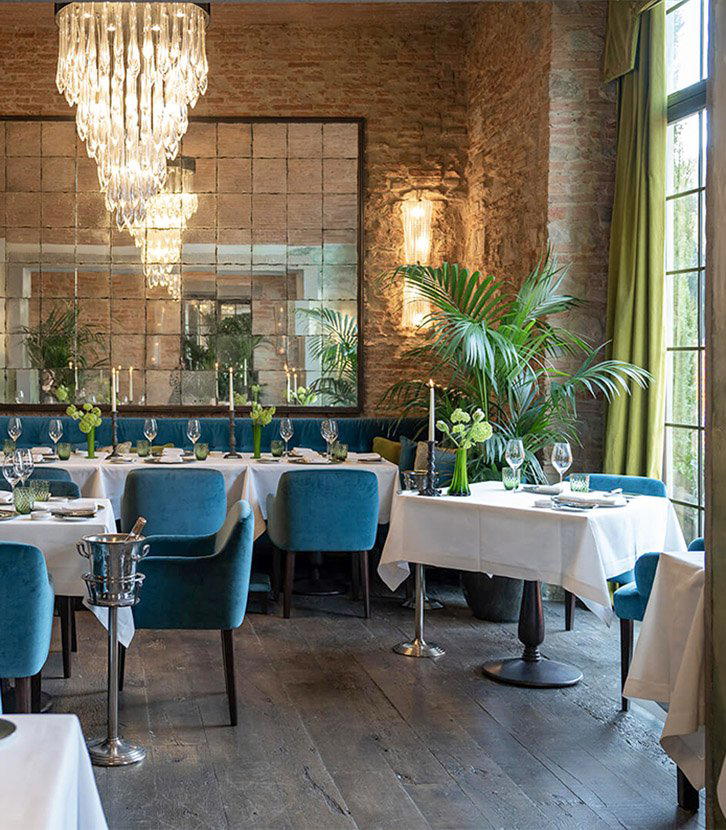
Bars in Milan
Browse all →
Hotels in Milan
Browse all →


At a Glance
- Elegant
- Sophisticated
- Modern
- Trendy
- Date Night
- Business Dinner
- Group Dining
- After Work
- Special Occasion
- Garden
- Live Music
- Private Dining
- Design Destination
- Craft Cocktails
- Extensive Wine List
- Garden
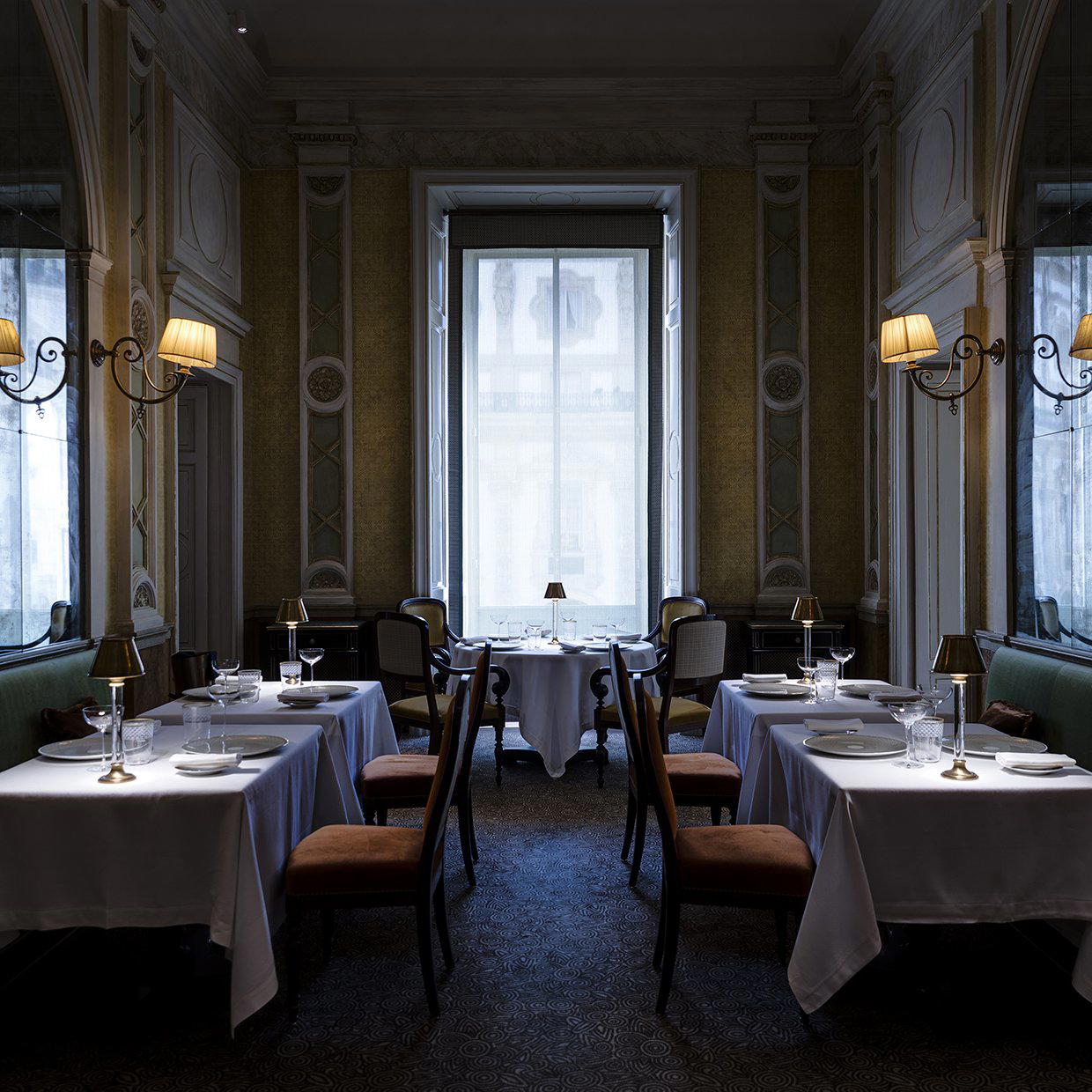
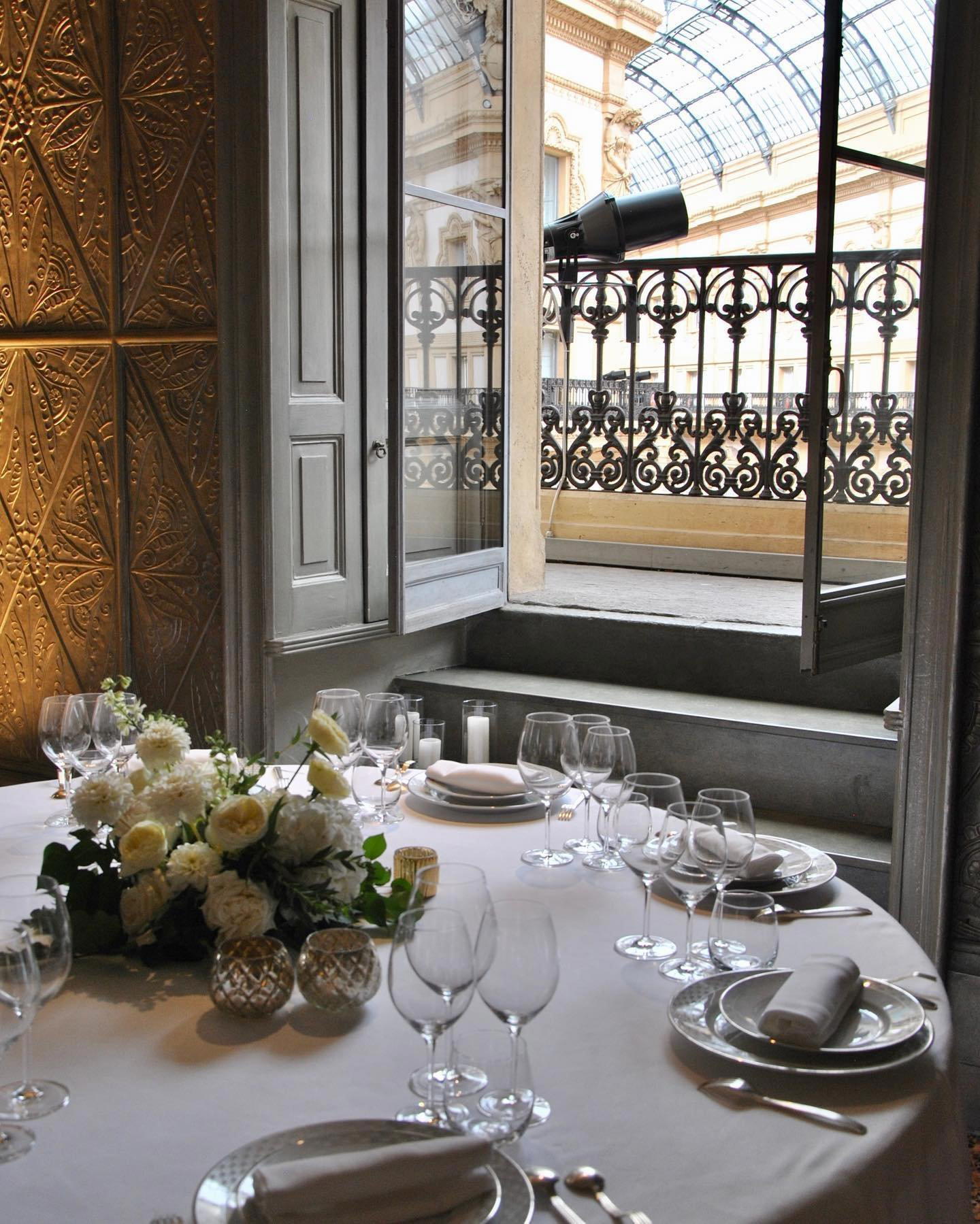
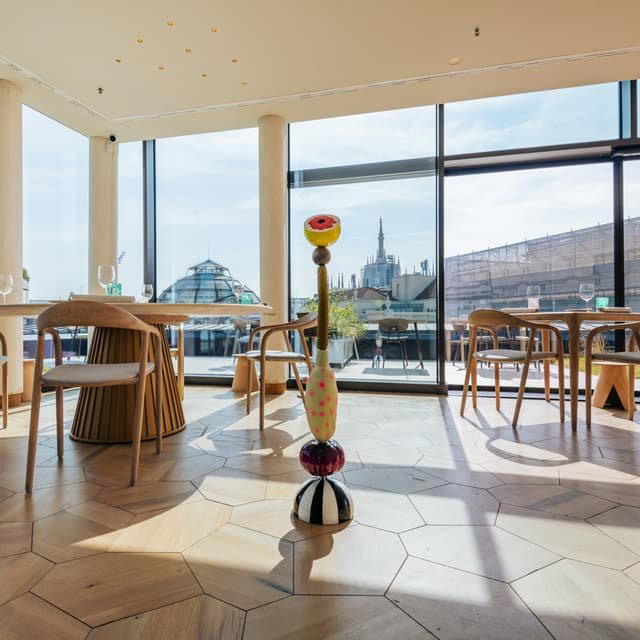
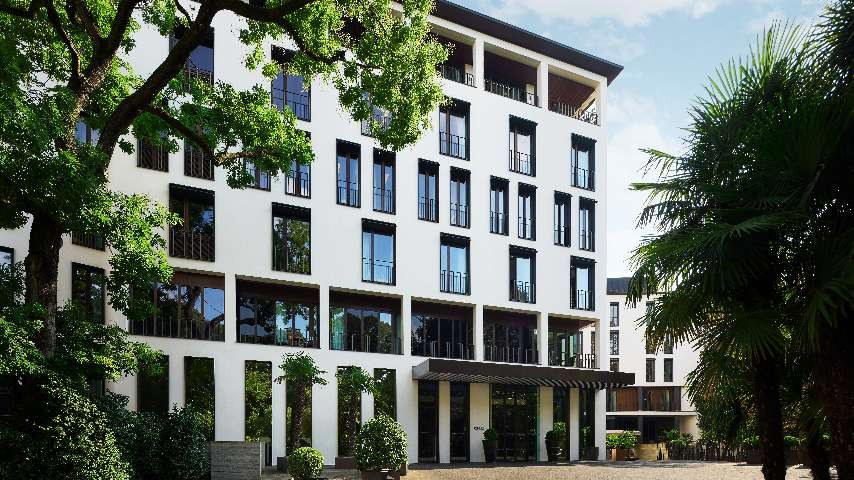
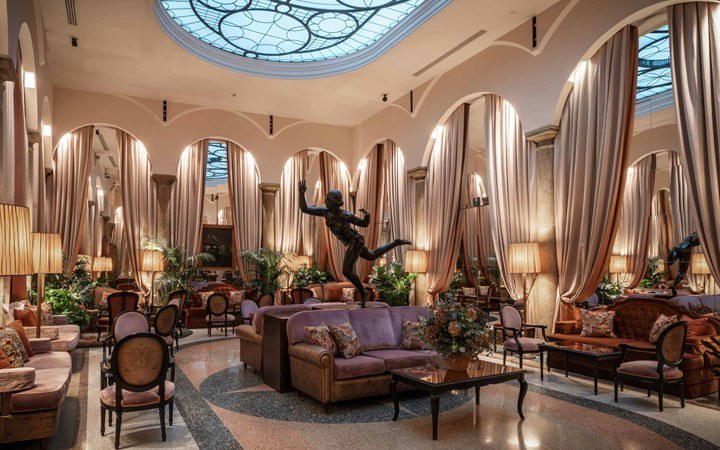
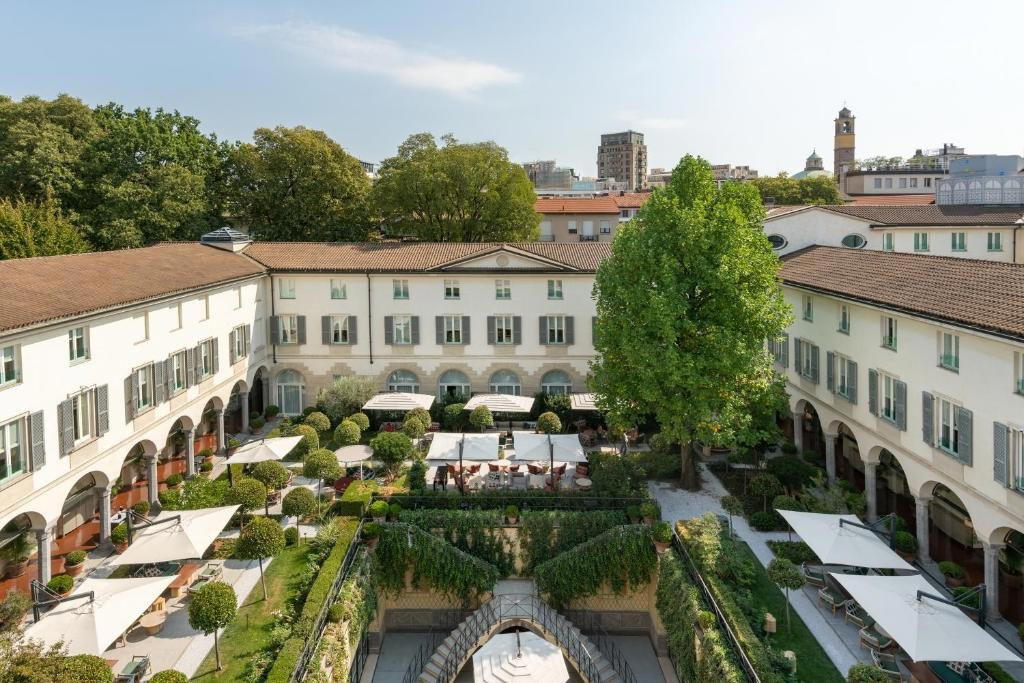
Refined and glamorous with refined design based on total black look with light and glossy black surfaces accented by a red dragon; decorated with burgundy damask panels in Baroque style honoring 1950s Milanese restaurants; serene and relaxed garden setting away from city traffic.