


Among Milan's luxury hotels, the Four Seasons Hotel Milano occupies a converted 15th-century convent in the Quadrilatero della Moda, steps from Versace, Prada, and La Scala. Its 118 rooms and suites retain Renaissance frescoes and vaulted ceilings alongside interiors refreshed by Pierre-Yves Rochon in 2025. At rates from around $1,632 per night, it sits at the summit of Milan's heritage-property tier.
Pearl is the En Primeur Club membership app — saves, bookings, and concierge access live there. Same editors, same standards.
- Address
- Via Gesù, 6-8, 20121 Milano MI
- Phone
- +39 02 77088
- Website
- fourseasons.com
- Directions
- Get directions
 Saves & bookings on Pearl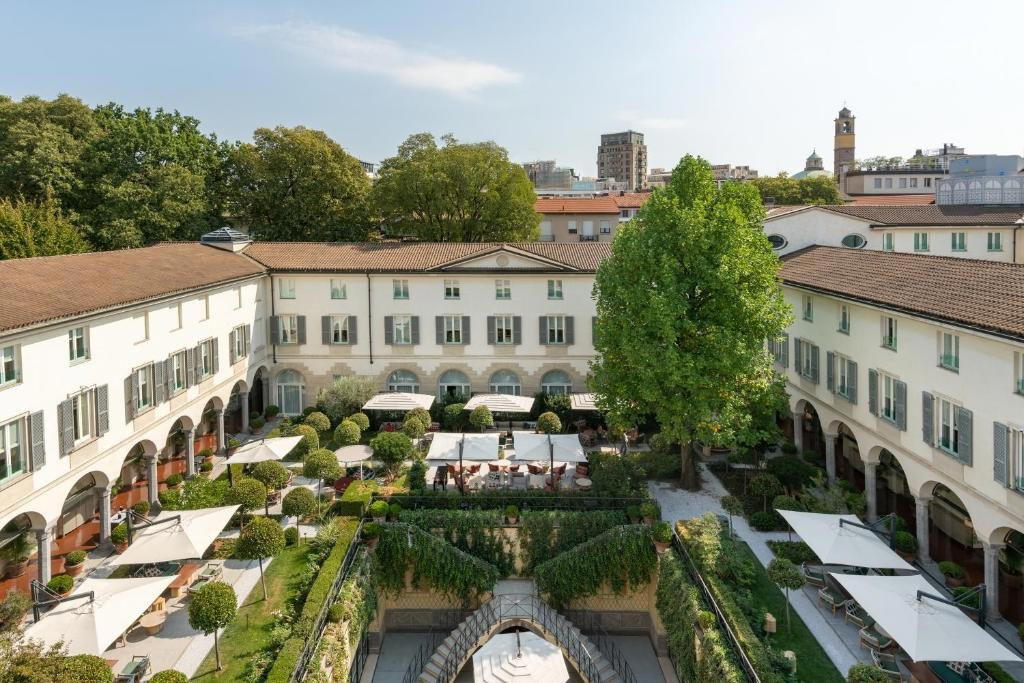
A Convent Repurposed: Milan's Heritage Hotel Tier
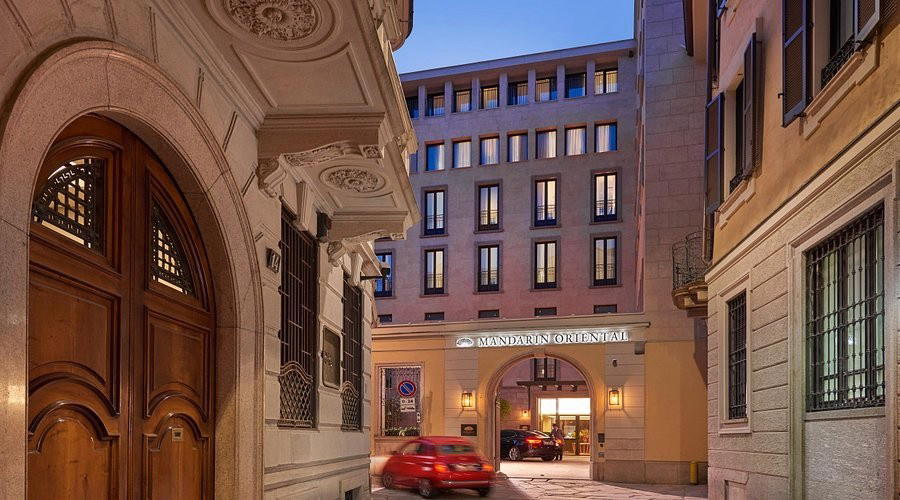
Milan's luxury hotel market divides clearly between two categories: contemporary towers and palazzi, and properties built inside repurposed historic structures. The Four Seasons Hotel Milano belongs firmly to the second, occupying a former 15th-century convent on Via Gesù, 6-8, in the Quadrilatero della Moda. That address places it within a few hundred metres of flagship stores for Versace, Armani, Prada, and Fendi, while La Scala and the Duomo sit within easy walking distance. In a city where fashion and history compete for attention at every corner, the hotel's location makes it a geographic argument for the neighbourhood itself.
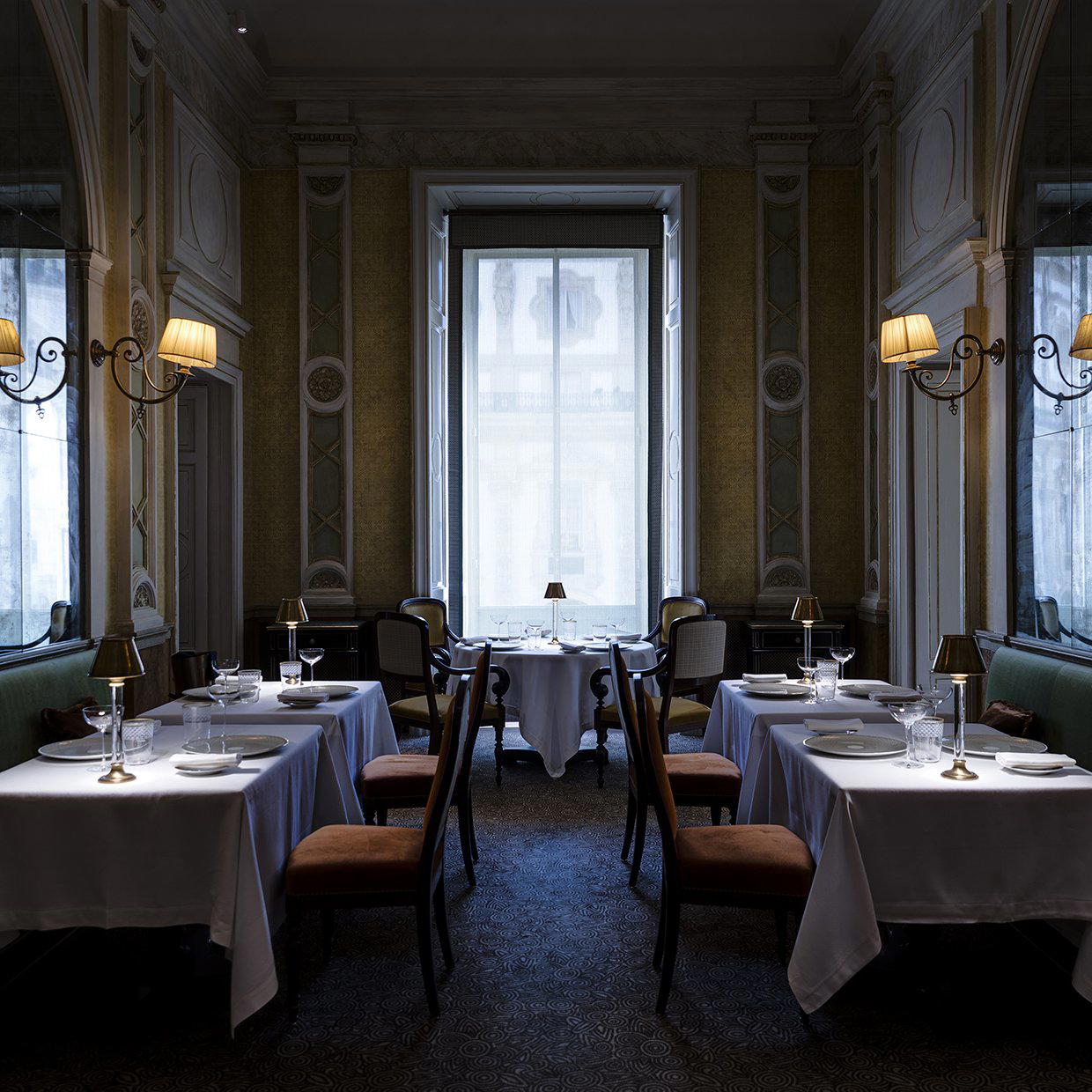
Approaching the hotel along the pedestrian-only Via Gesù, the shift from the city's commercial energy is immediate. The narrow street, lined with neoclassical rooflines, narrows the sightlines and quiets the ambient noise before you reach the entrance. Inside, the original cloister, now planted with trees and seasonal flowers, functions as the hotel's spatial centre of gravity. Renaissance fragments, ogival vaults, and ancient fireplaces coexist with contemporary furnishings in a register that characterises stronger examples from Italy's adaptive reuse hospitality. The 2021 renovation of the common areas by architect Patricia Urquiola preserved the structural language while updating the bar, restaurant, lobby, and garden. In 2025, the rooms themselves received a further refresh under Pierre-Yves Rochon.
The Rooms: Architecture as the Primary Amenity
Italy's convent-conversion hotels share a structural challenge: original monastic cells were not designed for contemporary luxury. The Four Seasons Milano's response across its 118 rooms and suites is to treat the architecture as the primary amenity rather than an obstacle. No two rooms are identical, partly by design and partly by necessity, given the irregularity of the original building. Some suites retain original frescoes; the Cloister Suite features the vaulted ceiling of the former convent's cloistered walkways. The subdued palette of pale creams, greens, and browns across all rooms reflects a deliberate choice to let the architectural surfaces carry the visual weight. Frette linens, Fortuny fabrics, and custom-made carpets operate within that restraint rather than against it. The 2025 Rochon reinterpretation has introduced a more cosmopolitan layer, though the structural character of each room remains the defining element. Views split between the manicured inner courtyard, Via Gesù, and adjacent private gardens, all quieter than the fashion district's main arteries would suggest. Rates from approximately $1,632 per night place the hotel at the upper boundary of Milan's luxury tier.
Dining at Zelo: Italian Seasonality as Editorial Stance
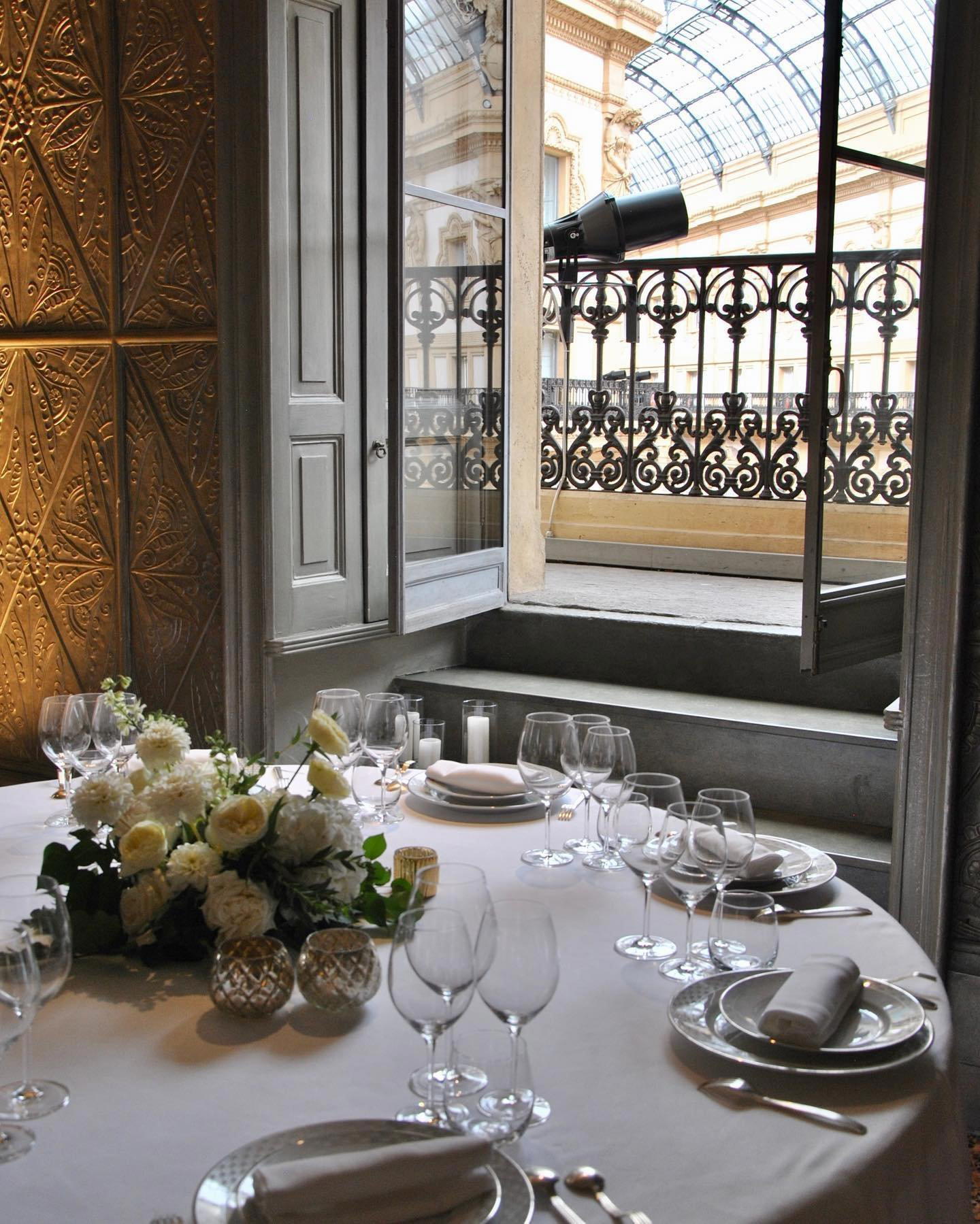
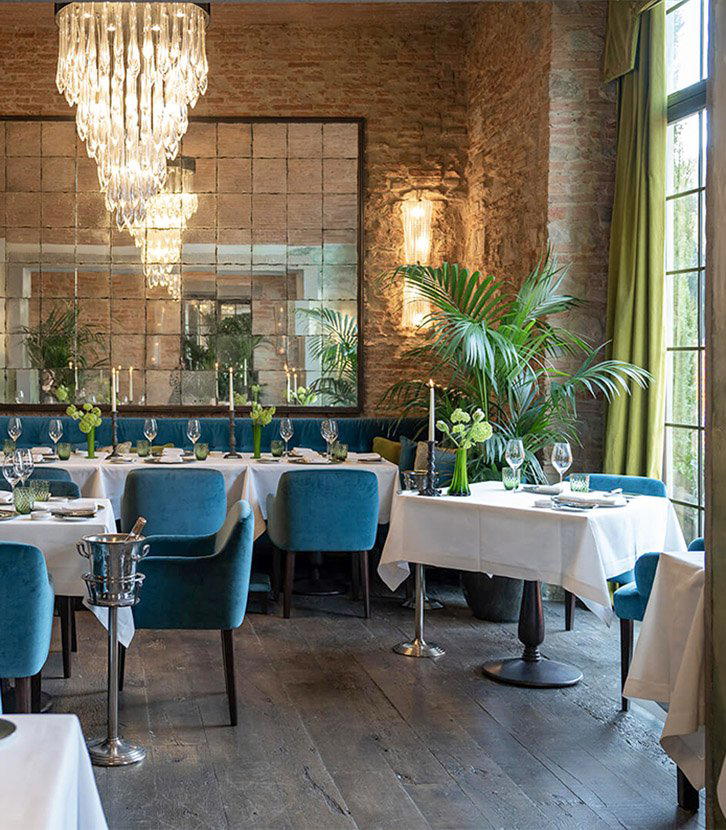
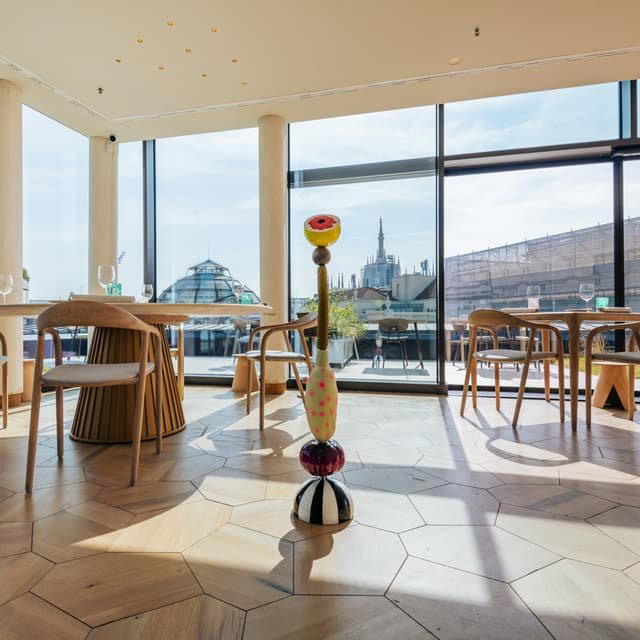
The broader shift in Italian hotel dining over the past decade has moved away from generic international menus toward sourcing-led programs that make a case for regional producers. Zelo Bistrot, the hotel's main restaurant, operates within that shift. Executive Chef Fabrizio Borraccino's approach centres on Italian produce and local suppliers, with seasonality and sustainability governing the menu structure. The format runs a dual identity across the day: a wide bistrot menu through lunch and early evening, then a distinct à la carte and blind tasting menu at night. That tasting format, personally curated by the chef, positions Zelo closer to a destination dining experience than the typical hotel restaurant function. During summer months, the cloister garden hosts al fresco versions of both Zelo and the Stilla Bar, where cocktails are accompanied by daily DJ sets, connecting the hotel's atmosphere to the city's aperitivo culture in a setting that most urban competitors cannot replicate.
The Foyer Bar, located within the former church of the convent, operates as the aperitivo anchor. Live piano music in an ecclesiastical space repurposed as a bar captures the particular register of Milanese hospitality, where historic architecture is inhabited rather than preserved behind glass. For a city that treats its fashion houses with the same reverence as its opera, the Foyer Bar's setting reads as entirely coherent.
The Spa: Patricia Urquiola in the Vaulted Cellars
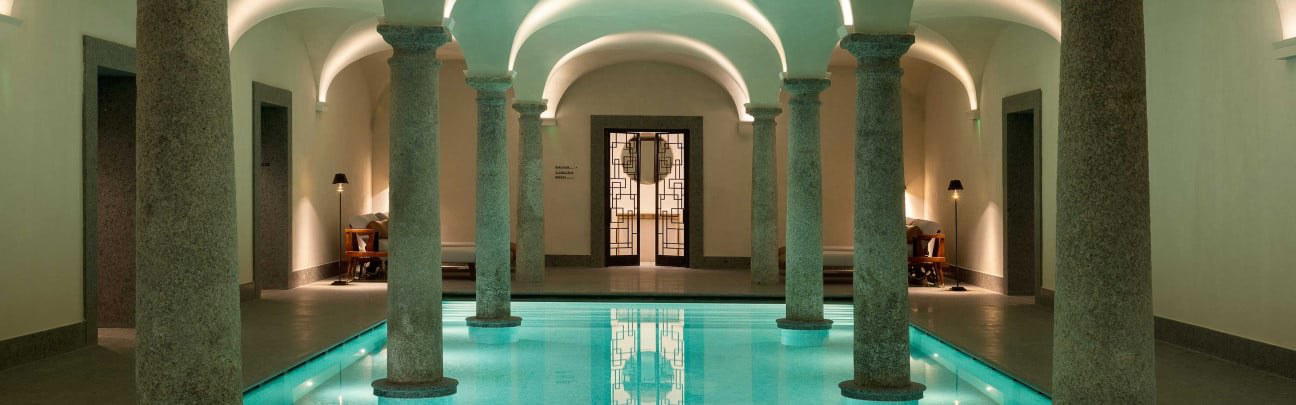
Spa occupies the monastery's former vaulted cellars, an 800-square-metre space that Urquiola designed to move fluidly between historic fabric and contemporary wellness function. Seven treatment rooms offer a range of facials, massages, and body treatments. The indoor pool sits beneath an arched brick ceiling, a setting that distinguishes this facility from the more conventionally designed spa environments found at competing Milan properties. A Turkish bath, sauna, and 24-hour fitness centre with personal training and yoga sessions complete the wellness offering. A full-service salon by hair designer Rossano Ferretti adds a fashion-district-appropriate amenity that aligns with the neighbourhood's primary commercial identity. The spa's architectural character is not incidental. Among hotel wellness spaces in Italy, the quality of the surrounding structure often carries more weight than the treatment menu alone, and here the two are closely matched.
The Quadrilatero della Moda: Neighbourhood as Context
Golden Quadrilateral's character is worth understanding as a factor in the hotel's positioning. This is not simply a shopping district. The Museo Bagatti Valsecchi, housed in a historical mansion within the neighbourhood, holds Renaissance art objects and design. The Museo di Milano, in an 18th-century palazzo nearby, traces the city's history. The fashion flagship stores on Via Montenapoleone and Via della Spiga are their own form of cultural institution in the Italian context, where design has long operated as a parallel discipline to fine art. A hotel positioned at the centre of this district is making a statement about which version of Milan it considers primary. For guests arriving for fashion week, design week, or La Scala's season, the address carries specific logistical and cultural advantages that a property outside this perimeter cannot replicate. Other hotels in the broader city, including Portrait Milano and Vico Milano, offer strong neighbourhood connections in different registers, and both are worth comparing for travellers whose itinerary pulls toward other parts of the city. For those whose Milan schedule centres on the Quadrilatero, the Four Seasons' address on Via Gesù is one direct answer. You can find further options across the city's hotel and dining spectrum in our full Milan guide.
Planning a Stay
Hotel holds 118 rooms and suites, a scale that keeps it within the category of large luxury rather than boutique.7 from 2,213 responses, a signal of consistent delivery across a substantial volume of stays. Room rates start at approximately $1,632 per night, reflecting its position at the upper end of Milan's hotel tier. Guests considering alternatives within Italy's broader luxury hotel range might also look at Aman Venice, Borgo Egnazia in Savelletri di Fasano, Il San Pietro di Positano, or the Bulgari Hotel Roma depending on their itinerary.
Compact Comparison
Comparable venues nearby, for context on price, style, and recognition.
| Venue | Cuisine | Price | Notes |
|---|---|---|---|
| Four Seasons Hotel MilanoThis venue — the venue you are viewing | Duomo, Hotel | Not listed | Not listed |
| Hotel Principe di Savoia, Dorchester Collection | Not listed | $$$$ | Stazione Centrale - Ponte Seveso, Beaux Arts luxury heritage hotel with Milanese elegance |
| Casa Cipriani Milano | Not listed | $$$$ | Guastalla, Historic palazzo transformed into an intimate luxury retreat reminiscent of gentlemen's clubs. |
| Palazzo Parigi Hotel & Grand Spa Milano | Not listed | $$$$ | Brera, Meticulously designed private palace with dazzling marble floors and light-filled spaces by architect Paola Giambelli. |
| Vico Milano | Not listed | $$$$ | Porta Ticinese - Conca Del Naviglio, Boutique guesthouse in former fashion atelier blending global design with artisan craftsmanship. |
| Sina The Gray | Not listed | $$$$ | Duomo, Boutique design hotel with Art Nouveau exterior blending modern ethnic luxury. |
Recognition history
Dated appearances from independent guides and award organizations, with the underlying list record or original source where available.
Forbes 4-Star
Forbes
Virtuoso Luxury Hotel Partner
Virtuoso
Forbes 4-Star
Forbes
Michelin 2 Keys
Michelin
Continue exploring
More in Milan
Hotels in Milan
Browse all →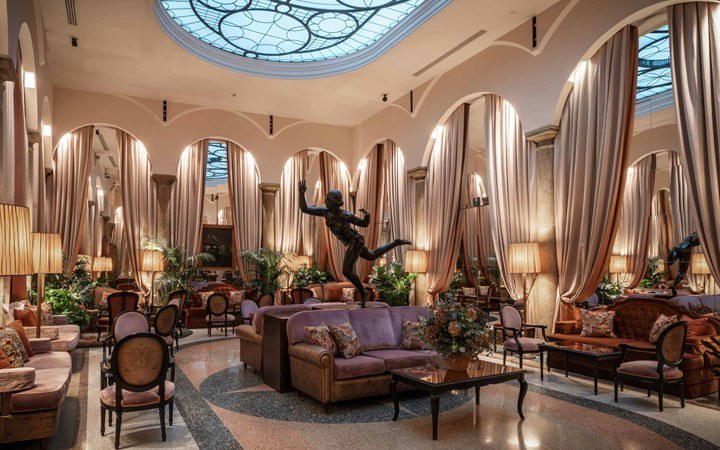
Bars in Milan
Browse all →
Restaurants in Milan
Browse all →
At a Glance
- Elegant
- Sophisticated
- Classic
- Quiet
- Well Known
- Business Trip
- Romantic Getaway
- Anniversary
- Weekend Escape
- Celebration
- Historic Building
- Garden
- Design Destination
- Wi Fi
- Spa
- Fitness Center
- Room Service
- Concierge
- Business Center
- Valet Parking
- Garden
- Street Scene
- Wi Fi
- Spa
- Fitness Center
- Room Service
- Concierge
- Business Center
- Valet Parking
A refined, sophisticated atmosphere that blends historic convent details with modern luxury; the lobby and common areas were described as intimate, elegant, and contemporarily classic, while the cloister garden adds a peaceful retreat feel.