Our verdict
Mari Vanna on Spiridonievsky Pereulok occupies a distinct position in Moscow's dining scene: a Russian comfort-food address that trades on nostalgia and domesticity rather than modernist ambition. Where peers like White Rabbit and Twins Garden chase critical recognition, Mari Vanna pitches toward a different emotional register entirely, offering the kind of Soviet-era grandmother's kitchen atmosphere that has made the format a reliable draw for both locals and international visitors.

Pearl is the En Primeur Club membership app, where members save venues, book tables and use the concierge.
The menu
What to order
- Borsch
- Pelmeni
- Beef Stroganoff
- Cherry Dumplings
A Different Kind of Moscow Dining Room
Moscow's restaurant scene has fragmented sharply over the past decade. At one end sit the modernist Russian addresses, places like White Rabbit and Twins Garden, that compete on technique, international recognition, and tasting-menu ambition. At the other end is a quieter, more durable category: the nostalgic Russian dining room, where the draw is emotional rather than intellectual. Mari Vanna on Spiridonievsky Pereulok, in the Patriarshiye Prudy neighbourhood of central Moscow, belongs firmly to this second group. The format is not accidental, it is the entire point.
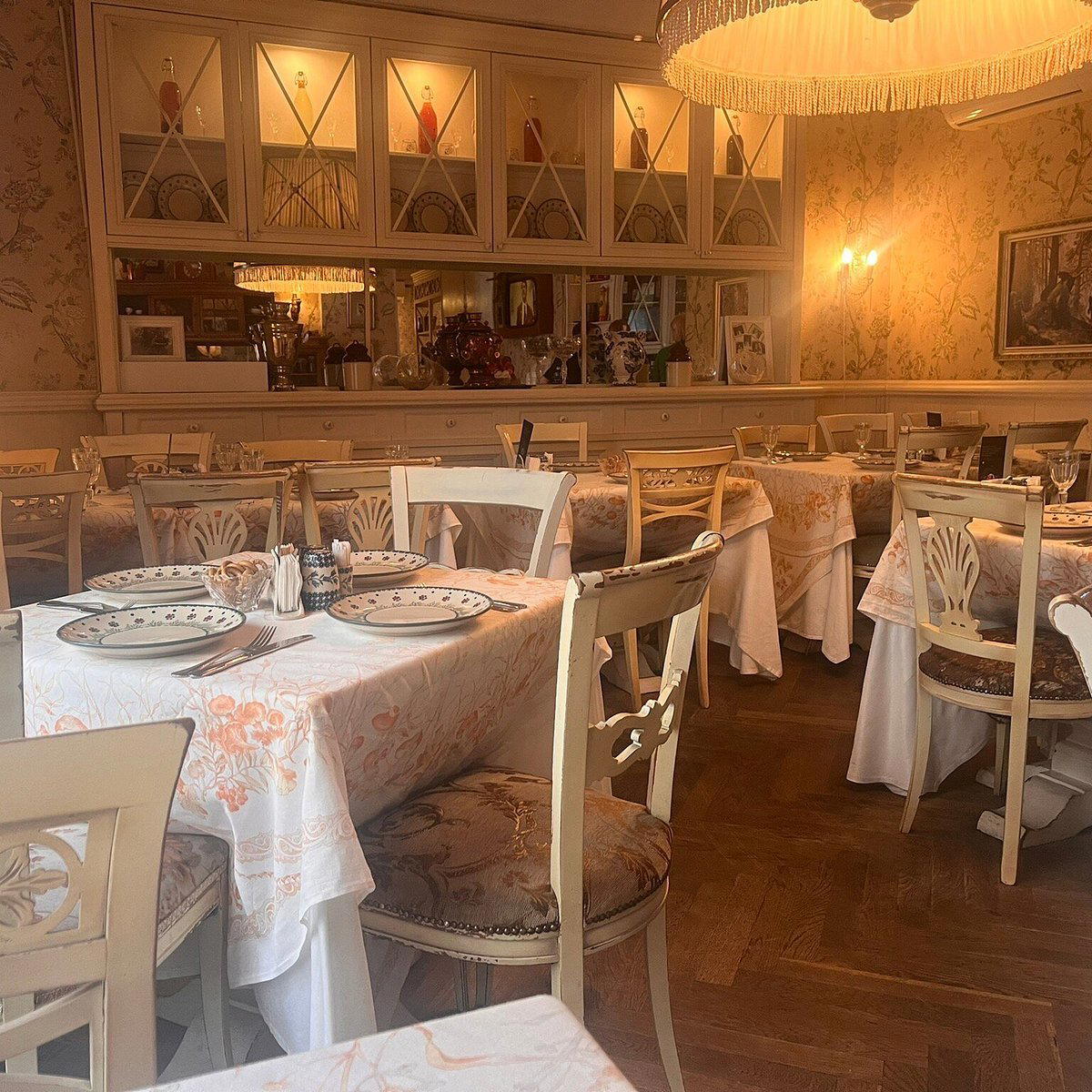
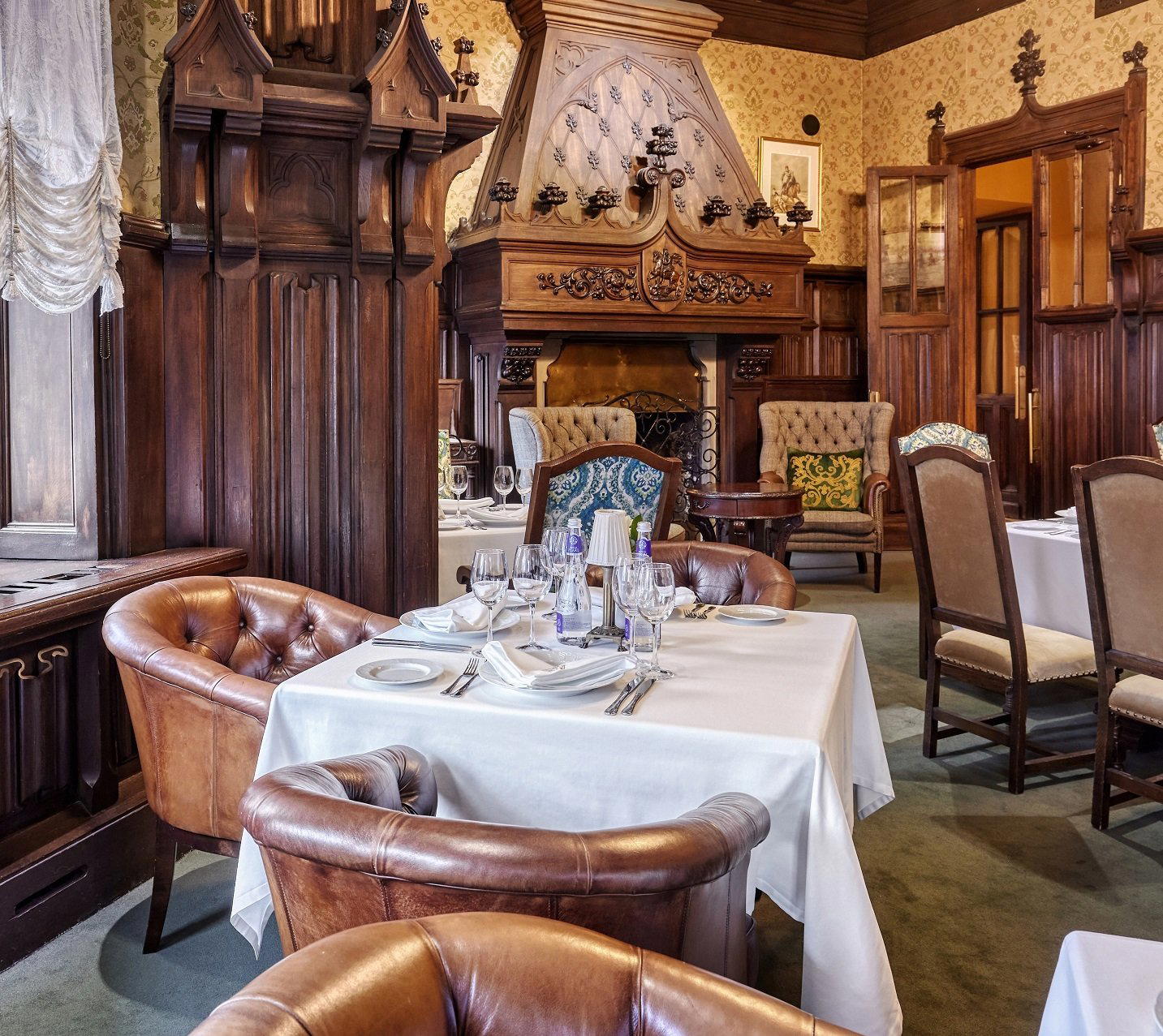
Walking into a restaurant built around Soviet-era domesticity requires a specific kind of commitment from the diner. The aesthetic language of mismatched crockery, lace curtains, shelves stacked with old books and preserved jars, and the general impression of having arrived in a relative's apartment rather than a commercial dining room is a deliberate curatorial choice. It positions Mari Vanna in a category of its own within central Moscow, distinct from both the high-concept modernism of Varvary and the European-inflected menus at addresses like Accenti. Even among Moscow's more atmospheric options, such as the long-running Aist, Mari Vanna occupies a particular emotional niche.
The Cuisine as Context
Russian home cooking, as a restaurant category, is harder to execute convincingly than its simplicity implies. The dishes that anchor this tradition, borscht, pelmeni, herring under a fur coat, slow-braised meats, syrniki with sour cream, are foods that most Russian diners carry strong personal memories of. A restaurant claiming to replicate the grandmother's kitchen invites direct comparison with actual grandmothers' kitchens, which is a significant bar. The nostalgia format only works if the food meets the emotional expectation it sets up.
This tension is one reason the nostalgic Russian dining format has remained a durable but relatively small niche within Moscow's competitive restaurant market. It does not attract the same critical infrastructure as modernist Russian cuisine, no Michelin inspectors are likely to award stars on the basis of a well-rendered olivier salad, but it serves a consistent audience: Muscovites seeking comfort and familiarity, and international visitors seeking an accessible entry point into Russian food culture without the formality of a tasting-menu counter. Both audiences exist in Patriarshiye Prudy, which is one of Moscow's more affluent and internationally frequented central neighbourhoods.
Across Russia, regional dining traditions are producing their own version of this authenticity question. In the south, addresses like Alanskaya Kukhnya in Krasnodar anchor their menus in local Caucasian heritage. In Nizhny Novgorod, Dzhani Restorani works similar territory with Georgian-inflected cooking. The impulse toward culinary memory and regional identity is a broad current in Russian dining, not a Moscow-specific phenomenon.
Location and the Patriarshiye Prudy Factor
The address on Spiridonievsky Pereulok places Mari Vanna in a neighbourhood that does a great deal of work on the restaurant's behalf. Patriarshiye Prudy, the area surrounding the Patriarch's Ponds, is one of the few parts of central Moscow that feels genuinely residential and walkable. It has literary associations, Bulgakov set the opening scenes of The Master and Margarita here, and has attracted an overlay of design-led cafes, wine bars, and boutique restaurants that give it a character distinct from the more corporate dining corridors elsewhere in the centre.
Within that context, a Russian home-cooking address reads differently than it would in a tourist-heavy district. The neighbourhood signals that the audience is local and self-selecting rather than captive. That matters for how a format like Mari Vanna is received: the nostalgia conceit works better when the room is not predominantly filled with visitors treating it as a cultural exhibit.
Planning Your Visit: What to Know Before You Go
Russian-format nostalgic dining rooms of this profile generally operate on a reservation-preferred basis rather than walk-in, particularly in the evenings and at weekends, when the combination of a contained room and a loyal local following can make spontaneous access difficult.
Patriarshiye Prudy is most easily reached via Mayakovskaya metro station, which places the neighbourhood within a short walk. The area rewards arriving with time to spare: the ponds themselves and the surrounding streets are worth the detour before or after a meal. Moscow's dining rhythm skews late by western European standards, with dinner services often extending well past midnight, so booking flexibility is worth factoring into an evening plan.
For visitors building a broader Moscow itinerary, our full Moscow restaurants guide maps the city's dining options across neighbourhoods and price tiers. Those specifically interested in the range of approaches to Russian cuisine will find useful contrast points in the modernist end of the spectrum at White Rabbit and the more ingredient-focused register of Varvary.
For context on how Russian regional dining compares to what Saint Petersburg offers, 1913 in Saint Petersburg and Lev I Ptichka represent the northern city's own take on heritage-driven dining. Further afield, Kukhterin in Tomsk and Grisha in Omsk show how Siberian cities are building their own dining identities. Khmeli Suneli in Yekaterinburg offers a Caucasian counterpoint in the Urals. For something altogether different in tone, Burger Records in Novosibirsk and Konditerskaya Kuzina in Syktyvkar reflect the younger, more casual end of Russia's provincial dining growth. Outside Russia, Made in China in St. Petersburg provides an interesting stylistic contrast. For international reference points at the technique-driven end of the spectrum, Le Bernardin in New York and Atomix in New York illustrate what critical-recognition-focused restaurant formats look like at their most developed.
Frequently asked questions
Where is Mari Vanna in Moscow?
Mari Vanna is located at Spiridon'yevskiy Pereulok, 10a, Moscow, Russia, 123104, Moscow.
How does Mari Vanna fit into Moscow's broader Russian cuisine scene?
Moscow has produced a wave of technically ambitious Russian restaurants over the past decade, with places like White Rabbit drawing international attention for reimagined national cooking. Mari Vanna occupies a different position, treating Russian home cooking as a category worth preserving on its own terms rather than reinterpreting it. The Patriarshiye Prudy address places it among the city's more established dining neighbourhoods, where the restaurant has maintained a distinct identity within that competitive local context.
What's the must-try dish at Mari Vanna?
Mari Vanna's kitchen is built around Russian home-cooking traditions, so the dishes that define the visit are the same ones that anchor that canon: borscht, pelmeni, and slow-cooked mains rooted in Soviet-era domestic recipes.
Is Mari Vanna reservation-only?
The venue sits on Spiridonievsky Pereulok 10a in the Patriarshiye Prudy area, one of Moscow's more sought-after dining neighbourhoods, which tends to generate consistent demand.
What's the standout thing about Mari Vanna?
The defining quality is the domestic staging: Mari Vanna recreates the look and feel of a Soviet apartment rather than a formal dining room, which sets it apart from the modernist Russian addresses that now dominate Moscow's upper tier. That positioning makes it one of the few Moscow restaurants where the décor and the cuisine operate as a coherent argument for the same culinary tradition.
Comparison Snapshot
Comparable venues nearby, for context on price, style, and recognition.
| Venue | Cuisine | Price | Awards | Notes |
|---|---|---|---|---|
| Mari VannaThis venue (the venue you are viewing) | Traditional Russian Home Cooking | $20–30 | Not listed | Not listed |
| Kazbek (Казбек) | Traditional Georgian Cuisine | $20–30 | Not listed | Пресненский |
| Savva | Modern Russian Fine Dining | $100–150 | La Liste Top Restaurants | Tverskoy |
| Restoran TsDL | Modern Russian | $30–50 | La Liste Top Restaurants | Presnensky |
| Doctor Zhivago | Modern Russian with Soviet Heritage | $30–50 | Not listed | Tverskoy District |
| Rybtorg | Fresh Seafood Shop-Restaurant | Not listed | La Liste Top Restaurants | Presnensky |
Continue exploring
More in Moscow
Restaurants in Moscow
All restaurants in Moscow →
Details
- Cozy
- Classic
- Intimate
- Elegant
- Special Occasion
- Group Dining
- Family
- Historic Building
- Craft Cocktails
- A La Carte
- Vegetarian Friendly
Current opening hours
- Monday
- 10 AM–11 PM
- Tuesday
- 10 AM–11 PM
- Wednesday
- 10 AM–11 PM
- Thursday
- 10 AM–11 PM
- Friday
- 10 AM–11 PM
- Saturday
- 10 AM–11 PM
- Sunday
- 10 AM–11 PM
Hours can change for holidays and private events. Hours as of .
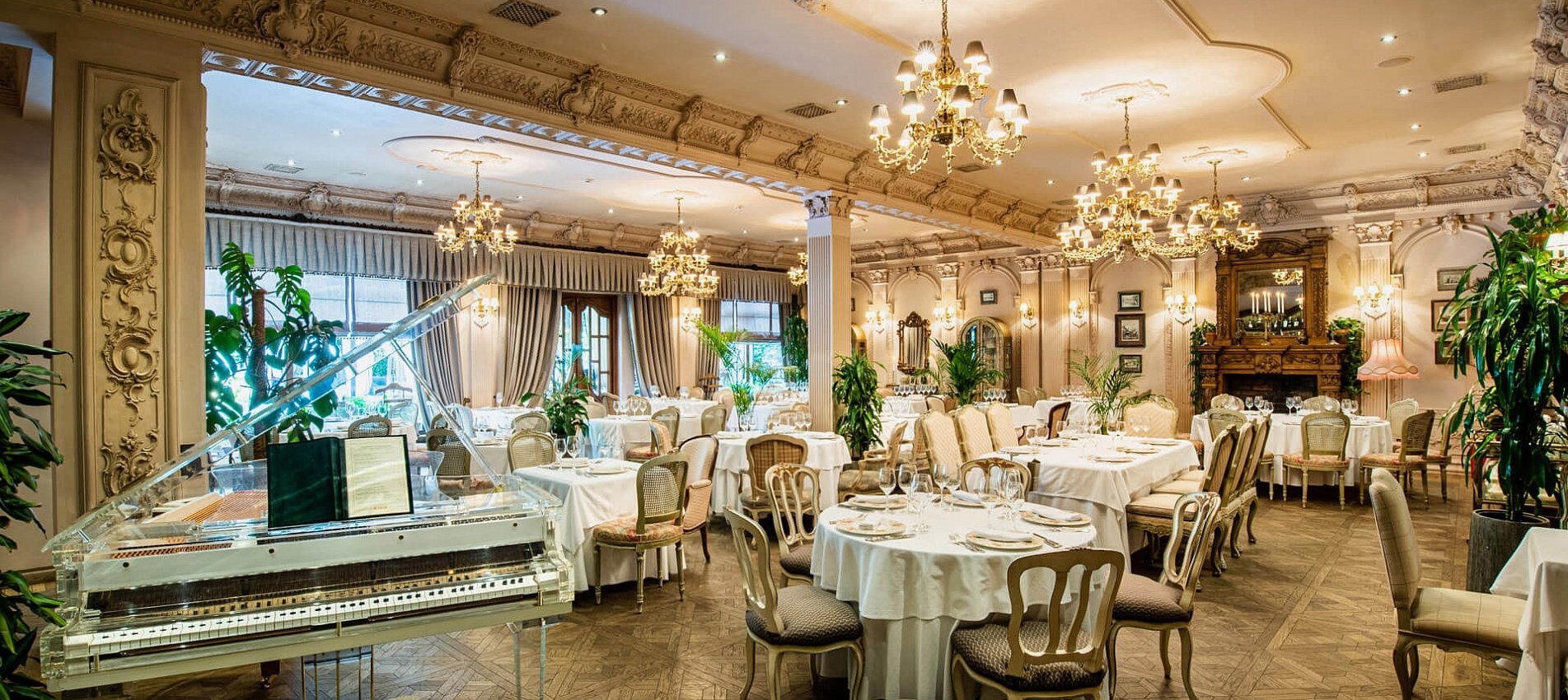
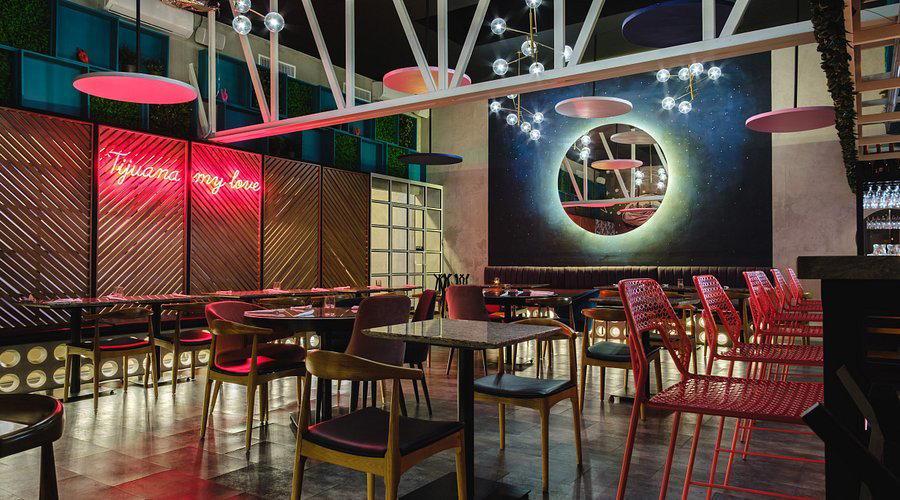
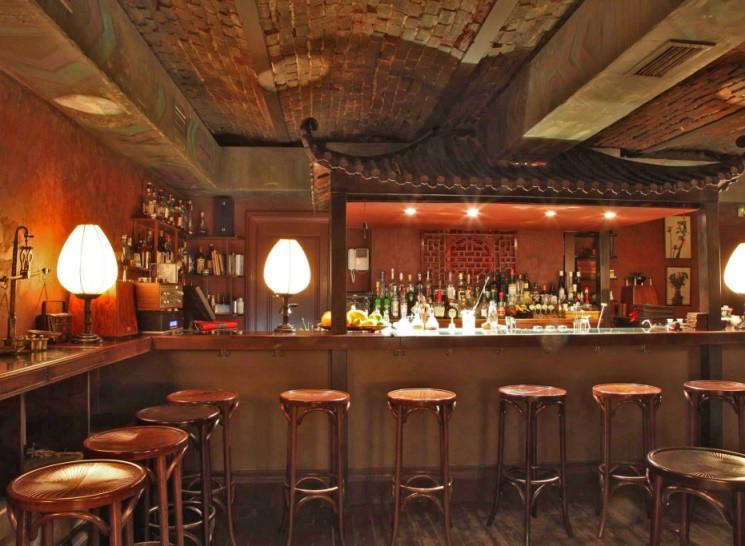
Chandeliers, bookshelves, old family photos, and comfortable furnishings create a warm, nostalgic Russian home atmosphere.