Man Man Kee Noodle Shop is a Hong Kong institution in the city's dense, neighbourhood-level noodle culture, where wonton soup and hand-pulled strands have defined local eating for generations. Set against a city that rewards those willing to eat where locals eat, it represents the kind of direct Cantonese craftsmanship that sits at the opposite end of the spectrum from Hong Kong's celebrated fine-dining tier.

Pearl is the En Primeur Club membership app — saves, bookings, and concierge access live there. Same editors, same standards.
Where Hong Kong Eats Between the Headlines
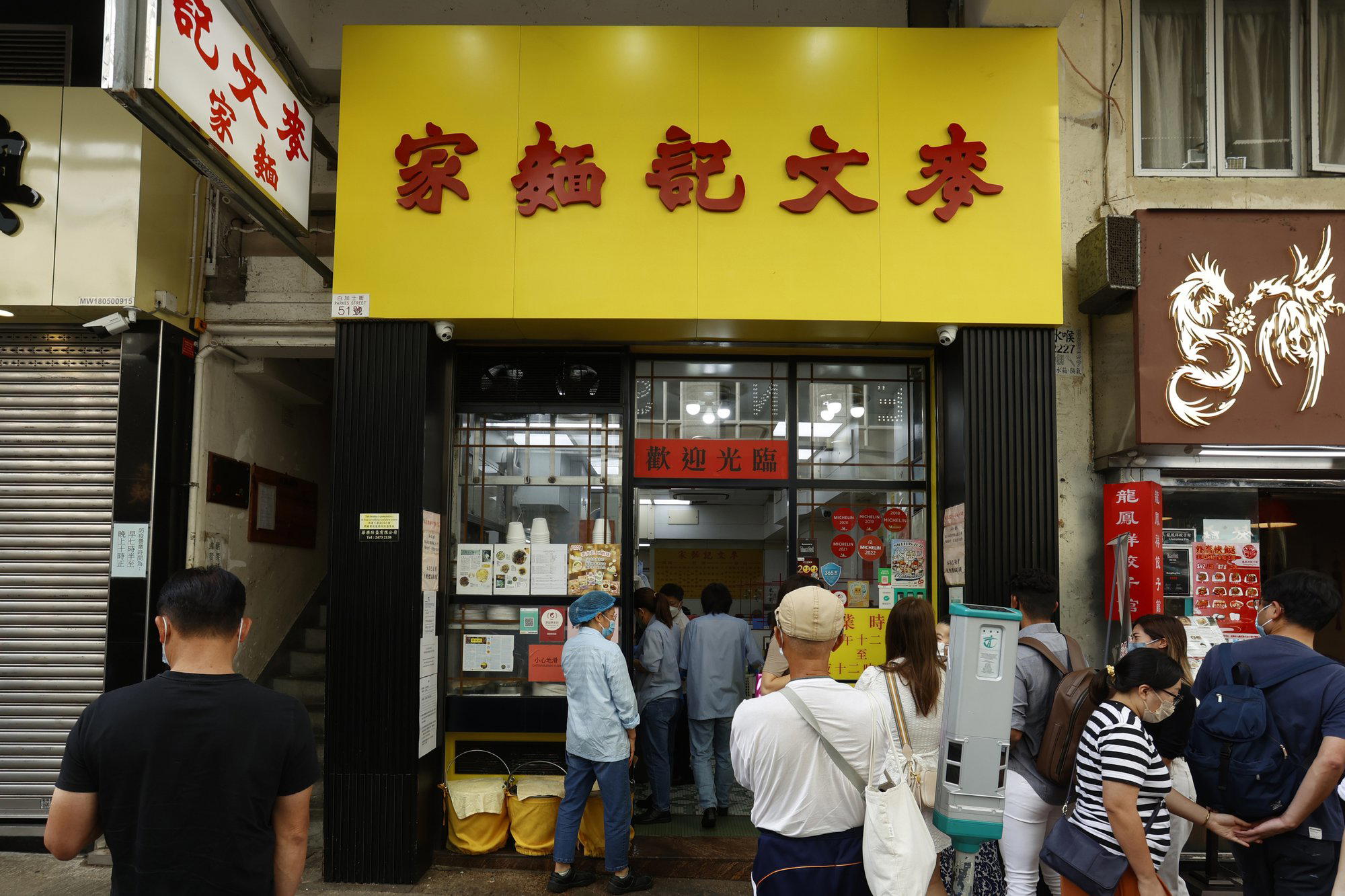
Man Man Kee Noodle Shop is a Cantonese wonton noodle shop in Hong Kong, with a price point around US$10 per person and a casual, walk-in-friendly setup. Walk far enough from the harbourfront towers and the Michelin-starred dining rooms that have made Hong Kong a reference point for global gastronomes, and you reach the city's other register entirely: the narrow shopfront, the plastic stool, the bowl set down without ceremony. Man Man Kee Noodle Shop occupies that register. The room, if you can call it that, is the kind of place where the gap between kitchen and table is measured in steps rather than corridors, where the hiss of a stock pot does the work that ambient music does elsewhere, and where the transaction between cook and customer is stripped to its logical minimum. This is not incidental to the experience. It is the experience.
Hong Kong's noodle shops exist on a spectrum that the city's food press tends to skip over in favour of tasting menus and wine lists. Yet the wonton noodle counter has as much claim to being the defining culinary form of Cantonese urban life as anything served at Forum or Caprice. The technique involved in a well-made bowl, from the alkaline snap of a properly made egg noodle to the reduction of a pork-and-shrimp broth, is specific and demanding. The difference between an average bowl and a serious one is immediately legible to anyone who has eaten enough of them.
The Neighbourhood as Context
Hong Kong is a city where neighbourhood identity survives despite density. The district a shop occupies shapes not just who walks through the door but what the kitchen is calibrating for, since the crowd in a working residential area eats differently from the lunchtime office crowd in Central or the tourist-adjacent foot traffic near Tsim Sha Tsui. Man Man Kee is the kind of name, direct, functional, that signals a shop earning its reputation through repetition and consistency rather than marketing. That posture is common in Hong Kong's older noodle culture, where longevity is the credential and the sign above the door is the only advertising that matters.
For context on how neighbourhood eating works across the city's more dispersed districts, the contrast is instructive. Coconut Soup in Yau Tsim Mong, King Of Soybeans in Wong Tai Sin, and Hoi Tin Garden in Tuen Mun each represent a version of local eating shaped by the specific character of their district. Hong Kong rewards the visitor who follows that logic rather than staying anchored to the standard tourist circuit.
Cantonese Noodle Culture and What It Demands
The wonton noodle bowl has a shorter list of variables than a tasting menu, which makes those variables harder to hide. Broth clarity and depth, noodle texture, the quality of the wonton filling, and the ratio of components in the bowl are all exposed without garnish or distraction. At the end of the city's fine-dining tier, Amber and Ta Vie operate with elaborate technical infrastructure to produce complexity. A noodle shop produces a different kind of difficulty: the difficulty of doing something simple so consistently that it becomes a reference point.
That compression is what makes serious noodle shops worth seeking out in any Cantonese city, and Hong Kong remains the benchmark. The city's concentration of practitioners, the competitive pressure of a market where a customer who finds the broth thin one day simply does not return, has produced a standard that is genuinely hard to replicate elsewhere. The bowl you get at a shop like Man Man Kee is the product of that competitive ecosystem as much as any individual kitchen decision.
For those building a broader picture of Hong Kong's eating culture, our full Hong Kong restaurants guide maps the city across price tiers and neighbourhood, from the multi-Michelin rooms to the street-level counters that have fed the city for decades.
Planning Your Visit
Noodle shops in Hong Kong operate on rhythms shaped by the working day: early mornings for construction workers and market traders, a sharp lunch peak, and often a second afternoon window before evening service. Arriving at off-peak hours, broadly mid-morning or mid-afternoon, is the practical way to avoid the queues that form at shops with established local reputations. Specific hours and booking arrangements for Man Man Kee are best confirmed directly, as the operational details for this category of restaurant can shift without public notice. The dress code is casual, and the shop is walk-in friendly. Payment at most Hong Kong noodle shops of this type is cash-first, so arriving with small bills is the functional preparation that saves time at the counter.
The contrast between those two modes of eating is itself part of what makes Hong Kong an interesting city to eat in. You can move, in the space of an afternoon, between a counter where a bowl costs the equivalent of a few dollars and a dining room where the wine list starts in the hundreds. Both are doing their job seriously.
Le Bernardin in New York City and Atomix in New York City represent how a different city's culinary ambition expresses itself at the summit of its register, while spots like Habib's Indian and Middle Eastern Food in Kwun Tong, One-ThirtyOne in Tai Po, Lei Garden in Sha Tin, Gangstas in the Islands, and I Love Istanbul in Tsuen Wan demonstrate the spread of eating options across Hong Kong's less-visited districts. The Former Jumbo Floating Restaurant in Aberdeen is a reminder that Hong Kong's food story includes chapters that have now closed.
Cuisine Context
Comparable venues nearby, for context on price, style, and recognition.
| Venue | Cuisine | Price | Notes |
|---|---|---|---|
| Man Man Kee Noodle ShopThis venue — the venue you are viewing | Cantonese Wonton Noodle Shop | $ | Not listed |
| Tak Yu Restaurant (德如茶餐廳) | Hong Kong Cha Chaan Teng | $ | Wan Chai |
| Tsui Wah Restaurant (翠華餐廳) | Hong Kong Cha Chaan Teng | $ | Central |
| Kung Wo Dou Ban Chong | Traditional Hong Kong Tofu Specialty | $ | Sham Shui Po |
| Keung Kee Dai Pai Dong | Cantonese Dai Pai Dong | $ | Sham Shui Po East |
| Lau Sum Kee Noodle | Traditional Hong Kong Bamboo-Pressed Noodles | $ | Sham Shui Po East |
Continue exploring
More in Hong Kong
Restaurants in Hong Kong
Browse all →
Bars in Hong Kong
Browse all →
At a Glance
- Classic
- Well Known
- Casual Hangout
- Late Night
- Standalone
No-frills interior typical of Hong Kong noodle shops, focused on fast service and honest cooking.