Where Wan Chai Eats Before the Rest of the City Wakes Up Kwong Ming Street in Wan Chai sits a few blocks from the district's more photographed stretches of neon and colonial architecture, but it operates on a different rhythm entirely. The...
Pearl is the En Primeur Club membership app — saves, bookings, and concierge access live there. Same editors, same standards.
- Address
- 2 Kwong Ming St, 灣仔區
- Directions
- Get directions
 Saves & bookings on Pearl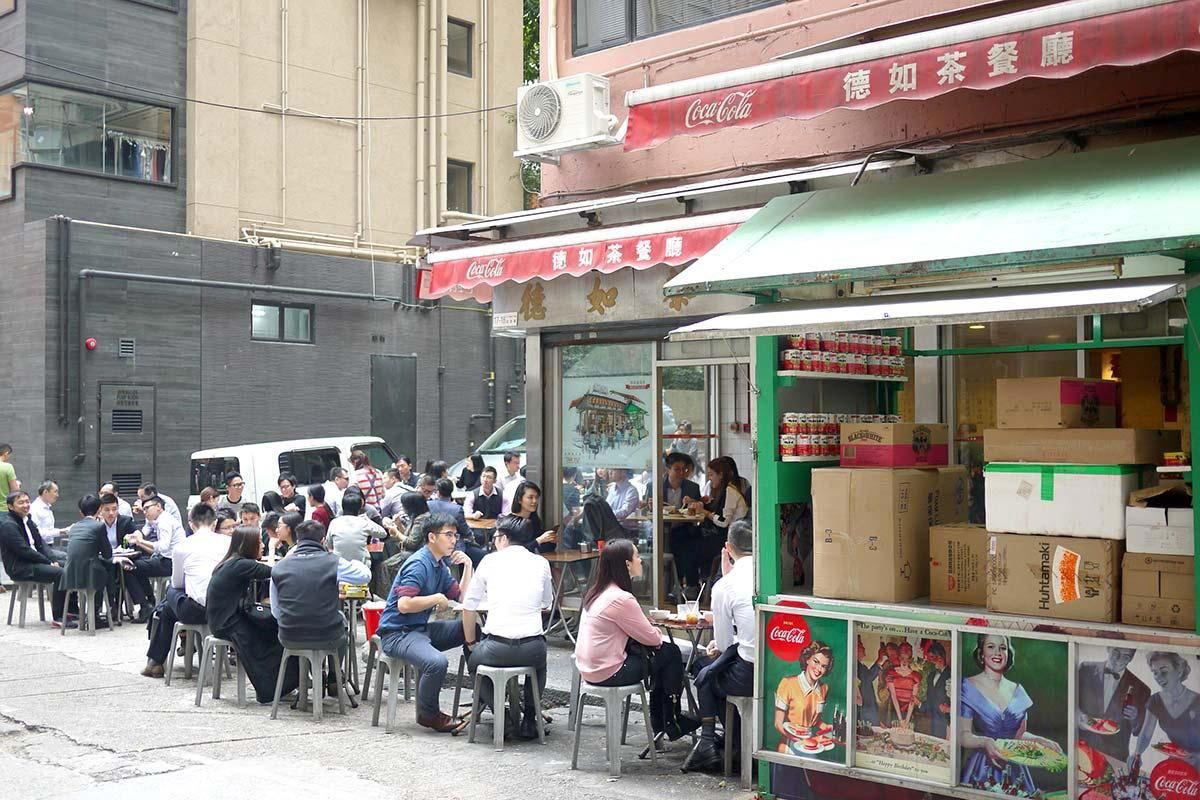
Where Wan Chai Eats Before the Rest of the City Wakes Up
Kwong Ming Street in Wan Chai sits a few blocks from the district's more photographed stretches of neon and colonial architecture, but it operates on a different rhythm entirely. Tak Yu Restaurant (德如茶餐廳) occupies that early-morning economy with the confidence of a place that has never needed to explain itself to newcomers. The signage is functional. The tables are close. The room communicates its priorities without ambiguity.
This is the cha chaan teng format in its working form: a category of Hong Kong dining institution that emerged from mid-twentieth-century necessity, when the city's population needed Western-influenced food at Chinese prices. The result was a genre that borrowed freely from colonial menus, milk tea, toast, baked goods, macaroni in broth, and rebuilt those elements around local taste and local economics. Decades later, the format persists not as nostalgia but as infrastructure. Cha chaan tengs remain where a significant portion of Hong Kong's population eats its first meal of the day, most days of the week.
The Intersection That Defines the Format
The milk tea that defines the format draws on British colonial tea culture but is strained through a cloth filter and blended with evaporated or condensed milk to produce a texture and sweetness profile that has no equivalent in the tradition it nominally descends from. Hong Kong-style French toast is deep-fried, often filled with peanut butter, and served with butter and syrup, structurally related to pain perdu but operating in a different register entirely. The macaroni soup, a breakfast staple found at counters across the territory, takes a pasta shape introduced through Western influence and places it in a clear, lightly seasoned Chinese-style broth with ham and vegetables. None of these dishes are fusion in the contemporary sense; they are the result of pragmatic adaptation over generations, and they now constitute their own coherent culinary tradition.
This places Hong Kong's cha chaan teng scene in an interesting comparative position relative to the city's fine-dining circuit. Restaurants like Ta Vie and Amber operate in a formal register where the dialogue between Japanese, French, and Cantonese techniques is deliberate, credited, and Michelin-validated. At a cha chaan teng, the same cross-cultural negotiation happened without documentation or intention, and its results are more durable for it. The two categories rarely overlap in conversation, but they are expressions of the same city's appetite for synthesis.
Wan Chai as a Dining District
Wan Chai's restaurant geography rewards those who look past the main arterial roads. The district contains some of Hong Kong's most-discussed fine-dining addresses alongside dai pai dongs, cha chaan tengs, and neighbourhood Cantonese restaurants that operate for residents rather than reservations platforms. The mix is not accidental: Wan Chai has historically been a district of density and transience, which produces a food culture that must serve a wide range of budgets and schedules simultaneously. Tak Yu's address on Kwong Ming Street places it within walking distance of the convention centre area and the commercial towers of Gloucester Road, giving it a natural customer base that ranges from tradespeople to professionals, often at the same counter at the same hour.
For visitors working outward from the Michelin-anchored circuit, places like Caprice or 8 1/2 Otto e Mezzo Bombana, a cha chaan teng breakfast in Wan Chai offers a counterpoint that no tasting menu can replicate. The format is instructive precisely because it is unreconstructed. You are eating the category, not a chef's interpretation of it. That distinction matters in a city where culinary identity is often mediated through fine-dining vocabulary.
Across Hong Kong's Neighbourhood Dining Circuit
The cha chaan teng format is not exclusive to Wan Chai. It runs through the city's districts as a constant beneath the more visible layers of international and luxury dining. Across the harbour and into the New Territories, neighbourhood restaurants serve comparable functions: Hoi Tin Garden in Tuen Mun and Lei Garden in Sha Tin represent the Cantonese end of the spectrum, while venues like King Of Soybeans in Wong Tai Sin and Coconut Soup in Yau Tsim Mong mark the range of specialist formats that serve residential populations rather than tourist itineraries.
Within the fine-dining tier itself, the cross-cultural technique question shows up in different forms. Forum represents the Cantonese banquet tradition at its most technically demanding, while Gaia in Central and Western anchors Italian cooking in the Central district's international crowd. Globally, the technique-and-ingredient dialogue that defines Hong Kong's food culture appears in different forms: Le Bernardin in New York approaches the French-ingredient relationship with classical rigour, while Atomix in New York positions Korean technique within a contemporary fine-dining framework not unlike what Hong Kong's tasting-menu circuit does with Cantonese tradition.
Planning Your Visit
Tak Yu Restaurant sits at 2 Kwong Ming Street in Wan Chai, a short walk from Wan Chai MTR station on the Island Line. Cha chaan tengs in this part of the district run on a breakfast and lunch schedule, with the busiest period typically from around 7am through mid-morning. Prices are around US$10 per person.
Awards and Standing
Comparable venues nearby, for context on price, style, and recognition.
| Venue | Cuisine | Price | Notes |
|---|---|---|---|
| Tak Yu Restaurant (德如茶餐廳)This venue — the venue you are viewing | Hong Kong Cha Chaan Teng | $ | Not listed |
| Leaf Dessert | Traditional Chinese Desserts & Noodles | $ | Central |
| Chiu Hing Noodle House | Teochew Fishball Noodles | $ | Wan Chai |
| Shui Kee | Hong Kong Cha Chaan Teng | $ | Sheung Wan |
| Master Low Key | Hong Kong Street Food - Egg Waffles & Puffs | $ | Shau Kei Wan |
| Lau Sum Kee Noodle | Traditional Hong Kong Bamboo-Pressed Noodles | $ | Sham Shui Po East |
Continue exploring
More in Hong Kong
Restaurants in Hong Kong
Browse all →
Bars in Hong Kong
Browse all →
At a Glance
- Cozy
- Lively
- Classic
- Casual Hangout
- Standalone
- Street Scene
Cozy and welcoming with a lively, no-frills atmosphere featuring plastic tables spilling onto lively Wan Chai streets during busy lunch hours.