Coconut Soup
On Poplar Street in Mong Kok, Coconut Soup occupies a corner of Yau Tsim Mong's densely layered dining scene where broth-centred cooking holds its own against the neighbourhood's noodle shops and hotpot houses. The name signals a specific register: a menu built around the logic of soup rather than stir-fry or grill. Practical to find by MTR, it sits within walking distance of several neighbourhood staples worth combining into a single evening.
Pearl is the En Primeur Club membership app — saves, bookings, and concierge access live there. Same editors, same standards.
- Address
- 2A號 Poplar St, Mong Kok, Hong Kong
- Phone
- +85252021535
- Website
- api.whatsapp.com
- Directions
- Get directions
 Saves & bookings on Pearl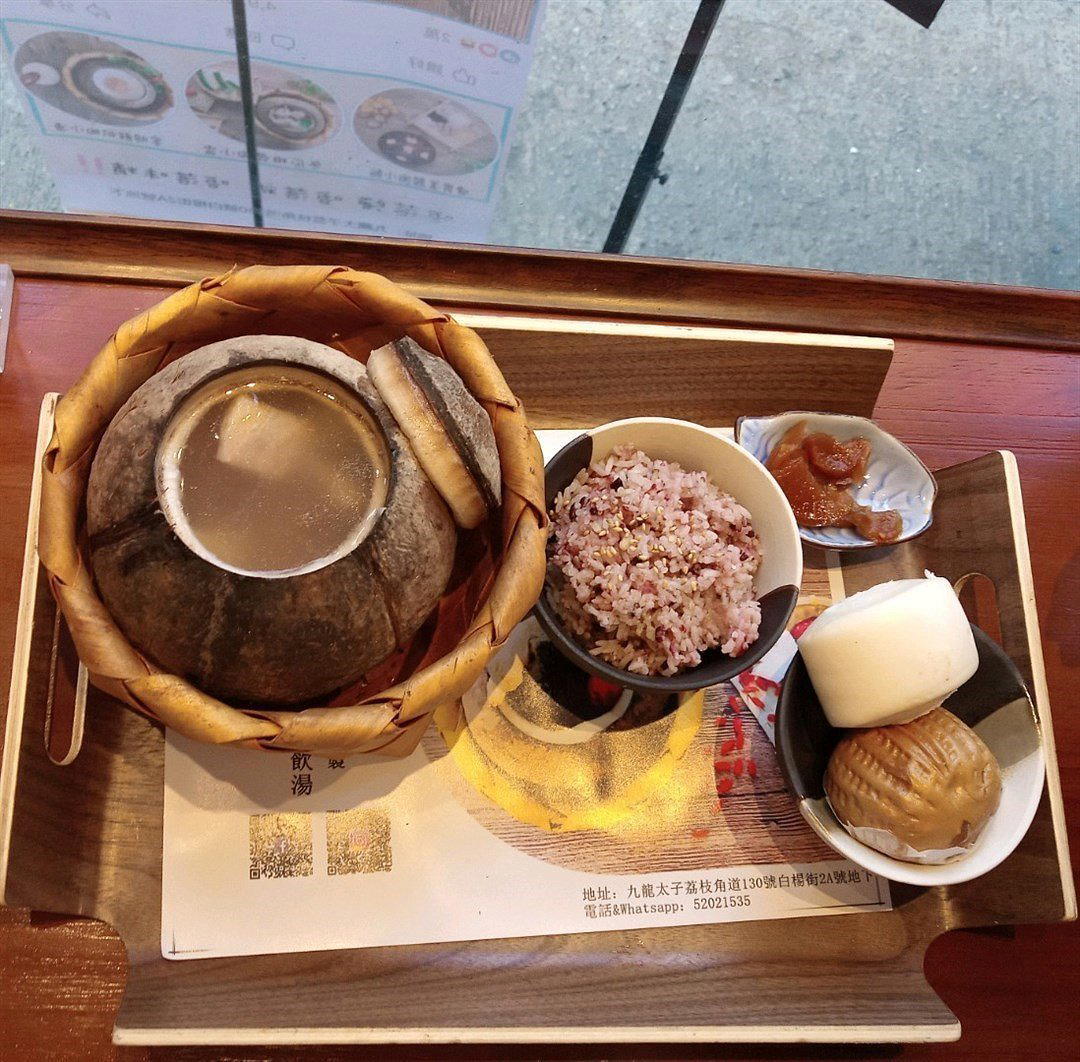
Soup as the Main Event: How Mong Kok Reads a Menu
In Yau Tsim Mong, where a single block of Poplar Street can hold a noodle shop, a hotpot room, and a dai pai dong-style counter all within thirty metres, the question a restaurant answers first is structural: what does the menu say this place is about? At Coconut Soup, the answer is in the name. Rather than the catch-all menu architecture common to Cantonese neighbourhood restaurants, where roast meats, stir-fries, and clay pot rice compete for equal billing, the framing here is narrower and more deliberate. Broth is the backbone. That choice alone positions the kitchen inside a specific tradition within Hong Kong Chinese cooking, one where the soup bowl functions not as a side order or appetiser but as the main event around which the rest of the table organises itself.
Mong Kok is an instructive environment for a restaurant with this kind of focus. The district runs dense and competitive, and diners here tend to know exactly what they want before they arrive. Soup-forward restaurants in this part of Kowloon sit in a different competitive tier from the larger hotpot operations, such as Budaoweng Hotpot Cuisine, where the experience is communal and interactive, or the noodle counters like Block 18 Doggie's Noodle, where the bowl arrives pre-assembled and the transaction is fast. Coconut Soup occupies a middle register: the cooking is specific enough to suggest a defined kitchen philosophy, but the format remains accessible to the neighbourhood cadence of Mong Kok, where long tasting menus and formal service structures are relatively rare.
The Coconut Broth Tradition in Hong Kong Cooking
Coconut-based soups occupy a recognised position in the broader canon of Hong Kong Chinese cooking, drawing from both Cantonese slow-fire soup tradition and Southeast Asian flavour registers that have been absorbed into the city's food culture over decades. The technique matters as much as the ingredient: Cantonese soup cooking typically involves long simmering periods that extract collagen and flavour from bones, seafood shells, or dried ingredients, producing broths that read as deeply savoury rather than sweet or aromatic. When coconut enters that framework, it functions as a softening agent and a fat source, rounding edges rather than dominating. The result sits differently on the palate from a Thai-inflected coconut curry or a Southeast Asian laksa, even when the primary ingredient is the same.
This culinary positioning is relevant because it explains how a restaurant named for a single ingredient can sustain a full menu without that ingredient becoming repetitive or limiting. In Cantonese cooking, the soup base changes seasonality faster than almost any other component of the menu, tracking the logic of what ingredients are at their peak rather than what the name printed on the shopfront promises. That flexibility is a feature of the tradition, not an inconsistency. For visitors approaching Coconut Soup from outside Hong Kong's food culture, a useful comparison point is the way Japanese ramen shops organised around a single broth type (tonkotsu, shio, shoyu) build their menus vertically, adding toppings and variations rather than horizontally into unrelated categories. The principle is similar even if the cuisine is entirely different.
Poplar Street and the Surrounding Block
The address on Poplar Street places Coconut Soup in the Mong Kok core, within a neighbourhood that runs at a different pace from Hong Kong Island's dining districts. The density here is pedestrian and practical. Streets like Poplar are not destination blocks in the way that Lan Kwai Fong or the Star Street precinct in Wan Chai are; they function as local infrastructure for residents and office workers, which means the restaurants that survive here do so on repeat custom rather than tourist volume. That context tends to produce menus that are priced for regular visits and kitchens that maintain consistency because the same customers return on a weekly basis.
The Mong Kok MTR station puts the area within direct reach of most of Hong Kong's major transport corridors, including the Airport Express interchange at Kowloon station a few stops away. For visitors staying in Tsim Sha Tsui, the walk north along Nathan Road is direct. The neighbourhood also sits in easy range of a broader evening built around Yau Tsim Mong's dining options, from the kebab and pizza format at Ebeneezer's Kebabs & Pizzeria to the Indian and Mediterranean cooking at Carat Fine Indian and Mediterranean Cuisine. For a broader survey of the district's options, the full Yau Tsim Mong restaurants guide maps the range across cuisines and price points.
Where Coconut Soup Sits in Hong Kong's Wider Dining Map
Hong Kong's restaurant spectrum runs from multi-Michelin-starred operations like Amber in Hong Kong at the formal end to neighbourhood-specific specialists that hold no awards but maintain consistent local followings. The restaurant sits firmly in the second category. That is not a diminishment: particularly instructive eating in Hong Kong happens in precisely this register, at restaurants that are organised around a single culinary logic and executed with the kind of repetition-built precision that formal kitchens achieve through different means. For context, the city also contains culturally specific institutions like the Former Jumbo Floating Restaurant in Aberdeen, which represented a different mode of Hong Kong dining history, and polished European-influenced venues such as Le Salon de Thé de Joël Robuchon Hong Kong (ifc mall) in Central. The restaurant is neither of those things. It is a neighbourhood restaurant with a named focus, and its interest lies in how that focus shapes what arrives at the table. The same principle of focused menu architecture, incidentally, produces particularly discussed restaurants internationally, from Le Bernardin in New York City, where the menu is structurally organised around seafood, to the more intimate format of Lazy Bear in San Francisco, where the menu architecture itself becomes the editorial statement. Scale and price point differ enormously, but the underlying logic of letting a defined focus drive structure is the same.
Planning a Visit
The restaurant is located at 2A Poplar Street, Mong Kok, in the Yau Tsim Mong district of Kowloon. Mong Kok MTR station is one practical access point for visitors not already in the immediate neighbourhood. The restaurant is open daily from 11 AM to 9 PM. For those building a broader Kowloon evening, the district also connects to restaurants across neighbouring areas, including Chin Sik in Tsuen Wan and further afield to Habib's Indian & Middle Eastern Food in Kwun Tong. Other Hong Kong destinations worth cross-referencing for a longer trip include Enchanted Garden Restaurant in Islands, Hoi Tin Garden in Tuen Mun, King Of Soybeans in Wong Tai Sin, Lei Garden in Sha Tin, and AMMO in Central And Western.
Awards and Standing
Comparable venues nearby, for context on price, style, and recognition.
| Venue | Cuisine | Price | Notes |
|---|---|---|---|
| Coconut SoupThis venue — the venue you are viewing | Hainan Coconut Chicken Hotpot & Soups | $ | Not listed |
| Cafe | Classic Hong Kong Cha Chaan Teng | $ | Yau Ma Tei |
| Block 18 Doggie's Noodle | Hong Kong Street Noodles | $ | Yau Tsim Mong |
| The Chinese Restaurant | Traditional Hong Kong Dim Sum | $$$ | Yau Tsim Mong |
| Ebeneezer's Kebabs & Pizzeria | Indian & Middle Eastern Kebabs and Pizza | $ | Tsim Sha Tsui |
| Ichiran | Tonkotsu Ramen | $$ | Yau Tsim Mong |
Continue exploring
More in Yau Tsim Mong
Restaurants in Yau Tsim Mong
Browse all →
Bars in Yau Tsim Mong
Browse all →



At a Glance
- Casual
- Cozy
- Casual Hangout
- Family
- Group Dining
Current opening hours
- Monday
- 11 AM–9 PM
- Tuesday
- 11 AM–9 PM
- Wednesday
- 11 AM–9 PM
- Thursday
- 11 AM–9 PM
- Friday
- 11 AM–9 PM
- Saturday
- 11 AM–9 PM
- Sunday
- 11 AM–9 PM
Hours can change for holidays and private events. Last verified .
Simple, casual neighborhood dining with a focus on traditional comfort food; warm and welcoming atmosphere typical of local Hong Kong eateries.