The Jumbo Floating Restaurant in Aberdeen Harbour was one of Hong Kong's most recognisable dining landmarks before it sank in the South China Sea in June 2022 while being towed away for repositioning. Its absence reshaped Aberdeen's waterfront and left a gap in the city's story of vernacular Cantonese dining culture that no subsequent venue has filled in the same way.
- Address
- Shum Wan Pier Dr, Aberdeen, Hong Kong
- Directions
- Get directions
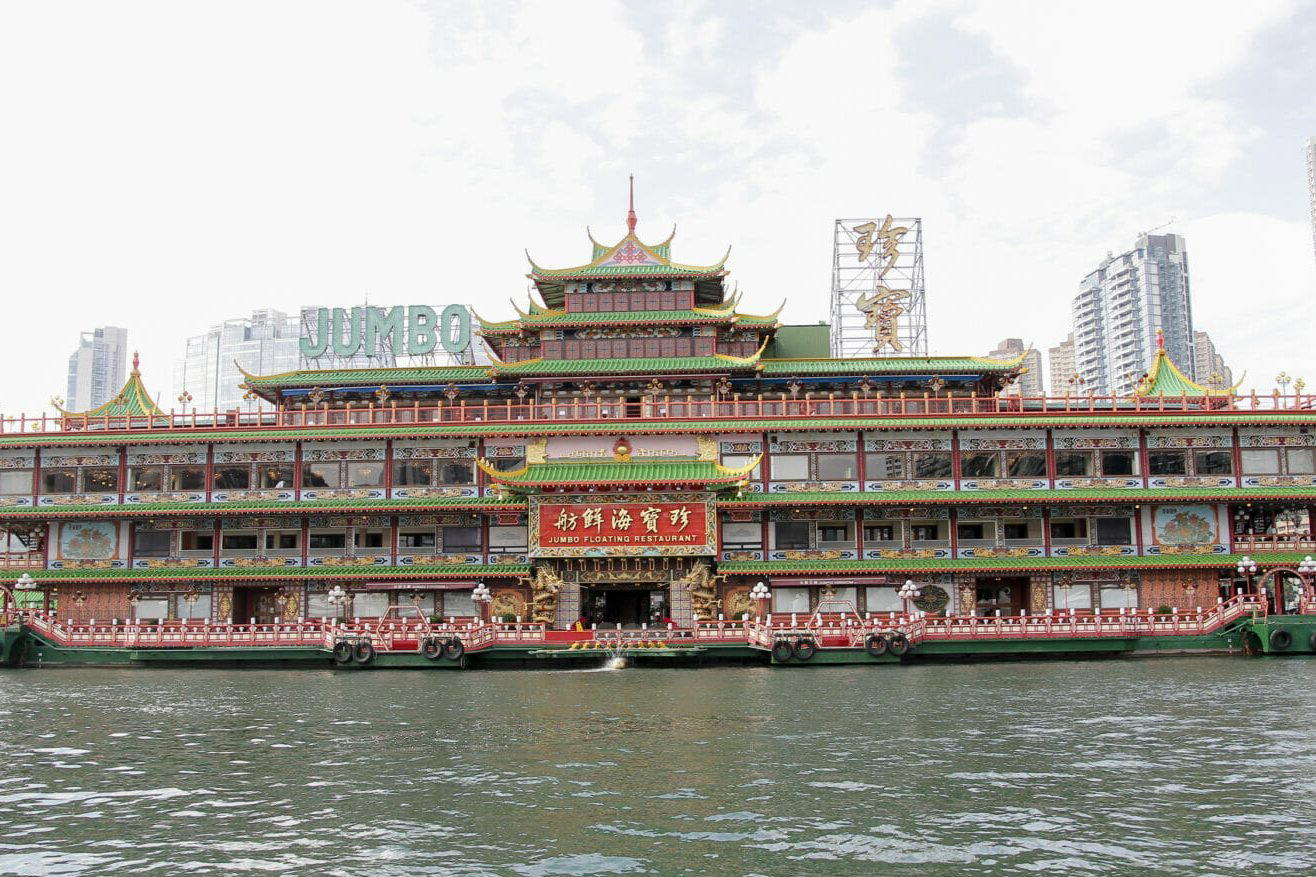
A Landmark That Defined Aberdeen Harbour
Aberdeen Harbour sits on the southwestern edge of Hong Kong Island, a district that for most of the twentieth century was defined less by its skyline than by its water. Sampans, fishing trawlers, and the low hum of marine industry gave Aberdeen a character distinct from the financial density of Central or the retail sprawl of Mong Kok. It was into this working harbour context that the Jumbo Floating Restaurant launched, a structure that would spend decades as among the more photographed dining venues in Asia, attracting millions of visitors and embedding itself into the city's cultural identity in ways that went well beyond what it served on the plate.
The vessel's palace-style architecture drew on the visual language of imperial Chinese design: tiered rooflines, lacquered red and gold surfaces, and a form that read more like a dynastic court than a seafood restaurant. That theatricality was deliberate and, for much of its operational life, effective. Floating dining in Hong Kong's typhoon shelters has roots that predate the Jumbo by generations, small boat kitchens known as sampan restaurants once clustered throughout the harbour, serving fishermen and later tourists. The Jumbo formalised and dramatically scaled that tradition, transforming a vernacular waterfront habit into a destination event.
What Cantonese Seafood Dining Looked Like at This Scale
Cantonese seafood cuisine, particularly in the context of Hong Kong's working harbours, has always been shaped by proximity to supply. The South China Sea feeding grounds that sustained Aberdeen's fishing fleets historically determined what appeared on local tables: grouper, garoupa, mantis shrimp, razor clams, and live seafood held in tanks and selected by diners before cooking. That live-selection model, now standard across Hong Kong's major seafood restaurants, was part of the broader Cantonese dining contract that the Jumbo operated within.
At peak capacity, the restaurant complex could seat several thousand diners across multiple floors and vessels, making it one of the largest Cantonese dining operations anywhere in the region. Venues of that scale rarely maintain ingredient precision at the level of smaller, more specialist operations. The comparison is instructive: Hong Kong's celebrated Cantonese seafood houses, including spots recognised in annual best-dining surveys and Michelin's Hong Kong and Macau guide, typically operate at lower covers with tighter sourcing controls. The Jumbo's value was always more civic than culinary, it was a gathering point, a wedding venue, a place where four generations of Hong Kong families marked occasions, and a destination that international visitors reached by ferry from the Aberdeen promenade.
For visitors interested in how Hong Kong's serious Cantonese dining is positioned today, venues like Lei Garden in Sha Tin or the broader scene covered in operations such as Amber in Hong Kong offer a more technically focused reference point. The contrast between large-format heritage dining and precision-driven contemporary Cantonese is one of the defining tensions in the city's restaurant story.
June 2022: The Tow, the Sinking, and What It Meant
The Jumbo's operational history effectively ended when its parent company, Aberdeen Restaurant Enterprises, ceased operations during the pandemic period. Visitor numbers had collapsed, maintenance costs on the ageing structure were substantial, and the economics of running a several-thousand-seat floating restaurant without tourist traffic proved impossible. In late May 2022, the vessel was towed out of Aberdeen Harbour to be repositioned elsewhere in Southeast Asia. On 20 June 2022, it capsized and sank in the South China Sea near the Paracel Islands, in waters exceeding a thousand metres depth. Recovery was deemed not feasible.
The sinking drew global press coverage disproportionate to its culinary significance, which says something useful about what the Jumbo actually was. It had long since become a symbol rather than a restaurant, a piece of Hong Kong's visual identity tied to the era of mass tourism and the city's post-colonial hospitality story. The restaurant is permanently closed. Its loss was mourned in the terms used for demolished buildings and discontinued transit lines, not in the language of food criticism.
Aberdeen Harbour Now: The Waterfront Without the Vessel
Shum Wan Pier Drive, where the Jumbo was moored, is accessible from Aberdeen's main waterfront and remains a point of interest for visitors trying to understand the harbour's spatial history. The pier itself offers views across a working marina that still carries traces of the district's fishing culture, even as gentrification has reshaped much of the surrounding neighbourhood. Aberdeen typhoon shelter remains active, and sampan operators continue to offer harbour tours, a format that predates the Jumbo and survives it.
For dining in Aberdeen and across the wider Hong Kong waterfront, the current options are distributed rather than consolidated into one landmark. The broader Hong Kong dining map spans everything from district noodle shops to multi-Michelin-starred tasting menus. Visitors building a Hong Kong itinerary will find the city's restaurant range documented across the EP Club guide, including venues in Central and Western such as AMMO in Central And Western, and across the harbour in Block 18 Doggie's Noodle in Yau Tsim Mong.
Those planning wider culinary itineraries across Hong Kong's districts can reference the full EP Club Hong Kong coverage, which includes neighbourhood-level context for areas including Islands, Tsuen Wan, and Wong Tai Sin, represented by venues such as Enchanted Garden Restaurant in Islands, Chin Sik in Tsuen Wan, and King Of Soybeans in Wong Tai Sin.
Planning a Visit to the Site
The former mooring location at Shum Wan Pier Drive is publicly accessible. There is no operational restaurant at the site. Visitors typically combine a stop at the pier with a walk along Aberdeen Promenade and, if interested, a sampan harbour tour arranged informally from the waterfront. The harbour is most atmospheric in the early morning, when fishing activity is highest, and in the late afternoon before the working vessels return. Aberdeen is reachable from central Hong Kong via bus routes running through the Aberdeen Tunnel, or by taxi from the MTR's South Horizons station on the South Island Line.
The Jumbo occupied a different category, but understanding that difference is part of reading what Aberdeen Harbour's dining history actually meant.
At-a-Glance Comparison
Comparable venues nearby, for context on price, style, and recognition.
| Venue | Cuisine | Price | Notes |
|---|---|---|---|
| Former Jumbo Floating RestaurantThis venue — the venue you are viewing | Cantonese Floating Restaurant | $$$ | Not listed |
| Tim's Kitchen | Traditional Cantonese | $$$ | Wan Chai |
| Lu Feng LF Peak Kitchen | Cantonese Dim Sum | $$$ | Central |
| The Chinese Restaurant | Traditional Hong Kong Dim Sum | $$$ | Yau Tsim Mong |
| Rú | Modern Cantonese Fine Dining | $$$ | Tsuen Wan |
| Lei Garden | Traditional Cantonese | $$$ | Sha Tin |
At a Glance
- Well Known
- Scenic
- Ornate
- Celebration
- Group Dining
- Special Occasion
- Waterfront
- Historic Building
- Waterfront
Ornate imperial palace atmosphere with ornate decor, dragon motifs, neon lighting, and glamorous surroundings overlooking Aberdeen Harbour.