
Our verdict
Lau Sum Kee Noodle serves traditional Hong Kong bamboo-pressed noodles at 48 Kweilin St in a historic building, with quick-bite pacing and lively noise for lunch or dinner.

Pearl is the En Primeur Club membership app, where members save venues, book tables and use the concierge.
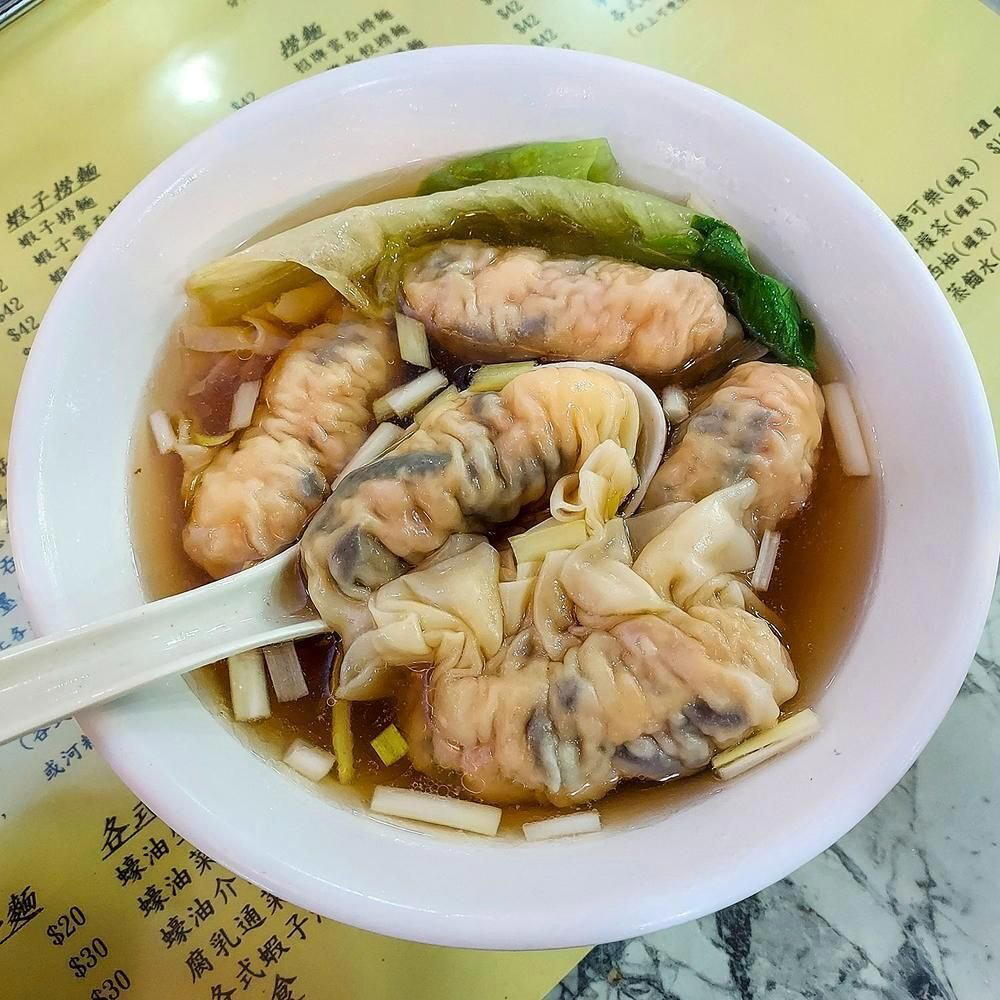
The menu
What to order
- Shrimp Roe Lo Mein
- Wonton Noodle Soup
Sham Shui Po and the Persistence of Wonton Noodle Culture
Kweilin Street in Sham Shui Po sits inside one of Hong Kong's densest working-class districts, a neighbourhood where fabric wholesalers and electronics dealers share pavements with noodle shops that have been feeding the same blocks for generations. This is not the Hong Kong of harbourfront hotels or Central finance towers. It is the city at street level, and it is where some of the most technically serious noodle work in the territory has always happened. Lau Sum Kee Noodle, at 48 Kweilin Street, belongs to that tradition, occupying a modest shopfront in a district that has never needed to perform for tourists to maintain its culinary identity.
Wonton noodle soup is one of Cantonese cuisine's most deceptively demanding formats. The variables are numerous: the texture and alkalinity of the egg noodle, the clarity and depth of the broth, the composition and seasoning of the wonton filling, the temperature at which everything arrives in the bowl. Shops that master all four simultaneously are fewer than the city's density of noodle counters might suggest. In Sham Shui Po, where residents and workers have eaten these dishes daily for decades, the tolerance for mediocrity is low, and reputations are built slowly.
A Format That Has Outlasted Multiple Waves of Dining Trends
Hong Kong's dining culture has shifted substantially over the past twenty years. The city saw an international fine dining surge through the 2000s and 2010s, with Michelin arriving in 2009 and institutions like Amber, Caprice, and 8 1/2 Otto e Mezzo Bombana consolidating the upper tier of the market. Meanwhile, boundary-pushing concepts such as Ta Vie and a broader wave of tasting-menu formats redefined what dinner could cost and how long it could last. None of that movement changed what a shop like Lau Sum Kee does. The wonton noodle format, priced at a fraction of any tasting menu, has retained its relevance not through reinvention but through the discipline of repetition.
The editorial angle here matters: the longevity of these Sham Shui Po institutions is not nostalgia marketing. It reflects a structural reality in Hong Kong dining, where a genuine two-tier system operates simultaneously. At the leading, Forum and its Cantonese fine dining peers command multi-course prices and dress codes. At street level, shops like Lau Sum Kee serve bowls that require equal technical discipline, for a fraction of the cost, to customers who will immediately know if the noodle texture is off. Both tiers are serious. Only one of them is discussed internationally.
The Wonton Noodle as Technical Object
Understanding what distinguishes a serious Hong Kong wonton noodle shop from an average one requires looking at the craft elements rather than the setting. The noodle itself, in the Cantonese tradition, is thin, springy, and slightly alkaline from the use of lye water, with a characteristic bite that softens within seconds if left in hot broth too long. This means timing from kitchen to table is not incidental to the dish; it is the dish. The wonton filling in the classic form combines pork and whole or roughly chopped shrimp, the latter providing a distinct textural resistance that separates the Cantonese version from the minced-everything approach found elsewhere. The broth, at the serious end of the category, is built from dried shrimp roe and pork bones, achieving a salinity and depth that arrives without the flat heaviness of stock-cube shortcuts.
Shops that maintain these standards across a full service, day after day, occupy a different competitive position than the neighbourhood's more casual operators. Lau Sum Kee has built a reputation in this more demanding tier, drawing visitors from outside Sham Shui Po specifically to compare its output against the handful of other shops considered to be working at this level. That cross-district pull, in a city where excellent food is available at every corner, is itself a form of peer recognition.
Sham Shui Po in the Wider Hong Kong Food Map
Sham Shui Po's food culture sits in contrast to the districts that draw the most international attention. Central and Western Hong Kong has AMMO and the refined daytime setting of Le Salon de Thé de Joël Robuchon in the IFC mall. Aberdeen once anchored its identity to the Former Jumbo Floating Restaurant. Across the water, Kowloon's Yau Tsim Mong district has its own noodle culture, including operations like Block 18 Doggie's Noodle. Further out, the New Territories and island districts produce their own neighbourhood anchors, from Lei Garden in Sha Tin to the Enchanted Garden Restaurant on the outlying islands, and community staples like Hoi Tin Garden in Tuen Mun and King Of Soybeans in Wong Tai Sin.
Sham Shui Po operates differently from all of these. It is a district where food quality is validated by repeat local custom rather than by review platforms or hotel concierge recommendations. Shops like Lau Sum Kee exist in a de facto peer review system run by the people who eat there most often, and that system is unforgiving. Comparison shops in adjacent districts, such as Chin Sik in Tsuen Wan and Habib's in Kwun Tong, serve their own communities through similar mechanisms of local accountability.
Planning a Visit
Frequently asked questions
What's the address for Lau Sum Kee Noodle?
Lau Sum Kee Noodle is located at 48 Kweilin St, Un Chau, Hong Kong, Hong Kong.
How does Lau Sum Kee Noodle fit into the broader Sham Shui Po food scene?
Sham Shui Po sits in deliberate contrast to the international dining districts of Hong Kong, Kweilin Street is fabric wholesalers and hardware shops, not hotel restaurants and Michelin-tracked fine dining. Lau Sum Kee operates within a cluster of noodle shops that have maintained Cantonese formats across multiple decades, making the street itself a reference point for wonton noodle craft in the city. For visitors oriented around Hong Kong's food culture rather than its fine dining tier, the district offers the denser argument.
What should I order at Lau Sum Kee Noodle?
Wonton noodle soup is the format that defines Sham Shui Po shops of this type and the logical starting point at Kweilin Street. The Cantonese wonton noodle is a technical object, shrimp-forward wontons, thin alkaline noodles with snap, and a clear pork-and-shrimp-roe broth are the elements serious practitioners are judged on. Order the house wonton noodle soup and judge the shop on those terms.
How far ahead should I plan for Lau Sum Kee Noodle?
No advance booking is required or possible, the format at 48 Kweilin St is walk-in only, as it is at traditional Sham Shui Po noodle counters across the district. Timing matters more than planning: arrive outside of the peak lunch rush or expect to queue, particularly on weekends when the neighbourhood draws food-focused visitors from across Hong Kong.
What is Lau Sum Kee Noodle known for?
Lau Sum Kee holds a reputation as one of the serious wonton noodle operators in Sham Shui Po, a district where local repeat custom functions as the primary quality signal rather than awards or press coverage. The shop operates on Kweilin Street inside one of Hong Kong's densest working-class neighbourhoods, where the concentration of long-running noodle shops creates a demanding, knowledgeable regular clientele. That context is the credential.
A Credentials Check
Comparable venues nearby, for context on price, style, and recognition.
| Venue | Cuisine | Price | Notes |
|---|---|---|---|
| Lau Sum Kee NoodleThis venue (the venue you are viewing) | Traditional Hong Kong Bamboo-Pressed Noodles | $1–10 | Not listed |
| Tak Yu Restaurant (德如茶餐廳) | Hong Kong Cha Chaan Teng | $10–20 | Wan Chai |
| Leaf Dessert | Traditional Chinese Desserts & Noodles | $1–10 | Central |
| Keung Kee Dai Pai Dong | Cantonese Dai Pai Dong | $10–20 | Sham Shui Po East |
| Kung Wo Dou Ban Chong | Traditional Hong Kong Tofu Specialty | $1–10 | Sham Shui Po |
| Crystal Jade | Modern Shanghainese with Handmade Noodles & Dim Sum | $20–30 | Wan Chai |
Recognition history
Dated appearances from independent guides and award organizations, with the underlying list record or original source where available.
Opinionated About Dining Casual in Asia Highly Recommended
Opinionated About Dining
Continue exploring
More in Hong Kong
Restaurants in Hong Kong
All restaurants in Hong Kong →
Bars in Hong Kong
All bars in Hong Kong →
Hotels in Hong Kong
All hotels in Hong Kong →
Wineries in Hong Kong
All wineries in Hong Kong →
Details
- Classic
- Well Known
- Casual Hangout
- Historic Building
- A La Carte
Current opening hours
- Monday
- 11:30 AM–9 PM
- Tuesday
- 11:30 AM–9 PM
- Wednesday
- 11:30 AM–9 PM
- Thursday
- 11:30 AM–9 PM
- Friday
- 11:30 AM–9 PM
- Saturday
- 11:30 AM–9 PM
- Sunday
- 11:30 AM–9 PM
Hours can change for holidays and private events. Hours as of .
Simple, crowded local noodle shop with a no-frills, traditional atmosphere.