Our verdict
Tsui Wah Restaurant sits on Level 8 of Hong Kong International Airport's Terminal 1 departures hall, bringing the cha chaan teng format to one of Asia's busiest transit hubs. The chain's broader reputation rests on Hong Kong-style milk tea, toast, and congee that define the city's all-day café tradition. For travellers with time between flights, it offers a grounded alternative to international terminal food courts.

Pearl is the En Primeur Club membership app, where members save venues, book tables and use the concierge.
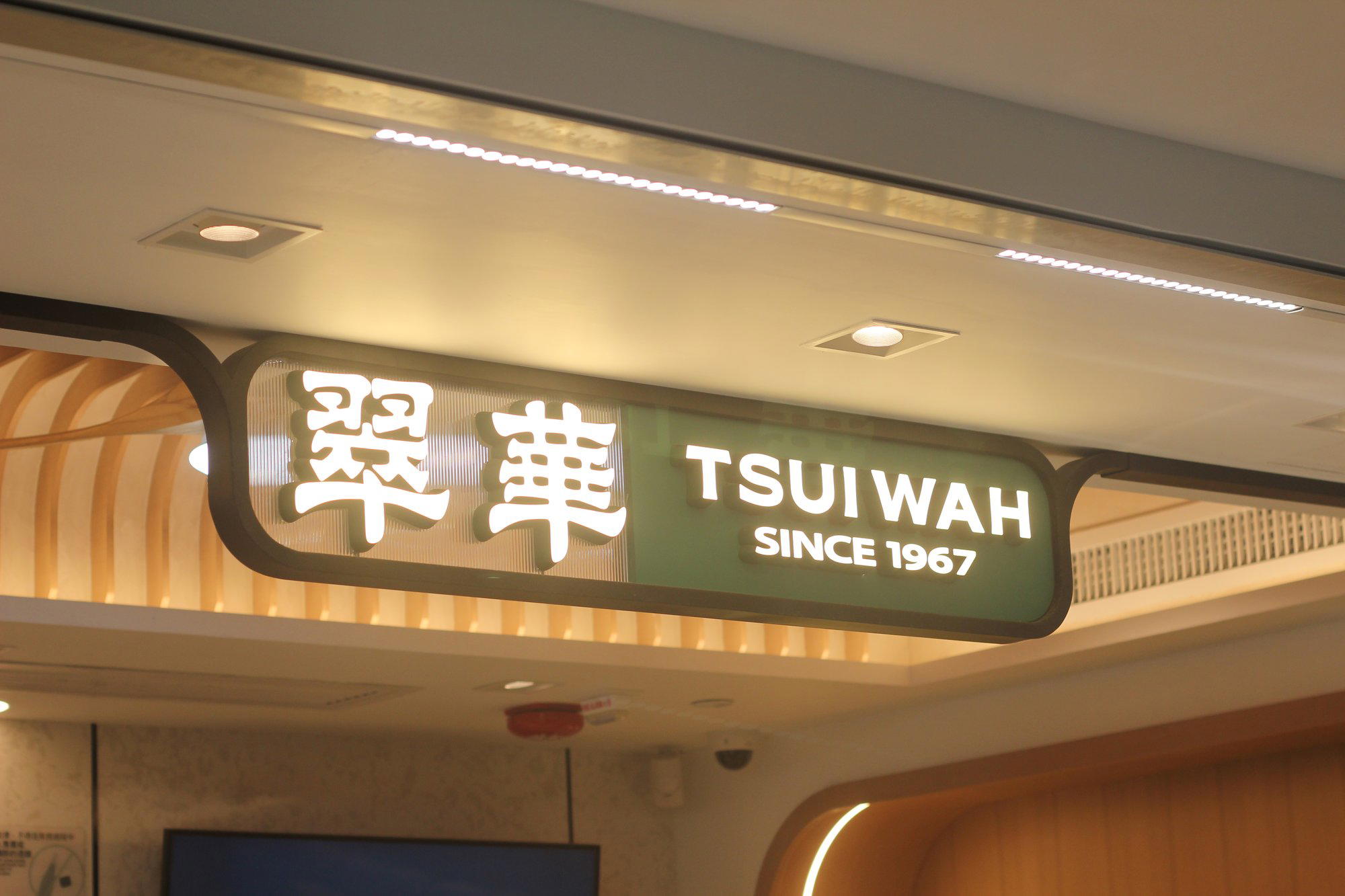
The menu
What to order
- Milk Tea
- Crispy Bun with Condensed Milk
- King Prawns XO Noodles
Cha Chaan Teng at 35,000 Departures a Day
Hong Kong's airport dining has long operated on two parallel tracks: the international terminal food court selling the same grab-and-go formats found in Heathrow or Changi, and a quieter tier of local operators who treat the departure hall as an extension of the city's neighbourhood café culture. Tsui Wah Restaurant, positioned on Level 8 of Terminal 1's departures zone, belongs firmly to the second category. Its presence here is less about airport convenience and more about a deliberate argument: that the cha chaan teng format, Hong Kong's hybrid tea café tradition, born from the city's colonial-era fusion of British and Cantonese habits, deserves a seat at the table even when the table is airside.
Cha chaan tengs occupy a specific and well-documented place in Hong Kong's food culture. They emerged in the 1950s as affordable alternatives to Western-style restaurants, borrowing the idea of milk tea and toast but filtering it through Cantonese practicality. The result was a genre defined by speed, directness, and a menu that resists the logic of any single meal period. Breakfast items appear at lunch. Congee runs all day. The format has survived decades of competition from international chains precisely because it answers a different kind of hunger, not for novelty, but for something reliable and locally coherent. Tsui Wah is one of the city's most recognisable operators in this space, with locations across Hong Kong Island and Kowloon that have built a following over decades.
The Daytime Case: Why the Airport Location Works well Before Noon
The editorial angle here is genuinely about time of day. Cha chaan tengs are morning and midday institutions. Their menus are calibrated for the early shift, milk tea drunk strong and hot, condensed-milk toast eaten fast, congee ordered in portions that fit a 20-minute window. The airport setting, with its steady stream of early departures and business travellers clearing security by 7am, suits this rhythm better than almost any other Tsui Wah location in the city. A passenger catching a 9am flight to Tokyo or Singapore can eat something that actually reflects where they've been, rather than reaching for a chain bakery croissant that could have been purchased in any city on earth.
The daytime service at a cha chaan teng also operates at a pace that airport dining demands. Orders are taken quickly, food arrives without ceremony, and the expectation is turnover. This is not a knock on the format, it is the format. Tsui Wah's airport branch inherits these operating norms from the wider cha chaan teng tradition, which means it functions with a kind of honest efficiency that more self-consciously designed airport restaurants often fail to replicate.
The Evening Shift: A Different Calculation
Evening service at airport restaurants presents a harder case. Cha chaan tengs in the city's residential neighbourhoods shift gear as the day progresses, later meals tend toward more substantial Cantonese dishes, hot pots, and the kind of comfort-food plates that make sense after a long working day. Passengers are stressed, time-pressured, or exhausted after long-haul arrivals. The contemplative mood of a late cha chaan teng dinner in the city doesn't always translate when you're watching a departures board.
For travellers with a genuine layover rather than a tight connection, the evening visit has its own logic. Hong Kong International Airport is one of the few transit hubs in Asia where a long layover can be managed comfortably without leaving the terminal. In that context, a recognisable local format offers something the international food court cannot: a reminder that you are passing through a specific city with a specific food culture, not a generic node in a global network.
Where Tsui Wah Sits in Hong Kong's Dining Register
It would be a category error to place Tsui Wah in the same conversation as Hong Kong's fine dining tier. The city's upper bracket, represented by restaurants like Amber, Caprice, 8½ Otto e Mezzo Bombana, Ta Vie, and Forum, operates on entirely different terms of reservation, price, and occasion. The comparison that matters is not with a Michelin-starred counter in Central but with what else is available at the same terminal, in the same price tier, at 6am on a Tuesday.
Across Hong Kong's broader geography, the city's dining offer is genuinely wide. Areas like Yau Tsim Mong and Tuen Mun support neighbourhood restaurants at very different price points and traditions. Further out, spots like Lei Garden in Sha Tin and One-ThirtyOne in Tai Po represent the kind of destination-specific dining that rewards travel across the territory. The airport Tsui Wah does not compete with any of these; it serves a logistically distinct situation. For travellers who want to understand where the airport branch fits in the wider city, our full Hong Kong restaurants guide provides the broader context, including neighbourhood breakdowns and venue recommendations across price tiers.
Hong Kong's dining culture also extends to less-documented corners worth naming for the curious traveller: the former Jumbo Floating Restaurant in Aberdeen represents a now-closed chapter in the city's food history, while operators like Habib's in Kwun Tong, King of Soybeans in Wong Tai Sin, and Gangstas on Lantau Island illustrate how far the city's food geography extends beyond Central and Wan Chai. Even I Love Istanbul in Tsuen Wan points to the city's appetite for importing international formats into suburban districts. Tsui Wah is the reverse of that impulse: a Hong Kong format deployed in the most international possible setting.
Planning Your Visit
The airport location on Level 8, Terminal 1 departures is accessible only to passengers who have cleared security. That constraint defines the entire visit: you need a boarding pass to eat here, which means this is genuinely a pre-flight or transit option rather than a destination in the conventional sense. Early morning windows, before the terminal reaches peak departures volume, are likely to offer the most comfortable experience. Travellers connecting through Hong Kong rather than departing should confirm their terminal access and transit arrangements before factoring this into their layover plans. For context on pricing at Hong Kong airport dining generally, the cha chaan teng tier sits well below the formal sit-down restaurant tier, expect the economics of a neighbourhood café rather than an airport premium restaurant. For reference, fine dining comparators in New York like Le Bernardin or Atomix illustrate just how wide the global restaurant spectrum runs, Tsui Wah occupies the opposite end of that spectrum by design, not by default. Also in Hong Kong's Central district, Gaia represents the kind of sit-down European format that contrasts directly with the cha chaan teng approach.
Frequently asked questions
Where do I go for Tsui Wah Restaurant (翠華餐廳)?
Tsui Wah Restaurant (翠華餐廳) is located at Level 8, Departures, Terminal 1,Hong Kong International Airport, Chek Lap Kok, Hong Kong, Hong Kong.
Is Tsui Wah at Hong Kong Airport only accessible to departing passengers?
Yes. The Tsui Wah branch at Chek Lap Kok sits on Level 8 of the Terminal 1 departures hall, which means the restaurant is only reachable after clearing immigration and security. This makes it relevant almost exclusively to outbound travellers, not meeters, greeters, or arrivals-side visitors.
What dish is Tsui Wah Restaurant (翠華餐廳) famous for?
Tsui Wah built its reputation across Hong Kong on cha chaan teng staples: milk tea, pineapple buns with butter, and congee. The airport location at Terminal 1 Level 8 carries that same menu identity, which is calibrated for morning and midday eating rather than elaborate evening dining.
How far ahead should I plan for Tsui Wah Restaurant (翠華餐廳)?
No advance booking is typical for cha chaan tengs in Hong Kong, and the airport location follows that format. The relevant planning constraint is clearance time: the Level 8 Terminal 1 seat is only accessible post-security, so factor immigration and screening into your departure schedule.
What's the signature at Tsui Wah Restaurant (翠華餐廳)?
The Hong Kong-style milk tea is the throughline at every Tsui Wah branch, and the airport location is no exception. It sits within the cha chaan teng genre, where the drink is as much a cultural marker as any food item on the menu.
Cost Snapshot
Comparable venues nearby, for context on price, style, and recognition.
| Venue | Cuisine | Price | Notes |
|---|---|---|---|
| Tsui Wah Restaurant (翠華餐廳)This venue (the venue you are viewing) | Hong Kong Cha Chaan Teng | $10–20 | Not listed |
| Bee Cheng Hiang (美珍香) | Singaporean Bakkwa Specialist | $1–10 | Tsim Sha Tsui, Singaporean Bakkwa Specialist |
| Hoover Cake Shop | Traditional Hong Kong Bakery | Not listed | Kowloon City, Traditional Hong Kong Bakery |
| Yue Hing (裕興大排檔) | Hong Kong Dai Pai Dong Sandwiches | $10–20 | Central, Hong Kong Dai Pai Dong Sandwiches |
| Keung Kee Dai Pai Dong | Cantonese Dai Pai Dong | $10–20 | Sham Shui Po East, Cantonese Dai Pai Dong |
| Lin Heung Tea House | Traditional Cantonese Dim Sum | $10–20 | Central, Traditional Cantonese Dim Sum |