Positioned steps from the Duomo in the heart of Milan's historic centro storico, Maio Restaurant occupies a city block where serious dining and sustainable sourcing increasingly converge. The address on Via Santa Radegonda places it within Milan's densest concentration of high-end restaurants, a peer group that includes Michelin-decorated names running from creative Italian to contemporary tasting formats. Maio enters that company with its own approach to environmental responsibility and ingredient provenance.
Pearl is the En Primeur Club membership app — saves, bookings, and concierge access live there. Same editors, same standards.
- Address
- Via Santa Radegonda, 3, 20121 Milano MI, Italy
- Phone
- +393928852455
- Website
- maiorestaurant.com
- Directions
- Get directions
 Saves & bookings on Pearl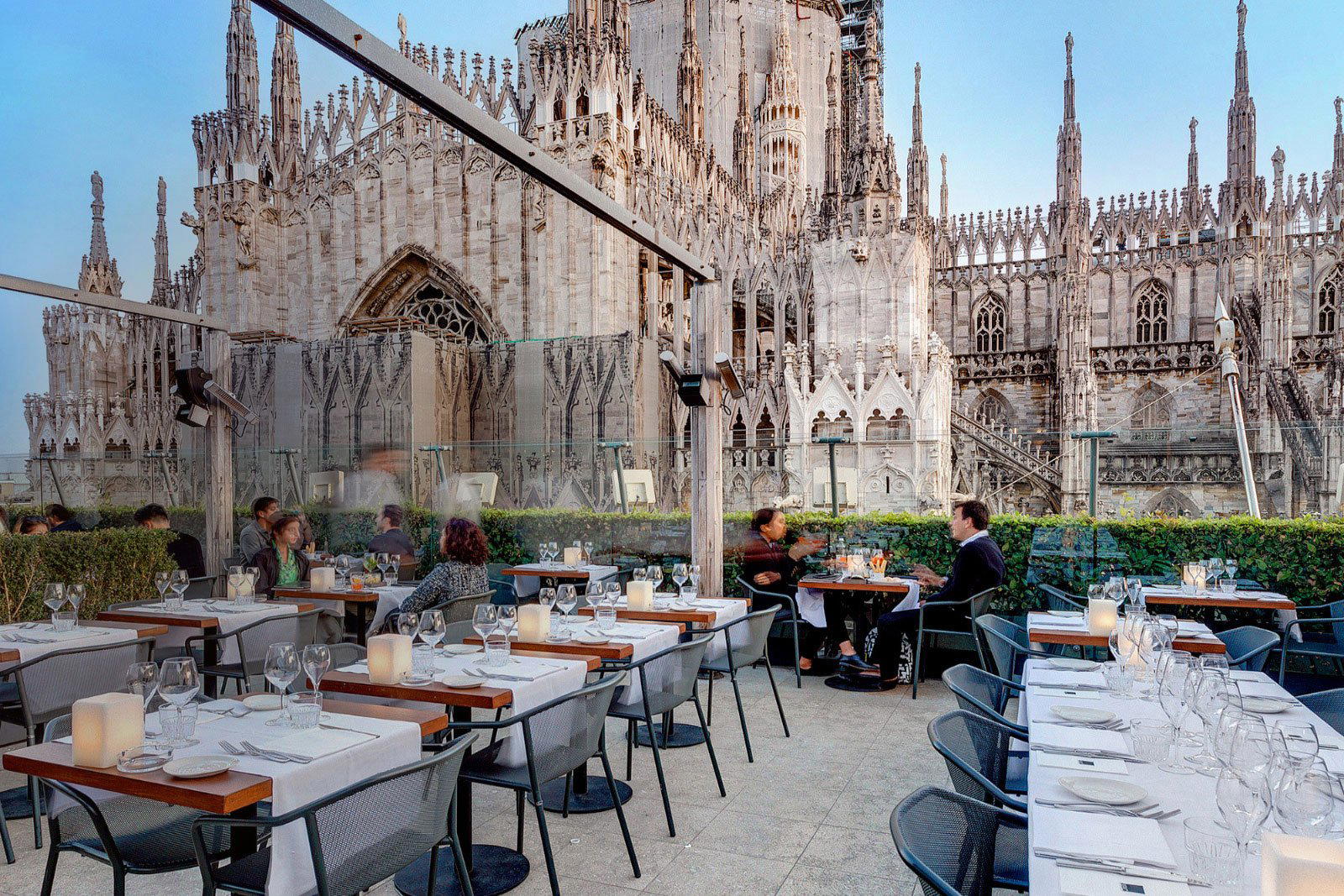
Where the Duomo's Shadow Meets the Dining Room
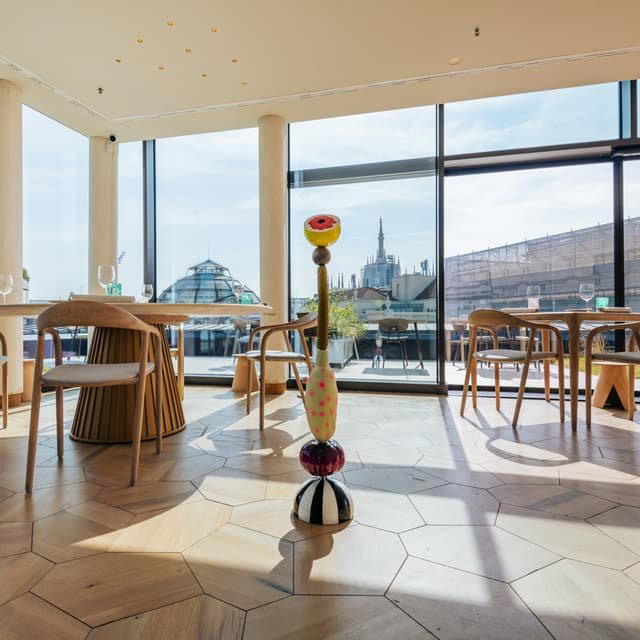
Via Santa Radegonda runs a short block from Milan's cathedral square, close enough that the Duomo's upper spires are visible at the street's end. This is not incidental geography. The centro storico addresses signal something specific in Milan's restaurant hierarchy: they sit at the intersection of maximum footfall and maximum expectation, places where the city's business visitors, cultural tourists, and serious diners converge at the same table. Restaurants that hold addresses here compete not on accessibility, everyone can find them, but on whether they offer something substantive enough to justify the location's implied premium. Maio Restaurant is a modern Italian restaurant in Milan, with a price point around $50 per person and views toward the Duomo.
Milan's high-end dining corridor has consolidated around a recognisable tier. Enrico Bartolini anchors the creative end of that spectrum; Cracco in Galleria occupies the theatrical centre; Andrea Aprea and Seta represent the modern Italian strand with Michelin validation. Maio Restaurant sits within that competitive geography, where the question every new or emerging address must answer is not simply whether the food is good, but what position it occupies relative to the comparable set already in place.
The Sustainability Frame: How Ethical Sourcing Shapes Milan's Restaurant Conversation
Across Italy's serious dining scene, the conversation around environmental responsibility has moved from marketing language to operational reality. At Atelier Moessmer Norbert Niederkofler in Brunico, the Cook the Mountain philosophy has turned alpine sourcing into a multi-Michelin-starred discipline. At Osteria Francescana in Modena, Massimo Bottura's Food for Soul initiative has given sustainability a cultural profile that extends well beyond any individual menu. These are benchmarks, and they matter because they have raised what it means for an Italian restaurant to make a credible claim about provenance.
In Milan specifically, that pressure is felt differently than in the countryside. Urban kitchens cannot point to kitchen gardens visible from the dining room or direct relationships with farms on the same hillside. They must instead build sourcing networks, make deliberate decisions about supply chains, and communicate those decisions in ways that hold up to scrutiny from a dining public that has grown steadily more informed. Waste reduction, nose-to-tail and root-to-stem approaches, and relationships with small-scale producers willing to operate on shorter contracts and lower volumes are the practical levers available to a city kitchen serious about this territory.
Maio's position on Via Santa Radegonda places it inside that conversation. The address itself is a statement of intent: this is not a restaurant hiding in a peripheral neighbourhood where low rents allow for low-margin sustainable sourcing without commercial pressure. Operating in the centro storico with a commitment to environmental responsibility requires that both the sourcing and the cooking carry enough weight to justify the economics. Across Italy's decorated addresses, from Dal Pescatore in Runate to Uliassi in Senigallia, the restaurants that have made sustainability central to their identity have done so by making it inseparable from the cooking, not a separate ethical statement appended to the menu.
Milan's Ethical Dining Tier: What Distinguishes the Serious Operators
The distinction between restaurants that talk about sustainability and those that have built it into their supply chain is visible in several ways. Menus that rotate genuinely with the season, rather than performing seasonality with token adjustments, are one signal. Another is the presence of lesser-known cuts, less commercially attractive fish, and vegetable preparations that require more kitchen labour to make compelling precisely because they start from less glamorous raw material. At Piazza Duomo in Alba, Enrico Crippa's hyper-local Piedmontese sourcing has become a template for what region-rooted cooking can achieve at the highest level. At Le Calandre in Rubano, the Alajmo family's long track record includes ongoing investment in producer relationships that predate the current sustainability conversation by decades.
These references matter not as a hierarchy to slot Maio into, but as evidence that the Italian fine dining circuit has established real precedents for what ethical sourcing looks like in practice. The question for any Milan address entering this space is where it sits on the spectrum between genuine operational commitment and the softer version, where sourcing language decorates a kitchen that is otherwise operating conventionally.
Among Milan's own dining addresses, Verso Capitaneo has carved out space in the creative tier with a similar interest in ingredient integrity. Internationally, the template for combining technical ambition with supply chain discipline is visible at restaurants like Le Bernardin in New York City, where sourcing rigour and culinary precision have operated in parallel for years, and at Atomix in New York City, where the tasting format is built around the specificity of provenance. The conversations happening across these addresses have a common thread: sustainability is most credible when it is a cooking decision, not a communications one.
The Centro Storico Dining Calculation
Booking a table at a Via Santa Radegonda address is a different calculation than booking at a neighbourhood restaurant in Navigli or Isola. The centro storico premium is real, and it is felt both in price and in the profile of the room on any given evening. Business dinners, design week bookings, and post-Scala evenings all flow through this corridor, creating a dining room that must function across several different modes simultaneously. The serious operators in this zone have learned to hold their culinary identity steady across that range of guest expectations, which is harder than it sounds when the table next to you is celebrating a corporate deal and the table on the other side is working through a tasting menu with the focused attention of a restaurant critic.
For comparable reference points across Italy's broader fine dining map, Reale in Castel di Sangro, Quattro Passi in Marina del Cantone, and Enoteca Pinchiorri in Florence each demonstrate how Italian fine dining has developed distinct regional identities that resist easy categorisation. Casa Perbellini 12 Apostoli in Verona offers another data point: a historic address that has been repositioned within the contemporary fine dining conversation without losing its sense of place. These are the peer coordinates for understanding what Maio is operating alongside, even when operating in a different geography.
Planning Your Visit
Maio Restaurant is located at Via Santa Radegonda, 3, in Milan's first municipality, a short walk from Piazza del Duomo and served by the Duomo metro station on both Line 1 and Line 3. The centro storico location means the immediate area is dense with visitors, particularly during Milan's design week in April and fashion weeks in February and September, when competition for tables across the neighbourhood's better restaurants intensifies considerably. Approaching any serious Milan address during those periods without an advance booking is a routine miscalculation.
At a Glance
Comparable venues nearby, for context on price, style, and recognition.
| Venue | Cuisine | Price | Notes |
|---|---|---|---|
| Maio RestaurantThis venue — the venue you are viewing | Duomo, Modern Italian with Duomo Views | $$$ | Not listed |
| Antica Trattoria della Pesa | Not listed | $$$ | Porta Garibaldi - Porta Nuova, Traditional Lombard Trattoria |
| Barzac • Tradizione Piacentina | Not listed | $$$ | Porta Garibaldi - Porta Nuova, Traditional Piacenza-Emilian |
| Via Pastrengo | Isola, Modern Italian Trattoria | $$$ | Not listed |
| Ristorante Caruso | Not listed | $$$ | Brera, Modern Neapolitan-Milanese Bistrot |
| Ristorante Limone | Not listed | $$$ | Stazione Centrale - Ponte Seveso, Modern Italian with Seafood and Pizza |
Continue exploring
More in Milan
Restaurants in Milan
Browse all →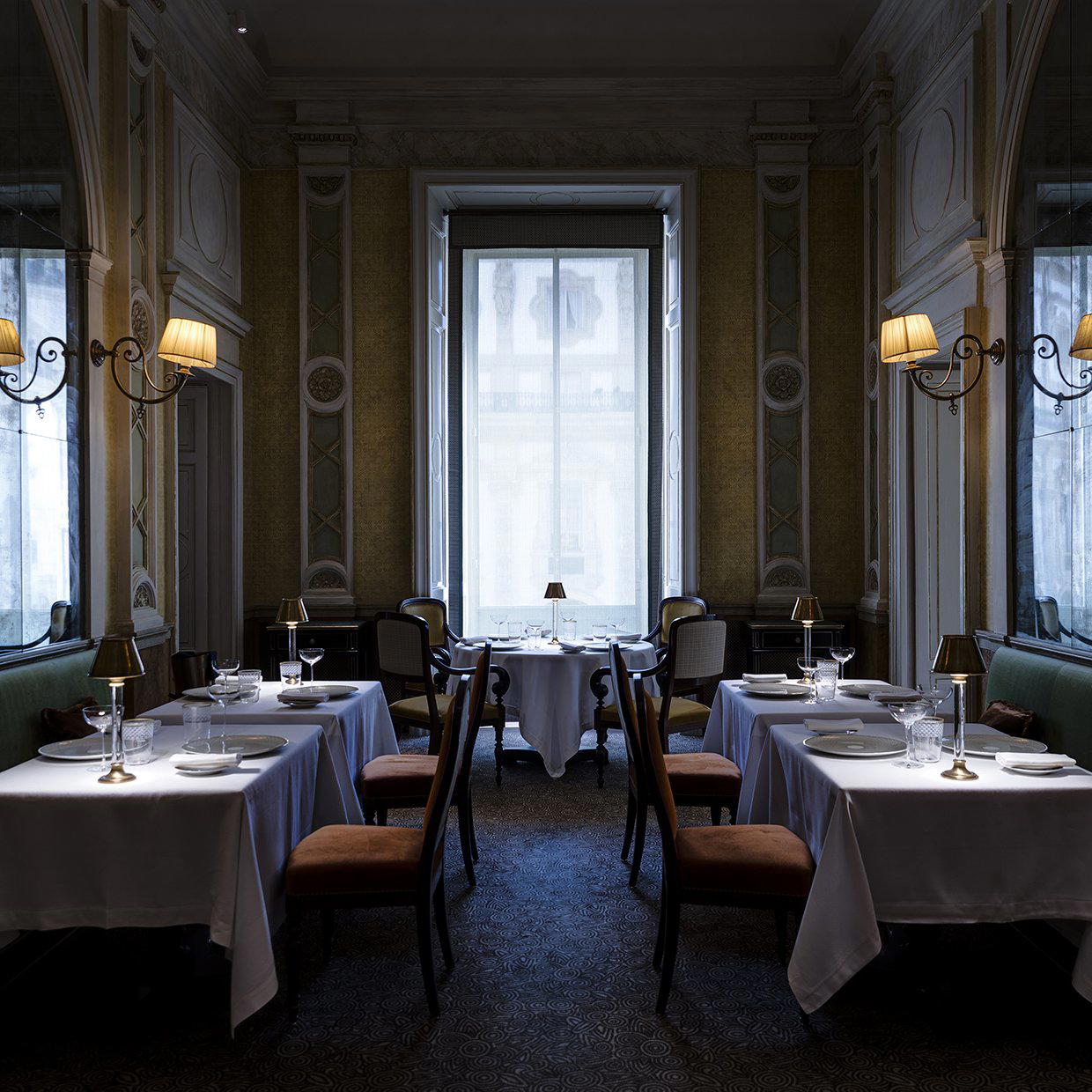
Bars in Milan
Browse all →
Hotels in Milan
Browse all →
Wineries in Milan
Browse all →
At a Glance
- Elegant
- Modern
- Sophisticated
- Scenic
- Date Night
- Special Occasion
- Business Dinner
- Rooftop
- Terrace
- Panoramic View
- Extensive Wine List
- Local Sourcing
- Skyline
Current opening hours
- Monday
- 11:30 AM–12 AM
- Tuesday
- 11:30 AM–12 AM
- Wednesday
- 11:30 AM–12 AM
- Thursday
- 11:30 AM–12 AM
- Friday
- 11:30 AM–12 AM
- Saturday
- 11:30 AM–12 AM
- Sunday
- 11:30 AM–12 AM
Hours can change for holidays and private events. Last verified .
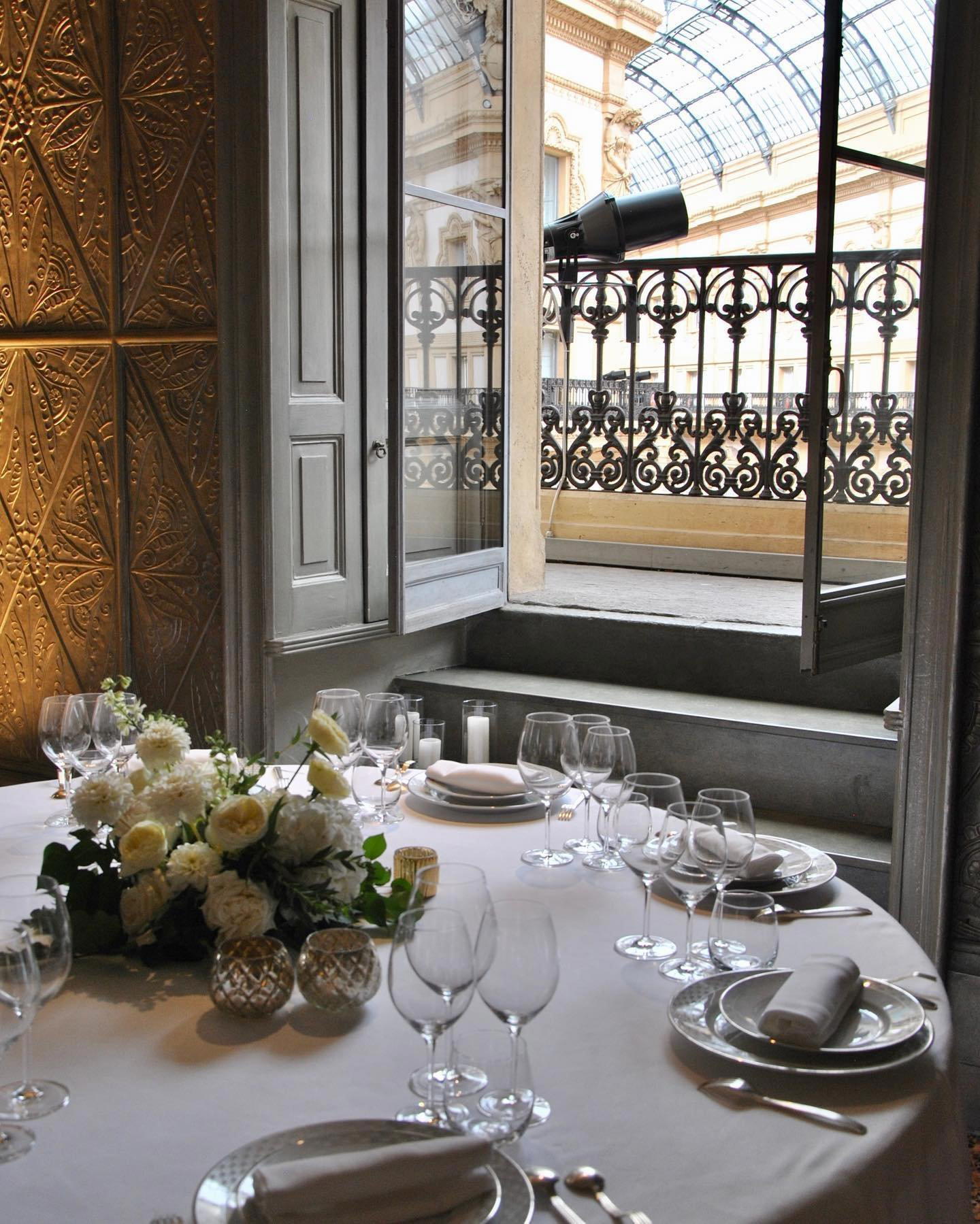
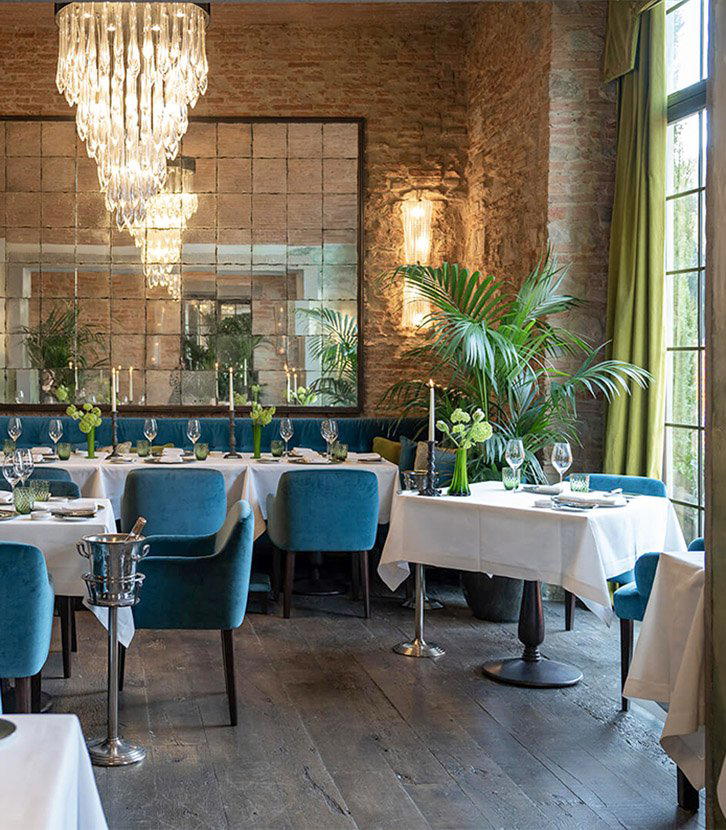
Modern, warm, and elegant dining room with an exclusive terrace overlooking the Duomo, featuring artistic touches and a cosmopolitan atmosphere.