
Our verdict
Crystal Jade sits in the heart of Causeway Bay's Times Square complex, part of a Singapore-origin chain that has become one of the most recognised names in Chinese dining across Asia. The brand's Hong Kong presence draws on Cantonese and Shanghainese traditions, from xiao long bao to roast meats, serving a crowd that ranges from local regulars to visitors cross-referencing every dim sum option in the district.

Pearl is the En Primeur Club membership app, where members save venues, book tables and use the concierge.
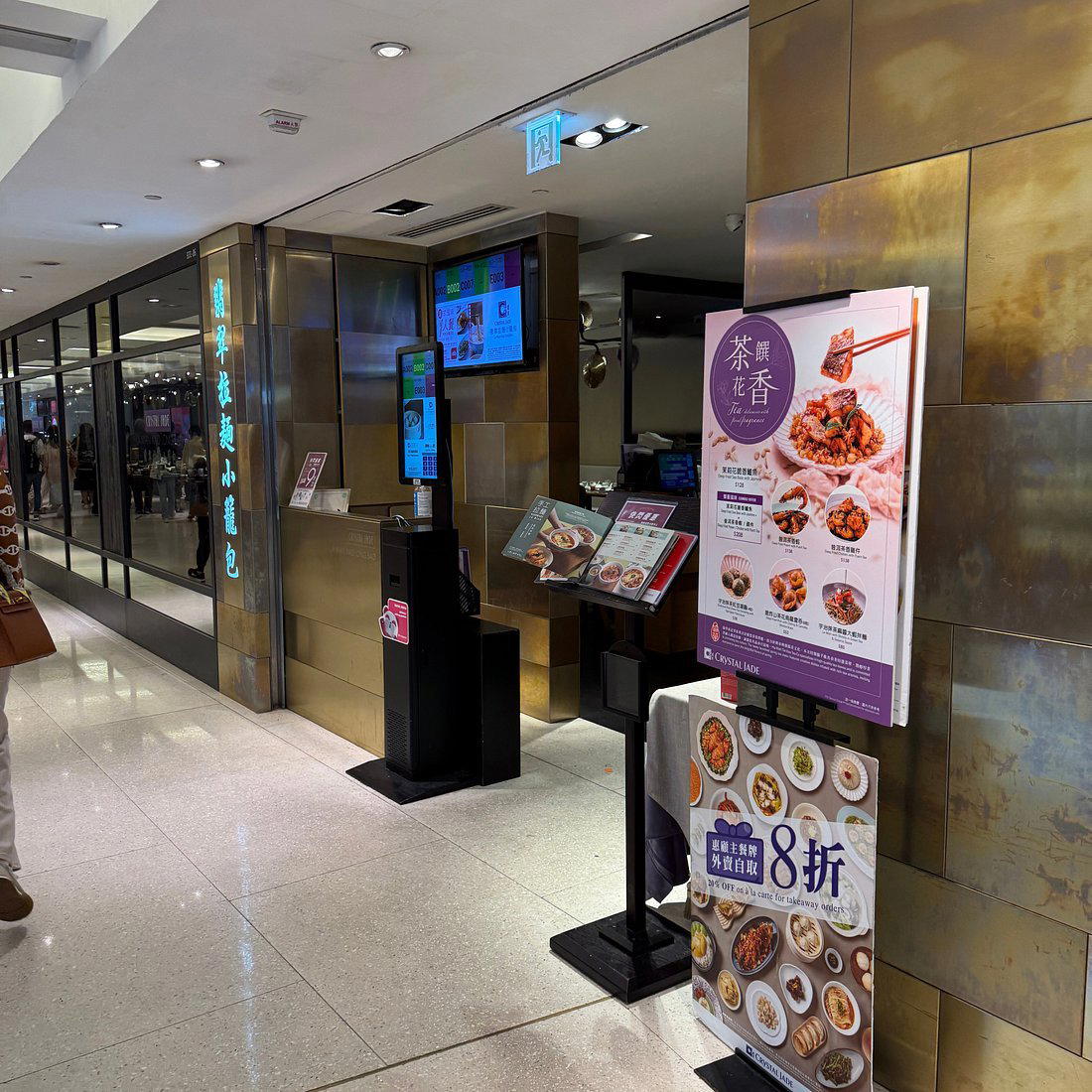
The menu
What to order
- Xiao long bao
- Dan dan noodles
- La mian
Causeway Bay and the Logic of the Mall Dining Tier
Causeway Bay is not where Hong Kong's most decorated kitchens operate. That gravitational pull belongs to Central, where restaurants like Amber, Caprice, and 8 1/2 Otto e Mezzo Bombana anchor a different kind of dining conversation. Causeway Bay operates on a different premise: high footfall, genuine local appetite, and the kind of reliability that fills a table at noon on a Tuesday. Times Square, the mall complex on Matheson Street where Crystal Jade occupies unit B221A on the second floor, is one of the district's clearest expressions of that logic. You arrive through an atrium of escalators and retail, which either reads as context-free or as quintessentially Hong Kong depending on your orientation.
The Singaporean chain model that Crystal Jade represents has shaped Chinese dining across much of urban Asia over the past three decades. Founded in Singapore in 1991, the group expanded by replicating a kitchen standard across multiple cities rather than betting on a single destination address. That approach places Crystal Jade in a distinct competitive tier: above street-level cha chaan teng and workaday dim sum houses, but operating with a different value proposition than the city's formal Cantonese fine-dining rooms. For comparison, Forum in Wan Chai represents the older guard of Cantonese prestige dining. Crystal Jade sits further down the formality register while still trading on recognisable culinary craft.
What the Menu Covers and Why It Matters in Context
The cooking at Crystal Jade draws from two distinct Chinese traditions: Cantonese, which is the dominant vernacular of Hong Kong dining, and Shanghainese, which introduces a different set of reference points. Xiao long bao, the soup-filled Shanghainese dumpling that has become a benchmark dish across the region, appears on most Crystal Jade menus and functions as a quality signal for the brand's kitchen consistency. In Hong Kong, where the bar for hand-made dim sum is set by decades of yum cha culture, any restaurant choosing to compete in that category is inviting direct comparison with the Cantonese specialists who have spent generations refining the form.
Roast meats, another anchor of Cantonese dining identity, also feature. The tradition of char siu, siu yuk, and roast goose runs deep across the city, from casual roast-meat shops in Sham Shui Po to the more refined interpretations found in hotel Cantonese rooms. Crystal Jade positions its roast meat program as part of a broader menu rather than a specialist focus, which is consistent with the chain's model of breadth over depth. That breadth is both the draw and the trade-off: diners can order across categories in a single sitting, but no single dish carries the singular focus you find at a venue built around one culinary discipline. For the kind of city-wide dining perspective that covers specialist options across all of Hong Kong's neighbourhoods, our full Hong Kong restaurants guide maps the range.
Causeway Bay at Table: The Neighbourhood as Context
Times Square's address on Matheson Street puts Crystal Jade within walking distance of one of Hong Kong Island's densest retail and residential concentrations. The neighbourhood draws office workers at lunch, shoppers through the afternoon, and families in the evening. That demographic spread shapes the pace of the room: faster than a formal tasting-menu setting, more purposeful than a leisurely hotel breakfast. The mall environment means the approach to the restaurant involves escalators and retail corridors rather than a street entrance, which concentrates the experience inside the dining room itself rather than distributing it across an approach.
The contrast with other Hong Kong dining districts is useful for orientation. Central and Sheung Wan attract a higher proportion of expense-account and destination diners; Causeway Bay runs on local habit. The distinction matters when choosing where to eat based on atmosphere as much as food. Diners seeking the heightened precision of something like Ta Vie or the grand room formality of Le Salon de Thé de Joël Robuchon in Central's IFC mall are looking at a different register entirely. Crystal Jade at Times Square is a neighbourhood-serving operation with regional brand recognition, which in Hong Kong's context carries its own kind of credibility.
The city's dining geography has shifted considerably over the years. Some formerly prominent venues have closed or relocated. The former Jumbo Floating Restaurant in Aberdeen is perhaps the most symbolic of those departures. The broader restaurant map still runs from hyper-local specialists like Block 18 Doggie's Noodle in Yau Tsim Mong and Lei Garden in Sha Tin to neighbourhood staples further afield such as Chin Sik in Tsuen Wan and Hoi Tin Garden in Tuen Mun. Crystal Jade in Causeway Bay sits within that wider grid as a mid-tier anchor, reliable and accessible, in one of Hong Kong Island's most active dining corridors.
Planning Your Visit
Times Square is directly accessible from Causeway Bay MTR station, making Crystal Jade one of the more direct restaurant addresses on Hong Kong Island for visitors staying in Wan Chai, Admiralty, or the eastern hotel belt. The mall setting means the venue operates within shopping-centre hours rather than the late-night schedule of some standalone Cantonese restaurants. Lunch service, particularly on weekends when dim sum demand spikes across the city, is the highest-pressure period for Chinese restaurants in this tier; a weekday visit or an early dinner sitting avoids the longest waits.
Frequently asked questions
What dish is Crystal Jade famous for?
Crystal Jade built much of its regional reputation on Shanghainese dim sum, with xiao long bao as the most-referenced dish across the brand's locations. In Hong Kong, where Cantonese dim sum sets a high local standard, the kitchen's ability to deliver consistent Shanghainese dumpling work across a multi-city chain format is the clearest signal of what the brand is aiming for. Roast meats and a broader Cantonese menu round out the offering, but the soup dumplings remain the most discussed reference point.
What is the ideal way to book Crystal Jade in Hong Kong?
The most reliable approach is contacting the Times Square mall guest services for current restaurant contact details, or visiting during a weekday off-peak window when walk-in availability is generally higher. Weekend lunch is the most competitive period for Chinese restaurants across Hong Kong, so planning around that constraint is advisable.
What is the standout thing about Crystal Jade?
The chain's ability to maintain a recognisable culinary standard across multiple Asian cities is what distinguishes Crystal Jade from both independent local operators and less consistent mall-food-court alternatives. In Hong Kong's Causeway Bay, that consistency functions as a trust signal for diners who want a known kitchen output in a neighbourhood better known for retail than for destination dining.
Can Crystal Jade accommodate dietary restrictions?
Chinese restaurant menus in Hong Kong generally carry a range of vegetable-based dishes, steamed preparations, and options that can be modified on request, but the extent of accommodation varies by kitchen. Contacting the restaurant directly through the Times Square mall directory before visiting is the most practical approach for diners with specific requirements.
Is Crystal Jade in Causeway Bay part of the same group as other Crystal Jade locations across Asia?
Yes. Crystal Jade is a Singapore-founded restaurant group established in 1991 that operates across multiple Asian cities including Singapore, Shanghai, and Hong Kong. The Causeway Bay Times Square location is part of that wider network, which means the kitchen operates within a shared brand standard rather than as an independent local restaurant. For diners familiar with Crystal Jade from other cities, the Hong Kong outlet offers a broadly comparable menu framework, though specific dishes and pricing can vary by location.
Cost Snapshot
A quick snapshot of similar venues for side-by-side context.
| Venue | Cuisine | Price | Awards | Notes |
|---|---|---|---|---|
| Crystal JadeThis venue (the venue you are viewing) | Modern Shanghainese with Handmade Noodles & Dim Sum | $20–30 | Not listed | Not listed |
| Ta Vie | Modern French-Japanese Fine Dining | $300–500 | 3 Michelin Stars · World's 50 Best #68 | Japanese - French, Innovative |
| 8 1/2 Otto e Mezzo Bombana (Hong Kong) | 3 Michelin-Star Italian Fine Dining | $200–300 | 3 Michelin Stars · World's 50 Best #94 | Italian |
| Estro | Modern Neapolitan Italian | $150–200 | 1 Michelin Star · World's 50 Best #32 | Wine Bar, Italian |
| Feuille | Modern Vegetable-Forward French | $200–300 | 1 Michelin Star · World's 50 Best #93 | French Contemporary |
| Mono | Modern Latin American Fine Dining | $150–200 | 1 Michelin Star · World's 50 Best #46 | Latin American |
Recognition history
Dated appearances from independent guides and award organizations, with the underlying list record or original source where available.
Opinionated About Dining Top Restaurants in Asia Recommended
Opinionated About Dining
Continue exploring
More in Hong Kong
Restaurants in Hong Kong
All restaurants in Hong Kong →
Bars in Hong Kong
All bars in Hong Kong →
Hotels in Hong Kong
All hotels in Hong Kong →
Wineries in Hong Kong
All wineries in Hong Kong →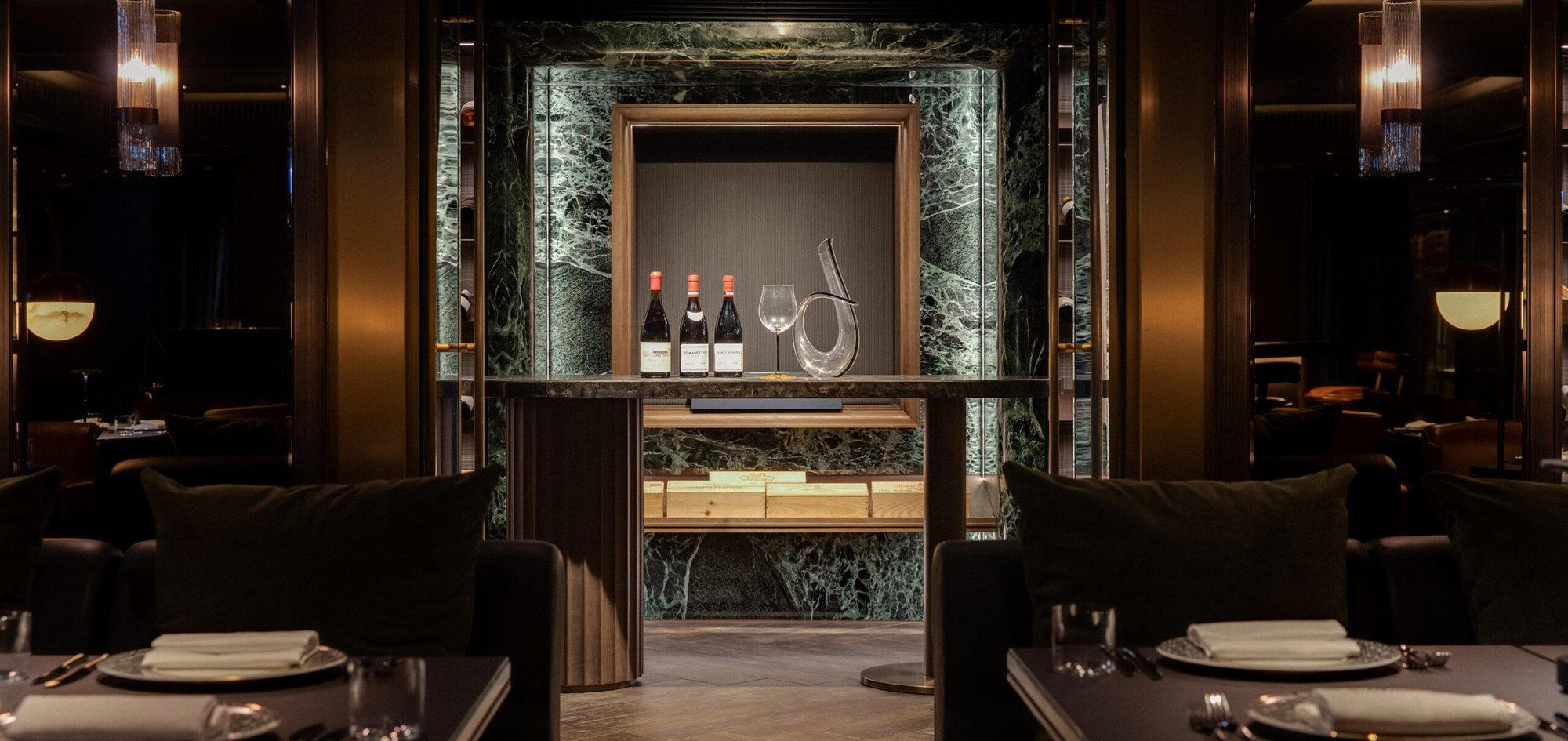
Details
- Modern
- Elegant
- Family
- Group Dining
- Casual Hangout
- Open Kitchen
- A La Carte
- Vegetarian Friendly
Current opening hours
- Monday
- 11 AM–10 PM
- Tuesday
- 11 AM–10 PM
- Wednesday
- 11 AM–10 PM
- Thursday
- 11 AM–10 PM
- Friday
- 11 AM–10 PM
- Saturday
- 11 AM–10 PM
- Sunday
- 11 AM–10 PM
Hours can change for holidays and private events. Hours as of .
Clean, slick, and modern interiors offering a comfortable and familiar atmosphere.