On Grunewaldstraße in Schöneberg, Lagalante occupies a quieter register than Berlin's more celebrated fine-dining addresses, positioning itself among the city's considered, course-driven rooms rather than its high-visibility Michelin circuit. The address rewards those tracking Berlin's mid-tier creative dining scene, where format discipline and progression matter more than headline credentials.
Pearl is the En Primeur Club membership app — saves, bookings, and concierge access live there. Same editors, same standards.
- Address
- Grunewaldstraße 82, 10823 Berlin, Germany
- Phone
- +493098375296
- Website
- lagalante-restaurant.de
- Directions
- Get directions
 Saves & bookings on Pearl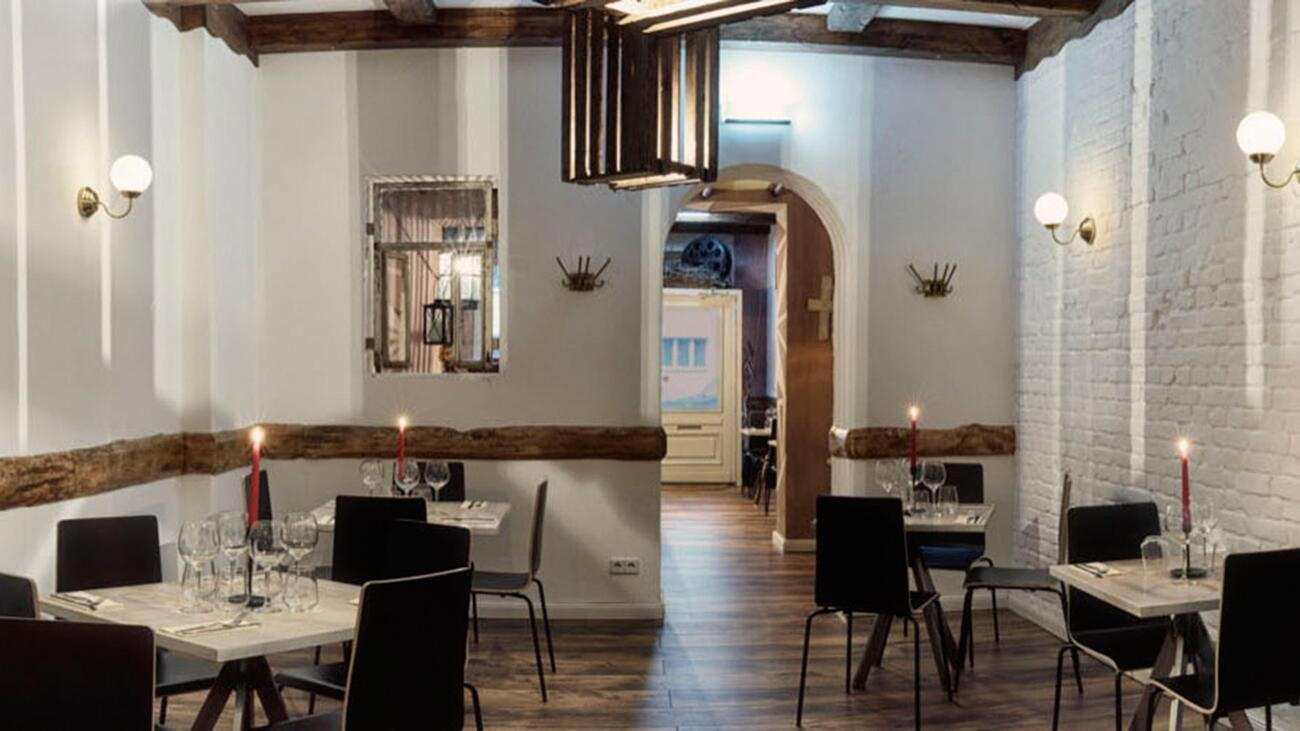
Schöneberg's Quieter Fine-Dining Register
Berlin's fine-dining geography has never been direct. The city's most-discussed rooms, Rutz, Nobelhart & Schmutzig, FACIL, cluster around Mitte and Kreuzberg, absorbing most of the critical oxygen. Schöneberg operates at a different frequency: fewer press cycles, quieter streets, and a dining culture that rewards patience over hype. Grunewaldstraße 82 sits in that zone. Lagalante is a restaurant in Berlin, in the Schöneberg district, serving Modern Italian Fine Dining at around $40 per person.
The neighbourhood context matters here. Schöneberg's restaurant stock runs from long-established neighbourhood institutions to newer, more format-conscious rooms that have opened as rents pushed operators westward from Mitte. Lagalante belongs to the latter pattern, a venue where the physical approach, along a residential stretch of Grunewaldstraße, does little to signal what waits inside. That gap between exterior modesty and interior ambition is a recurring feature of Berlin dining at this tier.
How Berlin Structures a Progressive Menu
The tasting-menu format has become the dominant grammar of serious Berlin dining. At the upper end, restaurants like CODA Dessert Dining have pushed the format into specialist territory, in that case, inverting the savoury-to-sweet arc entirely. More conventionally, rooms in Berlin's €€€€ tier build their menus around a linear progression: snacks and amuse-bouche calibrate the palate, mid-course proteins carry the structural weight, and the transition into sweets determines whether the meal coheres or simply ends. The craft lies in pacing and contrast between courses rather than in individual dish showmanship.
Lagalante operates within this broader Berlin context without the Michelin markers that define the city's most-discussed multi-course addresses. That positioning places it alongside rooms where the meal's arc is the primary editorial statement, where what the kitchen chooses to do between the first snack and the final sweet reveals more about intent than any single plate. For diners accustomed to tracking progressive menus in other German cities, the format here will feel familiar in structure while reflecting Berlin's particular preference for restraint over baroque complexity. Germany's wider fine-dining circuit, from Aqua in Wolfsburg to Schwarzwaldstube in Baiersbronn and Vendôme in Bergisch Gladbach, demonstrates how differently kitchens can interpret the tasting sequence within a shared national tradition.
The Meal as Architecture
In rooms that prioritise progression, the opening sequence does diagnostic work. Snacks and early courses establish whether a kitchen is thinking about the whole meal or performing individual moments. Berlin's stronger tasting menus, at addresses like FACIL or, further afield in Germany, JAN in Munich and ES:SENZ in Grassau, demonstrate how the opening courses function as a kind of promise: flavour intensity, textural register, and portion weight all set expectations that the remainder of the menu either fulfils or contradicts.
Mid-course sequencing is where most progressive menus either earn or lose their structural argument. The transition from lighter, acid-driven courses into richer proteins, and then the pivot back toward sweetness in the final third, requires a kitchen to think about cumulative effect rather than discrete plates. This is the architecture of the format, less visible to casual diners but immediately legible to those who eat this way regularly. At Lagalante's address in Schöneberg, the room's relative quiet works in the format's favour: without the ambient noise of a full Mitte dining room, the meal's rhythm is easier to follow.
The dessert sequence in Berlin's serious rooms has grown more ambitious over the past decade, partly under the influence of venues like CODA, which has reframed what a closing arc can do. Even rooms that operate within more conventional savoury-forward structures have absorbed this shift, treating the transition into sweets as a moment requiring as much compositional thought as the protein courses that precede it.
Placing Lagalante in Berlin's Competitive Set
Berlin's multi-course dining tier breaks into two visible cohorts. The first is Michelin-marked: Rutz, Nobelhart & Schmutzig, FACIL, Restaurant Tim Raue, rooms that carry institutional credentialing and book accordingly. The second operates without that scaffolding but within the same format logic: fixed menus, considered progression, and a room designed to support a longer, quieter meal. Lagalante sits in the second cohort, where the absence of a star does not indicate a failure of ambition so much as a different competitive orientation.
For comparison within Germany's broader fine-dining geography, rooms like Restaurant Haerlin in Hamburg, Schanz in Piesport, Bagatelle in Trier, and Victor's Fine Dining by Christian Bau in Perl demonstrate how the tasting-menu format adapts to different regional and audience contexts while maintaining the same structural grammar. Internationally, rooms like Le Bernardin in New York City and Atomix in New York City show how the format's pacing logic travels across culinary traditions. Waldhotel Sonnora in Dreis represents the more rural German interpretation of the same ethos. Lagalante is a Berlin-specific expression of this wider format discipline, operating in a city where the audience for progressive menus is large enough to support multiple rooms at different price and recognition levels.
Planning a Visit
Grunewaldstraße 82 is reachable from central Berlin via the S-Bahn to Schöneberg or Innsbrucker Platz, placing it within reasonable distance of Mitte but clearly outside the tourist-dining circuit. For diners building a Berlin itinerary around multi-course rooms, this address works as a lower-pressure counterpoint to the city's more heavily booked Michelin rooms, a place to experience the format without the three-month wait that Nobelhart & Schmutzig or Rutz require.
At a Glance
Comparable venues nearby, for context on price, style, and recognition.
| Venue | Cuisine | Price | Notes |
|---|---|---|---|
| LagalanteThis venue — the venue you are viewing | Schoneberg, Modern Italian Fine Dining | $$$ | Not listed |
| Osteria Culaccino | Charlottenburg, Italian Fine Dining | $$$ | Not listed |
| Pascarella | Not listed | $$$ | Charlottenburg, Modern Sicilian-Italian with Dry-Aged Steaks |
| Hostaria del Monte Croce | Kreuzberg, Traditional Italian Trattoria | $$$ | Not listed |
| Caravaggi Bistro | Not listed | $$$ | Prenzlauer Berg, Contemporary Italian Bistro with Natural Wines |
| Il Sorriso | Tiergarten, Authentic Italian | $$$ | Not listed |
Continue exploring
More in Berlin
Restaurants in Berlin
Browse all →
Bars in Berlin
Browse all →
Hotels in Berlin
Browse all →

At a Glance
- Elegant
- Cozy
- Modern
- Sophisticated
- Date Night
- Special Occasion
- Group Dining
- Open Kitchen
- Extensive Wine List
- Local Sourcing
Current opening hours
- Monday
- Closed
- Tuesday
- 5–10:30 PM
- Wednesday
- 5–10:30 PM
- Thursday
- 5–10:30 PM
- Friday
- 5–10:30 PM
- Saturday
- 10 AM–2:30 PM, 5–10:30 PM
- Sunday
- 1–10 PM
Hours can change for holidays and private events. Last verified .
Cozy, stylish, and welcoming with a modern yet refined atmosphere, attentive service, and beautiful food presentation.