
Amakusa Daiou Senmon Ten Tosaka belongs to Kumamoto’s ingredient-led yakitori tier, where the point is not variety for its own sake but a close reading of Amakusa Daio chicken. The counter format, Tabelog 100 Yakitori WEST selections from 2023 to 2025, and sake-shochu-wine drinks focus put it in a narrower, more serious bracket than casual skewer shops.
Pearl is the En Primeur Club membership app — saves, bookings, and concierge access live there. Same editors, same standards.
- Address
- 7-35 Kamitoricho, Chuo Ward, Kumamoto, 860-0845, Japan
- Phone
- +81 96-325-8323
- Website
- tabelog.com
- Directions
- Get directions
 Saves & bookings on Pearl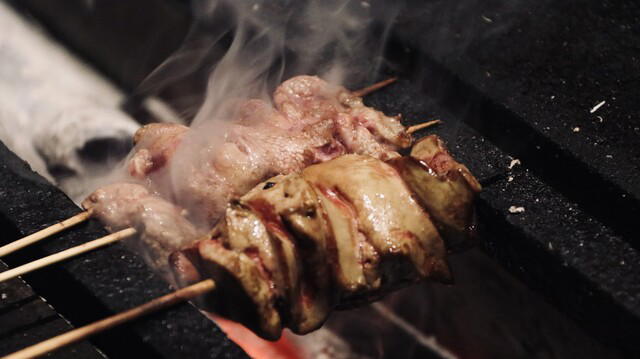
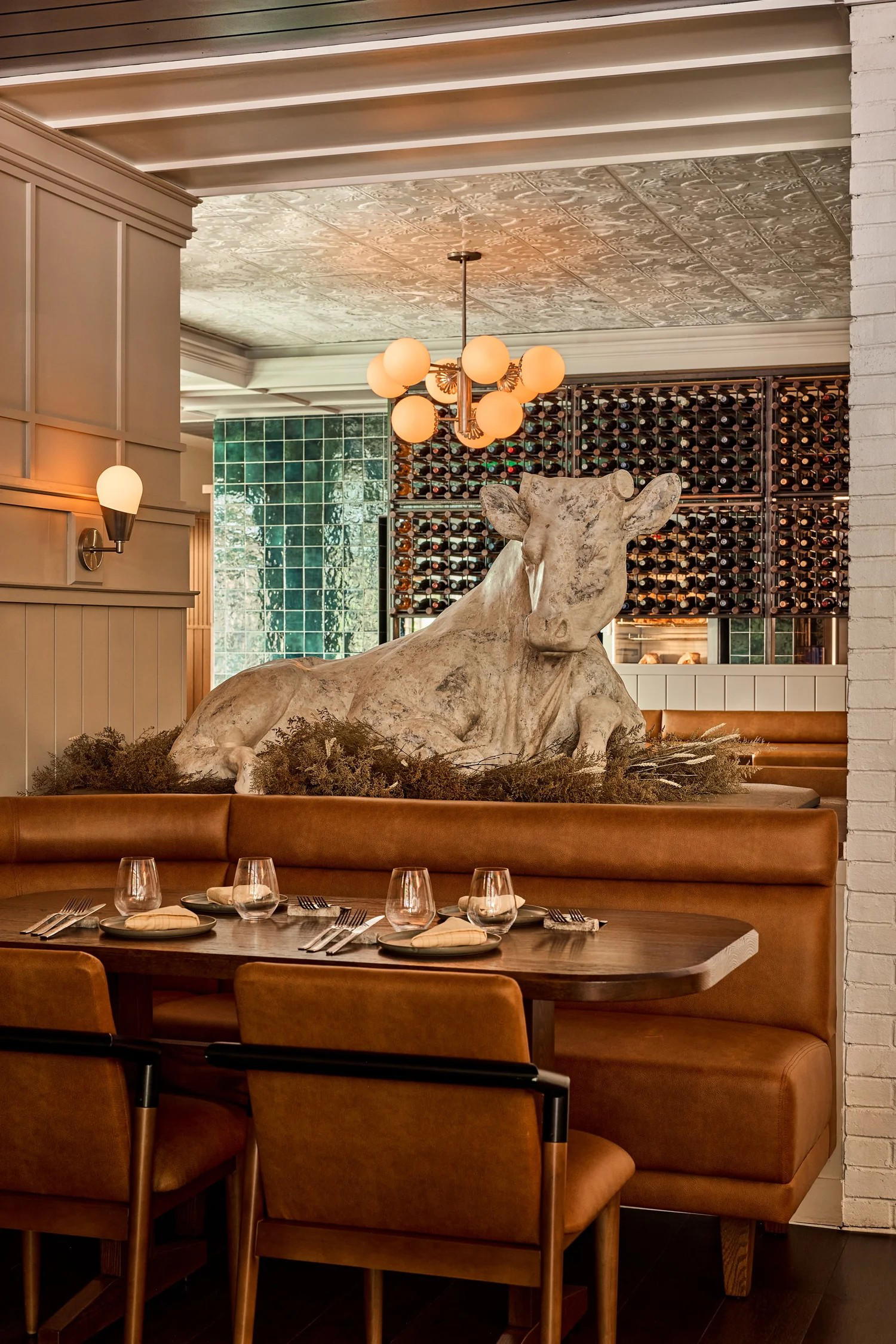
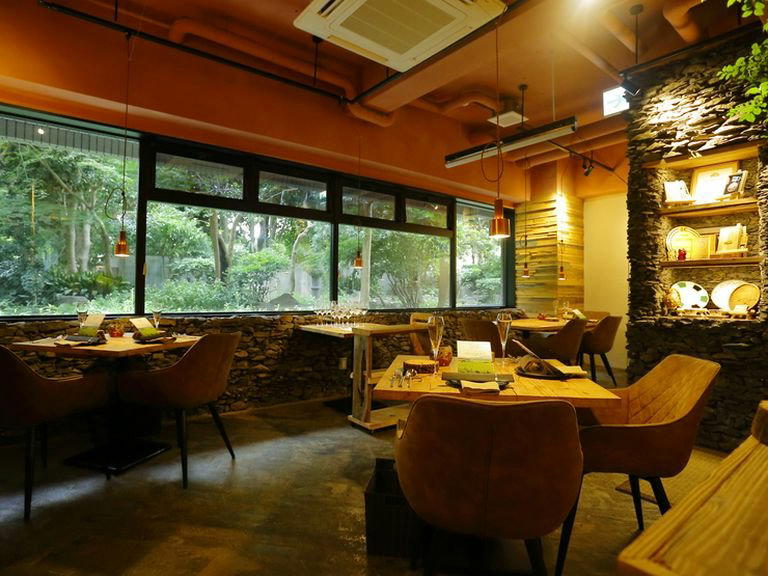
The room signals its intent before the first skewer reaches the counter: compact, counter-led, and built around watching heat do precise work. Kumamoto is not short on casual grilled chicken, but the sharper end of yakitori in Kyushu has moved toward ingredient identity, smaller rooms, and course-led pacing. Amakusa Daiou Senmon Ten Tosaka sits in that lane, using Kumamoto’s Amakusa Daio chicken as the organizing principle rather than treating chicken as a generic vehicle for tare and smoke.
Amakusa Daio chicken gives this Kumamoto counter its reason to exist
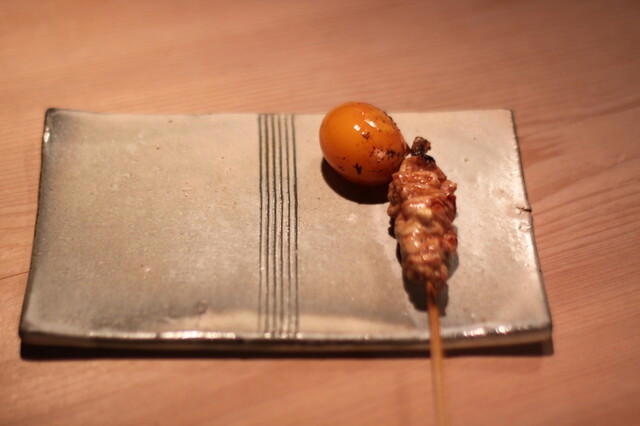
Yakitori changes character when the bird is not anonymous. Amakusa Daio, associated with Kumamoto Prefecture, gives the meal a regional anchor that matters in a city better known to many travellers for horse meat, shochu, and castle-town dining than for destination skewer counters. The specialization narrows the frame: the meal is about cuts, texture, fat, charcoal management, and pacing rather than a broad izakaya menu. That makes the restaurant more useful to a serious eater than a general-purpose dinner stop.
The recognition supports that reading. Selection for Tabelog 100 Yakitori WEST in 2023, 2024, and 2025 places the counter inside a western Japan skewer conversation rather than only a Kumamoto one. Its Tabelog score of 3.77 is another signal of local and regional attention, but the stronger evidence is the repeated category selection: yakitori lists reward consistency in a format where overcooking by seconds changes the result.
Price also clarifies the competitive set. In Kumamoto, a meal here sits above mid-range local restaurants such as Yakiniku Sudou Kumamoto honten and China Sichuan Togen, while below the higher spend associated with Tensho Katahei. That middle-high band is where ingredient sourcing and counter craft have to justify the commitment. The comparison is useful because yakitori can look casual from the outside while operating with the discipline of a tasting-menu format.
A 10-seat counter turns yakitori into a controlled sequence
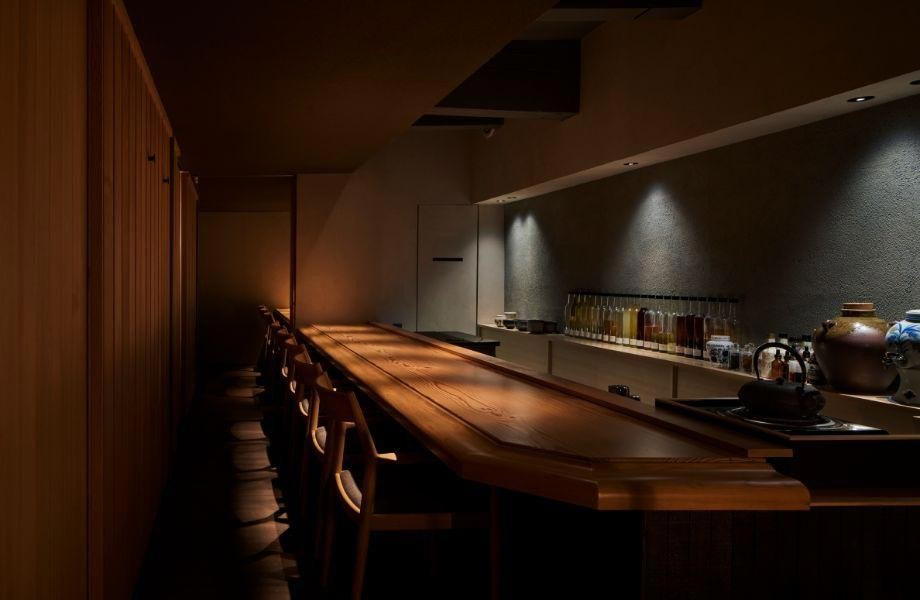
The format is small enough to make timing part of the experience. Ten counter seats, split across two L-shaped counters, create a room where the grill is not background theatre but the service engine. This is the difference between eating skewers as bar food and reading yakitori as a sequence: leaner cuts, richer cuts, salt, sauce, offal or vegetable interludes if included, and drinks chosen to reset the palate. No specific skewer needs to be promised for the point to hold. In this genre, the counter’s value comes from control.
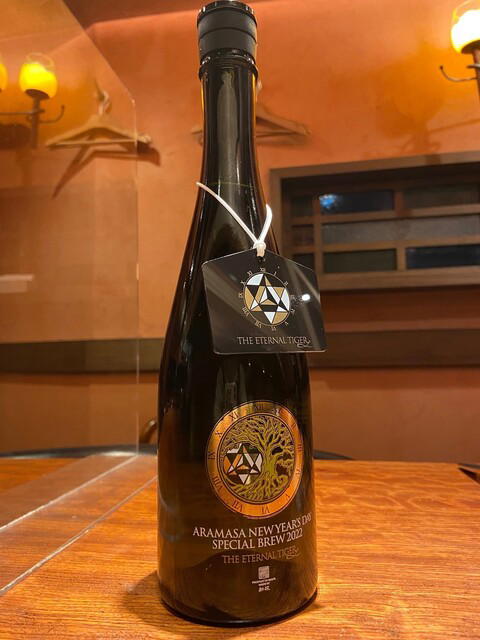
The drinks list points to Kumamoto’s wider table culture. Sake, shochu, and wine are all part of the offer, with wine treated as more than an afterthought. That matters in Kyushu, where shochu often dominates grilled food pairings. A serious yakitori counter that can handle both nihonshu and wine gives diners more range: sake for umami and salt, shochu for char and fat, wine for acidity and structure. The smarter choice depends less on status and more on how the course progresses.
Room’s counter-only nature also explains its etiquette. Strong perfume is discouraged because smoke, fat, and seasoning are part of the shared environment. Non-smoking policy and the absence of private rooms keep the focus on the grill rather than on social enclosure. This is not a banquet restaurant. It is a compact Kumamoto counter where the meal works when every guest accepts the same rhythm.
Where it fits in a sharper Kumamoto dining plan
Kumamoto’s dining scene rewards travellers who stop treating the city as a transit point for Aso or Amakusa. The centre has enough range to build a proper itinerary: contemporary dining, Chinese cooking, yoshoku, yakiniku, bars, and small specialist counters. For a broader map, start with Our full Kumamoto restaurants guide, then use category-specific planning through Our full Kumamoto hotels guide, Our full Kumamoto bars guide, Our full Kumamoto wineries guide, and Our full Kumamoto experiences guide.
Within the city, the useful contrast is not simply cuisine but spend and intent. China Sichuan Togen sits in a lower dinner band and brings a different kind of heat and structure. antica locanda MIYAMOTO, BARON, cocina uchida, and.know help show how Kumamoto has moved beyond a single local-specialty script. The yakitori counter adds another axis: regional chicken, charcoal technique, and a tight room designed for attention.
For travellers comparing Japanese specialist formats across cities, the distinction is worth keeping clear. A beef-led meal such as -Grilled beef Sukiyaki- KAMAKURA TANUKIAN 鎌倉 たぬき庵 in Kamakura, a seafood-and-charcoal address such as. 鮪と炭火焼き うお炭 秋葉原店 in Tokyo, and a Kyoto dining room like [ki:] in Kyoto answer different appetites. Casual specialists such as.cafe in Osaka, (Shoku) Vietnam in Kawasaki, [Curry Senmon Ten] Maruyama Kyoju. in Sapporo, Jōdo Saké Bar in Los Angeles, and Onigiri Time in Pasadena show the broader appeal of narrow focus, but Amakusa Daiou Senmon Ten Tosaka is narrower still: one regional bird, a small counter, and the discipline of the grill.
The editorial case is clear. Choose this meal when Kumamoto’s regional produce matters more than breadth, and when a compact yakitori sequence has more appeal than a roaming izakaya order. The restaurant’s repeated Tabelog 100 Yakitori WEST selections make it a serious regional reference point, but the deeper reason to go is the ingredient thesis: Amakusa Daio chicken gives the counter a Kumamoto accent that cannot be copied by technique alone.
Quick Comparison
Nearby venues at a similar price tier for orientation.
| Venue | Cuisine | Price | Notes |
|---|---|---|---|
| Amakusa Daiou Senmon Ten Tosaka | Omakase Yakitori with Amakusa Daio Chicken | $$$ | Kamitori / Torichosuji |
| Iroha | Traditional Kumamoto Izakaya with Horse Meat Dishes | $$ | Suizenji Park, Chuo Ward |
| 花小町 | japanese | Not listed | Kumamoto |
| Murakami | Traditional Sushi Omakase | $$$ | Chuo-ku |
| Katsuretsu Tei (勝烈亭 新市街本店) | Traditional Tonkatsu (Pork Cutlet) | $$ | Shinshigai, Chuo-ku |
| Sekka Sanbo | Handmade Soba & Sake | $$ | Chuo Ward, Kamidori / Kaminoura-dori area |
Recognition history
Dated appearances from independent guides and award organizations, with the underlying list record or original source where available.
Tabelog 100 #84 · No. 84
Tabelog · Tabelog 100 - Yakitori - WEST - 2025

At a Glance
- Intimate
- Cozy
- Lively
- Date Night
- Special Occasion
- After Work
- Solo
- Chefs Counter
- Standalone
- Natural Wine
- Sake Program
- Farm To Table
- Local Sourcing
Current opening hours
- Monday
- Closed
- Tuesday
- 6–10:30 PM
- Wednesday
- 6–10:30 PM
- Thursday
- 6–10:30 PM
- Friday
- 6–10:30 PM
- Saturday
- 6–10:30 PM
- Sunday
- 5:30–9:30 PM
Hours can change for holidays and private events. Last verified .
An intimate, adult-oriented yakitori bar with just two L-shaped counters, close interaction with the chef, and a calm yet lively atmosphere focused on charcoal grilling aromas and sake rather than large groups or families.