
Hiroshima Okonomiyaki Hiro belongs to Japan’s serious everyday-food tier: inexpensive, counter-led cooking with enough recognition to draw attention beyond its neighbourhood. Its Tabelog 100 Okonomiyaki selections from 2022 through 2025 place it among specialist addresses where batter, cabbage, noodles and griddle technique matter more than ceremony.
Pearl is the En Primeur Club membership app — saves, bookings, and concierge access live there. Same editors, same standards.
- Address
- Japan, 〒860-0821 Kumamoto, Chuo Ward, Motoyama, 2 Chome−7−12 野中ビル
- Phone
- +81 96-355-0544
- Website
- higonavi.net
 Saves & bookings on Pearl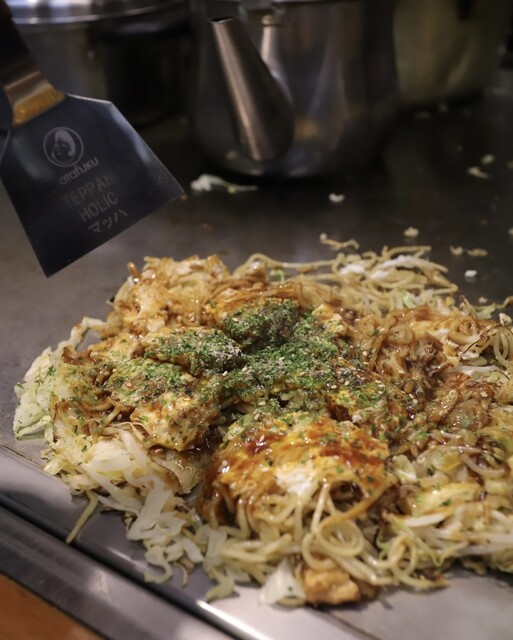
The room is built around the griddle, the right starting point for Hiroshima-style okonomiyaki. This food is layered rather than mixed into a batter-heavy pancake: cabbage collapses under heat, noodles add weight, and timing decides whether it eats as a compact meal or a loose pile. In Japan’s casual dining hierarchy, okonomiyaki is democratic, but better counters are serious about technique. Hiroshima Okonomiyaki Hiro works in that zone, with counter seating, teppanyaki, and a price band closer to everyday lunch than special-occasion dining.
Read this address not as a luxury destination, but as a specialist shop inside a national craft category. Tabelog’s Okonomiyaki 100 selection included it in 2022, 2023, 2024 and 2025, a stronger signal than one year because this cooking depends on repetition. Its 16-seat format matters too: at this scale, the griddle is not background equipment; it is kitchen, stage and pacing mechanism.
Hiroshima-style okonomiyaki depends on layering, not excess
Hiroshima-style okonomiyaki follows a different logic from the Osaka style many travellers know first. Osaka versions generally mix cabbage and batter before cooking, creating a thicker pancake. Hiroshima versions are built in successive layers, often with noodles, shifting emphasis from batter richness to heat control, compression and proportion. That difference explains why counters suit the genre. Diners read the process in real time: what goes down first, when cabbage is pressed, how noodles are handled, and how the finished stack moves without breaking.
Ingredient sourcing is not a luxury talking point here; it is the dish’s grammar. Cabbage must carry sweetness after wilting. Noodles need enough texture to resist turning soft under sauce and steam. Eggs, flour, sauce and add-ons matter, but success comes from inexpensive staples managed with discipline. Serious okonomiyaki shops often feel closer to ramen counters than izakaya: the menu looks accessible, yet reputation rests on small technical decisions repeated hundreds of times.
Hiroshima Okonomiyaki Hiro’s place on the Tabelog 100 Okonomiyaki list puts it in a national conversation about specialist comfort food rather than fine dining. The same price band can hold forgettable griddle meals and focused cooking; selection across multiple years suggests diners respond to consistency, not novelty. For travellers, that matters because okonomiyaki is often treated as a quick regional checkbox. Better to treat it as a craft format with regional rules.
The griddle-counter format is the point
Counter seating changes how okonomiyaki is judged. A tasting menu can hide labour behind plating; teppan cooking exposes sequencing. The rhythm is public, and diners watch common ingredients become a complete plate. In a small room, cooking and service stay close. Food leaves the hot surface with little delay, crucial for dishes where steam, sauce and noodle texture blur quickly.
That is why reservations being unavailable is not just logistics. Walk-in formats preserve the ordinary character of this food, but require a different mindset from travellers used to locking every meal months ahead. The strategy is simple: do not treat a 16-seat specialist counter as a flexible backup, and build slack around the meal. The reward is not theatrical exclusivity; it is seeing a regional method handled close up.
Within Japan’s casual-dining map, the comparison is useful. A ramen institution such as Kumamoto Ramen Kokutei Honten sits in an even lower budget bracket, while Kairakuen occupies a similar everyday range. At the other end,.know and Murakami belong to a far higher spend category. Hiroshima Okonomiyaki Hiro proves credibility in Japan is not tied to price. Recognition can accrue to a griddle counter as meaningfully as to a tasting-menu room when each category is judged on its own terms.
How it fits into a wider Japan itinerary
Travellers building a Japan food route often save attention for sushi, kaiseki and wagyu, then treat okonomiyaki as filler. That misses the point. Regional everyday foods show technique and supply chains without luxury framing. Hiroshima-style okonomiyaki, like Hakata ramen or Sapporo soup curry, turns ordinary inputs into local identity through method. The draw is not rarity; it is how clearly the cooking reveals place.
For a Toyama-focused itinerary, this page sits alongside practical dining references rather than replacing local planning. Compare the city’s casual and specialist options through Boteyan, Boteyan Tanaka, Cave Yunoki, Daimon and Daruma, then use Our full Toyama restaurants guide for the wider spread. For trip architecture beyond meals, the companion guides to Toyama hotels, Toyama bars, Toyama wineries and Toyama experiences help separate dining ambition from daily logistics.
The broader Japan list shows category matters. -Grilled beef Sukiyaki- KAMAKURA TANUKIAN 鎌倉 たぬき庵 in Kamakura frames beef through another tradition;. 鮪と炭火焼き うお炭 秋葉原店 in Tokyo points toward tuna and charcoal;.cafe in Osaka sits in a lighter urban register;.know in Kumamoto occupies a far more expensive bracket; (Shoku) Vietnam in Kawasaki and [Curry Senmon Ten] Maruyama Kyoju. in Sapporo show imported and regional forms becoming local through repetition. Outside Japan, Jōdo Saké Bar in Los Angeles and Onigiri Time in Pasadena show the diaspora version of the same question: what survives when format, ingredients and audience change?
The editorial case for Hiroshima Okonomiyaki Hiro is narrow and persuasive. It is a low-spend, small-format specialist repeatedly recognised in a category where cooking is exposed and ingredients are familiar. That makes it useful for travellers who care how Japan eats between famous reservations. The meal needs no luxury scaffolding. It needs a hot plate, disciplined layering and patience enough to let cabbage, noodles and sauce behave like a regional argument.
A Quick Peer Check
Comparable venues by cuisine and price in the same metro.
| Venue | Cuisine | Price | Awards | Notes |
|---|---|---|---|---|
| Hiroshima Okonomiyaki HiroThis venue — the venue you are viewing | Hiroshima-Style Okonomiyaki | $ | , | |
| Boteyan | Okonomiyaki (Japanese Savory Pancake) | $$ | , | Toyama Station area |
| Boteyan (ぼてやん多奈加) | Square Okonomiyaki Specialist | $$ | , | Toyama Station area |
| Tonjinchi Ramen | Toyama Himi Niboshi Ramen | $ | , | Himi |
| Ito Sho Honten | Traditional Japanese Udon | $ | , | Taromaru Honmachi |
| å¨ä¹ å± | japanese | , | , | Toyama |


At a Glance
- Cozy
- Lively
- Hidden Gem
- Classic
- Casual Hangout
- Family
- Group Dining
- Solo
- Open Kitchen
- Standalone
- Beer Program
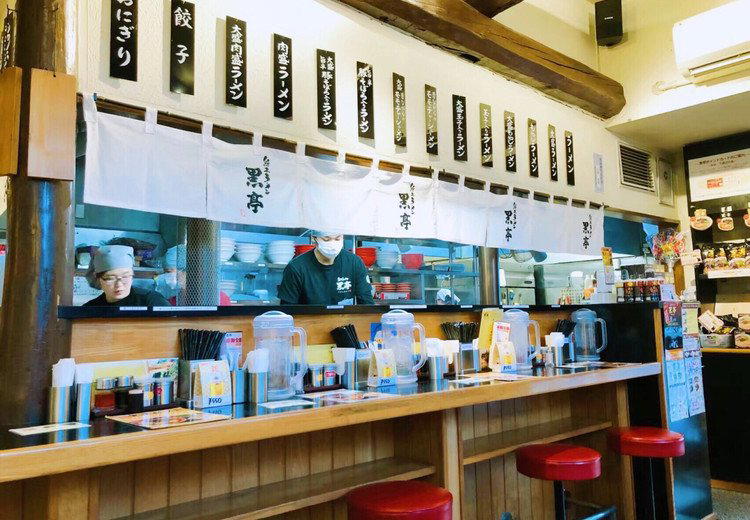
Casual, heat-from-the-griddle atmosphere centered on quick, savory okonomiyaki cooking.