Our verdict
Kitsuneya operates from the old Tsukiji market district, running a tight morning-to-early-afternoon window that reflects the neighbourhood's wholesale rhythm. Ranked #73 in Opinionated About Dining's Casual Japan list for 2025 and previously recommended in their Top Restaurants in Japan, it occupies the serious end of accessible sushi, a counter worth planning a Tokyo morning around.

Pearl is the En Primeur Club membership app, where members save venues, book tables and use the concierge.
The Tsukiji Morning and the Sushi It Produced
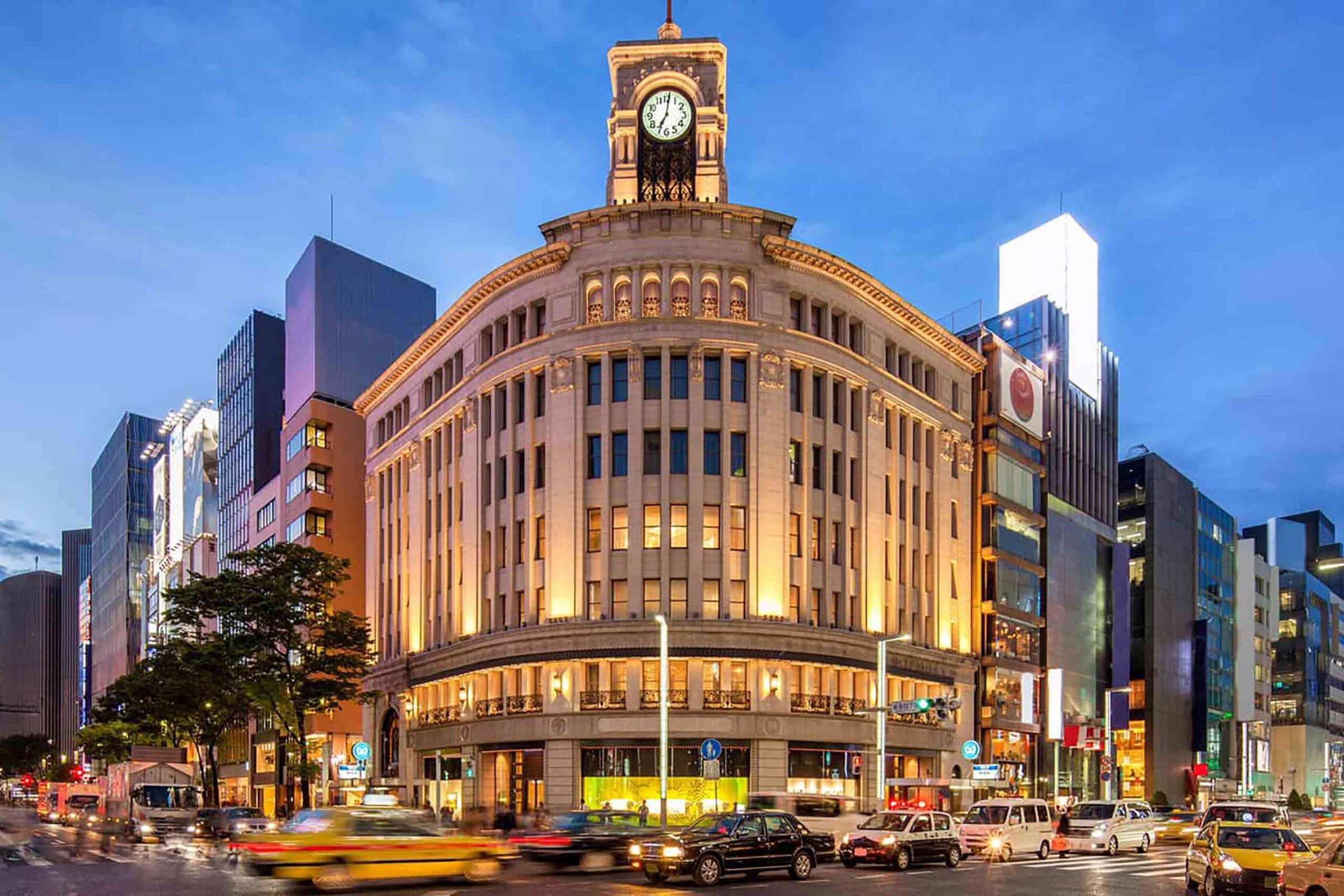
Few addresses in Tokyo carry more culinary weight per square metre than Tsukiji. Even after the wholesale fish market relocated to Toyosu in 2018, the neighbourhood around 4-chome retained its identity: early risers, seafood traders, and a cluster of restaurants calibrated to the rhythms of people who start work before the rest of the city is awake. That means kitchens opening at 6:30 in the morning and closing before most Tokyo restaurants have set their lunch covers. Kitsuneya, at 4 Chome-9-12 Tsukiji, belongs entirely to that tradition. Its hours, 6:30 am to 1:30 pm, Monday, Tuesday, Thursday, Friday, and Saturday, closed Wednesday and Sunday, are not an eccentricity. They are the point.
The morning sushi format has deep roots in Edo-period Tokyo. The original edomae style, built around fish sourced from Tokyo Bay and the fish markets that served the city, was sold as street food to hungry traders and dockworkers at daybreak. The counter experience as we know it today is a refinement of that same impulse: proximity to fresh product, speed without sacrifice of quality, and a menu shaped by what the boats and wholesalers delivered that morning rather than by a fixed kitchen brief. Restaurants like Kitsuneya inherit that logic in their most direct form.
Where It Sits in the Tokyo Sushi Spectrum
Tokyo's sushi scene runs along a wide axis. At one end sit the evening omakase counters, often eight to twelve seats, bookings months in advance, prices approaching ¥¥¥¥ territory, where restaurants like Harutaka, Sukiyabashi Jiro Roppongiten, and Sushi Kanesaka operate. The rituals there, the precise sequencing, the silence, the white-glove service logic, are performances of expertise as much as they are meals. At the other end, standing sushi bars near station exits serve nigiri at speed for under ¥1,000. Kitsuneya occupies neither extreme. The Opinionated About Dining placement in its Casual Japan list (ranked #73 in 2025, recommended in Leading Restaurants in Japan in 2023) is a meaningful coordinate: it signals serious culinary intent combined with the kind of format and setting that does not require advance preparation the way a Michelin three-star counter does.
This mid-tier but critically recognised bracket is increasingly where serious food travellers direct their attention. The Michelin-starred counters in Tokyo are well-documented, well-booked, and well-priced. What OAD's casual list tracks is something harder to systematise: the places that locals with genuine palates return to repeatedly, not for the occasion, but for the food itself. That a Tsukiji sushi-ya reached #73 nationally in that context, assessed against hundreds of Japanese restaurants, says something specific about the kitchen's consistency.
Comparable edomae-focused counters worth mapping against Kitsuneya include Edomae Sushi Hanabusa and Hiroo Ishizaka, both of which operate in the serious-but-accessible register that defines this tier.
Chef Izumi Kimura and the Kitchen's Position
The kitchen runs under Chef Izumi Kimura. In Tokyo's sushi world, where lineage (which master a chef trained under, which house their technique derives from) is used as shorthand for quality tier, the absence of a widely publicised apprenticeship chain at Kitsuneya is itself a data point. The restaurant's standing rests on the food and the OAD assessments rather than on a famous training credential. That is neither a strength nor a weakness in isolation, it places the focus squarely on what arrives at the counter, assessed by the people eating it, rather than on institutional affiliation.
The Cultural Logic of the Morning Counter
To eat sushi at 6:30 in the morning in Tsukiji is to engage with the original premise of edomae sushi in a way that an evening omakase, however technically accomplished, cannot fully replicate. The edomae tradition was not invented for special occasions. It was invented for people who needed to eat well, quickly, in a neighbourhood defined by the movement of fish. The meal at Kitsuneya is shaped by that context: the day's selection, the opening hours, the Tsukiji address. These are not marketing attributes, they are functional outcomes of where and when the restaurant exists.
For a visitor to Tokyo who has already covered the major evening counters, or who simply prefers to eat their most serious meal of the day in the morning, as the Japanese fish trade has always done, a Tsukiji breakfast counter like this offers something the dinner circuit cannot. The city looks different at 7 am in Chuo Ward. The outer market stalls are active, the side streets smell of brine and cold air, and the people eating around you are as likely to be traders wrapping up a shift as they are tourists working down a list.
Planning a Visit
Kitsuneya is at 4 Chome-9-12 Tsukiji, Chuo City, Tokyo. The address sits in the outer Tsukiji market area, accessible from Tsukiji Station on the Tokyo Metro Hibiya Line. The operating window runs from 6:30 am to 1:30 pm on Monday, Tuesday, Thursday, Friday, and Saturday. The restaurant is closed Wednesday and Sunday. Given the early opening and the neighbourhood's general pace, arriving at or near opening is advisable, not only for seat availability but because the morning light and market activity are part of what makes the experience specific to its place and time.
For broader Tokyo planning, see our full Tokyo restaurants guide, our full Tokyo hotels guide, our full Tokyo bars guide, our full Tokyo wineries guide, and our full Tokyo experiences guide.
If you are building a broader Japan itinerary around serious food, the EP Club network covers HAJIME in Osaka, Gion Sasaki in Kyoto, akordu in Nara, Goh in Fukuoka, 1000 in Yokohama, and 6 in Okinawa. For those tracking edomae sushi across Asia, Sushi Shikon in Hong Kong and Shoukouwa in Singapore represent how the tradition has been transplanted and adapted in the region's other major markets.
Quick reference: 4 Chome-9-12 Tsukiji, Chuo City, Tokyo 104-0045. Open Mon, Tue, Thu, Fri, Sat 6:30 am–1:30 pm. Closed Wed and Sun. Nearest station: Tsukiji (Hibiya Line). OAD Casual Japan #73 (2025).
What Should I Eat at Kitsuneya?
Kitsuneya follows the edomae tradition, meaning the menu reflects what is fresh that morning from the Tsukiji area market rather than a fixed selection. Chef Izumi Kimura leads the kitchen. The restaurant's OAD recognition, ranked #73 in Casual Japan 2025, recommended in Leading Restaurants in Japan 2023, points to consistent execution across seasonal product rather than a single signature item. In edomae sushi, the selection at opening hours typically includes the best of the day's catch before the afternoon service depletes availability, which is one practical reason to arrive early. Specific dishes and menu items vary with season and supply; no fixed menu is publicly documented.
Frequently asked questions
What's Kitsuneya known for in terms of accolades?
Kitsuneya has received recognition including: Opinionated About Dining Casual in Japan Ranked #73 (2025); Opinionated About Dining Top Restaurants in Japan Recommended (2023).
Where is Kitsuneya in Tokyo?
Kitsuneya is located at 4 Chome-9-12 Tsukiji, Chuo City, Tokyo 104-0045, Japan, Tokyo.
What should I eat at Kitsuneya?
Kitsuneya follows the edomae tradition, so the menu tracks what arrived fresh that morning from the Tsukiji area market rather than a fixed card. Arriving at opening, 6:30 am Thursday through Saturday or Monday and Friday, gives the widest selection before popular cuts sell out. The kitchen operates under Chef Izumi Kimura, and the OAD Casual Japan ranking (No. 73, 2025) points to a counter where technique is the draw, not spectacle. Order what the chef indicates is freshest that day rather than anchoring to a specific piece.
What type of food is Kitsuneya known for?
When can I go to Kitsuneya?
Hours at Kitsuneya: Hours: Monday 6:30 am–1:30 pm Tuesday 6:30 am–1:30 pm Wednesday Closed Thursday 6:30 am–1:30 pm Friday 6:30 am–1:30 pm Saturday 6:30 am–1:30 pm Sunday Closed.
Similar Picks
| Venue | Cuisine | Price | Awards | Notes |
|---|---|---|---|---|
| KitsuneyaThis venue (the venue you are viewing) | Traditional Japanese Gyudon & Horumon-don | $10–20 | Not listed | Not listed |
| Harutaka | Edo-Style Omakase Sushi | $200–300 | 3 Michelin Stars · World's 50 Best #76 | Sushi |
| RyuGin | Modern Kaiseki | $500+ | 3 Michelin Stars · World's 50 Best #41 | Kaiseki, Japanese |
| L'Effervescence | Modern French with Japanese Influences | $200–300 | 3 Michelin Stars · World's 50 Best #69 | French |
| HOMMAGE | Modern French with Japanese Influences | $150–200 | 2 Michelin Stars · World's 50 Best #78 | Innovtive French, French |
| MAZ | Innovative Peruvian-Japanese Fusion | $150–200 | 2 Michelin Stars · World's 50 Best #28 | Innovative |
Recognition history
Dated appearances from independent guides and award organizations, with the underlying list record or original source where available.
Opinionated About Dining Casual in Japan Ranked #91
Opinionated About Dining
Full recognition history (3 entries)
Opinionated About Dining Casual in Japan Ranked #73
Opinionated About Dining
Opinionated About Dining Top Restaurants in Japan Recommended
Opinionated About Dining