
Kinton Koube ten places Kobe’s everyday tonkatsu culture inside a recognised national frame, with selections in Tabelog’s Tonkatsu 100 for 2022, 2024, and 2026. The appeal is not ceremony but precision in a casual Sannomiya setting: pork cutlet as a lunch-and-dinner staple, supported by English menu availability, counter and table seating, and a reputation strong enough to travel beyond the neighbourhood.
Pearl is the En Primeur Club membership app — saves, bookings, and concierge access live there. Same editors, same standards.
- Address
- 兵庫県神戸市中央区三宮町1-8-1 さんプラザ B1F
- Phone
- +81783817036
 Saves & bookings on Pearl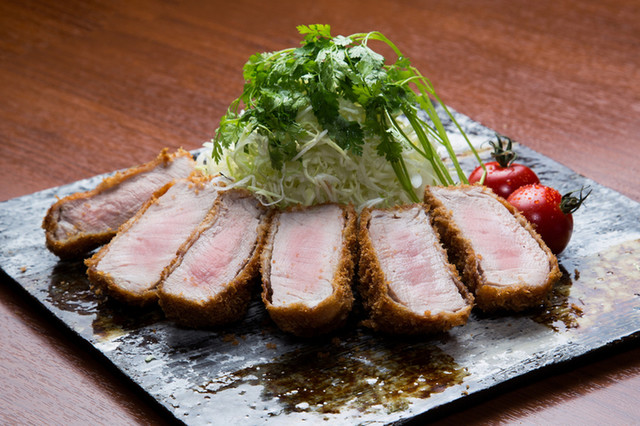
Below Sannomiya’s station-side flow, Kobe’s basement dining culture has its own rhythm: office workers moving quickly, families choosing by habit rather than hype, and small counters turning familiar dishes into serious local benchmarks. Tonkatsu belongs naturally in that world. It is democratic food with a technical spine, built on frying temperature, pork quality, cut thickness, cabbage, rice, sauce, and timing. In Kobe, where beef often takes the international spotlight, a recognised pork cutlet address says something useful about the city’s broader appetite: not every serious meal announces itself with a tasting menu.
Kinton Koube ten enters that conversation through repeat selection for Tabelog’s Tonkatsu 100 in 2022, 2024, and 2026, with a listed score of 3.69. That matters because tonkatsu is a crowded category across Japan, and the difference between a dependable shop and an award-listed one is usually measured in consistency rather than spectacle. The format is familiar, but the reputation places the restaurant in a narrower band of pork cutlet specialists where small technical decisions carry the weight.
Why a Sannomiya tonkatsu counter earns national attention
Japanese tonkatsu has always rewarded restraint. The dish looks simple enough to be misunderstood by travellers: breaded pork, rice, cabbage, miso soup, sauce. The better versions are judged by the seam between crust and meat, the way fat is handled, and whether the set meal feels balanced rather than heavy. That is why awards in this category are useful. They do not merely reward luxury; they identify shops that perform a repetitive craft at a high public standard.
The Sannomiya setting also sharpens the point. This is Kobe’s working hinge, not a destination dining enclave. Nearby casual addresses such as Akaneya Coffee Ten, Akari, and Ali's Halal Kitchen show how broad the area’s everyday dining register can be, while comparison venues such as SAVOY, Stand Classic, Gyoza no Mise Hyotan Sannomiya ten, and Tommy's Sannomiya ten sit in similarly approachable price bands. Within that local field, tonkatsu recognition functions less like glamour and more like proof of reliability.
For visitors, this is a useful corrective to the usual Kobe script. The city is often reduced to beef, and there are good reasons to examine that tradition through places such as Aburi Niku Kobo Wakkoku Shinkobe ten and Aburi Niku Kobo Wakkoqu Kitano Sakamoto Ten. But the stronger dining read is wider: Kobe’s centre supports special-occasion beef, coffee rooms, gyoza counters, curry shops, set-meal restaurants, and station-adjacent specialists. Tonkatsu fits that ecosystem because it is practical without being casual in technique.
The meal is familiar; the reputation is the filter
The restaurant’s category is tonkatsu, and that should guide expectations. This is not a chef-biography restaurant or a long-format modern Japanese dining room. The relevant comparison is the national set of pork cutlet specialists that have enough consistency to appear in a curated tonkatsu list across multiple years. Repeat selection in 2022, 2024, and 2026 gives the reputation more weight than a single-year mention, especially in a genre where regulars notice slippage quickly.
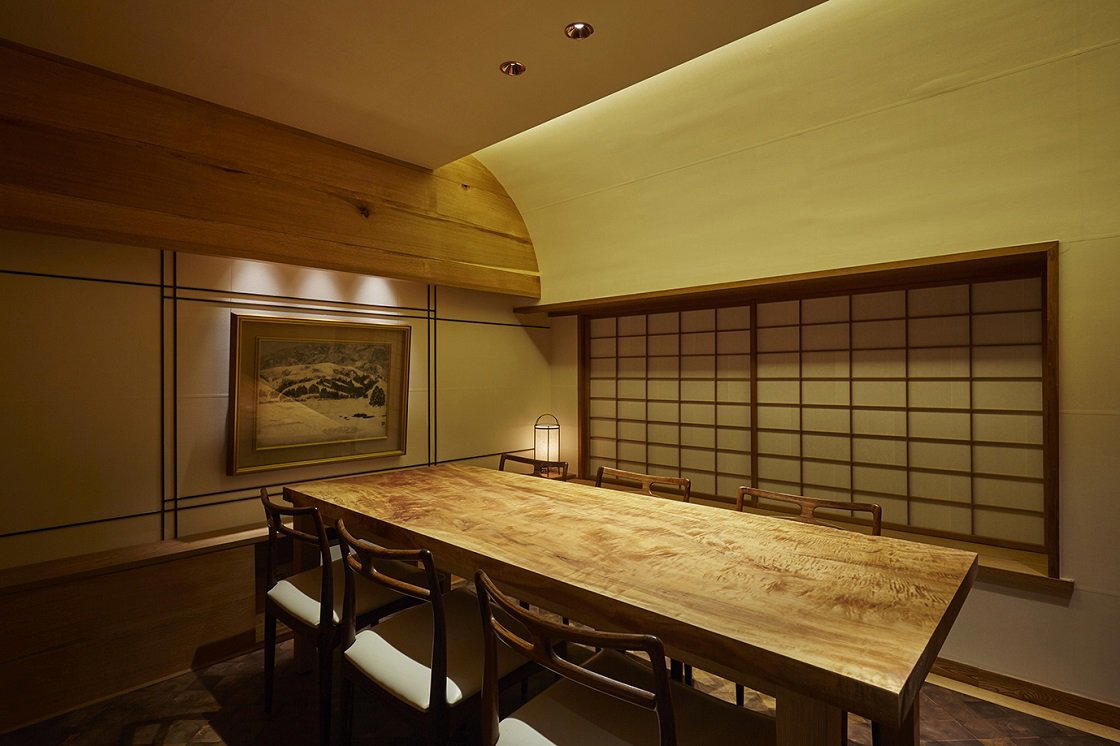
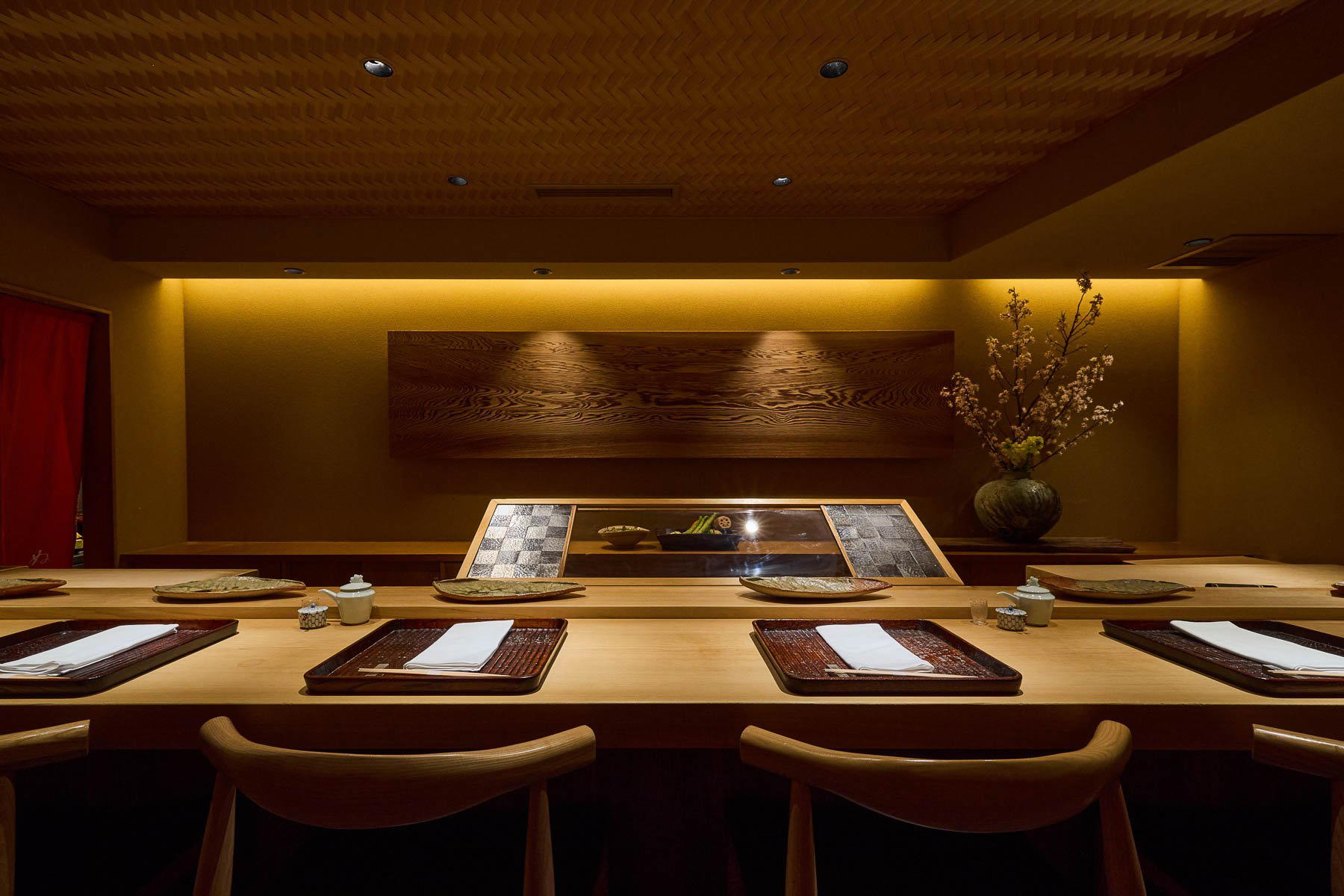
The room is built for turnover as much as attention, with 34 seats divided between counter and tables. That mix matters in Japan’s tonkatsu culture: counter seats suit solo diners and quick meals, while tables keep the format accessible to small groups and families. English menu availability also lowers friction for travellers, though the dining grammar remains local. The point is not translation into an international luxury code; it is access to a Japanese staple in a recognised Kobe setting.
Drinks remain within the Japanese casual-dining register, with sake and shochu listed rather than an expansive wine program. That signals the intended meal clearly. Tonkatsu asks for appetite and timing, not ceremony. The stronger order is to treat it as a focused stop in Sannomiya rather than as the centrepiece of an entire evening. A visitor planning across the city might pair this kind of lunch with coffee, shopping, or a later bar crawl, using Our full Kobe bars guide and Our full Kobe restaurants guide for the broader map.
How it fits into a Kobe itinerary
Kobe rewards travellers who resist a single-dish itinerary. Beef is central, but the city’s everyday food culture is built through station basements, shopping arcades, compact counters, coffee houses, and neighbourhood specialists. Kinton Koube ten is useful because it gives the pork cutlet category a credible anchor in Sannomiya, close to the transit and retail patterns that define the centre of the city. It is also a reminder that Japanese food reputation often develops through repeat local use before it becomes useful to visitors.
There is a practical editorial conclusion here: choose this for a concise, category-specific meal when the day calls for structure rather than ceremony. The award history supplies the trust signal; the Sannomiya context supplies the reason to place it in an itinerary. It makes particular sense for travellers who have already booked a beef meal elsewhere, or who want a recognisable Japanese format with enough critical reception to justify choosing it over a random station lunch.
For planning beyond the table, Kobe’s broader EP Club coverage separates the city by use case: hotels in Our full Kobe hotels guide, wineries in Our full Kobe wineries guide, and cultural formats in Our full Kobe experiences guide. Wider Japan and overseas dining context can be traced through addresses such as -Grilled beef Sukiyaki- KAMAKURA TANUKIAN 鎌倉 たぬき庵 in Kamakura. 鮪と炭火焼き うお炭 秋葉原店 in Tokyo.cafe in Osaka.know in Kumamoto, (Shoku) Vietnam in Kawasaki, [Curry Senmon Ten] Maruyama Kyoju. in Sapporo, Jōdo Saké Bar in Los Angeles, and Onigiri Time in Pasadena. Read together, they show the same lesson at different scales: casual formats can carry serious editorial weight when recognition, consistency, and local context align.
A Pricing-First Comparison
Side-by-side context: comparable cuisine and price.
| Venue | Cuisine | Price | Notes |
|---|---|---|---|
| Kinton Koube tenThis venue — the venue you are viewing | Not listed | $ | Not listed |
| Pan Yakidokoro RIKI | Chūō, Japanese artisan bakery | $ | Not listed |
| Kyuan | Hyōgo, Traditional Soba Noodle Shop | $ | Not listed |
| Gyoza Senmon Ten Akaman Sannomiya ten | Chūō, Gyoza specialty shop | $ | Not listed |
| Yoshoku no Asahi | Not listed | $ | Chūō, Japanese Western / Yoshoku |
| Jin Gyoza | Chūō, Japanese Gyoza & Dumplings | $ | Not listed |
Recognition history
Dated appearances from independent guides and award organizations, with the underlying list record or original source where available.
Tabelog 100 #51 · No. 51
Tabelog · Tabelog 100 - Tonkatsu - 2026
Continue exploring
More in Kobe
Restaurants in Kobe
Browse all →
Bars in Kobe
Browse all →
Hotels in Kobe
Browse all →


At a Glance
- Cozy
- Lively
- Classic
- Solo
- Family
- Casual Hangout
- After Work
- Group Dining
- Standalone
A compact basement tonkatsu shop with counter and table seating, bright but simple décor, and a bustling, casual atmosphere where the sound of frying cutlets and constant turnover of guests create an energetic, canteen‑like feel.