
Pan Yakidokoro RIKI is a Motomachi bread counter that belongs to Kobe’s serious everyday eating culture rather than its formal dining circuit. The draw is its compact take-out format, sub-¥1,000 pricing, and repeated Tabelog Bread 100 recognition, which place it among western Japan’s more closely watched bakeries without turning the experience into a ceremony.
Pearl is the En Primeur Club membership app — saves, bookings, and concierge access live there. Same editors, same standards.
- Address
- Japan, 〒650-0023 Hyogo, Kobe, Chuo Ward, Sakaemachidori, 2 Chome−7−4 1F
- Phone
- +81 78-392-8585
- Website
- facebook.com
 Saves & bookings on Pearl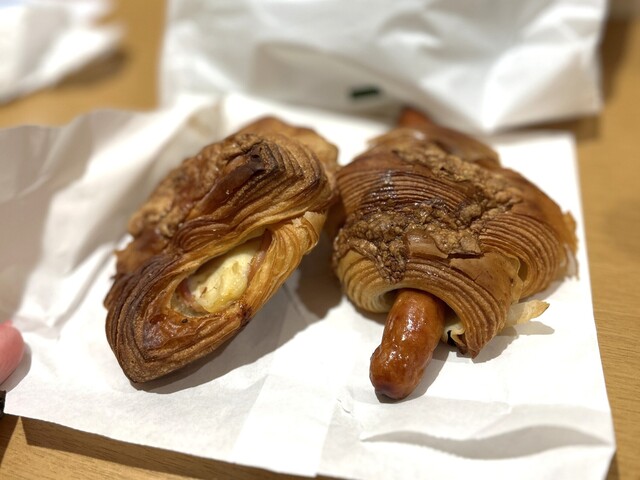
Approaching the Sakaemachidori side of Motomachi, Kobe shifts from department-store polish to a quieter grid of small food addresses, coffee rooms, bakeries, and take-out counters. This is useful terrain for bread: not a grand dining room, not a destination built around table service, but a daily stop where flour, fermentation, butter, and timing carry the argument. Pan Yakidokoro RIKI fits that Kobe rhythm, with a compact take-out format and the kind of low-price ceiling that keeps the conversation focused on craft rather than theatre.
Kobe has long been a port city with an appetite for imported food habits, from Western-style sweets to hotel baking and café culture. Bread here is not a side note to restaurants; it has its own serious audience. The city’s bakery scene rewards precision at small scale, and that matters because bread is unforgiving in a different way from sushi or beef. A loaf or pastry cannot hide behind service choreography. It has to justify itself in the hand, on the walk back to the station, or later at a hotel desk with coffee.
Motomachi bread culture, judged by the counter rather than the dining room
The useful comparison in Kobe is not between bakeries and tasting-menu restaurants, but between the city’s compact specialist formats. Gyoza Daigaku works in the same everyday-price register, while Cini CURRY and anthem sit in the casual café-and-lunch band. Patisserie mont plus Honten points toward Kobe’s French-influenced sweet tradition, and Grill Ippei Motomachi ten shows how the neighbourhood also supports old-school Western-style comfort cooking. In that set, a bread shop such as Pan Yakidokoro RIKI occupies a narrower lane: production discipline, fast turnover, and a customer who knows exactly what a good bakery run feels like.
The Tabelog Bread WEST 100 selection in 2022 gives the address a useful external marker. Tabelog’s Hyakumeiten lists are not Michelin-style stars, but in Japan they are meaningful because they identify category specialists that attract repeat local scrutiny. The bakery also appears in earlier Bread 100 selections from 2017, 2018, 2019, and 2020, which suggests sustained attention rather than a single-year spike. Its Tabelog score of 3.74 further places it in a competitive public-review environment where incremental differences matter.
That recognition also clarifies what the experience is not. This is not a chef-driven restaurant narrative, and there is no need to turn it into one. The stronger reading is about sourcing and handling: bread culture in Japan often depends on careful flour selection, dairy quality, seasonal fillings, and the ability to keep small batches moving while demand is high. When a bakery operates as take-out only, the product has to carry all the hospitality after the customer leaves the room.
Ingredient choices matter more when there is no table service to lean on
Ingredient sourcing is often discussed loudly in fine dining and quietly in bakeries, but the consequences are more immediate in bread. Butter quality changes aroma and texture; flour choice changes chew and crust; fruit, bean paste, chocolate, cheese, or savoury fillings can either read as filler or as a reason to choose one bakery over the next. Without verified item names, the smarter move is to read the format rather than invent a signature. Pan Yakidokoro RIKI’s reputation sits on the category itself: bread made for quick purchase, close comparison, and repeat use.
This is why Kobe is a strong city for this kind of stop. A traveller can eat through the formal registers of the city, from wagyu-focused rooms such as Aburi Niku Kobo Wakkoku Shinkobe ten and Aburi Niku Kobo Wakkoqu Kitano Sakamoto Ten to coffee institutions such as Akaneya Coffee Ten, but the city’s food intelligence also shows up in low-friction addresses. Akari and Ali's Halal Kitchen point to other sides of Kobe’s range, while a bakery counter keeps the itinerary grounded in the neighbourhood’s everyday habits.
The sub-¥1,000 listed price range is part of the appeal, but not because cheapness is the story. In Japan, excellent casual food often compresses skill into a narrow spend band. That changes how a visitor should think about value: the question is not whether the bakery replaces a meal at a serious restaurant, but whether it gives a precise read on Kobe’s ingredient-led casual food culture with minimal friction. On that measure, the case is strong.
How to place it in a Kobe itinerary
Motomachi is the right zone for a food-led day because it allows quick shifts in register. A bakery stop can sit before a coffee break, after a market walk, or between more structured reservations. For broader planning, Our full Kobe restaurants guide is the natural starting point, while Our full Kobe hotels guide, Our full Kobe bars guide, Our full Kobe wineries guide, and Our full Kobe experiences guide help build the rest of the day around it.
The broader lesson travels beyond Kobe. Japan’s casual specialist culture ranges from beef formats such as -Grilled beef Sukiyaki- KAMAKURA TANUKIAN 鎌倉 たぬき庵 in Kamakura to seafood-and-grill rooms such as. 鮪と炭火焼き うお炭 秋葉原店 in Tokyo, cafés such as.cafe in Osaka, and regional independents such as.know in Kumamoto. The same attention to category focus appears outside Japan too, from (Shoku) Vietnam in Kawasaki and [Curry Senmon Ten] Maruyama Kyoju. in Sapporo to Japanese-leaning addresses abroad such as Jōdo Saké Bar in Los Angeles and Onigiri Time in Pasadena. The restaurant belongs to that world of narrow, disciplined formats, where the point is not breadth but a clear category promise executed at daily scale.
In Context: Similar Options
Comparable venues for orientation by cuisine and category.
| Venue | Cuisine | Price | Notes |
|---|---|---|---|
| Pan Yakidokoro RIKI | Japanese artisan bakery | $ | Chūō |
| Marutaka Chuka Soba Kobe Ninomiya Ninomiya ten | Japanese Ramen | $ | Chūō |
| Kinton Koube ten | Tonkatsu (Japanese pork cutlet) | $ | Chūō |
| Gyoza Senmon Ten Akaman Motomachi ten | Traditional Kobe gyoza specialist | $ | Chūō |
| Gyoza no Mise Hyotan Sannomiya ten | Kobe-style gyoza specialty shop | $ | Chūō |
| Gyoza Daigaku | Japanese Dumplings (Gyoza) | $ | Chūō |
Recognition history
Dated appearances from independent guides and award organizations, with the underlying list record or original source where available.
Tabelog 100 #38 · No. 38
Tabelog · Tabelog 100 - Bread - WEST - 2022





At a Glance
- Cozy
- Solo
- Family
- Casual Hangout
- After Work
- Late Night
- Standalone
- Local Sourcing
Current opening hours
- Monday
- 8 AM–6 PM
- Tuesday
- Closed
- Wednesday
- Closed
- Thursday
- 8 AM–6 PM
- Friday
- 8 AM–6 PM
- Saturday
- 8 AM–6 PM
- Sunday
- 8 AM–6 PM
Hours can change for holidays and private events. Last verified .
A compact, neighborhood-style bakery with a warm, low-key atmosphere where customers line up for freshly baked loaves and croissants, feeling more like a local daily stop than a cafe for lingering.