
1 Michelin Star
Our verdict
Ken Anhe holds a Michelin star in Taipei's Da'an District, serving omakase-only menus that shift daily between raw fish and nigiri at lunch and kappo-style cooked courses at dinner. Chef Wachi Isao's approach centres on freshness and layered flavour, with a soup course notable for its minced fish dumpling paired with kelp bonito stock. Reservations are essential; the restaurant closes Mondays and Sundays.

Pearl is the En Primeur Club membership app, where members save venues, book tables and use the concierge.
The menu
What to order
- Wagyu gyudon
- Unadon
- Chawanmushi with caviar
The Ritual Before the First Bite
Lane 127 off Section 1 of Anhe Road is the kind of address that rewards those who already know where they are going. Da'an District has long been Taipei's most concentrated zone for serious Japanese dining, and the residential-feeling approach to Ken Anhe, tucked into a low-rise lane rather than a main commercial strip, sets a register before you cross the threshold. The neighbourhood around Anhe Road has accumulated a tier of Japanese restaurants that price and position themselves against Tokyo peers rather than local casual options, and Ken Anhe sits squarely within that cohort.
What greets you inside is the omakase format in its most committed form: no à la carte fallback, no menu card to study, no decisions to make once you have committed to the booking. The ritual here is one of surrender to the kitchen's daily assessment of what is worth eating. Chef Wachi Isao's insistence on freshness means the menu is genuinely rebuilt around what has arrived that day, which makes every sitting a different document of the season and the market.
Lunch, Dinner, and the Logic of Two Formats
Taipei's higher-end Japanese houses increasingly use a split format to serve two different audiences and two different moods within the same kitchen. Ken Anhe applies this division with discipline. The lunch sitting, running Tuesday through Saturday from noon to 2:30 PM, centres on raw fish and nigiri sushi, a format that demands the cleanest possible produce and the least intervention between market and plate. The evening sitting, from 6 PM to 9:30 PM on the same days, shifts toward kappo: a broader Japanese culinary tradition that incorporates grilling, simmering, and steaming alongside raw preparation, allowing the kitchen to show range across temperature and technique.
This is not a trivial distinction. The lunch format places Ken Anhe in direct dialogue with Taipei's omakase sushi specialists, a competitive set that includes Dasuke and Kiku, both operating at the top of the city's Japanese tier. The dinner format, by contrast, positions Ken Anhe within a kappo tradition that values the pacing of a longer, more varied meal, a tradition well-represented in Kyoto houses such as Isshisoden Nakamura and Tokyo counters like Azabu Kadowaki. Wachi's kitchen fluency across both modes is part of what the 2024 Michelin star recognises.
Where the Detail Shows: The Soup Course
In Japanese fine dining, the soup course is often where a kitchen's real priorities become legible. Anyone can source excellent fish; stock-making and dumpling composition reveal patience, technical grounding, and an understanding of how delicate elements interact under heat. At Ken Anhe, the soup course has drawn consistent notice for the combination of a minced fish dumpling made with seasonal produce and a kelp bonito stock built with enough nuance to register as its own course rather than a palate-clearing interlude.
The layering at work here, seasonal ingredient in the dumpling, umami depth in the dashi, reflects the same principle that governs the broader menu: freshness as a starting condition, technique as the means of revealing rather than transforming it. This approach places Ken Anhe in a lineage of Japanese cooking that prizes restraint and ingredient integrity over elaboration, a lineage shared by Tokyo houses like Myojaku and visible in the wider tradition of kappo service across Japan.
Ken Anhe in Taipei's Michelin Tier
Taipei's Michelin-recognised Japanese restaurants now occupy a meaningful share of the guide's one-star tier. The city's appetite for high-end Japanese cuisine predates the guide's arrival in Taiwan, rooted in decades of cultural and commercial proximity to Japan that produced a generation of Taiwanese diners fluent in omakase etiquette and a generation of Japanese chefs willing to open outside Tokyo or Osaka. That context matters when reading Ken Anhe's star: it is not a consolation prize for being a good Japanese restaurant in an Asian city, it is recognition within a competitive local field that includes Yu Kapo, AJIMI, and Shi, among others.
Beyond Japanese cuisine, Taipei's Michelin-starred tables span Cantonese cooking at the three-star level (Le Palais), Taiwanese-French contemporary at three stars (Taïrroir), and modern European expressions in between. Ken Anhe's one-star position within this broader field speaks to a specific register: serious, format-driven, and requiring the guest to meet the kitchen's terms rather than the other way around.
For those interested in how Japanese culinary traditions travel and adapt across Taiwan more widely, the contrast with JL Studio in Taichung and GEN in Kaohsiung shows how different cities and culinary backgrounds shape what the guide finds worth recognising.
Planning Your Visit
Ken Anhe operates Tuesday through Saturday only, with both a lunch sitting (noon to 2:30 PM) and a dinner sitting (6 PM to 9:30 PM). The restaurant is closed on Mondays and Sundays, which limits same-week booking flexibility for short-stay visitors. The address, No. 4, Lane 127, Section 1, Anhe Road, Da'an District, is a short distance from the Xinyi Anhe MRT station, making access from the city centre direct. The $$$$ price tier places Ken Anhe in Taipei's premium band; budget accordingly and treat the omakase format as a full-evening (or midday) commitment rather than a quick meal. There is no à la carte option, so arrive with time and appetite calibrated for a multi-course sequence. As with most counters at this level in Taipei, advance booking is the practical baseline rather than an optional precaution.
For a broader picture of where Ken Anhe sits within the city's dining scene, our full Taipei restaurants guide covers the range from street-level classics to multi-star tables. Those building a longer Taiwan itinerary will also find useful context in our full Taipei hotels guide, bars guide, wineries guide, and experiences guide. Further afield, Akame in Wutai Township, A Cun Beef Soup in Tainan, and Volando Urai Spring Spa & Resort in Wulai District represent different registers of what a Taiwan trip can hold beyond the capital.
Frequently asked questions
Is Ken Anhe a family-friendly restaurant?
What's the vibe at Ken Anhe?
at Ken Anhe?
Recognition, Side-by-Side
| Venue | Cuisine | Price | Awards | Notes |
|---|---|---|---|---|
| Ken AnheThis venue (the venue you are viewing) | Traditional Japanese Omakase | $150–200 | 1 Michelin Star | Not listed |
| logy | Modern Japanese-Taiwanese Fusion Omakase | $100–150 | 2 Michelin Stars · World's 50 Best #22 | Modern European, Asian Contemporary |
| Le Palais | Fine Dining Cantonese | $150–200 | 3 Michelin Stars · La Liste Top Restaurants | Cantonese |
| Taïrroir | Taiwanese-French Fusion Fine Dining | $150–200 | 3 Michelin Stars · La Liste Top Restaurants | Taiwanese/French, Taiwanese contemporary |
| Mudan Tempura | Michelin-Starred Tempura | Not listed | 2 Michelin Stars · La Liste Top Restaurants | Tempura |
| de nuit | Contemporary French | $150–200 | 1 Michelin Star · Star Wine List | French Contemporary |
Recognition history
Dated appearances from independent guides and award organizations, with the underlying list record or original source where available.
Michelin 1 Star
Michelin
Full recognition history (3 entries)
Michelin 1 Star
Michelin
Michelin 1 Star
Michelin
Continue exploring
More in Taipei
Restaurants in Taipei
All restaurants in Taipei →
Bars in Taipei
All bars in Taipei →
Hotels in Taipei
All hotels in Taipei →
Wineries in Taipei
Browse all →
Details
- Elegant
- Intimate
- Minimalist
- Date Night
- Special Occasion
- Chefs Counter
- Open Kitchen
- Sake Program
- Street Scene
- Omakase
- Counter Dining
- Sake
Current opening hours
- Monday
- Closed
- Tuesday
- 12–2:30 PM, 6–9:30 PM
- Wednesday
- 12–2:30 PM, 6–9:30 PM
- Thursday
- 12–2:30 PM, 6–9:30 PM
- Friday
- 12–2:30 PM, 6–9:30 PM
- Saturday
- 12–2:30 PM, 6–9:30 PM
- Sunday
- Closed
Hours can change for holidays and private events. Hours as of .
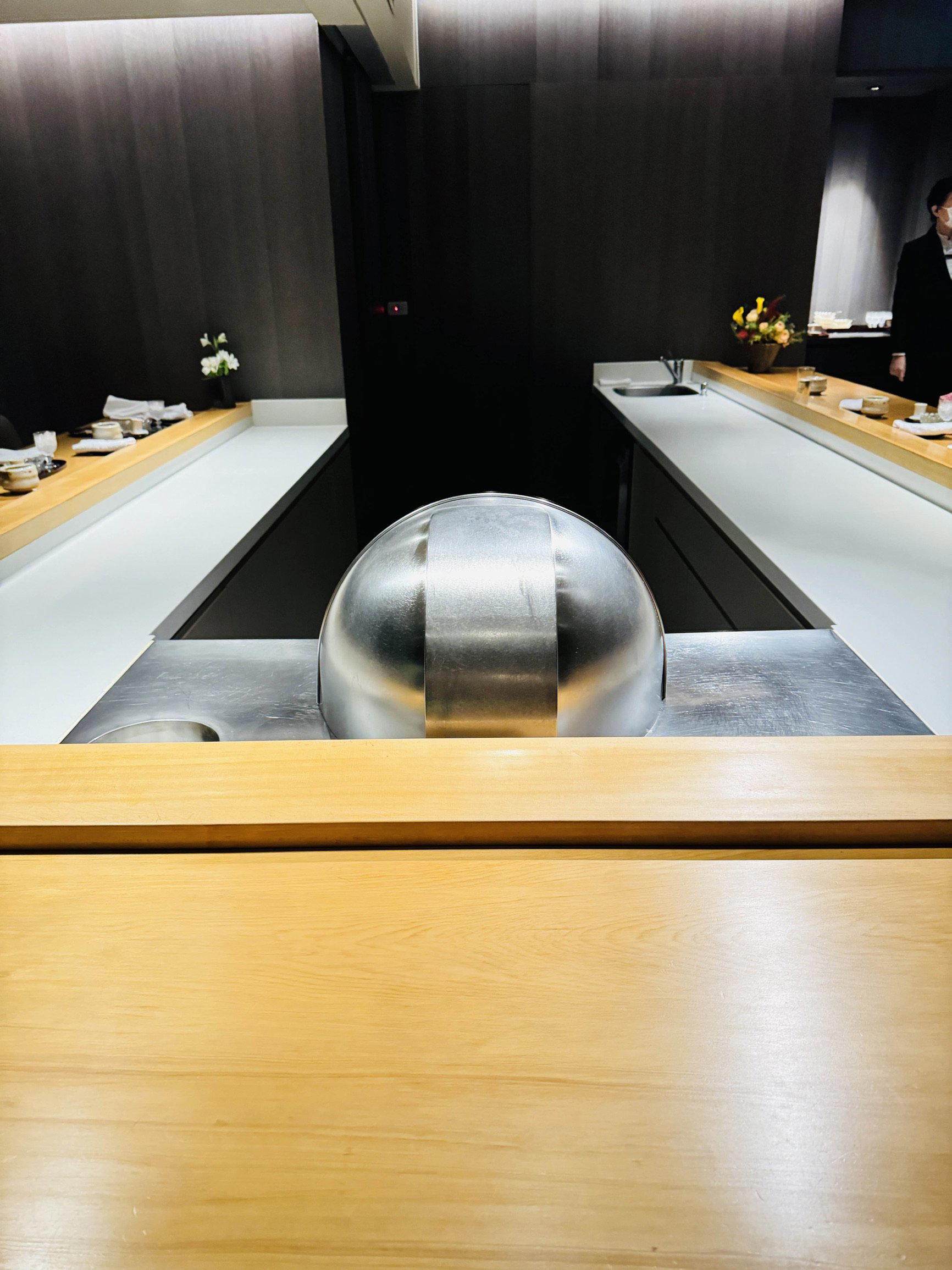
Dimly-lit with simple Japanese-style decor, open kitchen, and counter seating fostering an intimate, homely atmosphere.