Akame



Akame sits in the mountains of Pingtung County's Wutai Township, cooking over a wood-fired kiln in a language drawn from Rukai indigenous tradition. Ranked among the leading 110 restaurants in Asia by Opinionated About Dining for three consecutive years, it is the hardest table to secure in southern Taiwan, a marker of its position within Taiwan's most compelling indigenous fine dining movement.
Pearl is the En Primeur Club membership app — saves, bookings, and concierge access live there. Same editors, same standards.
- Address
- 90241, Taiwan, Pingtung County, Wutai Township, 古茶柏安街17巷8號
- Phone
- +88687997321
- Directions
- Get directions
 Saves & bookings on Pearl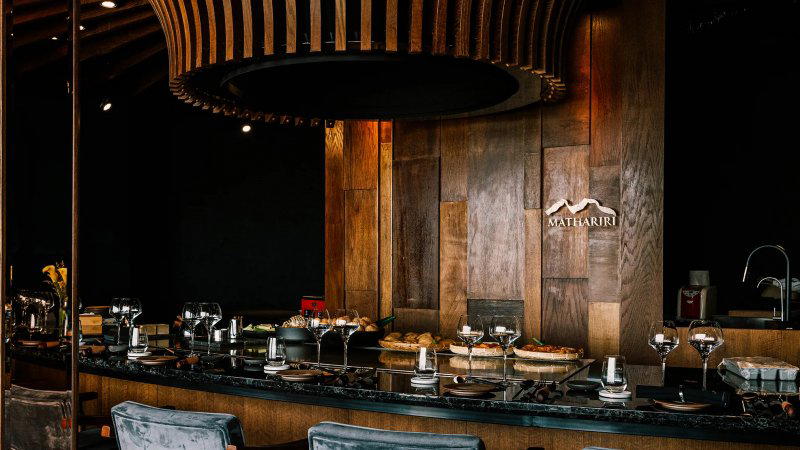
Fire, Forest, and the Logic of the Kiln
Akame is a restaurant in Wutai Township, Pingtung County, serving Modern Taiwanese Aboriginal Grill. The road into Wutai Township, deep in the mountains of Pingtung County, does not prepare you for a fine dining restaurant. The turn-offs narrow, the elevation climbs, and the surrounding forest shifts from the peripheral to the total. That physical approach is not incidental to the experience at Akame, it is the first argument the restaurant makes. The setting is not a backdrop; it is the editorial premise. By the time you arrive at the address on 古茶柏安街, the distance from Taiwan's urban dining circuits feels structural, not geographical.
In the context of contemporary Taiwanese cooking, this matters. Most of the country's celebrated restaurants operate within a city-to-city logic: logy in Taipei refines Asian-contemporary through a European technique lens; JL Studio in Taichung works a modern Singaporean idiom through $$$$ tasting-menu formality; GEN in Kaohsiung anchors the southern city's fine dining scene. Akame does not fit that axis. It operates in the mountains, in the territory of the Rukai people, and its cooking is organised around what that territory produces and what Rukai tradition has always done with it: fire.
What the Word Means
The name Akame comes from the Rukai language. It means grill. That etymology is not decorative. Where most ambitious restaurants in Asia frame high-heat cooking as technique, wok hei, Maillard reactions calibrated by gas output and pan weight, Akame builds its kitchen around a wood-fired kiln that removes the intermediary entirely. There are no modern stoves. Combustion is the method, and the kiln is the instrument. Ingredients sourced from surrounding forests and farms go into that heat, and the cooking that results is direct, material, and grounded in a tradition that predates the vocabulary of fine dining by generations.
This is a different relationship to flame than the one Chinese high-heat cooking theorises. Wok hei depends on speed: enormous BTU output, split-second timing, the cook's ability to keep ingredients moving through a temperature spike that would ruin them if they paused. The wood-fired kiln works on a slower logic, sustained heat, smoke as a flavour agent, the kiln's thermal mass doing work that a wok cannot. The result is cooking with depth rather than flash: char that carries the character of the wood, proteins that rest inside the heat rather than pass through it.
Position and Recognition
Akame has appeared on the Opinionated About Dining Leading Restaurants in Asia list for three consecutive years: ranked 106th in 2023, 114th in 2024, and rising back to 105th in 2025. OAD rankings are compiled from critic and industry votes rather than inspectors, which makes them a reasonable proxy for peer regard across Asia's restaurant community. Three consecutive years in the top 115, with movement at the upper end of that range, places Akame in a comparable set that includes urban tasting-menu operations with substantially larger budgets, higher-capacity rooms, and proximity to international travel infrastructure. The restaurant's position in that set, from a mountain township in Pingtung County, is worth pausing on.
It has also been described as one challenging restaurant to book in southern Taiwan. Demand has consistently outrun capacity, and reservations are essential. This is the territory of allocation and waitlist rather than open online booking.
The Ingredient Logic
The kitchen at Akame draws heavily from the forests and farms surrounding Wutai Township. In the context of Taiwan's broader indigenous food tradition, this is not a marketing position, it is the structural reality of how Rukai communities have sourced and prepared food for centuries. Wild ingredients, mountain plants, game, and produce that do not appear in lowland markets form the material base of the menu. Chef Alex Peng works within that material reality, plating with a discipline that the OAD community has consistently read as refined and contemporary, even as the techniques remain rooted in traditional fire-based methods.
The contrast with urban Taiwanese fine dining here is useful. Restaurants like Mountain and Sea House in Taipei or Fujin Tree Taiwanese Cuisine in Taipei engage Taiwanese identity through a curated lens, sourcing premium ingredients and applying contemporary plating sensibility. Akame works from a different position: the ingredients are local not because they are sourced locally as a fine dining gesture, but because this is the territory where the cuisine originates. There is no version of this food that happens somewhere else.
Other Taiwanese restaurants with strong identity, Shin Yeh Taiwanese Signature, Golden Formosa, Mipon, and 3927 in Taipei, and YUENJI in Taichung, operate within the Han Taiwanese culinary tradition. Akame operates within an entirely different ancestral lineage. The food at both ends of that spectrum is Taiwanese, but the cultural and ecological logic underpinning it diverges significantly.
Planning a Visit
Wutai Township sits in the interior mountains of Pingtung County, roughly two hours from Kaohsiung. The drive is mountainous and the township is not served by rail or major transit connections, which means a car is effectively required. Given that the restaurant operates until midnight and the road conditions in the mountains warrant attention, a stay in the area the night before or after makes logistical sense. For those building an extended southern Taiwan itinerary, pairing a visit here with A Cun Beef Soup in Tainan covers two completely different registers of southern Taiwanese food culture within the same trip window.
Service runs Thursday through Sunday from 6pm to midnight. Monday through Wednesday the restaurant is closed. For those combining this with a resort stay elsewhere in Taiwan's mountain districts, Volando Urai Spring Spa and Resort in Wulai District offers a comparable mountain-immersion context in the north.
Comparison Snapshot
Comparable venues nearby, for context on price, style, and recognition.
| Venue | Cuisine | Price | Awards | Notes |
|---|---|---|---|---|
| AkameThis venue — the venue you are viewing | Modern Taiwanese Aboriginal Grill | $$$ | Not listed | Not listed |
| Paul's Canteen | Refined Taiwanese with Cantonese Twists | $$$ | Michelin Plate | Lingya District |
| Hai Guang | Refined Jiangzhe Chinese | $$$ | Michelin Plate | Zuoying |
| UNA-VERSE | Modern Taiwanese Dessert | $$$ | Michelin Plate | Wenxin |
| Chang Sheng 29 | Refined Taiwanese Omakase | $$$ | Michelin Plate | Yancheng District |
| HUGH dessert dining | Modern Plated Dessert Dining | $$$ | Bib Gourmand | Longhe |
Recognition history
Dated appearances from independent guides and award organizations, with the underlying list record or original source where available.
Opinionated About Dining Top Restaurants in Asia Ranked #114
Opinionated About Dining
Star Wine List
Star Wine List
Opinionated About Dining Top Restaurants in Asia Ranked #105
Opinionated About Dining
Tatler Listed in Best Restaurants Asia-Pacific
Tatler
Opinionated About Dining Top Restaurants in Asia Ranked #114
Opinionated About Dining
Opinionated About Dining Top Restaurants in Asia Ranked #106
Opinionated About Dining
Continue exploring
More in Wutai Township
Restaurants in Wutai Township
Browse all →

Bars in Wutai Township
Browse all →



At a Glance
- Rustic
- Cozy
- Intimate
- Scenic
- Special Occasion
- Date Night
- Open Kitchen
- Sake Program
- Local Sourcing
- Mountain
Current opening hours
- Monday
- Closed
- Tuesday
- Closed
- Wednesday
- 6 p.m.–12 a.m.
- Thursday
- 6 p.m.–12 a.m.
- Friday
- 6 p.m.–12 a.m.
- Saturday
- 6 p.m.–12 a.m.
- Sunday
- 6 p.m.–12 a.m.
Hours can change for holidays and private events. Last verified .
Cozy dining room with open kitchen views, familial service, natural details like traditional Rukai utensils, and warm wood-fired atmosphere.