
Michelin Bib Gourmand
Our verdict
AKA to SHIRO in Osaka's Sonezakishinchi district holds consecutive Michelin Bib Gourmand recognition (2024 and 2025) for a sushi format built around two distinct vinegared rice traditions: Kanto-style red vinegar for tuna and blue-backed fish, Kansai-style white vinegar for shrimp and white-fleshed fish. The result is a counter that frames regional Japanese culinary identity as a live tasting dialogue, priced at the ¥¥ tier.

Pearl is the En Primeur Club membership app, where members save venues, book tables and use the concierge.
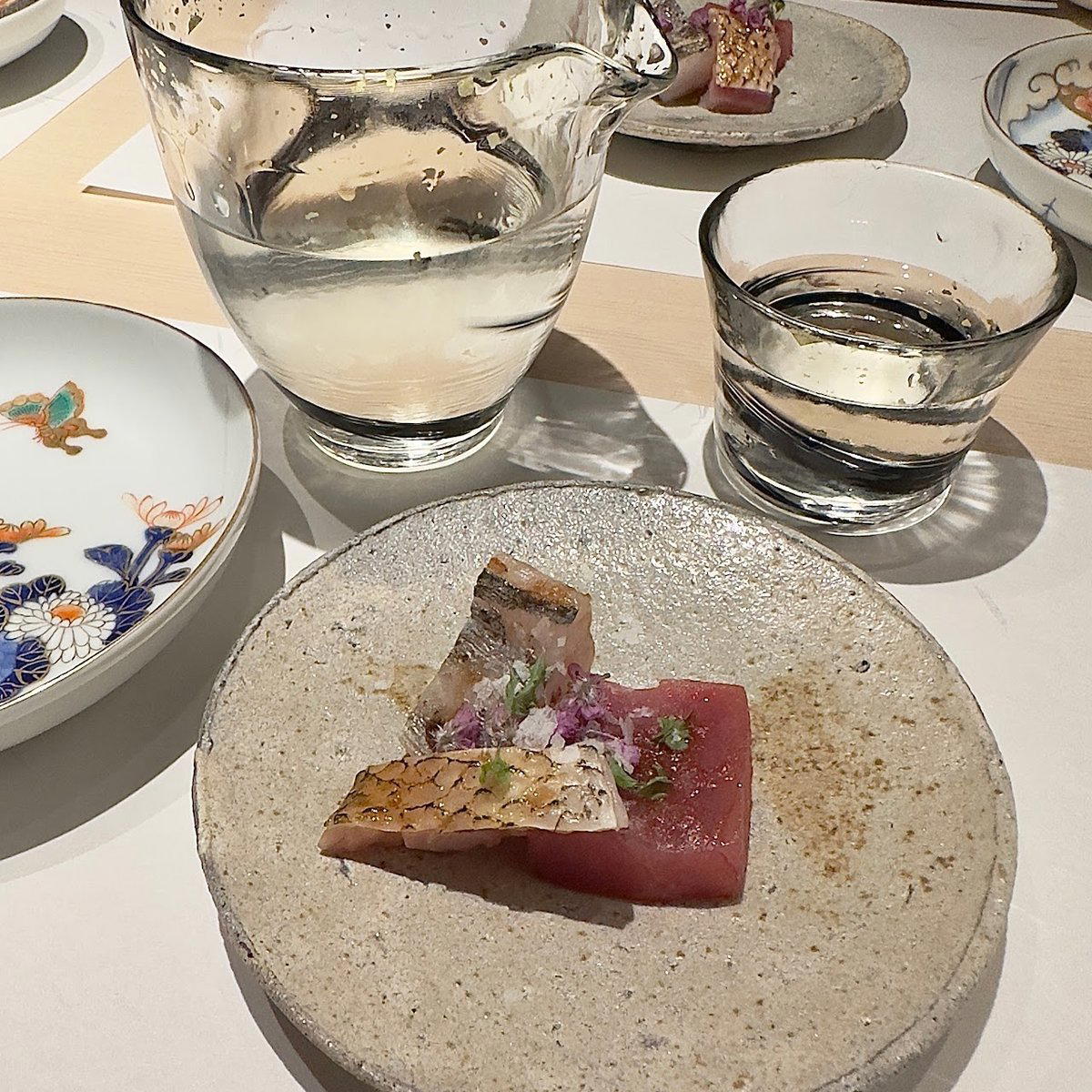
The menu
What to order
- Uni sushi
- Medium-fatty tuna nigiri
Where Kanto Meets Kansai, One Piece at a Time
Sonezakishinchi sits just north of Osaka's main Umeda interchange, a district that has long housed the kind of third-floor counter restaurants that reward the diner who does their research before arriving. The staircases are unmarked, the street-level signage minimal. This is not accidental. The neighbourhood has developed a quiet density of specialist sushi, yakitori, and kappo counters that operate on referral and reputation rather than foot traffic. AKA to SHIRO occupies a third-floor space in a building at 1 Chome-1-41 in Kita Ward, consistent with that pattern.
The name translates directly as "red and white," and every structural decision at the counter flows from that pairing. In Japan, red and white together carry the weight of ceremonial contrast, a duality present at celebrations, in traditional decoration, in the pairing of opposing forces that are stronger together than apart. Here, the duality is culinary and precise: two types of vinegared rice, each applied to the fish for which it is historically appropriate.
The Vinegar Question, Which Is Actually the Rice Question
The division between Kanto and Kansai sushi traditions runs deeper than regional pride. It comes down to fermentation, sweetness, and the way rice interacts with the fat content of different fish. Red vinegar (akazu), produced from sake lees, delivers a lower acidity with richer, more complex undertones. It is the foundation of Edo-mae sushi as it developed in Tokyo and the broader Kanto region, where fatty, assertive fish like tuna (maguro) and blue-backed varieties (aji, kohada, saba) benefit from a rice that can hold its own against their intensity.
White vinegar, by contrast, is rice vinegar balanced with sugar, a lighter, more explicitly sweet preparation that has deep roots in Osaka's oshizushi tradition. Pressed sushi and the delicate white-fleshed fish of the Seto Inland Sea corridor shaped a palate that prefers the rice to recede, to support rather than compete. Shrimp, tai (sea bream), and similar fish sit on white-vinegared rice at AKA to SHIRO because that is, historically, where they belong.
What the counter does is make the logic visible. Rather than choosing one tradition and committing to it, the format treats the rice decision as a piece-by-piece editorial act. The effect for the diner is educational in the most direct sense: you taste the same care applied through two different historical lenses, often within the same sitting.
The Omakase Framework and What You're Actually Agreeing To
Omakase sushi in Osaka operates across a wide price spectrum. At the lower end of the ¥¥ tier, where AKA to SHIRO is positioned, the implicit contract is different from the high-end counters running at ¥¥¥¥, venues like the kaiseki houses at Kashiwaya Osaka Senriyama or the French-rooted programs at Hajime and Fujiya 1935. At that upper register, the guest is paying for extreme sourcing depth, rarity of fish, and length of progression. At a Bib Gourmand sushi counter, the contract is more focused: the chef makes the decisions, you follow the sequence, and the value proposition comes from discipline and concept rather than from trophy ingredients.
AKA to SHIRO's dual-rice format is exactly the kind of conceptual anchor that makes a mid-market omakase coherent. You are not surrendering the menu to a chef who will improvise from the morning market alone. You are surrendering to a system, a logic, a declared point of view about how sushi should taste. That is a different and arguably more intellectually honest version of the omakase contract: the chef has told you what they believe before you sit down.
Consecutive Bib Gourmand recognition in 2024 and 2025 signals that Michelin's inspectors found the execution consistent across two separate assessment cycles. For a format as conceptually specific as this one, consistency is the correct metric. The dual-rice proposition only works if the application is precise every time.
Sushi in Osaka: The Broader Context
Osaka's sushi scene does not carry the same international profile as Tokyo's Ginza corridor, where counters like Harutaka in Tokyo anchor the highest tier of the Edo-mae tradition. Osaka has historically defaulted to kaiseki and street food as its culinary identity markers. But the city has a quietly serious sushi tier that draws on its own regional history rather than importing Edo-mae wholesale.
Counters worth knowing in this context include Sushi Harasho, Matsuzushi, Sushi Hoshiyama, Sushi Murakami Jiro, and Sushi Sanshin, each operating within this tradition of Kansai-inflected counter sushi. AKA to SHIRO sits in this peer group, distinguished by making the regional tension between east and west an explicit part of its structure rather than a background assumption.
For comparison, the approach taken at Sushi Shikon in Hong Kong and Shoukouwa in Singapore shows how Edo-mae sushi travels across borders by committing fully to the Tokyo lineage. AKA to SHIRO makes the opposite choice: it stays specifically Japanese in the most precise way, by insisting that Japan contains more than one sushi tradition and that both deserve to be taken seriously at the same counter.
Planning Your Visit
The restaurant is on the third floor at 1 Chome-1-41 in Sonezakishinchi, Kita Ward, Osaka. The ¥¥ pricing places it within reach without pre-planning a special occasion budget, though sushi counters at this recognition level in Japan typically require advance booking. Given the Bib Gourmand profile and the specific format, reservations should be made as early as possible, particularly for weekend sittings.
If you are building a broader Osaka itinerary, the full Osaka restaurants guide maps the city's dining across price tiers and cuisine types. For hotels, bars, and experiences, the Osaka hotels guide, bars guide, and experiences guide cover the full picture. For wider Kansai context, Gion Sasaki in Kyoto and akordu in Nara represent the broader regional dining ambition. Further afield, Goh in Fukuoka, 1000 in Yokohama, and 6 in Okinawa offer reference points across Japan's broader dining geography. The Osaka wineries guide rounds out the city's full beverage context.
Frequently asked questions
Where exactly is AKA to SHIRO?
AKA to SHIRO is located at Japan, 〒530-0002 Osaka, Kita Ward, Sonezakishinchi, 1 Chome−1−41 3階, Osaka.
Is AKA to SHIRO more mid-range or high-end?
Pricing at AKA to SHIRO is listed as ¥¥.
What's AKA to SHIRO known for in terms of accolades?
AKA to SHIRO has received recognition including: The chef uses two types of vinegared rice: red-vinegared rice for tuna and blue-backed fish, and white-vinegared rice for shrimp and white-fleshed fish. The red vinegar is a style popular in the Kanto region, while the ‘white’ vinegar (rice….
What's the best thing to order at AKA to SHIRO?
The format is omakase, so the kitchen determines the sequence. The structural centrepiece is the vinegar pairing: red-vinegared rice (in the Kanto tradition) is matched to tuna and blue-backed fish, while white-vinegared rice (a Kansai-style rice vinegar with sugar, rooted in oshizushi) is served with shrimp and white-fleshed fish. That contrast is not incidental, the restaurant's name, AKA to SHIRO, translates directly as 'red and white'. The rice choice is the dish.
Comparable Options
A quick snapshot of similar venues for side-by-side context.
| Venue | Cuisine | Price | Awards | Notes |
|---|---|---|---|---|
| AKA to SHIROThis venue (the venue you are viewing) | Modern Edomae-Kansai Sushi Omakase | $50–100 | Michelin Bib Gourmand | Not listed |
| HAJIME | Avant-Garde Japanese Fine Dining | $300–500 | 3 Michelin Stars · World's 50 Best #83 | French, Innovative |
| La Cime | Modern French with Japanese Ingredients | $150–200 | 2 Michelin Stars · World's 50 Best #13 | French |
| Kashiwaya Osaka Senriyama | Seasonal Kaiseki Omakase | $200–300 | 3 Michelin Stars · La Liste Top Restaurants | Japanese |
| Taian | Traditional Japanese Kaiseki Omakase | $150–200 | 3 Michelin Stars · La Liste Top Restaurants | Kaiseki, Japanese |
| Fujiya 1935 | Modern Japanese with European influences | $100–150 | 2 Michelin Stars · La Liste Top Restaurants | Innovative |
Recognition history
Dated appearances from independent guides and award organizations, with the underlying list record or original source where available.
Michelin Bib Gourmand
Michelin
Full recognition history (3 entries)
Michelin Bib Gourmand
Michelin
Michelin Bib Gourmand
Michelin
Continue exploring
More in Osaka
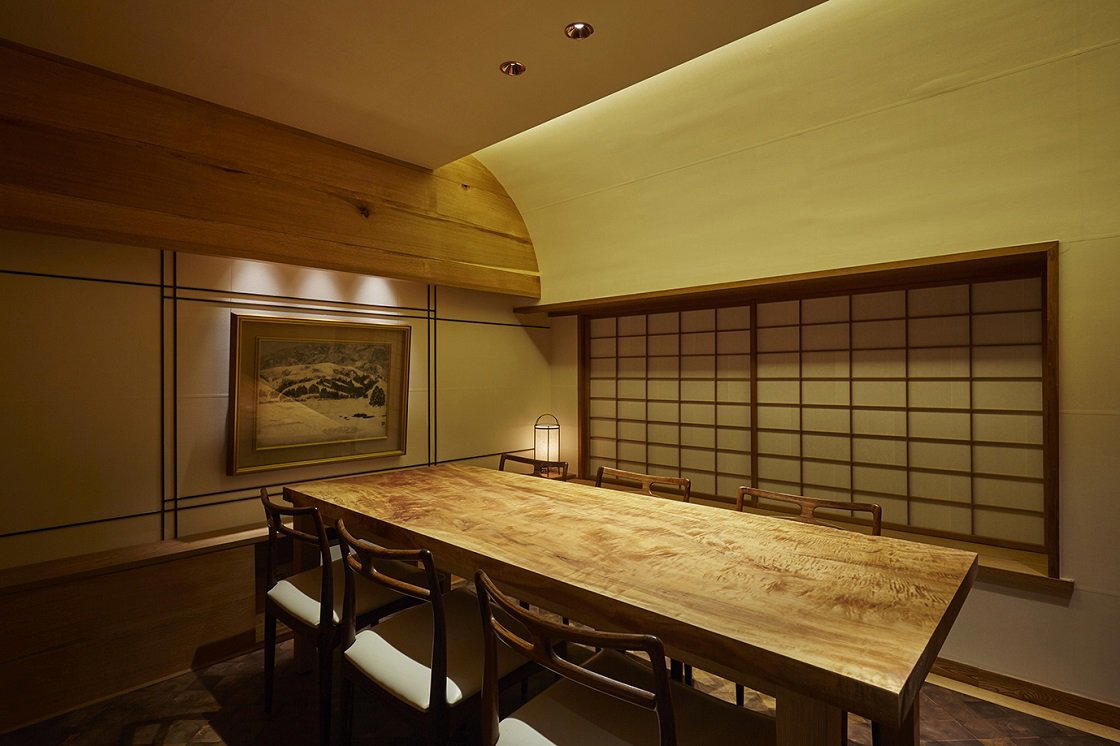
Restaurants in Osaka
All restaurants in Osaka →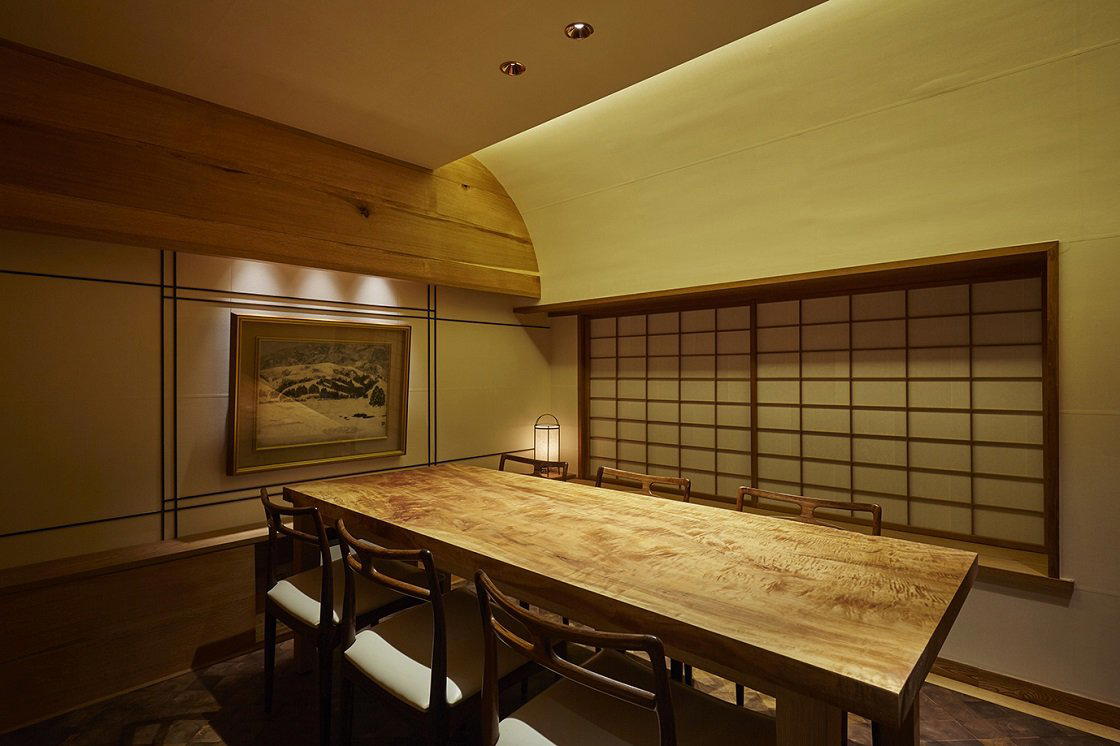



Bars in Osaka
All bars in Osaka →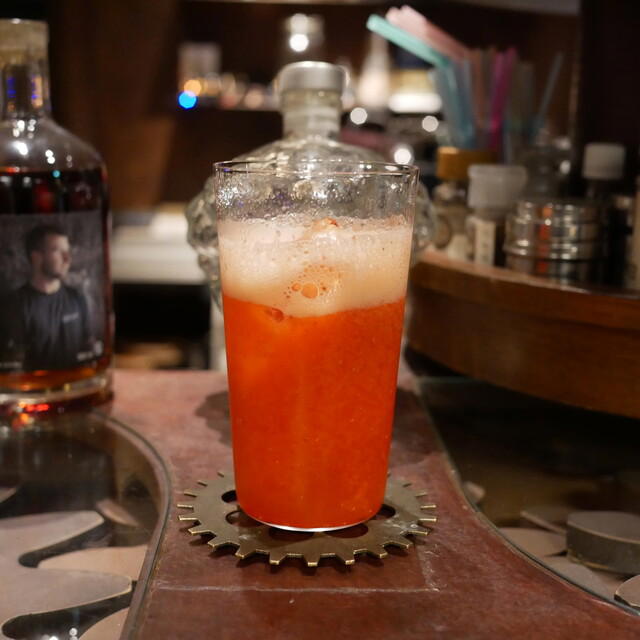




Hotels in Osaka
All hotels in Osaka →




Wineries in Osaka
Browse all →
Details
- Intimate
- Elegant
- Modern
- Date Night
- Special Occasion
- Chefs Counter
- Sake Program
- Omakase
- Counter Dining
- Sake Program
Current opening hours
- Monday
- 5–10 PM
- Tuesday
- 5–10 PM
- Wednesday
- 5–10 PM
- Thursday
- 5–10 PM
- Friday
- 5–10 PM
- Saturday
- 5–10 PM
- Sunday
- Closed
Hours can change for holidays and private events. Hours as of .
Serene and cozy counter seating with a focus on the chef's craft, creating an intimate and immersive sushi dining atmosphere.