

1 Michelin Star · Tabelog 100 #11
Our verdict
A Michelin Plate-recognised tempura counter in Shanghai drawing directly from the Numata lineage rooted in Osaka, Numata Sou positions itself within the upper tier of Japanese specialist dining in the city. Two consecutive Michelin Plate recognitions (2024 and 2025) place it alongside a small group of Japanese format venues operating at the ¥¥¥¥ price point.

Pearl is the En Primeur Club membership app, where members save venues, book tables and use the concierge.
The menu
What to order
- Ten don
- Tempura chazuke
- Egg tempura with runny yolk
The Counter, the Oil, and the Sequence
There is a particular discipline to high-end tempura dining that separates it from almost every other Japanese counter format. Where omakase sushi is governed by the cold, the precision of the knife, and the silent logic of the rice, tempura is governed by heat, timing, and the moment of service. A piece held ten seconds too long in the oil, or rested thirty seconds too long on the pass, is a different dish. The counter at Numata Sou is built around that constraint. The kitchen and the guest are in a direct, real-time relationship, and the meal is structured to honour it.
Numata Sou carries a direct connection to Numata in Osaka, the parent counter operating out of Nishitenma in Kita Ward, a neighbourhood that has long concentrated some of Osaka's most considered Japanese dining. The Shanghai outpost brings that lineage into a market where Japanese specialist formats have grown significantly over the past decade, moving from novelty to a recognised tier of the city's premium dining scene.
Where Tempura Sits in Shanghai's Japanese Dining Tier
Shanghai's Japanese dining market is one of the most competitive outside Japan itself. The city supports a full range of formats: conveyor-belt operations at the entry level, mid-tier izakaya and ramen specialists, and a narrower group of counter-format restaurants operating at ¥¥¥¥ pricing, where the product, sourcing, and chef-to-guest ratio justify the spend. Tempura counters occupy a specific position within that upper bracket. They are rarer than sushi omakase counters, which have proliferated across central Shanghai, and the format requires a different kind of attention from the guest, one structured around receiving each piece individually, in sequence, rather than assembling a meal from multiple small dishes simultaneously.
Michelin's 2024 and 2025 Plate recognitions for Numata Sou place it within the city's credentialled Japanese dining set, a group that includes venues at various price tiers but shares a commitment to format discipline. The Plate designation signals that Michelin inspectors found the cooking to meet a defined quality threshold, it is not a star, but it is a verifiable marker of consistent standard at the time of inspection. For a tempura specialist in a city where the format is underrepresented relative to sushi, that recognition carries weight as a reference point for guests choosing between formats at comparable price levels.
At the ¥¥¥¥ price tier, Numata Sou sits alongside Shanghai restaurants like Fu He Hui, the Michelin-starred vegetarian counter that has redefined what plant-based cooking means at the top of the market. The comparison is instructive: both venues operate within formats that require high trust from the guest, ask for a degree of surrender to the chef's sequencing, and price at a level where the expectation of craft is non-negotiable.
The Architecture of the Meal
Tempura at the counter level is a progression, not a selection. The meal follows a logic: lighter ingredients first, white fish, delicate vegetables, soft-shelled shellfish, building toward richer, more substantial pieces before the transition to a rice or noodle close. This sequencing is not arbitrary. It mirrors the way high-acid, high-mineral courses precede richer ones in a French tasting menu, or the way a kaiseki sequence moves from clear broth to denser compositions. The tempura counter simply does it through a single technique applied to a widening range of ingredients, with the oil temperature adjusted across the meal to accommodate each product.
What distinguishes a serious tempura counter from a competent one is the management of that progression: the ability to read the pace of the table, adjust the sequence without losing momentum, and maintain the temperature of each piece between the fryer and the guest's plate. At Numata Sou, the Osaka lineage implies a set of standards inherited from the parent operation, sourcing practices, batter consistency, oil choice, that give the Shanghai counter a reference framework not built from scratch in the local market.
Reading the 4.2
For a ¥¥¥¥ Japanese counter in Shanghai, a format that attracts guests with high baseline expectations and a tendency to review critically when those expectations are not met, maintaining a 4.2 across nearly 500 responses indicates consistent delivery. It does not indicate universal approval, and the format itself will not suit every dining preference. Tempura counter dining demands patience and willingness to follow a prescribed sequence. Guests looking for the flexibility of à la carte ordering or the sociability of a shared-plates format will find the experience less accommodating. Those who come prepared for the counter's particular rhythm tend to find it a more focused and satisfying meal format than many of the city's more loosely structured restaurants at the same price point.
Japanese Format Dining Across the Region
Numata Sou's position in Shanghai connects to a broader pattern of Japanese specialist formats expanding across major Chinese cities and elsewhere in Asia. Mudan Tempura in Taipei represents a comparable exercise in a different market: a city with deep Japanese culinary influence and a guest base fluent in counter dining etiquette. The comparison points to a regional dynamic in which Japanese counter formats, sushi, tempura, yakitori, teppanyaki, are moving beyond Japan not as exports, but as locally embedded practices with their own quality hierarchies and critical frameworks.
Within Shanghai's wider premium dining scene, the contrast with venues like Taian Table (Modern European, innovative tasting menu format) and Xin Rong Ji on West Nanjing Road (Taizhou cuisine at the top of the Chinese fine dining tier) illustrates how differently the city's ¥¥¥¥ market is segmented. Each of these venues operates a distinct format, draws a different primary audience, and uses a different set of trust signals to justify its price. Numata Sou's case rests on lineage, Michelin recognition, and the specificity of a technique-focused counter format that has no direct equivalent in Chinese culinary tradition.
For guests building a wider Shanghai itinerary, the Xindalu and 102 House entries in the Cantonese tier, as well as the broader Shanghai restaurants guide, offer useful reference points for how Japanese counter dining fits within the full range of options. Those planning beyond restaurants can also consult Shanghai hotels, bars, wineries, and experiences guides for a complete picture. Comparable Japanese-lineage venues in other cities, Ru Yuan in Hangzhou, Xin Rong Ji in Chengdu, Dai Yuet Heen in Nanjing, Chef Tam's Seasons in Macau, and Imperial Treasure Fine Chinese Cuisine in Guangzhou, offer further points of reference for how specialist formats perform across Greater China, and Xin Rong Ji on Xinyuan South Road in Beijing illustrates how a single brand can anchor multiple market positions simultaneously.
Know Before You Go
- Cuisine: Tempura (Japanese counter format)
- Price range: ¥¥¥¥
- Awards: Michelin Plate 2024; Michelin Plate 2025
- Lineage: Connected to Numata, Osaka (Nishitenma, Kita Ward)
- Format note: Counter dining with a set progression sequence, not suited to à la carte preferences
- Booking: Contact details not currently listed; advance reservation strongly advised given counter-format capacity constraints typical of this style
Frequently asked questions
What distinctions does Numata Sou have?
Numata Sou has received recognition including: Michelin Plate (2025); Michelin Plate (2024).
What's the best thing to order at Numata Sou?
Numata Sou operates as a counter-format tempura restaurant, so the sequence is set by the kitchen rather than chosen from a menu. The progression follows tempura convention: lighter ingredients early, moving through richer courses as the meal advances. At the ¥¥¥¥ price tier, the counter format is the experience, arriving expecting to direct individual selections misreads how this style of dining works.
What's the pricing like at Numata Sou?
Pricing at Numata Sou is listed as ¥¥¥¥.
Pricing, Compared
| Venue | Cuisine | Price | Awards |
|---|---|---|---|
| Numata SouThis venue (the venue you are viewing) | Tempura Omakase | Not listed | 1 Michelin Star · Tabelog 100 #11 |
| Fu He Hui | Modern Seasonal Vegetarian Fine Dining | $200–300 | 2 Michelin Stars · World's 50 Best #11 |
| Ming Court | Cantonese | Not listed | Michelin 1 Star |
| Polux | French Bistro | $30–50 | Michelin Bib Gourmand |
| Royal China Club | Cantonese Dim Sum | $100–150 | Michelin Plate · The Good Food Guide GFG Good |
| Scarpetta | Refined Italian Pasta & Pizza | $50–100 | Michelin Plate · Wine Spectator Best of Award of Excellence |
Recognition history
Dated appearances from independent guides and award organizations, with the underlying list record or original source where available.
Michelin 1 Star
Michelin
Tabelog 100 #11 · No. 11
Tabelog · Tabelog 100 - Tempura - 2025
Full recognition history (4 entries)
Michelin Plate
Michelin
Michelin Plate
Michelin
Continue exploring
More in Osaka
Restaurants in Osaka
All restaurants in Osaka →



Bars in Osaka
All bars in Osaka →


Hotels in Osaka
All hotels in Osaka →


Wineries in Osaka
Browse all →
Details
- Intimate
- Elegant
- Quiet
- Sophisticated
- Solo
- Date Night
- Special Occasion
- Open Kitchen
- Sake Program
- Omakase
Current opening hours
- Monday
- 12–2:30 PM, 5:30–11 PM
- Tuesday
- 12–2:30 PM, 5:30–11 PM
- Wednesday
- 12–2:30 PM, 5:30–11 PM
- Thursday
- 12–2:30 PM, 5:30–11 PM
- Friday
- 12–2:30 PM, 5:30–11 PM
- Saturday
- 12–2:30 PM, 5:30–11 PM
- Sunday
- 12–2:30 PM, 5:30–11 PM
Hours can change for holidays and private events. Hours as of .
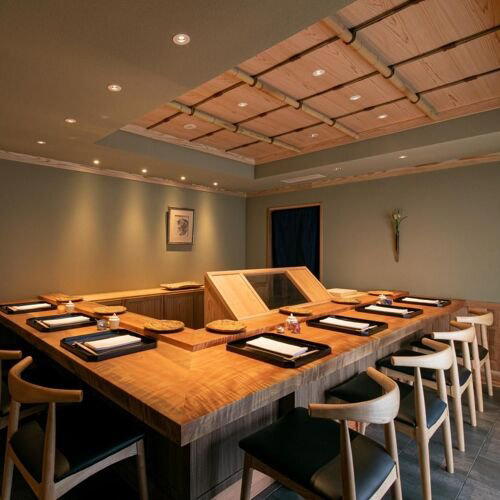
Soft lighting pools over the counter with natural woods and stone absorbing noise, creating a serene atmosphere accompanied by the gentle sizzle of frying.