
Positioned at the edge of Nara Park where the city meets ancient woodland, Fufu Nara is a 30-room ryokan awarded a Michelin Key in 2024. Azekura-style architecture, private open-air onsen in every room, and traditional herbal treatments place it in the quieter, more contemplative end of Japan's premium inn market.5 from nearly 500 reviews reinforces its reputation among those who make the journey here.
Pearl is the En Primeur Club membership app — saves, bookings, and concierge access live there. Same editors, same standards.
- Address
- 1184-1 Takabatakechō, Nara, 630-8301
- Phone
- +81 570-011-722
- Website
- fufunara.jp
- Directions
- Get directions
 Saves & bookings on Pearl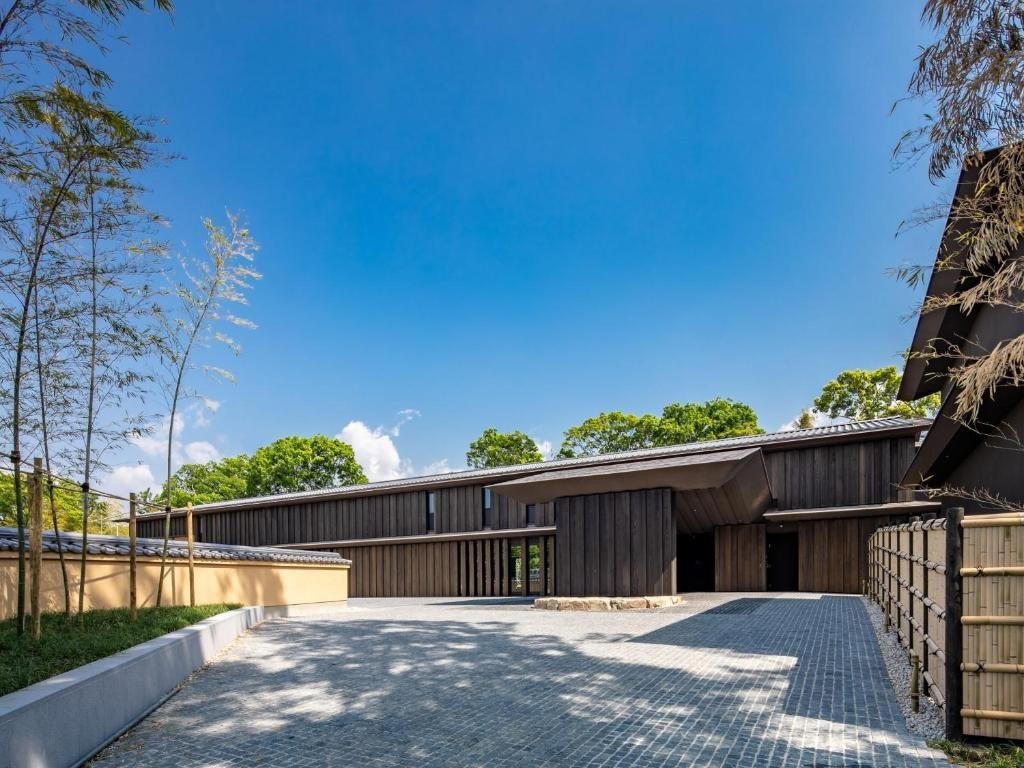
Where Nara Park Ends and Something Quieter Begins
Fufu Nara is a five-star, 30-room ryokan in Nara, recognized with one Michelin Key in 2024, at 1184-1 Takabatakechō, Nara, 630-8301. Takabatake-cho, the neighbourhood that fringes the eastern edge of Nara Park, is where the tourist circuits thin out and the cedar-edged paths toward Kasugayama Primeval Forest take over. Approaching the property, the transition from ancient parkland to structured hospitality happens gradually rather than abruptly, which is precisely the point. The architecture signals this continuity before a single interior detail registers: inky, age-worn timber in the azekura tradition, a building style historically associated with the great storehouses of the Nara period, reinterpreted here as a residential aesthetic rather than a monumental one.
Azekura construction, with its interlocking log framework, was designed to breathe, to respond to humidity and season rather than resist them. That same logic extends through the interior, where sea-tone textiles and the low flicker of lantern light create an atmosphere calibrated to slow the eye rather than impress it. This is not decorative restraint for its own sake; it is a design posture that a number of Japan's more considered ryokan have arrived at independently, recognising that guests arriving from Nara's dense historical sites often need decompression as much as comfort.
The Private Onsen as Architectural Argument
Among Japan's premium ryokan tier, the private in-room rotenburo has become something close to a baseline expectation. What distinguishes properties is not the presence of the feature but how it is integrated spatially and experientially. At Fufu Nara, each of the 30 rooms connects to a private hot-spring onsen, and the positioning matters: the transition from interior to outdoor bathing is designed to continue the visual logic of the room rather than interrupt it. The woodwork extends outward, the boundary between inside and outside dissolves at the threshold, and the surrounding treeline frames what you see from the water.
This architectural approach to the onsen, treating it as an extension of the room's spatial argument rather than an amenity bolted on, places Fufu Nara in a specific peer conversation within Japanese luxury hospitality. Properties like Gora Kadan in Hakone, Asaba in Izu, and Zaborin in Kutchan have each pursued versions of this integration across different landscape contexts. Fufu Nara's particular version is shaped by Nara's specific ecology: a city where deer move freely through public space, where ancient woodland begins within walking distance of modern infrastructure, and where the pressure to be somewhere historic is constant. The onsen here offers a counterweight to all of that.
The property also offers traditional herbal treatments, which in the context of this design philosophy function as an extension of the same logic: the body as a site requiring the same considered attention as the architectural envelope around it.
The Fufu Brand in the Japanese Ryokan Context
The hotel sits within a small group of Fufu-branded properties that have established themselves in locations where landscape and heritage intersect. Fufu Kawaguchiko in Fujikawaguchiko operates against the backdrop of Fuji views; Fufu Nikko in Nikko positions itself within one of Japan's densest concentrations of shrine architecture. The brand's consistent approach is to work with rather than against the specific character of a place, adjusting its design language and programming to the local register. In Nara, that means engaging seriously with the city's dual identity as both a living religious site and a functioning modern prefecture, a combination that has no real equivalent elsewhere in Japan.
The hotel's Michelin Key recognition places it within a select tier of Japanese accommodations formally acknowledged for the quality of the stay experience itself, not just the food or the facilities in isolation. The Michelin Keys system, introduced to reward hotels on their own terms rather than through the lens of their restaurants, signals that the property holds together as a coherent hospitality proposition.
Nara as a Context for This Kind of Stay
Nara's premium accommodation offer has developed more slowly than Kyoto's, partly because the city has historically been positioned as a day-trip destination from Osaka or Kyoto rather than a place to stay. That pattern is shifting. The argument for overnighting in Nara, particularly at a property on the park's edge, is direct: the deer, the shrines, and the forest paths behave differently before 9am and after 5pm, when the tour groups have gone. Staying at the hotel positions a guest for both windows.
The comparison with Kyoto's luxury accommodation tier is worth making directly. Properties like HOTEL THE MITSUI KYOTO operate within a city that has developed a dense infrastructure of premium stays, high-end kaiseki restaurants, and curated cultural experiences. Nara's offer is thinner in volume but no less serious in character; it simply requires more deliberate planning. The JW Marriott Hotel Nara and Noborioji Hotel Nara represent the city's other premium options, both operating on a different architectural and programmatic logic from the hotel's ryokan framework. The choice between them is a choice between international luxury-hotel conventions and a more specifically Japanese residential model.
Placing Fufu Nara in a Wider Japanese Ryokan Conversation
Japan's premium ryokan category has fragmented into distinct sub-tiers over the past decade. At one end, internationally recognised properties like Amanemu in Mie operate at a scale and price point that positions them against global ultra-luxury rather than domestic competition. Properties like Nishimuraya Honkan in Kinosaki-cho and Araya Totoan in Kaga hold their authority through longevity and deep regional rootedness. The hotel occupies a different position: a designed, contemporary interpretation of ryokan principles in a city where the surrounding heritage is among the oldest in Japan, with the Michelin recognition providing external validation that the proposition holds together.
Other properties that pursue comparable integration of landscape, onsen, and design intelligence include ENOWA Yufu in Yufu, Benesse House in Naoshima, and Sekitei in Hatsukaichi-shi, though each operates within a different geographic and cultural register. What connects them is a willingness to treat the stay itself as the primary experience, with architecture and setting doing work that marketing copy cannot.
Planning a Stay
The hotel's location at 1184-1 Takabatake-cho places it at the quieter, residential-feeling eastern edge of Nara Park, within walking distance of the major shrine complexes and the trailheads that lead into Kasugayama. The property holds 30 rooms, all with private onsen access. Advance planning is advisable, particularly for spring cherry blossom season and autumn foliage periods when the park draws visitors across the spectrum. For travellers building a broader Japan itinerary, the hotel pairs logically with a Kyoto stay and connects naturally to the onsen-focused properties in the Kansai and further afield, from Atami Izusan Karaku in Atami to ANA InterContinental Beppu Resort and Spa in Beppu. For those whose itinerary extends to islands, Jusandi in Ishigaki and Halekulani Okinawa represent the southernmost end of Japan's premium accommodation range, operating in a climate and landscape entirely unlike Nara's woodland edge.
Comparison Snapshot
Comparable venues nearby, for context on price, style, and recognition.
| Venue | Cuisine | Price | Awards | Notes |
|---|---|---|---|---|
| Fufu NaraThis venue — the venue you are viewing | Contemporary luxury resort blending modern comfort with traditional Japanese design, featuring natural materials and local artisanal craftsmanship throughout. | $$$$ | Michelin 1 Key | Not listed |
| JW Marriott Hotel Nara | Modern luxury with cultural Nara inspirations featuring warm earth tones and deer motifs. | $$$$ | Michelin 1 Key | Nara |
| Shisui, a Luxury Collection Hotel, Nara | Historic Japanese residence renovated into luxury hotel blending tradition and modernity | $$$$ | 5-Star | Nara |
| Hoshinoya Nara Prison | Luxury heritage hotel in a preserved former prison building | $$$$ | 5-Star | Nara |
| ふふ奈良 | 隈研吾設計の数奇屋風スモールラグジュアリーリゾート | $$$$ | 5-Star | 高畑町 |
| Villa Communico | Contemporary gastronomic auberge harmonizing nature's five elements with luxury hospitality. | $$$$ | 5-Star | Nara |
Recognition history
Dated appearances from independent guides and award organizations, with the underlying list record or original source where available.
Michelin 1 Key
Michelin
Michelin 1 Key
Michelin
Continue exploring
More in Nara
Hotels in Nara
Browse all →



Bars in Nara
Browse all →






Wineries in Nara
Browse all →
At a Glance
- Elegant
- Quiet
- Sophisticated
- Scenic
- Romantic Getaway
- Wellness Retreat
- Anniversary
- Celebration
- Destination Spa
- Garden
- Terrace
- Historic Building
- Design Destination
- Panoramic View
- Wi Fi
- Spa
- Restaurant
- Bar
- Garden
- Valet Parking
- Room Service
- Garden
- Mountain
- Wi Fi
- Spa
- Restaurant
- Bar
- Garden
- Valet Parking
- Room Service
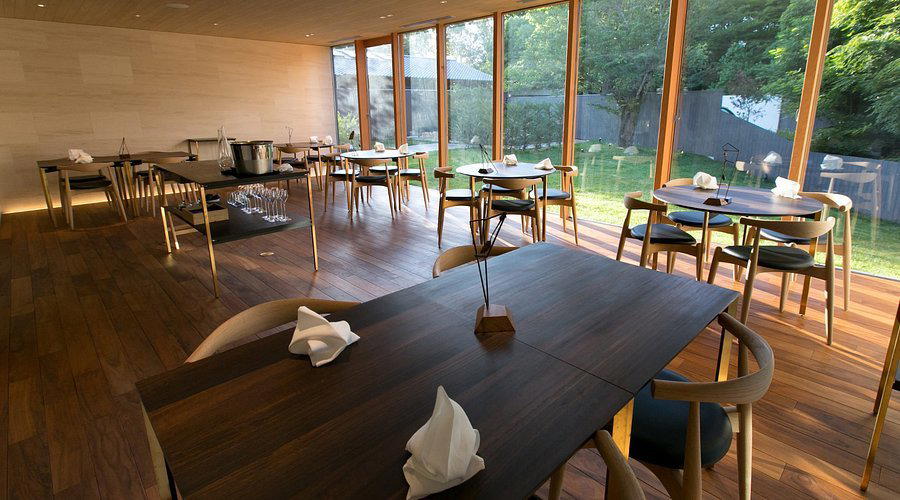
Serene and contemplative with warm flickering lanterns, natural wood finishes in the azekura regional style, and the gentle sounds of nature from the surrounding park creating a calming, meditative atmosphere.